 ProMapRanker
8 Best Procurement Software for University Warehouses for 2026

Small teams that require core purchasing quick · Pricing starts at: $99 a month
Direct answer
Tradogram leads the list, best for small teams that require core purchasing quick. Listed starting prices: Tradogram from $99 a month and Precoro from $499 per month. Alternatives: Euna Procurement for public bidding and sealed evaluations, and Oracle Procurement Cloud for universities already on Oracle Fusion Cloud. Prices, free plans and limits for all 8 tools follow.
ProMapRanker put together this guide to procurement software for university warehouses for readers who want a clear shortlist without reading every vendor page. It compares 8 tools on starting price, free plans, who each one suits and where each one falls short.
Key takeaways
- Tradogram sits first on this list: small teams that require core purchasing quick.
- None of the 8 tools, from Tradogram to Workday Procurement, has a free plan, so budget for a subscription or use a trial.
- A fair warning about Tradogram: essentials lacks requisitions and receiving.
- Workday Procurement suits universities already on Workday.
Quick comparison
| Pick | Great for | Pricing starts at | Free tier | |
|---|---|---|---|---|
| Tradogram | Small teams that require core purchasing quick | $99 a month | Free trial | Visit |
 Euna Procurement | Public bidding and sealed evaluations | Quote only | No | Visit |
 Oracle Procurement Cloud | Universities already on Oracle Fusion Cloud | Quote only | No | Visit |
 Airbase | Spend control with cards, bills, and expenses | Quote only | No | Visit |
 Jaggaer | Large universities with complicated sourcing | Quote only | No | Visit |
 Coupa | Large spend under management | Quote only | No | Visit |
 Precoro | Mid-sized teams that want a published price | $499 per month (billed annually) | No | Visit |
 Workday Procurement | Universities already on Workday | Quote only | No | Visit |
Procurement Software for University Warehouses, one by one
Pick Tradogram if this describes you: small teams that require core purchasing quick. Tradogram Essentials begins at $99 a month, or $950.40 a year with annual billing, and includes purchase orders, supplier management, AP invoices with matching, TradoPay payments, TradoScan document OCR, expense management, and mobile apps. Also, the vendor pricing page displays a 20 percent discount for annual billing, and extra user fees apply beyond the included seats.
The limits are clear on the same page. More specifically, a warehouse that needs goods received notes matched to purchase orders should price Premium or the receiving add on before committing. Tradogram starts at: $99 per month. On free options: Free trial.
Downsides: Premium needs 20 or more users and a custom quote.
- Lowest published entry price at $99 a month
- Annual billing cuts 20 percent off monthly billing
- Essentials lacks requisitions and receiving
Euna Procurement serves public bidding and sealed evaluations. Buyers can publish solicitations, collect sealed supplier submissions, run structured scoring across a committee, and keep a full audit trail for every step.
In practice, a university that only buys the sourcing module will still run purchase orders and invoices in its finance system, so confirm which modules are in the quote. The limit to check is scope. Pricing for Euna Procurement is quote based, so budget talks start with the vendor. Euna Procurement has no free plan.
Where it is weaker: Full procure to pay needs the wider Euna bundle.
- Sealed bidding with structured scoring
- Audit trails aimed at public sector rules
- No list price is published
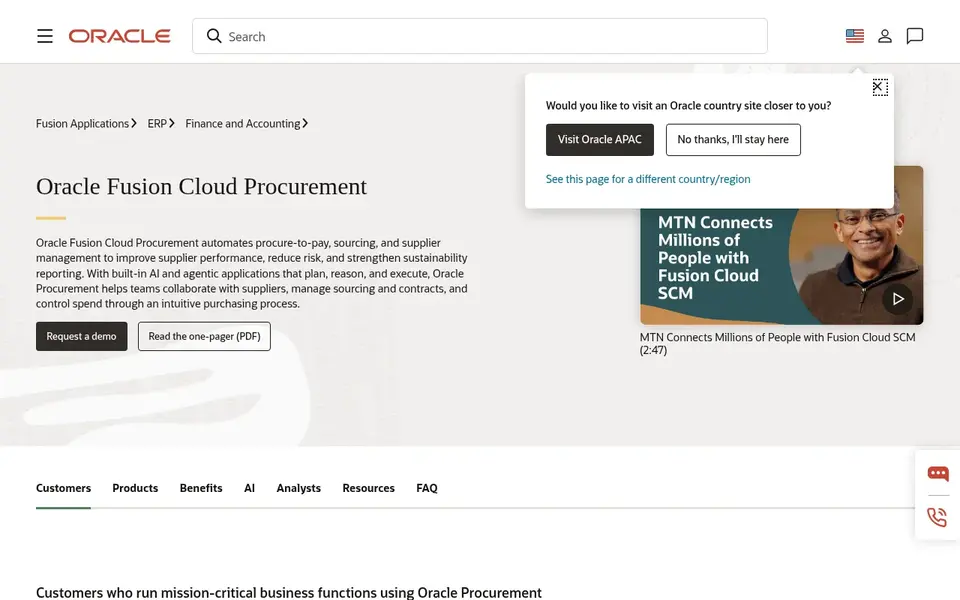
Oracle Procurement Cloud is a good fit for universities already on Oracle Fusion Cloud. The decision here is really about the system the university already runs. In daily use, for a university warehouse, the handy pieces are catalog buying with negotiated prices applied at order time, approval controls by business unit and amount, and three way matching on invoices.
Points against: not as a stand alone buy.
From a buyer's view, the supplier portal lets suppliers handle their own profiles, orders, and invoices, which cuts the email traffic that slows down receiving docks. A university without Oracle faces a large product decision, not a straightforward tool purchase, and Oracle publishes no price for the procurement modules. Oracle Procurement Cloud sells by quote instead of a published price. Oracle Procurement Cloud has no permanent free option.
- Full source to settle suite inside Oracle Fusion Cloud
- Guided buying with contract pricing
- No published price
Airbase is aimed squarely at spend control with cards, bills, and expenses. Virtual cards per vendor, bill pay, and expense reimbursement sit in the same flow as purchase intake. So a department can request, approve, and pay without handing the same order across three separate tools.
The main drawbacks: card issuing is US focused.
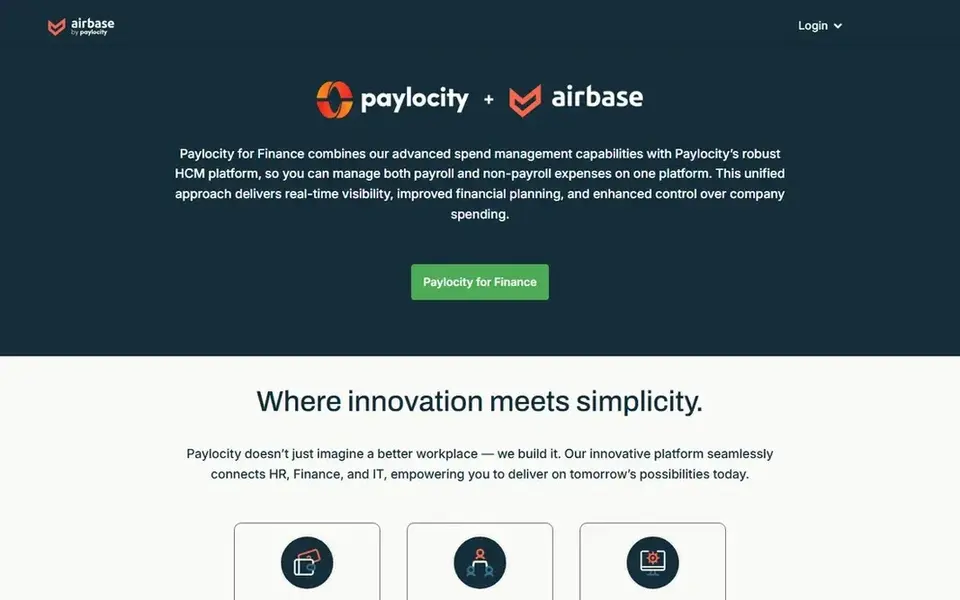
Worth adding: card issuing and bill payment are built around United States entities and bank accounts, which is a limit for campuses with overseas suppliers. On top of that, the pricing picture changed after Paylocity acquired Airbase. The vendor pricing page now redirects to Paylocity, with the spend management features sold as Paylocity for Finance on a quote. Airbase merges corporate cards, bill payment, expense reports, and procurement under one approval policy, which fits a university warehouse that pays numerous small suppliers by card and invoice. There is no list price for Airbase, so a quote is the way in. Airbase has no free tier.
- Bill pay
- Expenses under one approval policy
- Pricing page redirects to Paylocity
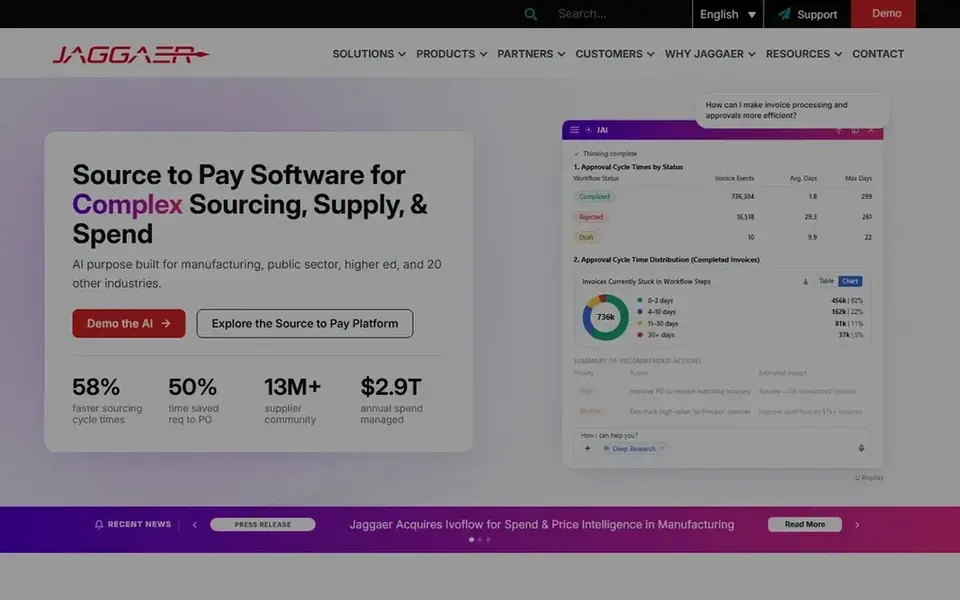
Jaggaer targets large universities with complicated sourcing. Jaggaer One is made for higher education buying, and that presents in the way it manages catalogs, contracts, and inventory for labs and facilities. The trade off is scale: Jaggaer sells by quote, and setup runs through its professional services team.
The main drawbacks: No published price, so budgeting needs a sales quote.
Departments can buy from approved supplier catalogs, see contract prices at the point of order, and route approvals by department, fund, and amount. That fit matters, since lab chemicals, maintenance parts, and food service stock each carry different rules for storage and sign off. Jaggaer does not show a fixed starting price, so you request a quote. There is no free plan with Jaggaer.
- Higher education version with catalog buying
- Sourcing, contracts
- Setup is a long project, not self-serve
For large spend under management, Coupa is a natural candidate. For a large research university with high annual spend, that can still be the right call.
Where it is weaker: No published price and no self-serve start.
Pricing for Coupa is quote based, so budget talks start with the vendor. Coupa has no free plan.
- Large supplier network for sourcing and onboarding
- Source to contract in one place
- Pricing follows spend under management
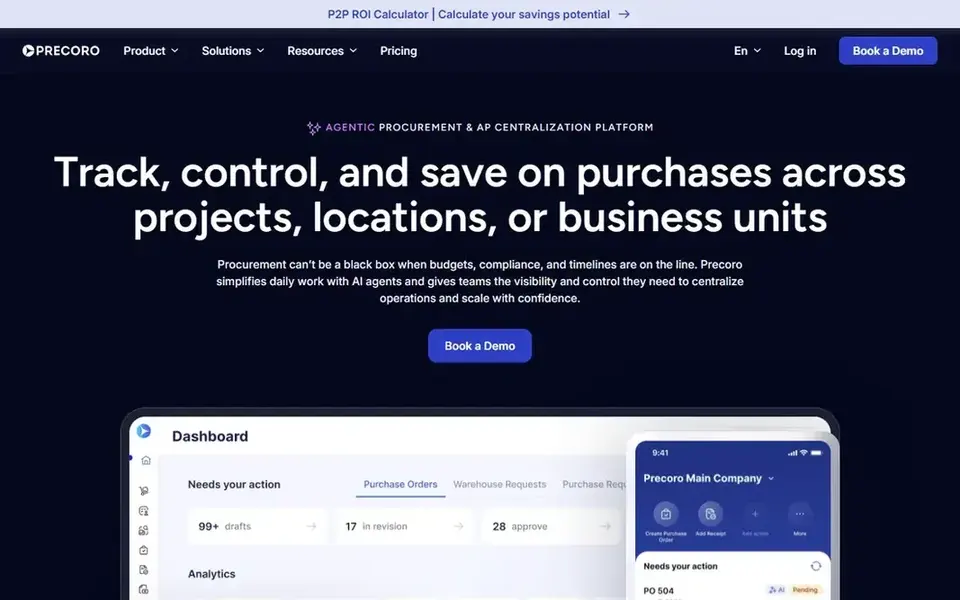
Precoro serves mid-sized teams that want a published price. The catch sits in the level split: intake management, live budget tracking. The supplier portal start on the $999 Automation plan, so a university that needs request intake from numerous departments should price Automation, not Core.
As for the details, core starts at $499 a month billed yearly, Automation opens at $999 a month, and Enterprise is custom. More specifically, integrations contain QuickBooks Online, Xero, NetSuite, and Sage Intacct, plus PunchOut catalogs for suppliers like Amazon Business, Grainger, and Thermo Fisher Scientific, which suit lab and facilities buying. Precoro cost at the entry level: $499 per month. Precoro does not include a free plan.
- Published pricing with Core at $499 a month
- Three way matching and multi location budgets
- Intake and live budget tracking need the $999 Automation plan, not Core
Workday Procurement targets universities already on Workday. The vendor page stresses AI guided buying, so a lab manager or facilities supervisor who orders seldom can still follow the right path, pick the right category, and stay inside policy.
Beyond that, Workday prices by quote, and its pricing model runs per employee. So a procurement module quote will reflect the size of the entire institution instead of the warehouse team alone. Workday Procurement does not publish a starting price; ask for a quote. Workday Procurement has no free tier.
Drawbacks to consider: procurement sits inside a wider Workday product decision.
- AI guided buying for casual requesters
- Procure to pay inside one Workday system
- No published price
Things to verify first
- Get a written quote from Euna Procurement, Oracle Procurement Cloud, Airbase and others; the list shows no starting price for them.
- Run a trial of Tradogram with real work before paying for a year; your own workflow is the best test.
- Read the limits listed for Tradogram first: essentials lacks requisitions and receiving.
- Find out whether the entry plan of Workday Procurement covers your must-haves or only a trimmed-down version.
- Confirm that Euna Procurement connects to the apps your team already uses, on the plan you would actually buy.
Frequently asked questions
What should a public university check first?
Check the sealed bidding and audit rules first, since public funds carry thresholds for competitive quotes and board approval. Confirm the thresholds with the campus procurement office before shortlisting any tool.
Do any of these tools publish a price?
Precoro lists Core at $499 a month billed yearly and Automation at $999 a month, whereas Tradogram lists Essentials at $99 a month or $950.40 a year.
How long does it take to go live?
Tradogram describes setup in steps from day 1 to 9 months or more, based on scope. Enterprise suites like Jaggaer, Coupa, Oracle, and Workday need multi month rollouts with professional services, so plan a full term for those.
Can I try these tools before paying?
Often, yes. Tradogram offers a free trial. Use your own data and a real task during the test, and check what the free tier or trial limits before you rely on it.
Do these tools publish their prices?
Not all of them. Euna Procurement, Oracle Procurement Cloud, Airbase and others publish no starting price, so expect a quote request for those. The rest, Tradogram included, show a starting price, though seats and billing terms still change the final cost.
What is the cheapest option for procurement software for university warehouses in this list?
On published monthly entry prices, Tradogram is the lowest here at $99 per month. Entry price is only part of the cost, because seats, add-ons and billing terms can change the total. All 8 picks in this procurement software for University warehouses comparison list a starting price, free plan details and the main limits on their cards above.
Sources
See where you really rank - block by block
ProMapRanker scans Google Maps across a grid of your service area. Simple monthly plans from $19, white-label on every plan.
Start freeBrowse all guides
← 7 Best Procurement Analytics Software for 2026Procurement Software for Warehouses in 2026: Top 7 Compared →
 best procurement analytics software for food distributors
6 Best Procurement Analytics Software for Food Distributors (2026)
Best procurement analytics software for food distributors in 2026: 6 contenders with entry costs and free tiers. Pros and cons for every tool. No filler.
Read → best ovulation and period tracking apps
7 Best Ovulation and Period Tracking Apps for 2026
Best ovulation and period tracking apps: 7 tools compared on price, free plans and fit. Fit and flaws are laid out for each entry. Budget notes included.
Read → best customer revenue optimization software for startups
Customer Revenue Optimization Software for Startups (2026)
5 best customer revenue optimization software for startups, with entry costs, free tiers and the buyer each one serves. Limits and pricing notes included.
Read → alternatives to scala
Alternatives to Scala in 2026
We compared alternatives to Scala in 2026, covering general purpose, functional, and systems languages for backend, data, web, and application work today.
Read → best conversation intelligence software
Best Conversation Intelligence Software in 2026
We compared the best conversation intelligence software for sales teams, from Gong and Chorus to budget picks, on recording, coaching, CRM sync, and price.
Read → anaconda alternatives
Best Anaconda Alternatives in 2026
We compare 9 anaconda alternatives for Python data science, from Miniforge and Micromamba to uv, Pixi and Poetry, with free options and setup guidance.
Read →More in Data & Analytics · All guides A to Z by date · Latest guides