 ProMapRanker
Alternatives to Scala in 2026

Key takeaways
- Python suits data, scripting, and fast iteration, while Java suits large JVM teams that want stability.
- Kotlin offers a modern JVM path with simpler syntax and strong Android support.
- Go and Rust suit services and systems work where performance and deployment simplicity matter.
- Hiring pool, libraries, and runtime matter more than language style alone.
Quick comparison
| Pick | Great for | Pricing starts at | Free tier | |
|---|---|---|---|---|
 Python | data, scripting, and fast iteration | Free | Yes | Visit |
 Java | large JVM teams and stability | Free | Yes | Visit |
 Kotlin | modern JVM and Android work | Free | Yes | Visit |
 Go | backend services and infrastructure | Free | Yes | Visit |
 Rust | systems and performance work | Free | Yes | Visit |
 Haskell | pure functional programming | Free | Yes | Visit |
 Clojure | functional JVM programming | Free | Yes | Visit |
 Elixir | fault-tolerant concurrent systems | Free | Yes | Visit |
 TypeScript | full-stack web applications | Free | Yes | Visit |
The best alternatives to Scala
Scala mixes object-oriented and functional styles on the JVM, but teams often want simpler hiring, faster builds, or a different runtime. We compared alternative languages that cover backend, data, and application work, not Scala itself.
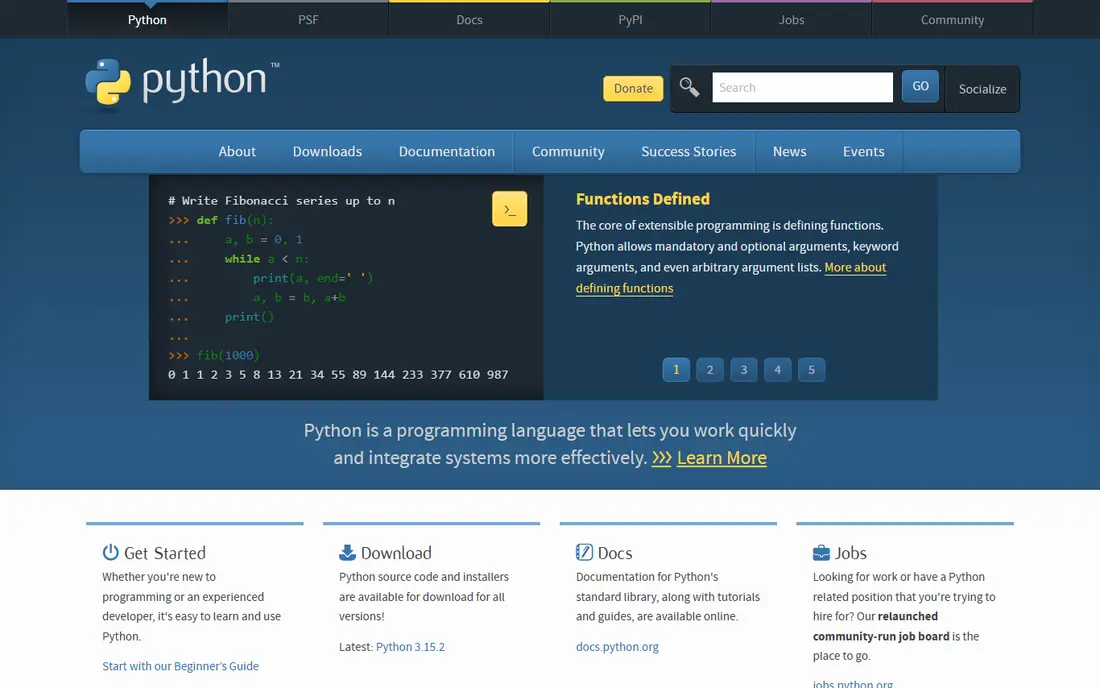
If data, scripting, and fast iteration is the main job, Python stands out for huge libraries for data, web, and automation, with readable syntax. In our comparison of official feature pages and pricing, that combination stood out because it answers the core job without forcing a separate tool for every step.
That strength shows up in daily use, not only on a feature page. The plan limits and the way the tool handles real work matter, so check trial terms, user limits, and what happens when you outgrow the entry tier. A tool that fits the first month but blocks the sixth month is a poor buy.
The catch is that it is slower than compiled languages for some workloads, and packaging can be messy. Before you commit, run a real task in the trial or free tier, check the plan limits, and confirm the tool fits the team that will use it every day. That short test usually reveals more than a feature list.
- Huge libraries for data, web, and automation
- Readable syntax
- Large hiring pool
- Slower than compiled languages for some workloads
- Packaging can be messy on large projects
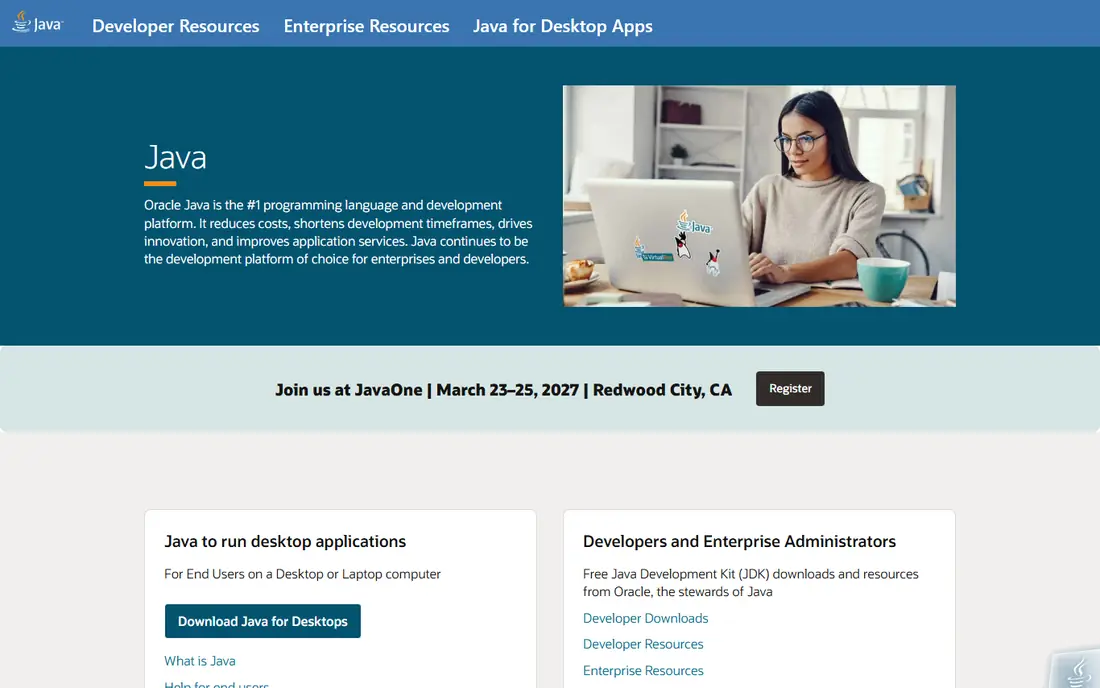
For teams focused on large JVM teams and stability, Java stands out for a mature JVM ecosystem with strong tooling and long-term support. In our comparison of official feature pages and pricing, that combination stood out because it answers the core job without forcing a separate tool for every step.
Pricing and limits shape the real cost. Check what the entry plan includes, what sits on higher tiers, and whether extra users, volume, or add-ons change the bill. A clear plan page is a good sign, while vague pricing usually means a sales call and a custom quote.
The catch is that syntax is verbose versus modern languages, and startup time can be higher than Go. Before you commit, run a real task in the trial or free tier, check the plan limits, and confirm the tool fits the team that will use it every day. That short test usually reveals more than a feature list.
- Mature JVM ecosystem
- Strong tooling
- Long-term support releases
- Verbose syntax versus modern languages
- Startup time can be higher than Go
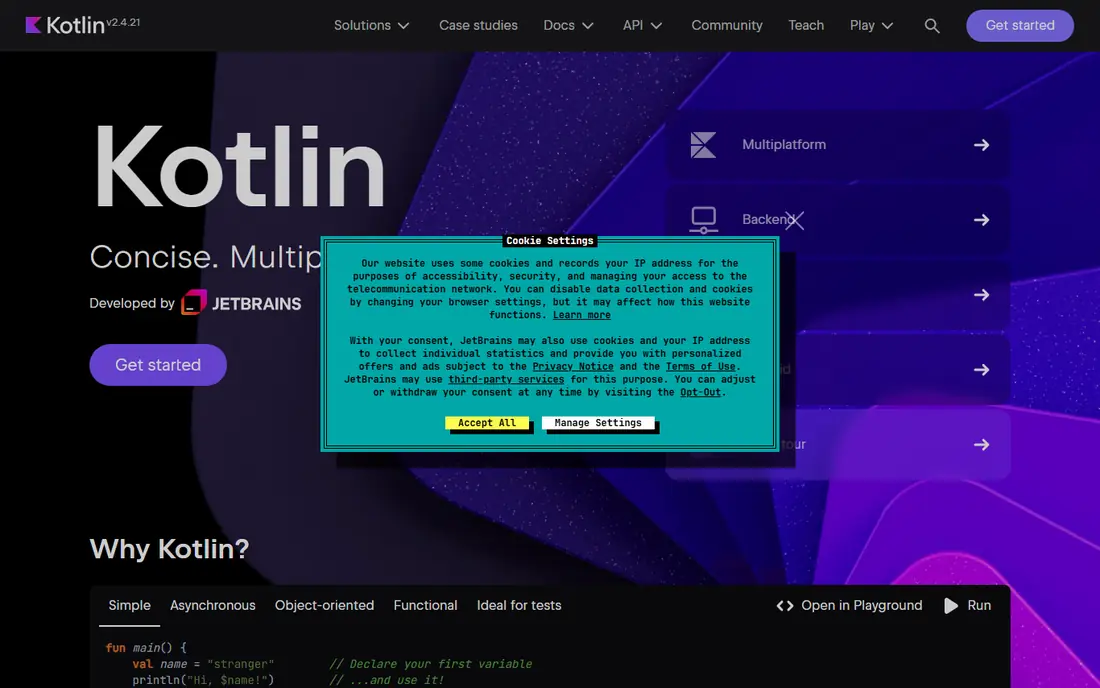
When modern JVM and Android work matters most, Kotlin stands out for modern syntax on the JVM, with null safety and strong Android support. In our comparison of official feature pages and pricing, that combination stood out because it answers the core job without forcing a separate tool for every step.
Daily workflow is where a tool earns its place. Look at how quickly a new user can complete the core job, how clear errors and reports are, and how well the tool connects to the rest of your stack. A strong feature that is hard to find rarely gets used.
The catch is that functional depth is smaller than Scala, and build times can grow on large projects. Before you commit, run a real task in the trial or free tier, check the plan limits, and confirm the tool fits the team that will use it every day. That short test usually reveals more than a feature list.
- Modern syntax on the JVM
- Null safety
- Strong Android and server support
- Smaller functional depth than Scala
- Build times can grow on large projects
If your priority is backend services and infrastructure, Go stands out for simple syntax, fast builds, and single binary deployment for services. In our comparison of official feature pages and pricing, that combination stood out because it answers the core job without forcing a separate tool for every step.
Support and docs matter when work stalls. Check the help centre, community, and update history before you commit. A tool with clear docs and recent updates is easier to trust than one with a polished landing page and thin guidance.
The catch is that generics and error handling feel basic to some developers, and GUI work is limited. Before you commit, run a real task in the trial or free tier, check the plan limits, and confirm the tool fits the team that will use it every day. That short test usually reveals more than a feature list.
- Simple syntax
- Fast builds
- Single binary deployment
- Strong concurrency
- Generics and error handling feel basic to some developers
- GUI work is limited
For buyers who need systems and performance work, Rust stands out for memory safety without a garbage collector, with strong performance. In our comparison of official feature pages and pricing, that combination stood out because it answers the core job without forcing a separate tool for every step.
That strength shows up in daily use, not only on a feature page. The plan limits and the way the tool handles real work matter, so check trial terms, user limits, and what happens when you outgrow the entry tier. A tool that fits the first month but blocks the sixth month is a poor buy.
The catch is that the learning curve is steep, and compile times can be long on large projects. Before you commit, run a real task in the trial or free tier, check the plan limits, and confirm the tool fits the team that will use it every day. That short test usually reveals more than a feature list.
- Memory safety without a garbage collector
- Strong performance
- Growing ecosystem
- Steep learning curve
- Compile times can be long on large projects
When the brief is pure functional programming, Haskell stands out for a strong type system and pure functional style for correct, composable code. In our comparison of official feature pages and pricing, that combination stood out because it answers the core job without forcing a separate tool for every step.
Pricing and limits shape the real cost. Check what the entry plan includes, what sits on higher tiers, and whether extra users, volume, or add-ons change the bill. A clear plan page is a good sign, while vague pricing usually means a sales call and a custom quote.
The catch is that the hiring pool is smaller, and the learning curve is steep for new functional teams. Before you commit, run a real task in the trial or free tier, check the plan limits, and confirm the tool fits the team that will use it every day. That short test usually reveals more than a feature list.
- Strong type system
- Pure functional style
- Good for correct, composable code
- Smaller hiring pool
- Learning curve is steep for teams new to functional style
If functional JVM programming tops your list, Clojure stands out for functional style on the JVM, with interactive development and strong data handling. In our comparison of official feature pages and pricing, that combination stood out because it answers the core job without forcing a separate tool for every step.
Daily workflow is where a tool earns its place. Look at how quickly a new user can complete the core job, how clear errors and reports are, and how well the tool connects to the rest of your stack. A strong feature that is hard to find rarely gets used.
The catch is that the community is smaller than Java or Python, and tooling differs from mainstream JVM work. Before you commit, run a real task in the trial or free tier, check the plan limits, and confirm the tool fits the team that will use it every day. That short test usually reveals more than a feature list.
- Functional style on the JVM
- Interactive development
- Strong data handling
- Smaller community than Java or Python
- Startup time and tooling differ from mainstream JVM work
For work centred on fault-tolerant concurrent systems, Elixir stands out for an actor model for concurrency and fault tolerance, with Phoenix for web work. In our comparison of official feature pages and pricing, that combination stood out because it answers the core job without forcing a separate tool for every step.
Support and docs matter when work stalls. Check the help centre, community, and update history before you commit. A tool with clear docs and recent updates is easier to trust than one with a polished landing page and thin guidance.
The catch is that the hiring pool is smaller, and the ecosystem is narrower than Python or Java. Before you commit, run a real task in the trial or free tier, check the plan limits, and confirm the tool fits the team that will use it every day. That short test usually reveals more than a feature list.
- Actor model for concurrency
- Fault tolerance
- Strong web framework in Phoenix
- Smaller hiring pool
- Ecosystem is narrower than Python or Java
When you need full-stack web applications most, TypeScript stands out for typed JavaScript for web and server work, with a huge npm ecosystem. In our comparison of official feature pages and pricing, that combination stood out because it answers the core job without forcing a separate tool for every step.
That strength shows up in daily use, not only on a feature page. The plan limits and the way the tool handles real work matter, so check trial terms, user limits, and what happens when you outgrow the entry tier. A tool that fits the first month but blocks the sixth month is a poor buy.
The catch is that the type system adds build steps, and runtime behaviour still follows JavaScript. Before you commit, run a real task in the trial or free tier, check the plan limits, and confirm the tool fits the team that will use it every day. That short test usually reveals more than a feature list.
- Typed JavaScript for web and server work
- Huge npm ecosystem
- Shared code across stack
- Type system adds build steps
- Runtime behaviour still follows JavaScript
How we picked these
We compared official language pages, docs, and ecosystem notes for languages that are actively maintained in October 2026. We kept languages with a live toolchain, libraries, and community support for backend or application work. We left Scala out, because this list covers alternatives only. We compared official feature pages, pricing, and app store listings where relevant, plus public reviews. We did not claim hands-on testing that did not happen, and we kept only products that exist and work today.
What to check before you buy
Match the runtime to the team
JVM teams will move faster with Java or Kotlin. Python teams will move faster on data and scripting. Go and Rust teams gain deployment simplicity but need different hiring and tooling.
Check libraries before syntax
A language is only as useful as its libraries for your job. Check web frameworks, data tools, database drivers, and cloud support before judging a language by style alone.
Try a small service first
Build one small service or data job in the new language, and measure build time, test ease, and deployment effort. A small trial reveals hiring and tooling gaps early.
Frequently asked questions
What are the best Scala alternatives?
Java and Kotlin are the closest JVM alternatives. Python suits data and scripting work. Go suits backend services, while Haskell, Clojure, and Elixir suit functional programming fans. The best choice depends on runtime and team skills.
Is Kotlin a good replacement for Scala?
Yes, for many JVM teams. Kotlin offers modern syntax, null safety, and strong tooling, with simpler builds and wider Android support. It is less focused on advanced functional patterns than Scala, which many teams see as a benefit.
Should I learn Python instead of Scala?
Python is a good choice for data, automation, and fast prototyping, with a huge library range and hiring pool. It is slower than JVM languages for some workloads, so performance-critical services may still suit Java, Go, or Rust.
What language is closest to Scala functionally?
Haskell and Clojure are closest in functional style, with strong immutability and expressive type or data models. Elixir also offers functional programming with a focus on fault-tolerant concurrent systems.
Is Go better than Scala for backend services?
Go suits backend services that need simple deployment, fast builds, and strong concurrency. Scala suits JVM teams with complex domain models and existing Java libraries. Pick Go for simplicity, and Scala-style JVM languages for ecosystem fit.
Sources
See where you really rank - block by block
ProMapRanker scans Google Maps across a grid of your service area. Simple monthly plans from $19, white-label on every plan.
Start freeKeep reading
 zoho inventory alternatives
6 Alternatives to Zoho Inventory, Compared on Price and Fit
Zoho Inventory alternatives: 6 tools compared on price, free plans and fit. Katana leads the list for manufacturers. Fit and flaws are laid out for each entry.
Read → zoho crm alternatives
Best Zoho CRM Alternatives (2026)
Need Zoho CRM alternatives? We compare 7 tools on cost, free access and who each suits. Every pick gets a straight assessment. Built for quick decisions.
Read → zelle alternatives
Best Zelle Alternatives in 2026
Compare the best Zelle alternatives for sending money to friends, paying sellers and moving funds abroad, with honest notes on fees, speed and safety in 2026.
Read →