 ProMapRanker
6 Alternatives to Zoho Inventory, Compared on Price and Fit

Direct answer
Katana is the first pick on this list for manufacturers. If your case is different, Ordoro suits shipping and dropshipping and Odoo Inventory suits full ERP on a budget. The full list of 6 tools follows, with prices and free plan facts.
Key takeaways
- Katana sits first on this list: manufacturers.
- QuickBooks Commerce has the lowest monthly starting price in this list: $50 per month.
- For scaling multichannel sellers, Cin7 is worth a look.
- 2 of 6 tools offer a free plan: Katana, Odoo Inventory.
Quick comparison
| Pick | Great for | Pricing starts at | Free tier | |
|---|---|---|---|---|
 Katana | Manufacturers | Free | Yes | Visit |
 Ordoro | Shipping and dropshipping | See website | No | Visit |
 Odoo Inventory | Full ERP on a budget | Free | Yes | Visit |
 QuickBooks Commerce | QuickBooks accounting users | $50 per month | No | Visit |
 inFlow Inventory | B2B wholesalers | $129 a month | No | Visit |
 Cin7 | Scaling multichannel sellers | $349 a month | No | Visit |
The full Zoho Inventory list
This ProMapRanker guide covers 6 options for Zoho Inventory. Each profile lists a starting price, free plan details, strengths and drawbacks, so you can drop poor fits quickly.
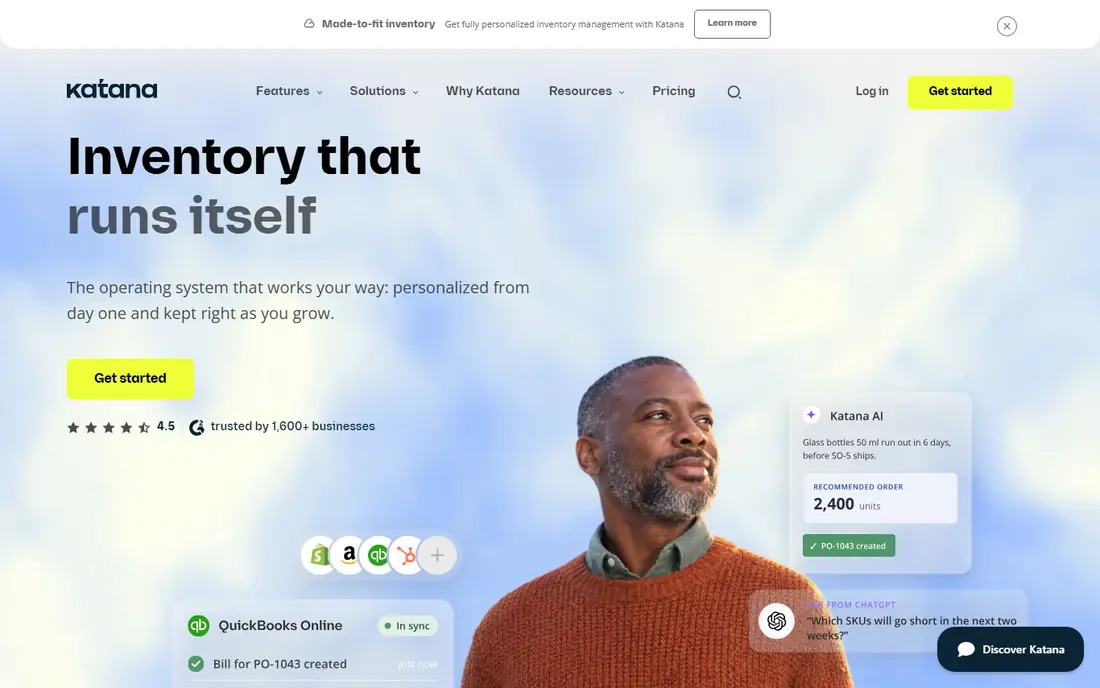
Choose Katana for manufacturers. Integrations with Shopify, WooCommerce, Amazon, QuickBooks, and Xero keep sales and accounting connected. In practice, for makers, though, the production view is the point: Zoho and most inventory tools track finished stock well but deal with raw materials and production poorly, and Katana closes that gap.
In practice, the free plan handles up to 30 SKUs, which lets a small maker test the system on a real product line, and premium plans are custom priced for bigger catalogs. In daily use, Katana is a cloud inventory tool made for product companies that manufacture or assemble their own goods. It handles raw materials, bills of materials, production planning, and finished stock in one flow, so a maker can see what can be built from current materials without a spreadsheet. The starting price for Katana: Free. Katana has a free plan.
Limits to weigh: Manufacturing focus brings complexity for resellers.
- Free plan for up to 30 SKUs
- Manufacturing and production planning
- Premium plans custom priced
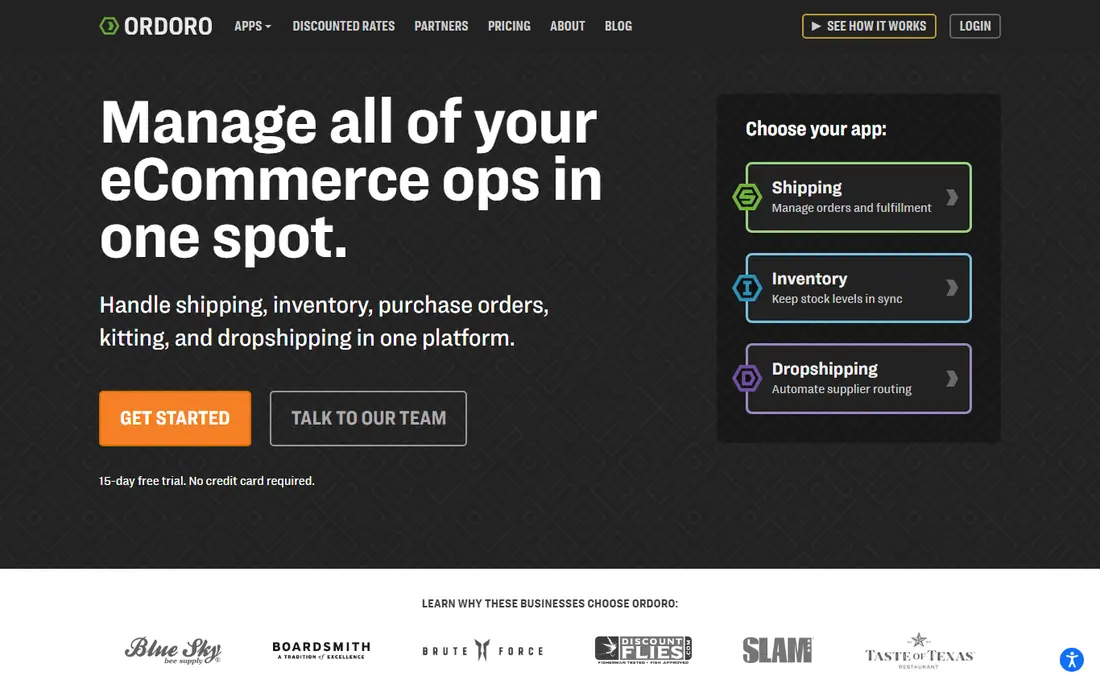
Choose Ordoro for shipping and dropshipping. Guides conflict on Ordoro pricing, with some listing entry plans from $59 a month and others listing inventory plans near $349 a month, so check the current vendor pricing page before budgeting, which is why this article lists the price as See website. Ordoro targets small and mid-size ecommerce sellers that require inventory management and shipping in one place, with dropshipping support for sellers who never hold stock themselves.
For sellers whose workflow centers on shipping and dropshipping, Ordoro spans the job well. The shipping discounts matter more than the subscription line. Shipping discounts, batch label printing, and supplier management handle the daily workflow of a shipping-heavy store, whereas inventory tracking keeps channel stock in sync. Ordoro does not show a starting price in this comparison, so check the vendor site for current pricing. Ordoro has no free plan.
Drawbacks to consider: No free plan.
- Inventory and shipping together
- Dropshipping support
- Pricing guides conflict
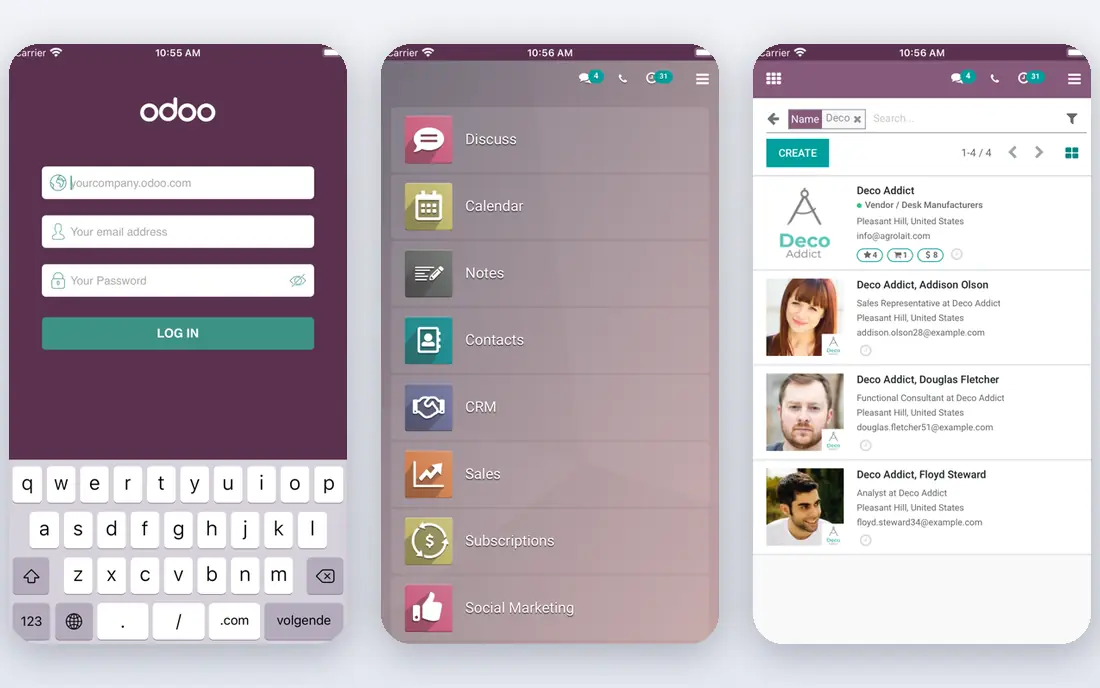
Odoo Inventory is designed for full ERP on a budget. Odoo Inventory is part of the Odoo ERP suite. Its pricing model is unusual: the first app is free for unlimited users, whereas premium plans start at $24.90 per user a month billed yearly in the first year.
More specifically, Inventory features contain double-entry stock tracking, which records every movement in and out, barcode scanning, and multi-warehouse support, and the same system can add accounting, CRM, manufacturing, and ecommerce as the business grows. In daily use, Odoo is feature-rich since it is adaptable, but that adaptability means setup takes longer than a focused inventory tool, and implementation for a multi-module business can cost more than the first year of licenses. The cost is configuration time. Entry price for Odoo Inventory: Free. Free access exists with Odoo Inventory.
Points against: Per-user pricing on premium plans.
Strengths: Barcode support.
- Double-entry inventory tracking
- Free single-app choice
- Configuration takes effort
QuickBooks Commerce was built for QuickBooks accounting users. Plans start at $50 per month for Essentials, with Plus at $80 and Advanced at $150 a month. In daily use, Inventory syncs across sales channels in real time, orders flow into fulfillment.
The accounting side needs no third-party sync tool, since stock, sales, and books live in one Intuit system. More specifically, a private B2B portal lets wholesale customers order at their own prices, which covers the wholesale use case that Zoho takes care of through price lists and a customer portal. The central limit is that the integration advantage only applies to QuickBooks users. In daily use, teams on Xero or another accounting system gain little from QuickBooks Commerce over a standalone tool, and there is no free plan to test it on a small scale. QuickBooks Commerce pricing: $50 per month. QuickBooks Commerce has no free tier.
Trade-offs to know: Advanced plan from $150 a month.
- B2B wholesale portal
- Direct QuickBooks Online integration
- Accounting tie-in only helps QuickBooks users
inFlow Inventory is aimed squarely at B2B wholesalers. Pricing begins at $129 a month, or $99 a month billed yearly on some plans, with a 14-day free trial to test the system on real orders. As for the details, inFlow Inventory is designed for small and mid-size B2B wholesalers, with private customer portals that display each buyer only their own products and prices.
The main drawbacks: No free plan.
That per-customer pricing control is the feature wholesalers actually need, and inFlow pairs it with purchase orders, stock tracking, and integrations with Shopify, Amazon, and QuickBooks. Worth adding: the limits are the lack of a free plan and less multichannel depth than Cin7, so pure retail brands with plenty of channels may prefer a different tool. For wholesalers, though, inFlow structure suits the business: customer-specific pricing, B2B portals, and order workflows aimed at trade buyers instead of retail shoppers. inFlow Inventory cost at the entry level: $129 per month. inFlow Inventory has no free plan.
- 14-day free trial
- Private B2B portals with per-customer prices
- Monthly price higher than Zoho
For scaling multichannel sellers, Cin7 is a natural candidate. It links Amazon, eBay, Shopify, WooCommerce, and other channels with live stock sync, layers on warehouse management with picking and packing workflows, and gives you a B2B portal add-on for wholesale customers. Worth adding: the price and setup effort are the barriers.
Honest limits: High entry price.
With more than 700 integrations, it includes point of sale, shipping, accounting, and marketplace connections that smaller tools manage only through extras. Some older guides still list Cin7 from $299 a month, so treat the $349 figure from the current vendor page as the one to verify at purchase. For brands selling across plenty of channels with wholesale and retail mixed together, Cin7 depth pays for itself in fewer stockouts and less manual reconciliation. The starting price for Cin7: $349 per month. There is no free plan with Cin7.
- B2B portal add-on
- Solid for omnichannel brands
- Implementation takes time
What went into this list
ProMapRanker looked at what each vendor publishes: pricing, plan limits, feature coverage for Zoho Inventory and stated drawbacks. No hands-on testing is claimed. Figures are shown as the vendors publish them. Billing terms, seat minimums and add-ons can change the real cost. Order on the page follows fit for the typical buyer first, then price transparency and free access. Your own requirements should decide the final pick.
A buyer's checklist
- Ask Ordoro for a written quote, since no starting price is shown.
- Look at free plan limits closely: Katana and Odoo Inventory have one, and the caps decide whether it is usable for real work.
- Before choosing Katana, weigh its main limit: premium plans custom priced.
- Test the integrations you rely on with Odoo Inventory before committing; some connectors sit on upper tiers.
- Check how data leaves inFlow Inventory: formats, limits and whether exports are available on every plan.
Frequently asked questions
How are the tools for Zoho Inventory ordered?
Katana sits first and Cin7 last because the order follows typical fit for Zoho Inventory, then price clarity and free access. It is a judgement call, so read each profile for fit and limits.
Which alternative is best for QuickBooks users?
For most readers this guide would start with Katana, built for manufacturers. Ordoro is the alternative for shipping and dropshipping, and Odoo Inventory for full ERP on a budget. The right answer depends on budget and workflow.
Can I try these tools before paying?
Often, yes. Katana and Odoo Inventory have a free plan. Use your own data and a real task during the test, and check what the free tier or trial limits before you rely on it.
Is there a free Zoho Inventory alternative?
Yes. Both handle real inventory work, though Odoo needs configuration time and Katana fits makers best, so free does not mean identical to Zoho free plan.
Do these tools publish their prices?
Not all of them. Ordoro publishes no starting price, so expect a quote request for it. The rest, Katana included, show a starting price, though seats and billing terms still change the final cost.
Is Katana the right pick for everyone comparing Zoho Inventory?
No single tool suits every team. Katana comes first because it fits manufacturers, while Ordoro suits shipping and dropshipping and Odoo Inventory suits full ERP on a budget. Match the tool to your own size, budget and workflow before deciding.
Sources
See where you really rank - block by block
ProMapRanker scans Google Maps across a grid of your service area. Simple monthly plans from $19, white-label on every plan.
Start freeKeep reading
 zoho crm alternatives
Best Zoho CRM Alternatives (2026)
Need Zoho CRM alternatives? We compare 7 tools on cost, free access and who each suits. Every pick gets a straight assessment. Built for quick decisions.
Read → zelle alternatives
Best Zelle Alternatives in 2026
Compare the best Zelle alternatives for sending money to friends, paying sellers and moving funds abroad, with honest notes on fees, speed and safety in 2026.
Read → xcancel alternatives
XCancel Alternatives in 2026
XCancel alternatives compared, with X viewers, front-ends and social clients for reading public posts without an X login, plus stability warnings in 2026.
Read →