 ProMapRanker
8 Best Procurement Software for Municipal Warehouses in 2026

Mid-market teams that want control and budgets · Pricing starts at: $499 a month (billed annually)
Direct answer
Our first pick is Precoro, best for mid-market teams that want control and budgets. Listed starting prices: Precoro from $499 a month, Tradogram from $99 a month and Ramp from $0 per user/month. If your case is different, Tradogram suits small teams that require POs and approvals quick and OpenGov Procurement suits cities and counties running formal solicitations. The other 5 tools in the list cover narrower or pricier cases.
Short on time? The summary and table above give the quick view of 8 procurement software for municipal warehouses, and the profiles that follow give the detail behind each entry.
Key takeaways
- Top of the list is Precoro, which targets mid-market teams that want control and budgets.
- 2 of 8 tools offer a free plan: Tradogram, Ramp.
- One limit worth knowing about Ramp: Procurement is an add-on to Plus or Enterprise.
- Bonfire suits public agencies that require sealed bids and scoring.
- Ramp has the lowest monthly starting price in this list: $0 per user/month.
Quick comparison
| Pick | Great for | Pricing starts at | Free tier | |
|---|---|---|---|---|
| Precoro | Mid-market teams that want control and budgets | $499 a month (billed annually) | Free trial | Visit |
 Tradogram | Small teams that require POs and approvals quick | $99 a month | Yes | Visit |
 OpenGov Procurement | Cities and counties running formal solicitations | Quote only | No | Visit |
 Ramp | Cost-driven teams that want cards plus procurement | $0 per user/month | Yes | Visit |
 Procurify | Expanding teams that want modular purchasing | Quote only | No | Visit |
 Oracle NetSuite | Agencies that want procurement inside an ERP | Quote only | No | Visit |
 SAP Ariba | Enterprises that require sourcing and supplier networks | Quote only | No | Visit |
 Bonfire | Public agencies that require sealed bids and scoring | Quote only | No | Visit |
Procurement Software for Municipal Warehouses, one by one
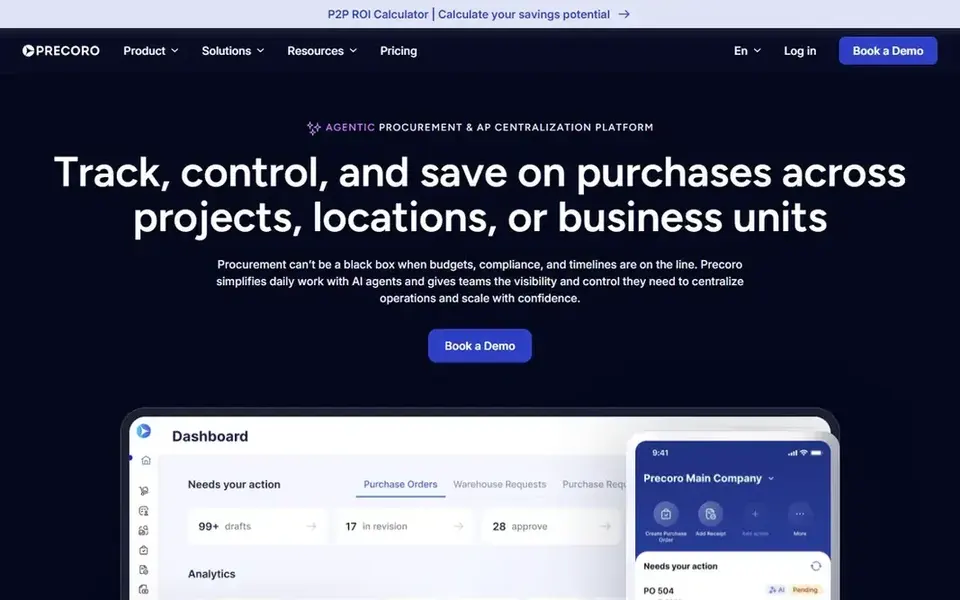
Precoro targets mid-market teams that want control and budgets. The vendor pricing page lists Core from $499 a month and Automation from $999 a month, with Enterprise custom quoted, and implementation usually runs 2 to 8 weeks.
Downsides: Automation plan at $999 a month doubles the bill.
What you pay to start with Precoro: $499 per month. Free plan details: Free trial.
- Published prices with three-way matching
- Or location
- AI invoice capture sits above Core
Tradogram is aimed squarely at small teams that require POs and approvals quick. The Essentials plan costs $99 a month for the first user, or $950.40 a year on annual billing, with a 20 percent discount for annual billing.
The main drawbacks: Requisitions and custom approvals are extras at the entry level.
Tradogram pricing: $99 per month. Tradogram includes a free tier.
- Handles POs, suppliers, invoices, expenses
- Lowest published entry price in this list
- Additional users cost more
For cities and counties running formal solicitations, OpenGov Procurement is a natural candidate. Its procurement module came from the ProcureNow acquisition in 2021.
Solicitation Development assembles compliant RFPs, RFQs, and ITBs automatically, with the agency rules embedded in the document workflow, and an intake module hands department staff a structured, self-guided experience backed by a scope library shared across hundreds of agencies. From a buyer's view, external advisory ranges put usual annual cost near $40,000 to $95,000, and core modules usually go live in 4 to 8 months. OpenGov Procurement sells by quote instead of a published price. No free plan comes with OpenGov Procurement.
Where it falls short: No published prices; every deal is a quote.
- Vendor registration is free
- Designed for local government, with solicitation templates and a shared scope library
- Core modules typically take 4 to 8 months to go live
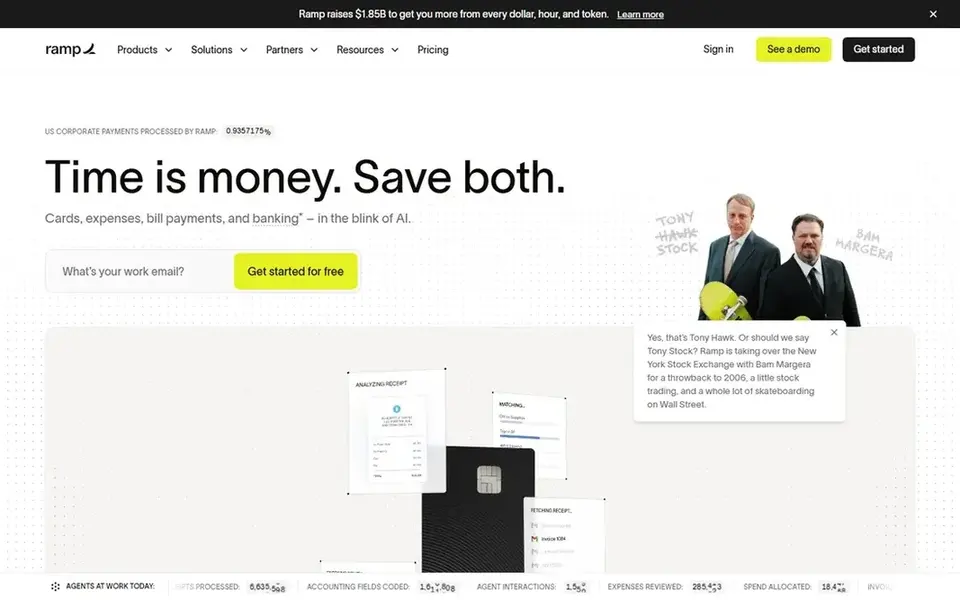
Ramp serves cost-driven teams that want cards plus procurement. The Plus plan costs $15 per user a month and brings custom procurement approvals, multi-entity management, HRIS integrations, and multi-currency bill payments, plus a product fee based on team size that the vendor does not publish.
On top of that, Ramp needs an US-registered corporation or LLC with a $25,000 balance in a linked bank account. So an agency should confirm eligibility before counting on the free level. Ramp pricing: $0 per user/month. You can start on Ramp without paying.
Drawbacks to consider: eligibility rules may exclude some agencies.
- Core system costs nothing per user
- Unlimited cards with receipt matching and accounting sync
- Procurement is an add-on to Plus or Enterprise
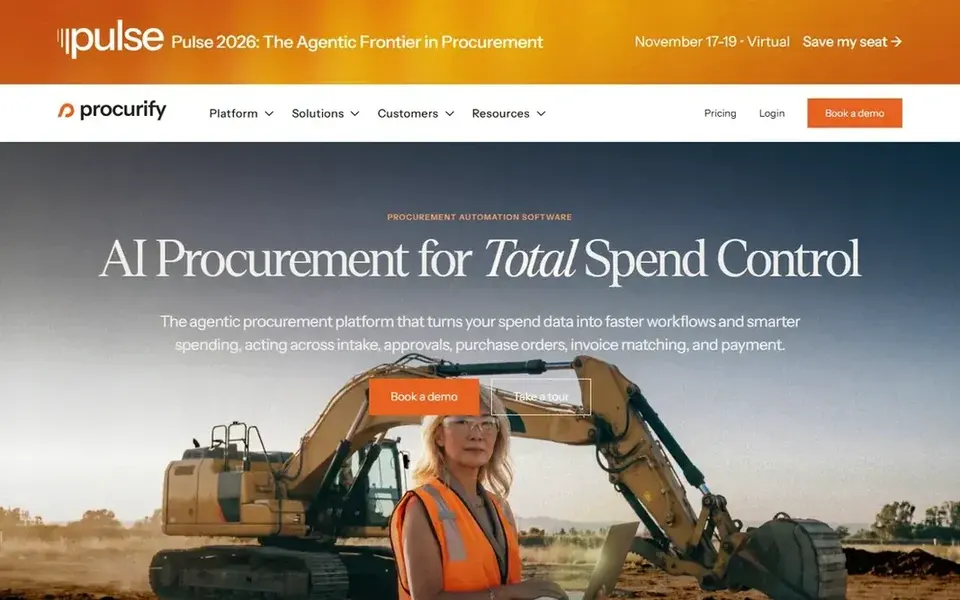
Procurify targets growing teams that want modular purchasing. For a municipal warehouse, the modular shape is the point: a team can buy Purchasing first and add invoice capture later, rather than paying for a full suite on day one.
As for the details, pricing is modular and quote-based: start with Purchasing on the product, then add Accounts Payable or Expense and Card when the team is ready. There is no list price for Procurify, so a quote is the way in. Procurify has no permanent free option.
Trade-offs to know: No published prices at all.
- Start with Purchasing and add AP later
- Unlimited Basic users can request and receive
- Guided Intake and Contracts are extras
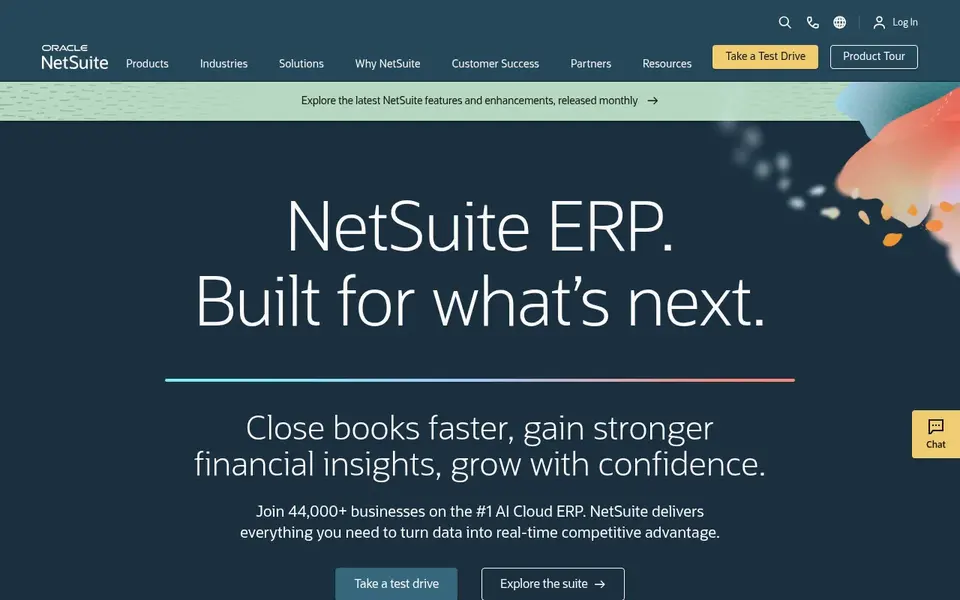
Oracle NetSuite is built with agencies that want procurement inside an ERP in mind. Oracle NetSuite is a cloud ERP that runs finance, inventory, procurement, order management, CRM, and reporting on a single live product. The limit is cost and commitment: the license, the modules, and the implementation add up quick, and every deal is negotiated with Oracle.
Points against: Quote-based with a base fee plus per-user fees.
Beyond that, Procurement sits inside the ERP, so a purchase order, a receipt, a vendor bill. The general ledger all share the same record. Oracle NetSuite sells by quote instead of a published price. There is no free plan with Oracle NetSuite.
- One live product
- Warehouse management
- Implementation is a separate five-figure cost
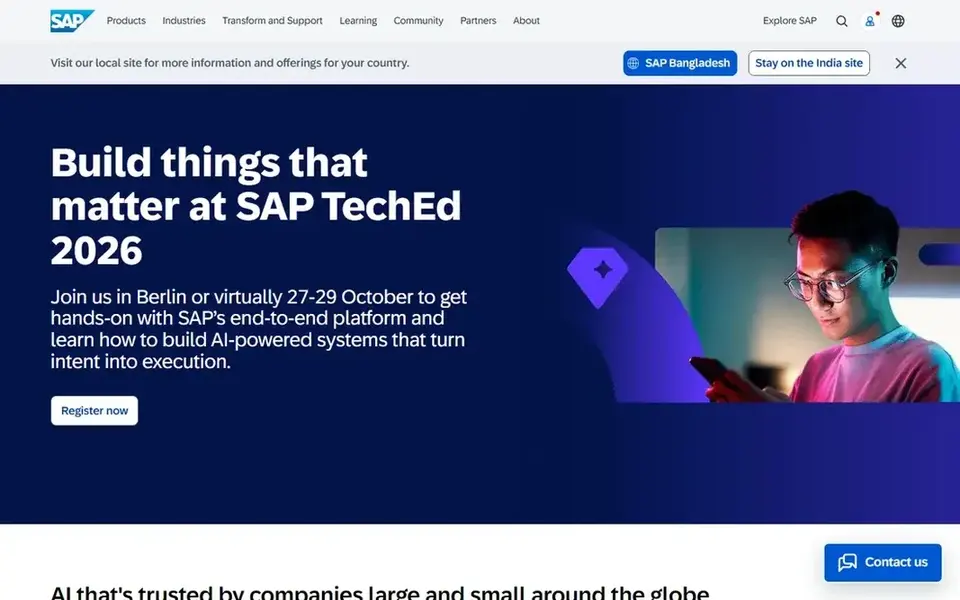
SAP Ariba was built for enterprises that need sourcing and supplier networks. The suite is built for formal, RFP-driven programs with dedicated sourcing teams.
Pricing for SAP Ariba is quote based, so budget talks start with the vendor. SAP Ariba has no free tier.
Limits to weigh: Quote-based with long rollouts.
- Ariba Network links buyers with a huge supplier base
- Capable sourcing and contract tools
- Heavy for a single warehouse
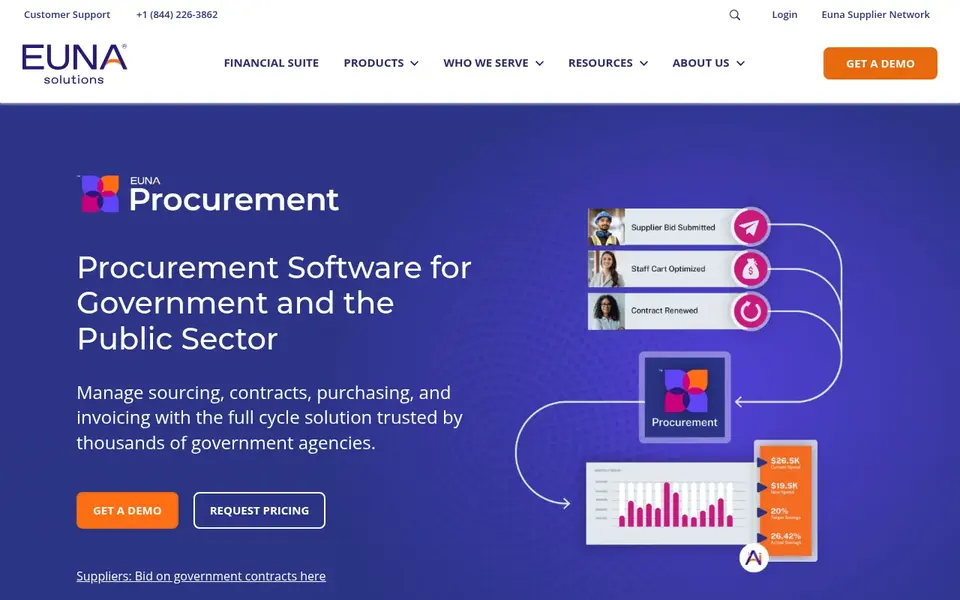
Bonfire is aimed squarely at public agencies that need sealed bids and scoring. It now sells as Euna Procurement within Euna Solutions, after Bonfire, IonWave, EqualLevel, and DemandStar came together.
More specifically, pricing is quote-based, with public contracts showing annual subscriptions often from about $9,000 to $45,000 for plenty of agencies. There is no list price for Bonfire, so a quote is the way in. Bonfire does not include a free plan.
What to check first: POs and invoicing stay in the finance system.
- Sealed bidding with scored
- Supplier registration is free
- No published prices
How the list was put together
The comparison looks at four things: starting price, free access, how well the feature set matches procurement software for municipal warehouses, and the main limit of each tool. Where a vendor does not publish a price, the entry says quote. Where a price depends on seats or billing term, the entry says so. Position on the page reflects fit for a typical buyer first, with price clarity and free access breaking ties. Treat it as a guide, not a ruling.
Things to verify first
- Ask OpenGov Procurement, Procurify, Oracle NetSuite and others for a written quote, since no starting price is shown.
- Look at free plan limits closely: Tradogram and Ramp have one, and the caps decide whether it is usable for real work.
- Run a trial of Precoro with real work before paying for a year; your own workflow is the best test.
- Before choosing Precoro, weigh its main limit: automation plan at $999 a month doubles the bill.
- Check whether the features you need in Tradogram sit on the entry plan or only on higher tiers.
- Price Ramp for your actual team size; headline prices rarely include add-ons or overage.
Frequently asked questions
How are the tools for procurement software for municipal warehouses ordered?
The order follows typical fit for procurement software for municipal warehouses, with Precoro first and Bonfire last, then price clarity and free access. It is editorial judgement, not a score, so another team could rank the tools differently.
Can I try these tools before paying?
Often, yes. Tradogram and Ramp have a free plan and Precoro offers a free trial. Use your own data and a real task during the test, and check what the free tier or trial limits before you rely on it.
Which options for procurement software for municipal warehouses have a free plan?
Tradogram and Ramp offer a free plan in this list. Free plans usually cap users, projects or features, so check the limits on the vendor page. One other tool offers a trial instead.
Do these tools publish their prices?
Not all of them. OpenGov Procurement, Procurify, Oracle NetSuite and others publish no starting price, so expect a quote request for those. The rest, Precoro included, show a starting price, though seats and billing terms still change the final cost.
Sources
See where you really rank - block by block
ProMapRanker scans Google Maps across a grid of your service area. Simple monthly plans from $19, white-label on every plan.
Start freeBrowse all guides
← Best Platform for Data Ingestion from Any Source in 2026Best Route Analytics Software for Small Fleets in 2026 →
 best metadata software
Best Metadata Software: 2026 Prices and Picks
Best metadata software: 6 contenders ranked by fit, with entry costs and free tiers. Strengths and weak spots are spelled out. Pricing and limits included.
Read → best legal matter tracking software for mid size law firms
Best Legal Matter Tracking Software for Mid Size Law Firms (2026)
Best legal matter tracking software for mid size law firms: 7 tools compared on price, free plans and fit. Each entry gets a plain verdict. Pick by budget.
Read → best legal analytics software
Top 6 Legal Analytics Software, Compared on Price (2026)
Compare 6 picks for the best legal analytics software, with prices, free plans and who each fits. Each entry gets a plain verdict. Narrow your shortlist.
Read → best robotics companies
Best Robotics Companies in 2026
We compare the best robotics companies for factories, warehouses, homes and hospitals, covering industrial robots, cobots and humanoids in 2026 before you buy.
Read → google analytics alternatives
Google Analytics Alternatives in 2026
Explore Google Analytics alternatives that respect privacy and simplify reporting. We compare 8 tools on price, features, and data ownership today. Start today.
Read → softr alternatives
Softr Alternatives in 2026
We compared the best softr alternatives for portals, internal tools and client apps, with current prices, data sources and the limits that change the real cost.
Read →More in Data & Analytics · All guides A to Z by date · Latest guides