 ProMapRanker
Google Analytics Alternatives in 2026

Key takeaways
- Matomo is the closest full replacement for a traditional analytics suite, and its free self-hosted version gives you full data ownership.
- Plausible and Fathom are our picks for site owners who want a clean dashboard without cookies, consent banners, or a steep learning curve.
- PostHog and Mixpanel suit product teams that need funnels, retention, and user-level behavior, not just page traffic.
- Umami and Simple Analytics are strong low-cost options for small sites that want simple, privacy-friendly stats.
- Clicky remains a good real-time option for owners who like watching live visitors and simple heatmaps.
Quick comparison
| Pick | Great for | Pricing starts at | Free tier | |
|---|---|---|---|---|
 Matomo | Full analytics with data ownership | Free | Yes | Visit |
 Plausible | Simple privacy-friendly traffic reports | $9 per month | Free trial | Visit |
 Fathom | Agencies managing many sites | $15 per month | Free trial | Visit |
 Simple Analytics | Minimal cookieless reporting | See website | Yes | Visit |
 Umami | Developers who want lightweight stats | Free | Yes | Visit |
 Clicky | Real-time visitor tracking | $9.99 per month | Yes | Visit |
 PostHog | Product analytics plus web analytics | Free | Yes | Visit |
 Mixpanel | Funnels and retention for apps | Free | Yes | Visit |
The best Google Analytics alternatives
Many site owners leave traditional analytics for one of three reasons: privacy rules, a dashboard that feels too complex, or a wish to own their data. The tools below cover all three reasons, but they are not interchangeable. Some count page traffic only. Others track how users move through a product. Pick based on the question you need answered each week.
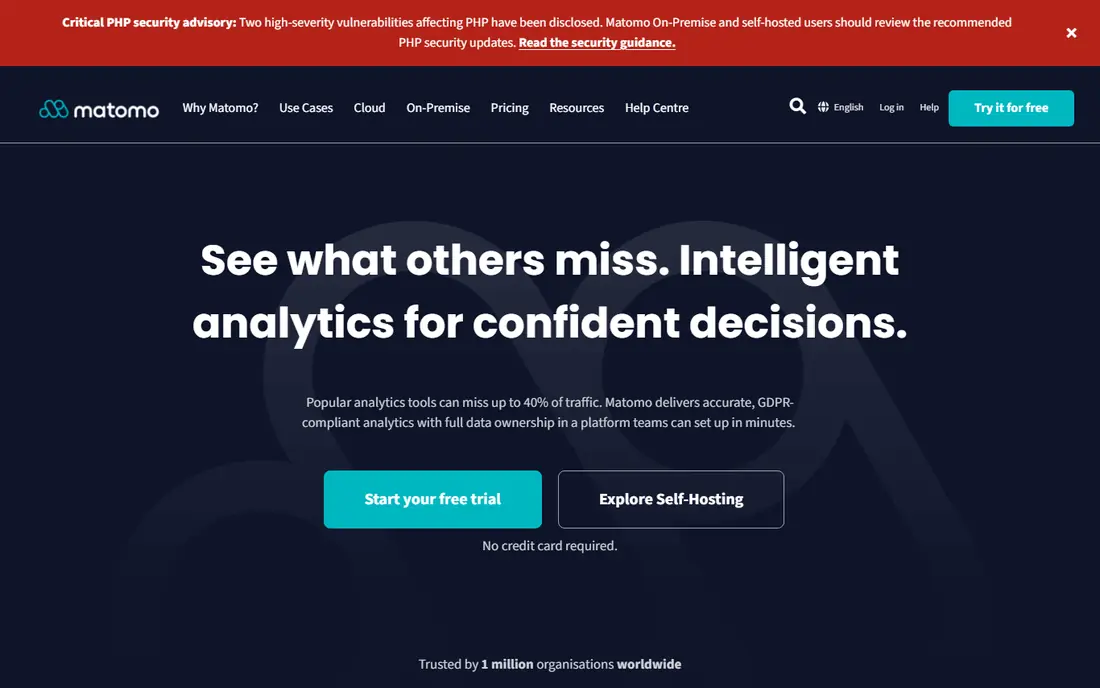
Matomo is the most complete alternative in this list. It covers visitors, pages, referrers, goals, ecommerce, and funnels, and it can be configured to avoid cookies when that fits your privacy approach. The On-Premise version is free and open source, which means you host it yourself and keep the raw data. A paid cloud version removes the server work for a monthly fee.
That completeness has a cost. Self-hosting means you handle installation, updates, and backups, and the interface has more settings than a simple traffic tool. For a business with privacy duties, a European audience, or a wish to own its data outright, Matomo is worth that effort. For a small blog that only needs visitor counts, a simpler tool will feel faster.
- Full suite close to a traditional analytics tool
- Self-hosted version is free
- Data stays under your control
- Self-hosting needs server care and updates
- The full feature set takes time to learn
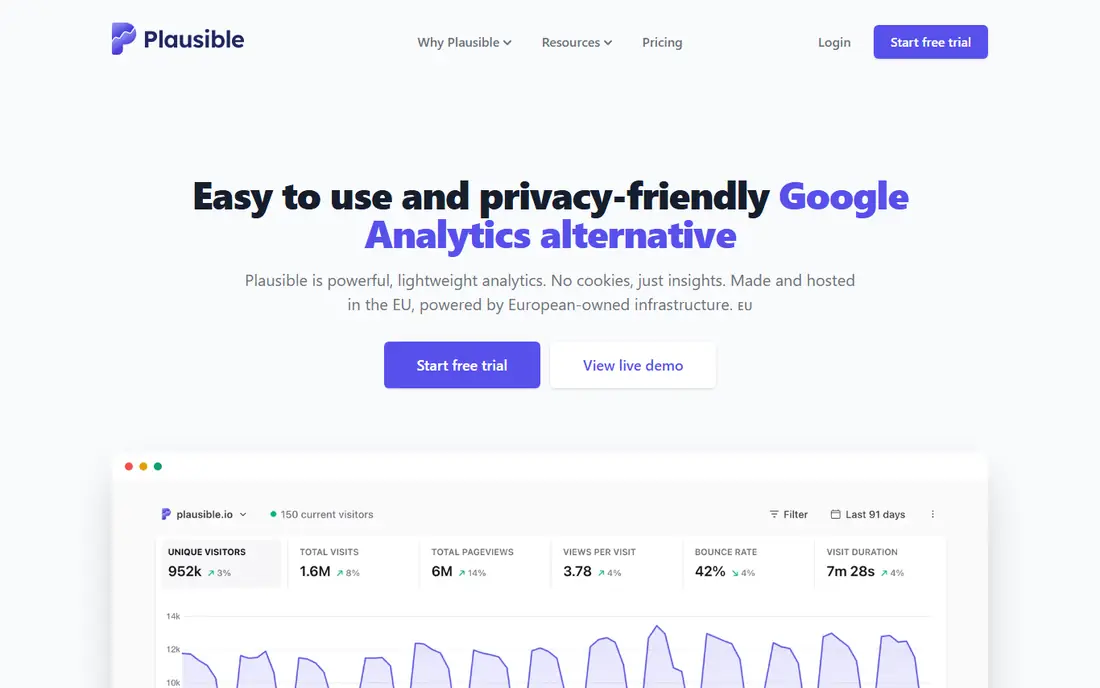
Plausible answers the basic traffic questions on one page: visitors, top pages, referrers, devices, and countries. Its script sets no cookies by default and does not collect personal data, which helps many site owners avoid a consent banner, though your own legal duties still depend on your location and setup. Plans start at $9 per month for 10,000 pageviews, with a 30-day trial, and a free self-hosted Community Edition exists for technical owners.
The limit is depth. Plausible does not track individual users across a product, and it does not offer session replay or complex funnels. That is a fair trade for most blogs, marketing sites, and small stores, where the weekly question is simply which pages and sources bring visitors. If you need product behavior, pair Plausible with a product tool or pick PostHog instead.
- Clean single-page dashboard
- No cookies by default
- Lightweight script that loads fast
- No user-level funnels or session replay
- Paid plans scale with pageviews
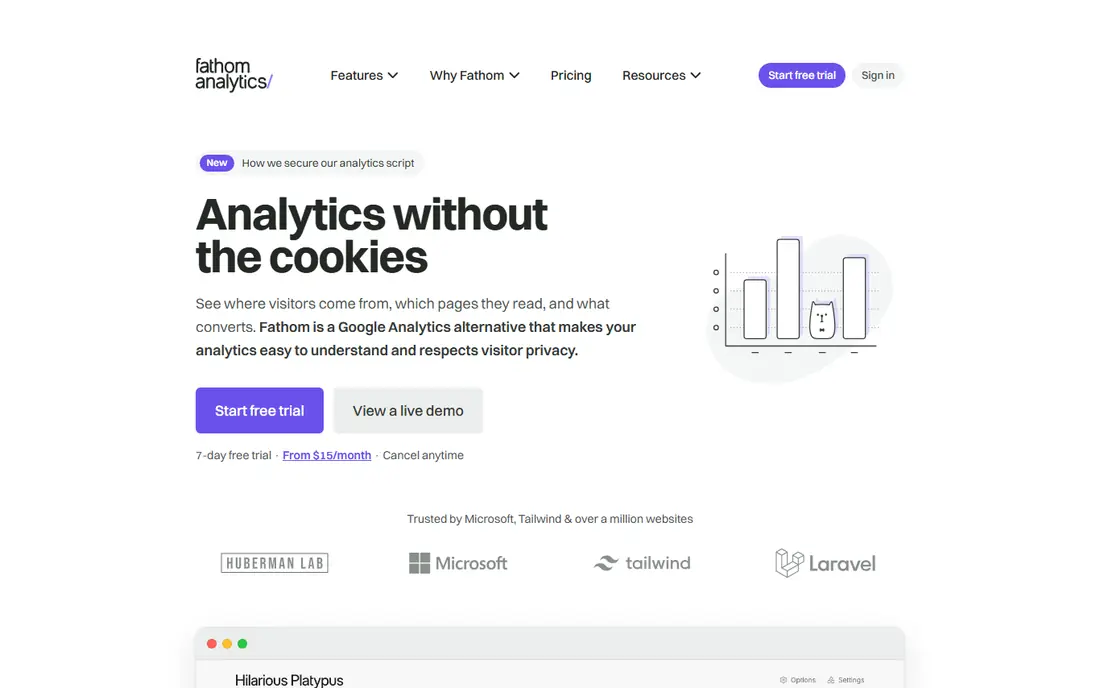
Fathom is built for owners who want a quick, honest traffic report without a long setup. Its entry plan costs $15 per month for up to 100,000 pageviews and includes 50 sites, which makes it good value for an agency or an owner with several small sites. The dashboard is simple, the script is lightweight, and no cookies are set by default.
The trial is short, at 7 days, so test it with a real site before paying. Like Plausible, Fathom focuses on traffic rather than user-level product behavior, so it will not replace a funnel tool for a software product. For content sites and marketing sites, that focus is a strength, because the report you check each week stays short and readable.
- Simple dashboard with many sites included
- No cookies by default
- Fast and easy to set up
- No free plan, only a 7-day trial
- Limited depth for product analytics
Simple Analytics takes the privacy-first idea to its simplest form. It avoids cookies, avoids collecting personal data, and shows the core traffic numbers without a maze of settings. A free tier covers basic use with a limited history, which makes it easy to test on a small site before paying for a longer history and higher limits.
The trade-off is scale and depth. Pricing moves with your traffic, so a growing site should check the slider on the pricing page rather than budgeting from a single headline number. Advanced goals, funnels, and product behavior are thinner here than in Matomo or PostHog. For a small site that wants the most privacy-conscious hosted option, Simple Analytics is a good fit.
- Very privacy-focused approach
- Clean reports
- Free tier for basic use
- Pricing is slider-based, so the cost depends on traffic
- Fewer advanced features than Matomo
Umami is a favorite among developers because it is simple to install, light on the page, and open source. The hosted Hobby plan is free for one site with a monthly event limit and a limited history, while paid cloud plans raise those limits. Self-hosting removes the cloud limits and keeps the data on your own server, which appeals to owners who want full control without a large suite.
Umami does not try to match Matomo feature for feature. It covers visitors, pages, referrers, events, and basic breakdowns, and it does that well. If you run a personal site, a docs site, or a small product site and you like clean tools, Umami is an excellent low-cost choice. If you need ecommerce reporting or deep goals, Matomo is the stronger pick.
- Lightweight and open source
- Self-hosting is free
- Clean modern dashboard
- Cloud limits and history depend on plan
- Fewer built-in marketing features than Matomo
Clicky has been around for years, and its strength is still real-time data. You can watch visitors arrive, see their pages and actions as they happen, and check uptime and heatmaps on higher plans. A free tier covers a small number of daily views, while paid plans start at $9.99 per month. That makes Clicky easy to try on a low-traffic site.
The interface looks older than Plausible or Fathom, and privacy is less central to its pitch, so owners with strict privacy duties should read its data practices carefully. For an owner who likes to watch live traffic during a launch, a sale, or a press mention, Clicky remains a practical and affordable tool.
- Strong real-time visitor view
- Heatmaps on higher plans
- Free tier for small sites
- Interface feels older than newer tools
- Privacy features are less central than Plausible or Fathom
PostHog is the pick when the question is not just how many people visited, but what they did inside a product. It covers web analytics, funnels, retention, session replay, surveys, feature flags, and experiments, with a free tier that includes a monthly event allowance. That breadth lets a startup replace several tools with one, and a hobby self-hosting option exists for technical teams.
Breadth brings complexity. Setting up events, funnels, and flags takes more planning than dropping a traffic script on a blog, and usage-based pricing means a traffic spike can raise the bill. For a software product or a growing app, PostHog is the strongest all-in option here. For a simple blog, it is more tool than needed.
- Web analytics, product analytics, replay, and feature flags in one tool
- Generous free tier
- Self-hosting option
- Broader scope means a longer setup
- Usage-based pricing needs monitoring as traffic grows
Mixpanel is built around events and users, not pages. You define actions like sign up, upgrade, or complete checkout, then study funnels, retention, and cohorts to see where users drop off. The free tier includes a large monthly event allowance, which lets a small product team learn the tool before paying for higher usage.
That focus is also its limit. Mixpanel is not the simplest way to count blog visitors, and it asks you to plan your events before the reports become useful. For an app or SaaS product where retention and conversion matter more than raw pageviews, Mixpanel is one of the best choices available. For a content site, Plausible or Fathom will feel simpler.
- Strong funnels, retention, and cohort reports
- Free tier with a large event allowance
- Good for apps and SaaS
- Focused on user behavior, not simple page traffic
- Learning curve for event design
How we picked these
We compared official pricing pages, feature lists, and public reviews for analytics tools that work as a real replacement for traditional web analytics, and we kept only tools that exist and work today. We favored tools that cover the main use cases: simple traffic, privacy-first reporting, full-suite analytics, and product behavior. Prices quoted here are entry prices found in October 2026, and they can change, so check the vendor pricing page before you buy. We did not claim hands-on testing we did not do; our comparison rests on vendor documentation, pricing, and public user feedback.
How to choose the right analytics tool
Start with the decision the data must support. A blog owner needs sources and top pages. A store owner needs product views, checkout steps, and referrers. A product team needs funnels and retention. Write down the three reports you will check every week, then pick the tool that shows all three without a workaround. A tool that answers a question you never ask is wasted money, no matter how good its feature list looks.
Next, settle the privacy and ownership question before you install anything. Decide whether you need cookieless tracking, data hosted in a specific region, or data on your own server. That choice narrows the list fast: Plausible, Fathom, and Simple Analytics suit cookieless hosted use, while Matomo and Umami suit self-hosting. Check your consent and privacy duties with whoever handles compliance for your business, since a tool alone does not settle them.
Keep migration simple
Run the new tool alongside your old analytics for a few weeks if you can, so you can compare numbers before you switch fully. Traffic counts differ between tools because of how each one handles bots, cookies, and privacy settings, so a small gap is normal. Keep your old data export if you may need it later, and note the date you switched so future comparisons stay honest.
Watch costs as traffic grows
Several tools here price by pageviews or events, so a successful post or campaign can push you into a higher tier. Check the next tier price, not just the entry price, and set a reminder to review the plan each quarter. A free tier is a good test, but it is not a long-term plan for a growing site.
Frequently asked questions
What are the best free alternatives to Google Analytics?
Matomo self-hosted, Umami, PostHog, and Mixpanel all offer free tiers or free self-hosting, and Clicky and Simple Analytics offer limited free plans. The best free choice depends on your needs: Matomo for a full suite, Umami for simple self-hosted stats, and PostHog or Mixpanel for product behavior. Check event and pageview limits, since free tiers cap usage.
What is the best Google Analytics 4 alternative for privacy?
Plausible, Fathom, and Simple Analytics are the strongest privacy-first choices here, because their default scripts set no cookies and avoid collecting personal data. Matomo can also be configured for privacy-first use, and self-hosting gives you the most control. Your consent duties still depend on your location and setup, so check them separately.
Are there alternatives for Google Analytics 4 that are open source?
Yes. Matomo and Umami are open source and can be self-hosted for free, and Plausible offers an open source Community Edition for self-hosting. Open source matters when you want to inspect the code, host the data yourself, or avoid vendor lock-in. Self-hosting still needs server care, so weigh that cost against a paid cloud plan.
What are the best alternatives to Google Analytics for a small blog?
Plausible and Fathom are the best small-blog picks, because their dashboards show the key numbers on one page without a long setup. Umami is a good free option for a technical owner, and Simple Analytics suits a blog with strict privacy needs. A small blog rarely needs funnels or session replay, so a simple traffic tool is enough.
Which analytics alternatives support funnels and retention?
PostHog and Mixpanel are the strongest funnel and retention tools here, with Matomo offering goals and funnels in a more traditional analytics suite. Plausible and Fathom focus on traffic and do not offer the same user-level funnel depth. If funnels are your main need, start with PostHog or Mixpanel and plan your events first.
How do I switch from Google Analytics to a new tool?
Install the new tracking script, run both tools for a few weeks, and compare the key numbers before you remove the old script. Export any old reports you may need, since historical data does not move automatically. Note the switch date, and expect small count differences, because tools handle bots and privacy settings differently.
Sources
See where you really rank - block by block
ProMapRanker scans Google Maps across a grid of your service area. Simple monthly plans from $19, white-label on every plan.
Start freeKeep reading
 zeffy payment processor stripe alternatives
Zeffy and Stripe Alternatives for Nonprofits in 2026
Explore zeffy payment processor stripe alternatives for nonprofits. We compare 8 fundraising platforms on fees, donor tools, and nonprofit focus. Check fees.
Read → workday alternatives
Workday Alternatives in 2026
Workday alternatives compared: we review 8 HR and payroll platforms that replace Workday, with pricing, strengths and honest limits for each team size.
Read → what's the best weather app
What's the Best Weather App in 2026
Wondering what's the best weather app? We compare 10 free and paid apps for forecasts, radar, alerts, and Colorado mountain weather for everyday and storm use.
Read →