 ProMapRanker
Best Platforms for Growth Engineering in GTM in 2026

Key takeaways
- Clay is the central workbench for many growth engineering teams, thanks to enrichment waterfalls and workflow automation.
- Apollo, ZoomInfo, and HubSpot cover prospecting, data, and CRM, but they play different roles in a go-to-market stack.
- Mutiny, Warmly, and Pocus suit website personalization, visitor identification, and product led sales signals.
- HockeyStack suits teams that need full funnel attribution, while n8n suits technical teams that want to build custom workflows.
- Credit and seat pricing means the headline plan price rarely equals the total cost, so budget for data and automation usage.
Quick comparison
| Pick | Great for | Pricing starts at | Free tier | |
|---|---|---|---|---|
 Clay | Enrichment and GTM workflows | $185 per month | Yes | Visit |
 Apollo.io | Prospecting and outreach in one place | $49 per user per month | Yes | Visit |
 HubSpot Sales Hub | CRM led go-to-market teams | See website | Yes | Visit |
 ZoomInfo | Enterprise B2B data and intent | See website | No | Visit |
 Mutiny | Website personalization for B2B | See website | No | Visit |
 Warmly | Visitor identification and engagement | See website | No | Visit |
 HockeyStack | Full funnel attribution | See website | No | Visit |
 Pocus | Product led sales signals | See website | No | Visit |
The best platforms for growth engineering in GTM
This article angles plainly as platforms and tools for growth engineering in go-to-market work: the systems growth engineers use to find accounts, enrich data, run experiments, and turn signals into pipeline. It is based on publicly reported factors, not a verified ranking, and no scores are claimed here.
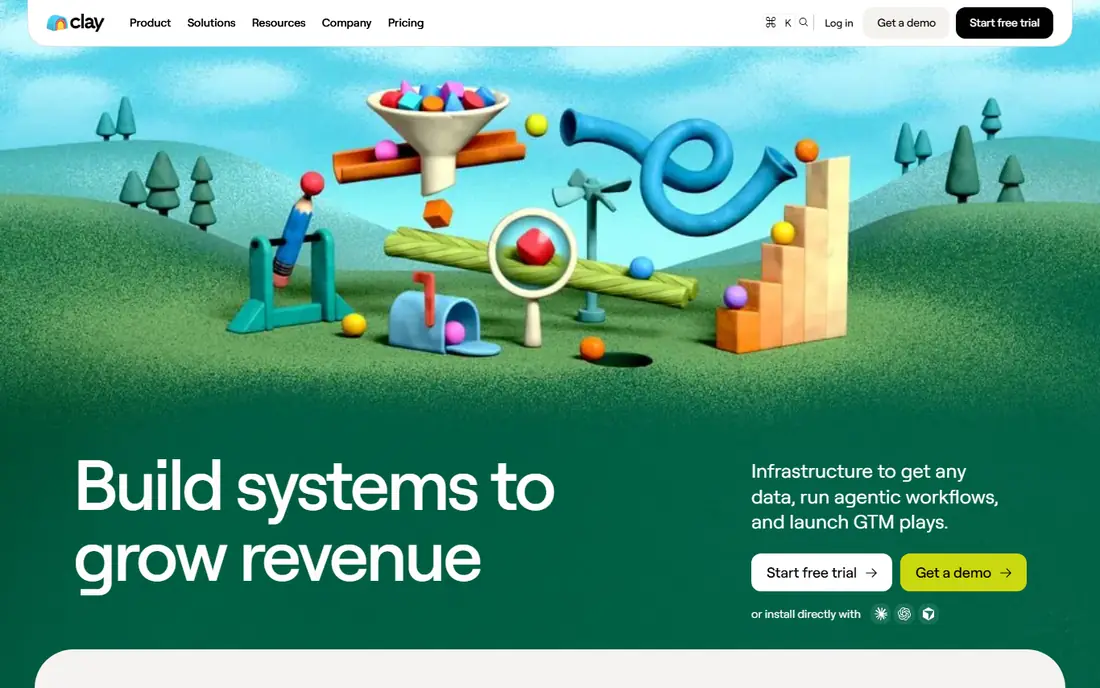
Clay is the tool most often named at the centre of a growth engineering stack. It lets teams build tables that pull data from many providers in a waterfall, so if one source misses an email or data point, the next source tries. AI agents can research companies, score accounts, and draft personalization, which turns a manual list build into a repeatable workflow.
The catch is cost and complexity. Data credits and automation actions are metered, failed lookups can still burn credits, and building good workflows takes a skilled operator. Clay fits RevOps and growth teams that will run it daily and want full control over data and plays.
- Waterfall enrichment from many providers
- Workflow automation
- AI research agents
- Credit costs add up
- Setup needs skill
- CRM sync sits in higher tiers
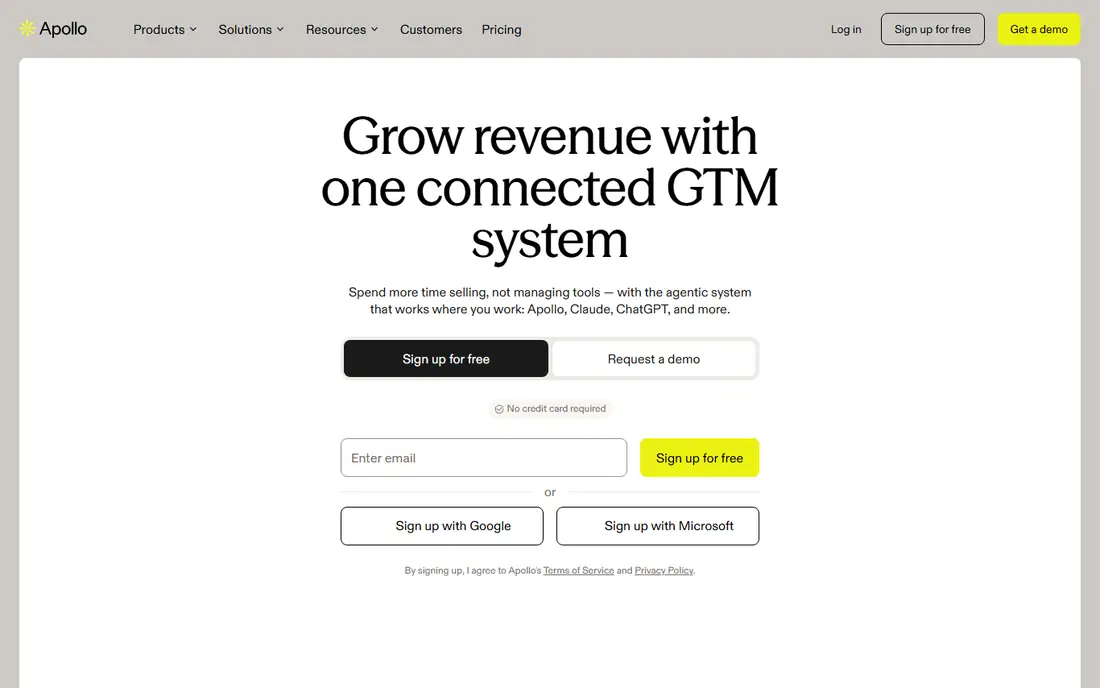
Apollo.io combines a B2B contact database with prospecting, sequences, and basic CRM features, which suits smaller sales teams that want one tool for finding and contacting buyers. Its free plan lets a team test search and outreach before paying, and its paid plans add more credits, sequences, and integrations. For many startups, Apollo is the first growth tool they buy.
Data quality is not uniform across industries and regions, so test your target segments before committing. Higher tiers also include the features larger teams need, so the starting price is a floor. Apollo fits small and mid-size teams that want prospecting and outreach together.
- Large contact database
- Prospecting plus sequences
- Free plan to start
- Data quality varies by segment
- Higher tiers needed for advanced features
- Credit limits apply

HubSpot Sales Hub suits growth teams that want a CRM at the centre, with prospecting, sequences, and reporting connected to marketing and service data. Its free CRM lowers the barrier to starting, and growth engineers can build workflows, lists, and reports without stitching several systems together. Integrations with Clay, Apollo, and other tools also help it sit in a larger stack.
Costs rise with seats, contacts, and hub combinations, so check the exact Sales Hub tier against your team size. HubSpot fits marketing led and sales led teams that want one system of record, rather than a pure data or automation tool alone.
- Free CRM foundation
- Sales, marketing, and service in one system
- Many integrations
- Paid seats and hubs rise in cost
- Advanced automation needs higher tiers
- Pricing is tiered
ZoomInfo remains the enterprise incumbent for B2B data, intent signals, and workflow tools. Large sales teams use it to build account lists, spot buying signals, and route work to reps, with data depth that smaller databases struggle to match. Its platform also covers engagement and orchestration for bigger go-to-market programs.
Pricing is quoted and contracts are often large, so ZoomInfo fits enterprises with dedicated RevOps and sales teams. Smaller companies will usually get better value from Apollo or Clay, unless they need ZoomInfo specific intent data at scale. Ask for a trial on your exact target accounts before signing.
- Very large B2B database
- Intent and technographic signals
- Enterprise workflow breadth
- Quote only pricing
- Contracts can be large
- Smaller teams may find it heavy
Mutiny helps B2B teams personalise website pages for different visitor segments, such as industry, company size, or campaign source. Growth engineers use it to run experiments on headlines, proof points, and calls to action, turning anonymous traffic into more demo requests. Its segment and experiment tools suit teams that already get meaningful website traffic.
Personalization needs traffic to produce reliable test results, so low traffic sites will learn slowly. Pricing is quoted, and setup needs both marketing and engineering input. Mutiny fits B2B companies with steady website traffic that want to improve conversion, not just generate more top of funnel leads.
- B2B website personalization
- Audience segments
- Experiment and test tools
- Quote based pricing
- Needs website traffic to test well
- Setup needs marketing and engineering time
Warmly identifies anonymous website visitors and helps teams engage them with AI chat and automated sequences, turning traffic that would otherwise leave into pipeline. Growth teams use it to spot in market accounts early, route them to reps, and start outreach while intent is fresh. That speed matters when competitors chase the same accounts.
Identification is not perfect, and rates vary by traffic source and company size. Warmly also needs CRM and outreach connections to turn identified visitors into meetings, so budget for that integration work. It fits B2B teams with website traffic that want faster account identification and engagement.
- Anonymous visitor identification
- AI chat engagement
- Automated sequences
- Pricing needs a quote
- Identification rates vary
- Needs CRM and outreach setup to convert
HockeyStack gives growth teams a full funnel view, connecting website visits, ad touches, outreach, and CRM pipeline so teams can see which channels and campaigns actually create revenue. That attribution view helps growth engineers shift budget from vanity metrics to programs that produce pipeline. Its B2B focus suits companies with longer sales cycles and multiple touchpoints.
Attribution only works with clean data, so CRM hygiene, ad connections, and consistent campaign naming matter. Pricing is quoted, and setup takes data work before reports are trustworthy. HockeyStack fits growth teams that already run multi-channel programs and need to prove what works.
- Full funnel journey and attribution
- Multi-touch reporting
- B2B focused analytics
- Quote based pricing
- Needs clean CRM and ad data
- Setup takes data work
Pocus helps product led companies turn product usage into sales action, scoring accounts based on signals such as team invites, feature use, and usage growth. Growth engineers build playbooks that alert reps when an account looks ready for a sales conversation, rather than waiting for a demo form. That approach suits SaaS companies with a free or trial product tier.
Pocus needs product data wired in correctly, which takes engineering time, and pricing is quoted. It fits product led SaaS teams with enough usage data to score accounts meaningfully, not early startups with only a handful of users.
- Product usage signals
- Account scoring
- Sales playbooks from product data
- Needs product data connections
- Pricing quoted
- Smaller product led teams may find it heavy
How we picked these
We compared vendor product pages, public pricing, and go-to-market stack guides from 2026, and we favoured tools with distinct growth engineering roles: data and workflows, prospecting, CRM, personalization, visitor identification, attribution, and product signals. Where pricing is quoted, we marked it as See website rather than inventing a figure.
How to build a growth engineering stack
Start with data quality, not tools
Clean account and contact data decides whether any workflow works. Test enrichment on your real target accounts, check bounce rates, and agree on scoring rules before buying more tools. A new platform on bad data only automates bad outreach faster.
Pick one workbench, then add specialists
Most teams start with Clay or a CRM as the workbench, then add a specialist for personalization, attribution, or product signals when a clear gap appears. Adding five tools at once creates integration debt and unclear ownership, so add one tool per proven bottleneck.
Measure experiments, not activity
Track meetings, pipeline, and revenue per experiment, not just emails sent or accounts enriched. Growth engineering earns its budget when experiments produce pipeline, so set a baseline, run one change at a time, and keep what works.
Frequently asked questions
What is the best growth engineering software for GTM?
The best growth engineering software for GTM depends on the bottleneck. Clay suits data and workflow building, Apollo suits prospecting, HubSpot suits CRM led teams, and Mutiny, Warmly, HockeyStack, and Pocus suit personalization, visitor identification, attribution, and product signals.
What does a GTM engineer actually do?
A GTM engineer builds systems that find accounts, enrich data, score intent, automate outreach, and route pipeline to sales. The role blends RevOps, data work, and experimentation, rather than manual list building or cold calling alone.
Is Clay worth the cost for a small team?
Clay can be worth it if a team runs enrichment and outreach workflows daily and can manage credit usage. Smaller teams with simple prospecting needs may start with Apollo or HubSpot and add Clay when custom data plays become a bottleneck.
How much does growth engineering software cost?
Clay starts at $185 per month on its Launch plan, Apollo starts at $49 per user per month, and ZoomInfo, Mutiny, Warmly, HockeyStack, and Pocus are quoted per deal. Credit, seat, and data usage usually add to the headline price.
Do I need all of these tools?
No. Most teams use a workbench such as Clay or HubSpot, a prospecting source such as Apollo or ZoomInfo, and one specialist tool for their main bottleneck. Start with the bottleneck, prove a result, then expand.
Sources
See where you really rank - block by block
ProMapRanker scans Google Maps across a grid of your service area. Simple monthly plans from $19, white-label on every plan.
Start freeKeep reading
 wpforms alternatives
Best WPForms Alternatives in 2026
We compare 9 wpforms alternatives for WordPress forms, with free and paid options, current pricing notes, and honest limits for small business sites in 2026.
Read → windows task scheduler alternatives
Best Windows Task Scheduler Alternatives in 2026
Looking for Windows Task Scheduler alternatives? We compare 9 schedulers for Windows and cross-platform work, from free tools to enterprise automation.
Read → which ai video service is best
Which AI Video Service Is Best in 2026
which ai video service is best? We compare 10 legitimate AI video services on price, avatars, editing and output quality to help you pick the right tool.
Read →