 ProMapRanker
Best Platform for Content for Retail in 2026

Key takeaways
- For retail teams, this article means content marketing and content creation platforms suited to shops, brands, and ecommerce sellers.
- Retail content runs on seasons, drops, and promotions, so calendars, templates, and fast social publishing matter more than long research reports.
- Canva and Later cover daily visuals and social posts at a low cost, while StoryChief ties blog, social, and email together.
- HubSpot Content Hub fits larger retailers that already use HubSpot for CRM and ecommerce marketing, but it is more than a small shop needs.
- Semrush helps retailers find product and category search terms, but it should support a content plan, not replace product photography and real store stories.
Quick comparison
| Pick | Great for | Pricing starts at | Free tier | |
|---|---|---|---|---|
 Canva | product visuals and lookbooks | $12.99 per month | Yes | Visit |
 Later | social planning for shops and brands | See website | Yes | Visit |
 StoryChief | blog, social, and email from one editor | $22 per month | Free trial | Visit |
 HubSpot Content Hub | larger retailers on HubSpot | See website | Yes | Visit |
 Semrush | product and category search research | $139.95 per month | Yes | Visit |
 CoSchedule | seasonal campaign calendars | $29 per month | Free trial | Visit |
 Contently | brand stories from vetted writers | See website | No | Visit |
 ClearVoice | writers for brand and product content | See website | No | Visit |
The best platforms for content for retail
We read this topic plainly as content marketing and content creation platforms suited to retail businesses. That means tools that help a shop or brand plan seasonal campaigns, create product visuals and stories, publish to a website and social channels, and promote offers without needing a large agency team.
These eight platforms cover the retail content workflow, from product visuals to seasonal campaigns. Some focus on social, some on blog and email, and some on writer capacity, so a retailer can start with a visual tool plus a scheduling tool and add research or managed writing later.
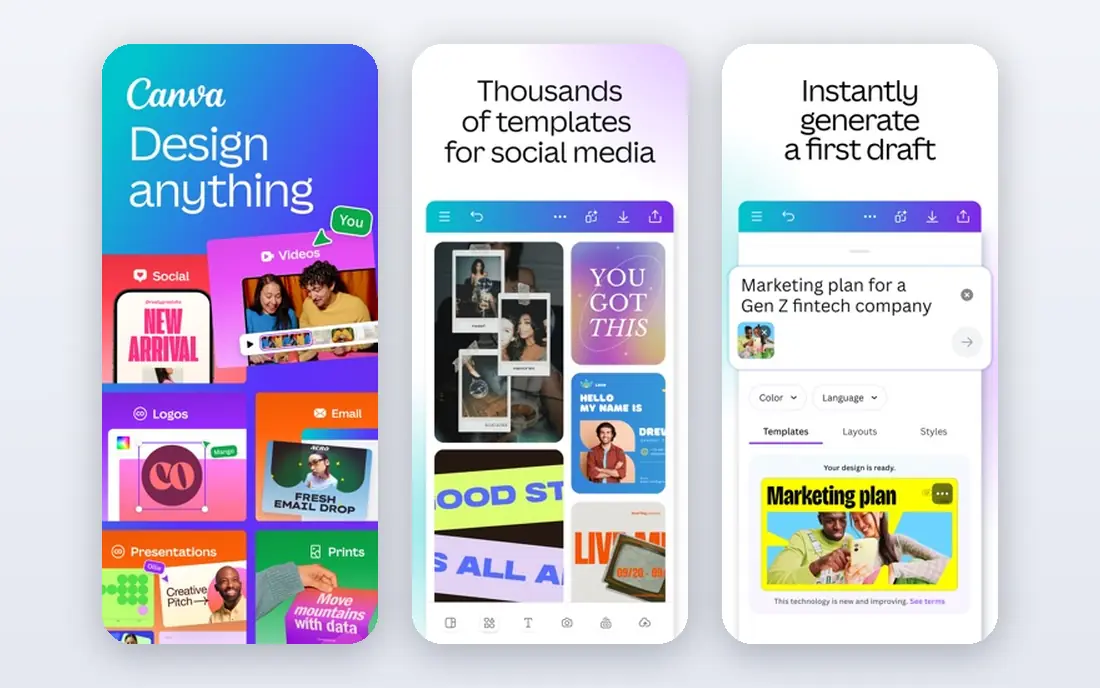
Canva is the daily workhorse for retail content, because product graphics, sale banners, lookbooks, and social posts can all be made from templates without a designer on staff. The free plan covers many templates, while Pro at $12.99 per month adds brand kits, background removal, and more assets, which help a shop keep colors and fonts consistent across channels. That consistency matters when a customer sees the same offer on Instagram, email, and a store website.
The catch is originality. Templates used by many other shops can make a brand look ordinary, so invest in real product photos and a few custom elements. Canva covers daily retail visuals well, but it does not replace professional photography for hero products or a full brand system for a large chain.
- Large template library
- Easy product graphics and lookbooks
- Brand kits on Pro
- Templates can look generic
- Video editing is basic compared with specialist tools

Later is built around visual social planning, which suits retail teams that sell through Instagram, TikTok, and Pinterest. A drag-and-drop calendar shows how product posts, stories, and reels will look together, and link-in-bio tools connect social traffic to product pages. Analytics show which products and formats drive clicks, not just likes.
Pricing varies by plan, social sets, and users, so check the current price for the channels your shop actually uses. Later is not a full blog hub, so pair it with StoryChief or HubSpot if you also publish buying guides and brand stories. For a shop whose main content channel is social, Later is a focused and practical pick.
- Visual social calendar
- Link-in-bio tools
- Analytics on social performance
- Pricing varies by plan and social sets
- Less depth on blog publishing
StoryChief helps a retailer publish buying guides, gift guides, and brand stories once and distribute them to a website, social channels, and email without manual copying. Its editor includes SEO scoring, which helps a gift guide target the category terms shoppers search for, and approval steps keep sale claims accurate before they go live. Campaign analytics show which channels drive traffic to product pages.
The Social Media Calendar plan starts around $22 per month, while Team plans are priced per seat and add channels and collaboration. Check the destination list on the plan you would buy, because the cheapest tier may not include every social channel your shop uses. For a retailer that publishes guides as well as social posts, StoryChief ties the two together well.
- One editor for blog, social, and newsletters
- SEO scoring
- Approvals
- Entry plans limit channels
- AI credits capped by plan
HubSpot Content Hub suits a larger retailer that already uses HubSpot for CRM, email, and ecommerce marketing, because content, customer data, and campaigns share one system. Blog posts and landing pages can capture leads and feed segmented email lists, and reporting can tie a gift guide to sales rather than just views. That closed loop is valuable when content is a real revenue channel.
For a small shop, HubSpot is usually more than needed, and Professional plans are a large monthly step up from free tools. A small retailer will often get the same blog and social output from StoryChief plus Canva and Later at a lower cost. Choose HubSpot when your team already lives there, not just for a blog tool alone.
- Blog, pages, and CRM in one system
- Lead capture
- SEO suggestions
- Paid plans rise quickly
- More than a small shop needs
Semrush helps retailers find the product, category, and gift terms shoppers search for, and see which rival pages rank for them. Its content toolkit turns that research into briefs for buying guides and category pages, which helps a retailer compete on search rather than only on paid ads. Site audit tools also flag technical problems that can hurt product page visibility.
Pricing starts at $139.95 per month for Pro, with Guru at $249.95 per month for the full content toolkit. That is a lot for a small shop, so start with the limited free account to plan seasonal content, and buy a paid plan only when search is a clear growth channel. Semrush supports retail content, but it cannot replace good product photos, accurate descriptions, and real customer stories.
- Keyword data for products and categories
- Competitor gap analysis
- Content briefs
- Full content toolkit is on Guru
- Price is high for a small shop
CoSchedule helps a retail team plan seasonal campaigns, from holiday gift guides to clearance events, on one shared calendar. Blog posts, social promotion, and campaign assets stay visible together, so a sale announcement does not clash with a new collection launch. Social scheduling tied to each post keeps promotion from being forgotten after a guide goes live.
Entry pricing starts around $29 per month, with higher tiers adding users and features. CoSchedule does not provide deep SEO research or visual design, so pair it with Semrush and Canva when those gaps matter. If missed deadlines and scattered seasonal promotion are your main problems, CoSchedule is a focused fix.
- Shared calendar for campaigns
- Social promotion tied to posts
- Campaign views
- Limited SEO research
- Best alongside a visual tool
Contently suits larger retail brands that need consistent brand stories, lookbook copy, and editorial features but do not want to hire a full editorial team. Its platform covers strategy, assignments, approvals, and reporting, while its writer network supplies professional writing capacity. That combination helps a brand publish polished stories at a steady pace across seasons.
Pricing is quote-based and enterprise-level, so Contently fits larger brands better than independent shops. Onboarding is selective and takes time. If your retail brand publishes at scale and needs high-quality editorial content, Contently is worth a sales conversation. If you publish a few posts a month, a self-serve tool plus Canva will serve you better.
- Vetted writer network
- Editorial workflow
- Performance reporting
- Quote-based pricing
- Selective onboarding
- Overkill for small shops
ClearVoice connects retail brands with independent writers through a shared workspace for assignments and calendars. That model works when a retailer knows its seasonal plan but lacks writers for gift guides, product stories, and brand features. Teams can manage writers directly or choose a managed workflow, depending on how much editorial work they want to keep in-house.
Pricing depends on writers and volume, so ask for a quote tied to your seasonal cadence. Writer availability varies, and fashion or niche product topics may take longer to staff. ClearVoice is best for retailers that already have a content plan and need reliable writing capacity to carry it out.
- Talent matching
- Assignment and calendar tools
- Managed workflow option
- Pricing varies by writer and volume
- Availability varies by niche
How we picked these
We compared official feature pages, pricing pages, and recent 2026 guides, and we kept only platforms with a live content planning, creation, or publishing product in October 2026. We favored tools that support visual templates, social scheduling, campaign calendars, and publishing to ecommerce-friendly destinations, because retail content is visual, seasonal, and time sensitive. We did not claim hands-on testing, and we used "See website" where pricing varies by seats, channels, or plan changes.
What to check before you choose
Start with your selling calendar, not a feature list. Retail content lives or dies on timing, so the tool you choose must make seasonal planning, sale accuracy, and social promotion easy. Check that sale prices, dates, and terms can be reviewed before publication, because a wrong price in a guide can create customer service problems. Confirm that product photos and brand assets are easy to reuse, so each campaign does not start from scratch.
Also check channel fit. A tool that publishes beautifully to a blog but poorly to Instagram will leave your main retail channel weak, and vice versa. Count the social sets, seats, and brand kits included on the plan you would buy, and test the workflow for one real campaign before committing for a year. Measure content by product page visits, email sign-ups, and sales assisted, not just likes, so you can see which guides actually help the shop.
Frequently asked questions
What is the best platform for content for retail?
For most retailers, Canva plus Later covers daily visuals and social posts at a low cost, while StoryChief adds blog and email publishing. Larger retailers already on HubSpot may prefer Content Hub for its CRM link. Add Semrush when search-driven buying guides become a growth channel, and a writer marketplace when volume outgrows the internal team.
What are the best tools for content for retail?
The best tools for content for retail cover visuals, social, planning, and publishing. Canva covers visuals, Later covers social, CoSchedule covers seasonal calendars, StoryChief and HubSpot cover blog and email, Semrush covers research, and Contently and ClearVoice cover writer capacity. Start with visuals and scheduling, then add research or writing help.
Is Canva enough for retail content?
Canva covers daily graphics, sale banners, and simple lookbooks, but it does not handle blog publishing, social scheduling at scale, or SEO research on its own. Pair Canva with Later for social planning and StoryChief or HubSpot for blog and email, so visuals, promotion, and guides work as one program.
How should small shops plan seasonal content?
Plan one quarter at a time on a shared calendar, with product guides, gift guides, and sale announcements mapped to real dates. Use CoSchedule or Later to keep deadlines and promotion visible, and review prices and terms before each campaign goes live. Reuse photos and templates across channels to save time without losing brand consistency.
How much does a retail content platform cost?
A lean retail stack can start with Canva Pro at $12.99 per month plus a social tool, while StoryChief starts around $22 per month and CoSchedule around $29 per month. Semrush starts at $139.95 per month, and managed platforms such as Contently are quote-based. Budget for seats, social sets, and brand kits, not just the headline price.
Sources
See where you really rank - block by block
ProMapRanker scans Google Maps across a grid of your service area. Simple monthly plans from $19, white-label on every plan.
Start freeKeep reading
 wpforms alternatives
Best WPForms Alternatives in 2026
We compare 9 wpforms alternatives for WordPress forms, with free and paid options, current pricing notes, and honest limits for small business sites in 2026.
Read → windows task scheduler alternatives
Best Windows Task Scheduler Alternatives in 2026
Looking for Windows Task Scheduler alternatives? We compare 9 schedulers for Windows and cross-platform work, from free tools to enterprise automation.
Read → which ai video service is best
Which AI Video Service Is Best in 2026
which ai video service is best? We compare 10 legitimate AI video services on price, avatars, editing and output quality to help you pick the right tool.
Read →