 ProMapRanker
Best Plant Identification App in 2026


Identification, diagnosis, and full plant care in one app · Pricing starts at: 39.99 dollars per year
Key takeaways
- PlantNet is the best free plant identification app for wild plants and general use, with no ads and a research backed catalogue.
- PictureThis gives the most complete identification plus diagnosis and care package, but its subscription prompts are frequent and its yearly price is higher.
- Seek by iNaturalist is the best free option for families and nature learning, because it avoids guessing when it is unsure and feeds citizen science data.
- Planta and Greg suit houseplant owners who want care reminders, light checks, and watering schedules more than wild plant identification.
- No app should be trusted alone for edible or toxic plants, so check a second app and a trusted botanical source before touching, eating, or letting a pet near a plant.
Quick comparison
| Pick | Great for | Pricing starts at | Free tier | |
|---|---|---|---|---|
| PictureThis | Identification, diagnosis, and full plant care in one app | 39.99 dollars per year | Yes | Visit |
 PlantNet | Free identification of wild and garden plants | Free | Yes | Visit |
 Seek by iNaturalist | Families, schools, and nature learning | Free | Yes | Visit |
 Planta | Houseplant care schedules and habit building | Free | Yes | Visit |
 Greg | Houseplant care with light and water tracking | Free | Yes | Visit |
 PlantSnap | Large catalogue identification with a lifetime option | 21.99 dollars per year | Yes | Visit |
 PlantIn | Identification plus help from human botanists | 29.99 dollars per year | Yes | Visit |
 Google Lens | Quick identification without installing a dedicated plant app | Free | Yes | Visit |
The best plant identification apps
Plant apps differ by job. Some are best for wild flowers on a walk, others for houseplants on a windowsill, and others for a sick plant that needs diagnosis. The apps below cover those jobs, with free and paid options, so a reader can pick by plant type rather than by app store rank alone.
PictureThis
Great for: Identification, diagnosis, and full plant care in one app
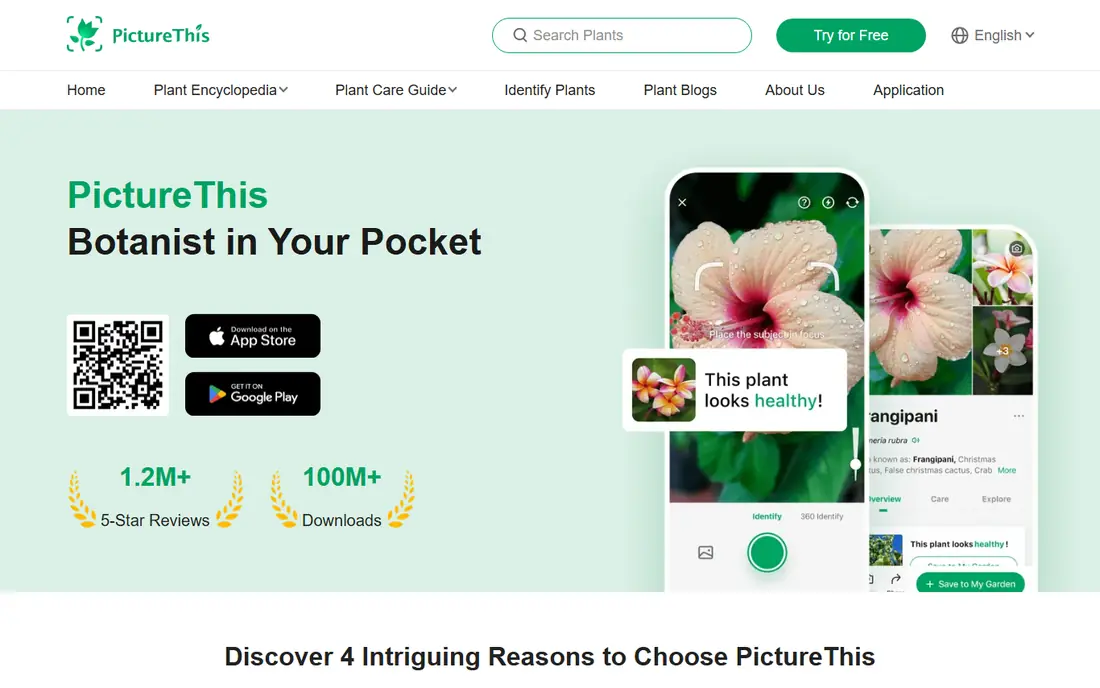
PictureThis is the most complete single app for a user who wants identification, diagnosis, and care together. It recognises a large catalogue of plants, including houseplants and cultivars, diagnoses common diseases from a photo, warns about toxicity, and builds care reminders for watering, fertilising, and repotting. That package suits a new plant owner who wants one app for every question. The subscription pressure is the main drawback. Free identification is limited, and prompts to upgrade appear often, which can frustrate a user who only wants a quick identification. The yearly price, listed at 39.99 dollars in recent comparisons, is also higher than PlantSnap or Greg. For a user who will use diagnosis and care daily, the price is easier to justify than for a casual identifier.
- Large species catalogue, disease diagnosis, toxicity warnings, care reminders, watering schedules
- Frequent subscription prompts, yearly price higher than some rivals, care advice can be generic for some climates
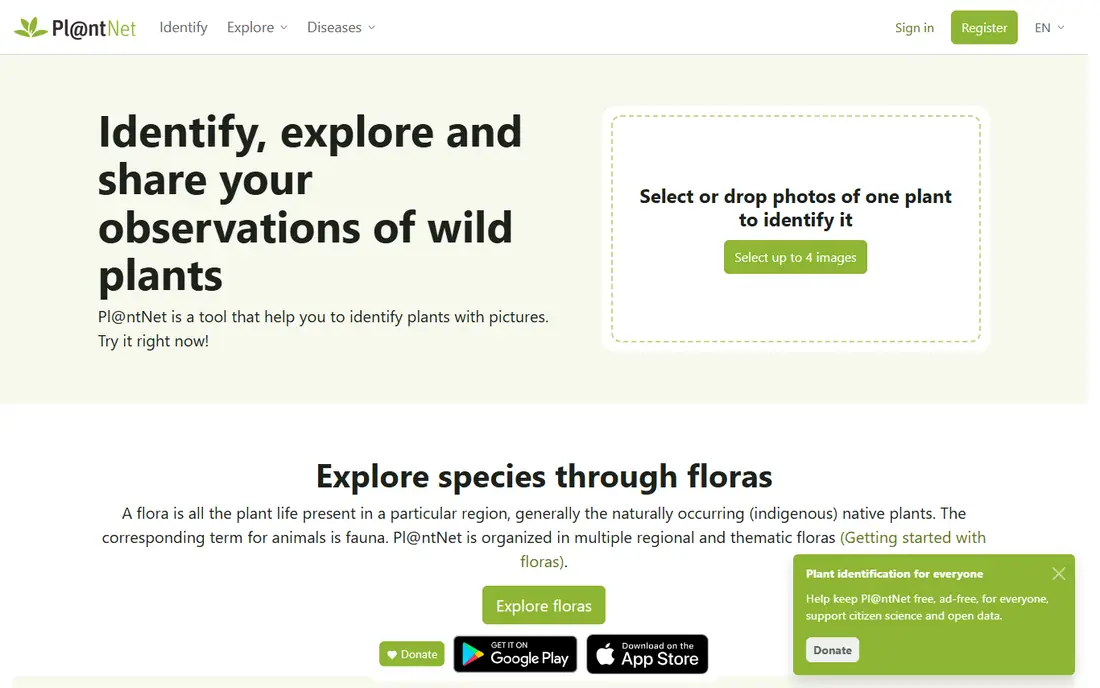
PlantNet, known as Pl@ntNet, is a free, research backed identification tool that suits walkers, gardeners, and students. It asks for photos of flowers, leaves, fruit, or bark, and shows ranked suggestions with confidence scores, which helps a user judge whether a result is certain or just a close match. Photos can also contribute to research on plant distribution, which adds value for nature lovers. The catalogue focuses more on wild flora than on houseplant cultivars, so a variegated houseplant may be identified only to its parent species. The interface is also less polished than commercial rivals, and there is no full care schedule. For pure identification, especially outdoors, PlantNet is the best free choice on this list.
- Free and ad free, research backed, confidence scores, multiple photo options, citizen science contribution
- Weaker on some houseplant cultivars, interface is less polished than PictureThis, no full care schedule
Seek by iNaturalist is designed for learning rather than for a quick commercial identification. It uses the camera to identify plants, animals, and fungi, awards badges for finds, and encourages users to upload observations to iNaturalist, where the community can confirm them. That design suits families, schools, and walkers who want to learn nature names without pressure. Seek is cautious, which is a strength for safety and a weakness for speed. It declines to guess when it is unsure, so it may give a genus rather than a species, or no result at all, where PictureThis would give a confident name. For a family walk or a school project, that caution is good. For a houseplant owner who needs a care schedule, Seek should be paired with Planta or Greg.
- Free, safe for children, identifies plants, animals, and fungi, avoids guessing when unsure, citizen science link
- Lower species level accuracy than PlantNet in some tests, no care schedules, needs a camera and location for best results
Planta takes a care first approach. After a plant is added to a digital garden, Planta builds a custom care calendar based on location, season, and species needs, with watering reminders that adjust over time. Its light meter uses the phone camera to measure light in a room, which helps owners who overestimate how bright a spot really is. Repotting reminders and progress streaks help build a consistent habit. Identification exists in Planta, but it is not the headline strength. Close species can be confused, so a user should confirm a tricky identification in PlantNet or PictureThis before relying on a care schedule. Premium, listed at about 35.99 dollars per year in some comparisons and about 7.99 dollars per month in others, adds full features. For a houseplant owner who struggles with watering, Planta is a strong pick.
- Custom care calendars, light meter, watering reminders, repotting tracker, progress streaks
- Identification accuracy is lower than PictureThis for close species, premium price adds up, some features need paid plan
Greg suits English speaking houseplant owners who want a simple, friendly care tracker. It helps track watering, light, and plant health over time, and its community features let owners share progress and ask questions. The free tier covers basic identification and care, while SUPER Greg, listed at 29.99 dollars per year in recent comparisons, adds fuller tools. Greg is less of a wild plant identifier than PlantNet, and its catalogue is smaller than PictureThis. For a houseplant collection, though, its focus on light and watering history is practical, because those two factors cause most houseplant problems. Pair Greg with PlantNet for a wild plant, and use Greg alone for daily houseplant care.
- Simple care tracking, light measurement, watering history, community features, free tier for identification
- Paid features needed for full care tools, catalogue is smaller than PictureThis, English language focus
PlantSnap claims one of the largest catalogues on this list, at 600,000 species, which helps for unusual plants that smaller apps miss. Its yearly price starts at 21.99 dollars in recent comparisons, with a lifetime option listed at 29.99 or 39.99 dollars in some listings, which appeals to users who dislike subscriptions. Care features and a plant library support ongoing use after identification. A large catalogue also raises the risk of a confident wrong answer for close species, so a user should check confidence and compare with PlantNet for a tricky plant. Pricing also varies by store listing, so check the in app purchase details before buying. For a user who wants broad coverage and a one time payment, PlantSnap is worth testing.
- Large claimed catalogue of 600,000 species, lifetime purchase option, care features, offline use in some plans
- Accuracy varies for close species, interface and pricing vary by store listing, care tools are lighter than Planta
PlantIn adds a human layer to photo identification. When a photo result is unclear, paid users can ask a botanist for help, which is useful for a sick plant or a plant that looks like several species. Diagnosis, care reminders, and a plant library round out the package for houseplant and garden owners. The price varies by listing, from 29.99 to 39.99 dollars per year in recent comparisons, so check the app store listing for the current price and what it includes. Human help also takes time, so it is not a instant answer for every photo. For a user with a valuable or sick plant who wants a second opinion from a person, PlantIn offers something most rivals do not.
- Photo identification, disease diagnosis, human botanist help on paid plans, care reminders
- Yearly price varies by listing, botanist help needs paid plan, care advice can be generic
Google Lens
Great for: Quick identification without installing a dedicated plant app
Google Lens is the fastest way to identify a plant when no dedicated app is installed. Open the camera or a gallery photo, tap Lens, and get a result in seconds, with links to web pages for more detail. That speed suits a quick question in a shop or on a walk, and it works for animals and objects as well. Lens is not a plant care app. It has no watering reminders, no diagnosis, and no plant library, and in tests it has given confident wrong answers for close species more often than PlantNet. Use Lens for a first guess, then confirm with PlantNet or Seek, especially before pruning, repotting, or letting a pet near a plant.
- Free, no new app needed, fast results, works from camera or gallery, identifies animals and objects too
- No care schedules, no diagnosis, more prone to confident wrong answers, no plant specific catalogue
How we picked these
We compared official app pages, app store listings, pricing pages, and public reviews for plant identification apps that are live in October 2026. We kept only apps that identify plants from a photo, offer a free tier or a free download, and have a current listing on iOS or Android. We checked yearly prices from app store listings and recent comparisons, because plant app prices vary by store and region. We also matched apps to jobs. A wild plant identifier, a houseplant care app, and a diagnosis app solve different problems, so the list includes a strong option for each job rather than eight versions of the same photo identifier. Safety was a key filter: we kept apps that show confidence or that avoid guessing, and we note where a second check is needed.
How to get a better identification
Take several photos
Photograph flowers, leaves, bark, and the whole plant, not just one leaf. Many apps give better results when they can see several parts of the same plant.
Check confidence, not just the top name
If an app shows a confidence score or ranked suggestions, read them. A top name with low confidence is a guess, not an answer, and should be checked in another app.
Use two apps for important plants
For a plant that may be toxic, edible, or valuable, use PlantNet plus Seek or PictureThis, and only trust a result when both agree. For edible or medicinal use, confirm with a local expert who can see the plant in person.
Note location and season
Wild plant results improve when location is on, because an app can rule out species that do not grow in your region. Season also helps, because flowers and fruit narrow the options.
Keep a plant library
Save identified plants in the app library, with photos and notes, so care reminders and future identifications build on past results rather than starting fresh each time.
Frequently asked questions
What is the best plant identification app for free?
PlantNet is the best free plant identification app, because it is free, ad free, and research backed, with confidence scores and multiple photo options. Seek by iNaturalist is another strong free option, especially for families.
What is the best app for identifying plants and caring for them?
PictureThis covers identification, diagnosis, and care in one app, while Planta and Greg cover care more deeply for houseplants. For a houseplant owner, Planta or Greg plus PlantNet for identification is a strong pair.
What is the best plant diagnosis app?
PictureThis and PlantIn both offer disease diagnosis from a photo, with PlantIn adding human botanist help on paid plans. Diagnosis from a photo is a guide, not a lab test, so check care advice against a trusted gardening source for a valuable plant.
What is the best free plant app for houseplants?
Greg and Planta both offer free tiers for houseplant care, with light checks and watering reminders. PlantNet remains the best free identifier, so many houseplant owners use PlantNet for identification and Greg or Planta for care.
Can a plant app identify a plant from a gallery photo?
Yes. PictureThis, PlantNet, Google Lens, and most apps on this list accept photos already on a phone, as well as live camera photos. Gallery photos work best when they are clear and show several parts of the plant.
Are plant identification apps accurate?
Accuracy varies by species, photo quality, and catalogue. Wild plants with clear flowers are easier than houseplant cultivars with similar leaves. Use two apps, check confidence scores, and do not rely on one app alone for toxic or edible plants.
Sources
- https://www.picturethisai.com
- https://identify.plantnet.org
- https://www.inaturalist.org
- https://planta.app
- https://greg.app
- https://www.plantsnap.com
- https://myplantin.com
- https://lens.google.com
- https://floralens-app.com/en/blog/trends/tools/best-plant-identification-app
- https://www.getgrowli.app/blog/picturethis-alternatives
See where you really rank - block by block
ProMapRanker scans Google Maps across a grid of your service area. Simple monthly plans from $19, white-label on every plan.
Start freeKeep reading
 zoom alternatives
Best Zoom Alternatives in 2026
Compare Zoom alternatives in 2026, with free meeting limits and prices, so you can pick the best alternative to Zoom for your team, class, or community.
Read → which software is best for remote work
Which Software Is Best for Remote Work in 2026
Answering which software is best for remote work, we compare Slack, Zoom, Asana, Notion, Teams and more, with pricing and honest tradeoffs in 2026 now.
Read → which ai tool is best for content writing
Which AI Tool Is Best for Content Writing in 2026
Wondering which ai tool is best for content writing? We compare ChatGPT, Claude, Jasper, Grammarly, and more on price, quality, and best use in 2026 now.
Read →