 ProMapRanker
Best Payment Gateway Software in 2026


Developers and online-first businesses · Pricing starts at: 2.9% + $0.30 per transaction
Key takeaways
- Stripe leads for developers and online-first businesses, with strong APIs, subscriptions, and billing tools.
- Square leads for businesses selling in person and online together, with one inventory and dashboard system.
- PayPal leads for checkout conversion through buyer trust, while Authorize.net suits established businesses with existing merchant accounts.
- At high volume, interchange-plus pricing from Helcim, Adyen, or Worldpay can beat flat-rate pricing, so model fees at your real volume.
Quick comparison
| Pick | Great for | Pricing starts at | Free tier | |
|---|---|---|---|---|
| Stripe | Developers and online-first businesses | 2.9% + $0.30 per transaction | No | Visit |
 Square | In-person plus online selling | 2.9% + $0.30 per online transaction | Yes | Visit |
 PayPal | Checkout conversion through buyer trust | 2.99% + $0.49 per transaction | No | Visit |
 Authorize.net | Established businesses with merchant accounts | $25 per month | No | Visit |
 Adyen | Enterprises and global commerce | See website | No | Visit |
 Braintree | Cards plus PayPal and Venmo in one stack | See website | No | Visit |
 Checkout.com | Online payment performance | See website | No | Visit |
 Helcim | Interchange-plus without haggling | See website | No | Visit |
 Worldpay | Scale and omnichannel enterprise | See website | No | Visit |
The best payment gateway software
A payment gateway moves card data from checkout to processor and returns an approval, but the right choice depends on how you sell, where your customers live, and how much volume you process. Flat-rate pricing suits small teams, interchange-plus suits high volume, and enterprise gateways suit global complexity. The platforms below cover those cases.
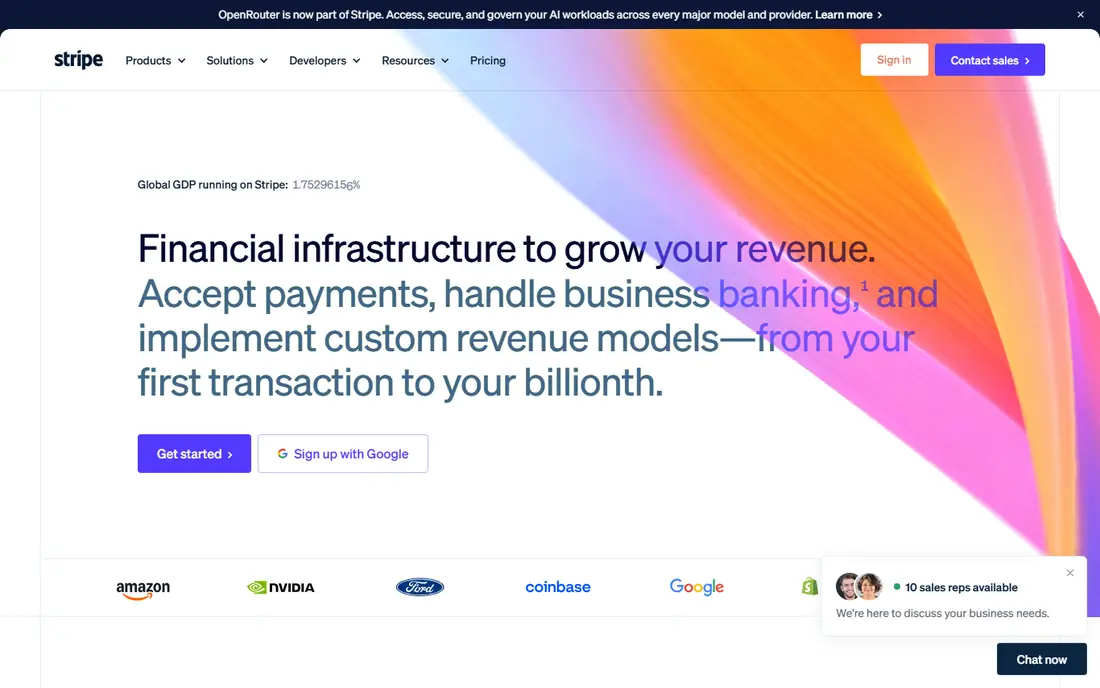
Stripe is our pick for most online-first businesses because the API is the product. Developers can build custom checkouts, subscriptions, marketplaces, and invoicing with clean documentation and libraries, while non-developers can use payment links and hosted checkout. Fraud screening, tax tools, and support for many currencies and methods make it a complete online stack, not just a gateway.
The catch is cost at scale. At 2.9% plus $0.30 per successful domestic card transaction, with no monthly fee, small businesses get predictable pricing, but high-volume merchants often save with interchange-plus pricing elsewhere. Risk reviews can also delay payouts. For online businesses that value developer control and speed to launch, Stripe remains the default.
- Best developer APIs and documentation
- Subscriptions, invoicing, and tax tools
- Many currencies and payment methods
- Flat rate gets costly at high volume
- Risk reviews can hold payouts
- Premium support costs extra

Square suits businesses that sell at a counter, a market stall, and a website, and want one system for all three. Inventory, orders, customers, and payments sync between POS and online store, so a sale in store updates online stock without manual work. Free POS options and simple setup help small retailers, cafes, and service businesses start without a developer.
The trade-off is online pricing on the free plan. The online rate on the free plan is higher than Stripe's standard rate, falling to 2.9% plus $0.30 on paid plans, so online-heavy sellers should check plan pricing carefully. Account holds for risk reviews also occur, as with other gateways. For omnichannel sellers, the unified system often outweighs the rate gap.
- Unified POS and online system
- One inventory and dashboard
- Free POS hardware options
- Free-plan online rate is higher than some rivals
- Risk-based account holds occur
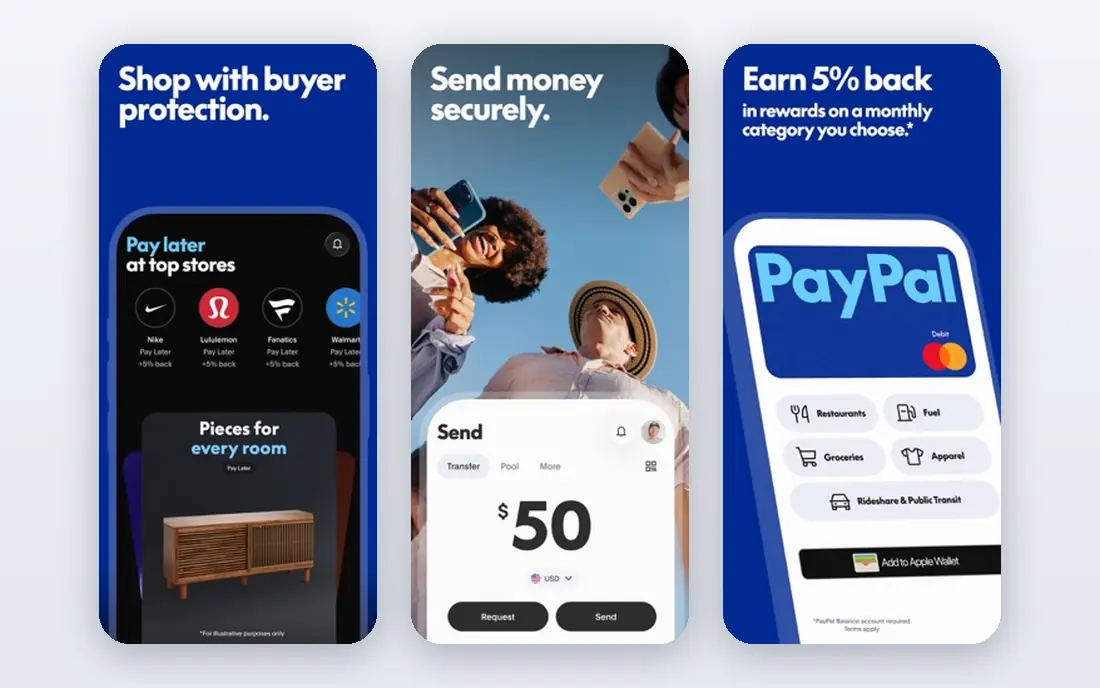
PayPal wins on trust. Many shoppers already have a PayPal account, so checkout feels familiar and fast, and that familiarity can lift conversion compared with a card-only form. Setup is instant with no underwriting wait, and Pay Later options add flexibility for larger orders. Global reach also helps sellers with international customers.
The downside is price. Standard card processing at 2.99% plus $0.49 per transaction, with higher rates for PayPal-branded checkout in some cases, makes PayPal pricier than Stripe on headline rates. Dispute fees and holds are also frequent complaints. For stores where buyer trust drives conversion, PayPal earns its place beside a card gateway, not always instead of one.
- Buyer trust and fast setup
- PayPal and Venmo checkout options
- Wide global reach
- Higher headline card rate than Stripe
- Dispute fees and account holds are common complaints
Authorize.net suits established businesses that already have a merchant account and want a classic, widely supported gateway. It integrates with many carts and platforms, offers a large fraud filter library, and supports recurring billing and customer profiles. The all-in-one option bundles gateway and processing at 2.9% plus $0.30 per transaction plus $25 per month, while gateway-only plans suit businesses that bring their own processor.
The catch is modern feel and fee structure. The monthly fee adds cost for low-volume sellers, and the dashboard feels older than Stripe or Square. Businesses that value broad compatibility and fraud controls over a modern developer experience will still find Authorize.net dependable. New online-first sellers usually prefer Stripe or Square.
- Long-established gateway with wide platform support
- Advanced fraud filters
- All-in-one or gateway-only options
- Monthly fee on top of transaction fees
- Interface feels older than newer rivals
Adyen suits enterprises and global merchants that need local acquiring, many payment methods, and unified online and in-person data. Interchange-plus pricing, with a processing markup on top of card network costs, can beat flat rates at high volume, while local payment methods help conversion in markets where cards are not the default. Fraud tools and rich transaction data support large, complex operations.
The trade-off is access and complexity. Adyen is quote-based and built for larger merchants, so small businesses will find onboarding and technical needs heavy. Smaller teams should start with Stripe, Square, or Helcim. For global enterprises processing large volumes across regions, Adyen's acquiring depth and data justify the enterprise setup.
- Global acquiring and many local payment methods
- Interchange-plus pricing
- Strong fraud and data tools
- Quote-based enterprise pricing
- Needs technical resources to use fully
Braintree, a PayPal service, helps businesses offer cards, PayPal, Venmo, and wallets through one integration. That mix suits subscription businesses, marketplaces, and apps where customers expect several payment choices at checkout. Vaulting, recurring billing, and marketplace payout tools support repeat payments without building each method separately.
The limit is pricing clarity. Published rates have varied over time, so confirm the current card, PayPal, and Venmo rates for your volume before you compare. Developer work is also needed for fully custom checkouts, though hosted fields and drop-in UI reduce that load. For businesses that want PayPal in the mix without a second integration, Braintree is a practical choice.
- Cards, PayPal, Venmo, and digital wallets in one integration
- Strong for subscriptions and marketplaces
- PayPal backing
- Pricing varies and needs confirmation
- Developer resources still needed for custom checkouts
Checkout.com suits online businesses that treat payment performance as a growth lever. Authorization optimization, routing, fraud screening, and detailed reporting help larger stores recover failed payments and understand declines, which matters when a small lift in approval rate means real revenue. Global methods and currencies support cross-border stores.
The downside is fit for small sellers. Checkout.com is quote-based and built for businesses with meaningful online volume, so a small store will find Stripe or Square simpler and faster to launch. For mid-market and enterprise online sellers where performance and data matter, Checkout.com is a strong specialist gateway.
- Strong authorization and performance focus
- Global payment methods
- Detailed data and fraud tools
- Quote-based pricing
- Built for online businesses with volume, not small stores
Helcim suits growing businesses that want interchange-plus savings without negotiating a custom merchant account deal. Transparent pricing passes card network costs through plus a markup, which often beats flat rates once volume rises, and there is no monthly fee on core plans. Online checkout, invoicing, and in-person tools cover omnichannel sellers without a second system.
The limit is geography and ecosystem. Helcim focuses on the United States and Canada, so global sellers will need another gateway for other regions. Its app and integration range is also smaller than Stripe or Square. For US and Canadian sellers crossing into higher volume, Helcim offers a clear, honest pricing step up from flat rates.
- Transparent interchange-plus pricing
- No monthly fee on core plans
- Online, in-person, and invoicing tools
- US and Canada focus
- Smaller ecosystem than Stripe or Square
Worldpay suits mid-market and enterprise merchants that need scale across stores, online, and platforms. Negotiated pricing, omnichannel reporting, and broad payment method support help large retailers and platforms manage high volume and complex operations. Enterprise support and platform tools also suit businesses that process payments for others.
The trade-off is simplicity. Worldpay pricing is negotiated and varies by volume, channel, and risk, so small businesses will find onboarding slower and less transparent than Stripe or Square. For large merchants where scale and omnichannel consistency matter most, Worldpay is a proven enterprise option. For small stores, a flat-rate gateway will launch faster.
- Scale for large omnichannel retail
- Wide payment method support
- Platform and enterprise options
- Quote-based negotiated pricing
- Complexity suits larger merchants, not small stores
How we picked these
We compared official pricing pages, fee schedules, and public documentation for gateways that process online, in-person, or global payments in the United States. We kept only gateways that exist and work today and that serve real merchant needs, not wallets alone. Where a published standard rate exists, we use it, and where pricing is quote-based or interchange-plus, we say so rather than invent a flat rate. Fees change by card type, region, and volume, so confirm your effective rate before you sign.
How to choose by volume and channel
Start with channel and volume. If you sell mainly online at low volume, a flat-rate gateway with no monthly fee keeps costs predictable. If you sell in person and online, a unified POS and online system saves more time than a slightly lower rate. If you process high volume, model interchange-plus pricing at your real card mix, because the cheapest headline rate is not always the cheapest effective rate.
Next, test checkout, payouts, and support before you switch. Run test payments for cards, wallets, and refunds, check payout timing, and confirm dispute fees and hold policies. Also check platform integrations: a gateway that plugs into your cart, accounting, and subscription tool without custom code will save more than a small rate saving. The right gateway is the one customers trust, your team can support, and your volume makes affordable.
Frequently asked questions
What is the best payment gateway software for a small business?
Stripe suits online-first small businesses, Square suits sellers with a physical presence, and PayPal suits stores that need buyer trust at checkout. All three start with no monthly fee on standard plans, so pick by channel and customer behavior rather than rate alone. Test checkout conversion with your real customers before you commit long term.
What is the best payment gateway platform for high-volume sales?
Interchange-plus gateways such as Helcim, Adyen, and Worldpay often beat flat rates at high volume, because the markup is lower than the flat-rate margin. Model your effective rate at your real card mix and monthly volume, including monthly fees, dispute fees, and international surcharges. Ask each vendor for a cost model on your last three months of transactions before you switch.
What is the difference between a payment gateway and a payment processor?
A gateway securely sends card data from checkout to the processor and returns the result, while a processor moves money between banks and settles funds. Some providers, such as Stripe and Square, bundle gateway and processing in one service, while Authorize.net can work as a gateway beside a separate processor. For most small businesses, a bundled provider is simpler.
Do I need a merchant account to use a payment gateway?
It depends on the provider. Stripe, Square, and PayPal use aggregated accounts, so you can start without your own merchant account. Authorize.net gateway-only plans and some enterprise gateways require a separate merchant account. Aggregated accounts launch faster, while dedicated merchant accounts can offer more control and negotiated rates at volume.
How much do payment gateways charge?
Standard US online card rates in 2026 are around 2.9% plus $0.30 per transaction on flat-rate gateways, with PayPal card rates slightly higher and interchange-plus gateways charging network costs plus a markup. Monthly fees, dispute fees, international fees, and chargeback costs add to the total. Always model the effective rate at your volume, not just the headline rate.
Is it safe to use a payment gateway?
Reputable gateways use encryption, tokenization, fraud screening, and PCI-compliant handling so card data does not sit on your servers. Check for 3D Secure support, fraud tools, and clear dispute processes before you choose. Your team still owns checkout security, refund policies, and customer data handling, so keep those practices tight beside any gateway.
Sources
See where you really rank - block by block
ProMapRanker scans Google Maps across a grid of your service area. Simple monthly plans from $19, white-label on every plan.
Start freeKeep reading
 wpforms alternatives
Best WPForms Alternatives in 2026
We compare 9 wpforms alternatives for WordPress forms, with free and paid options, current pricing notes, and honest limits for small business sites in 2026.
Read → windows task scheduler alternatives
Best Windows Task Scheduler Alternatives in 2026
Looking for Windows Task Scheduler alternatives? We compare 9 schedulers for Windows and cross-platform work, from free tools to enterprise automation.
Read → which ai video service is best
Which AI Video Service Is Best in 2026
which ai video service is best? We compare 10 legitimate AI video services on price, avatars, editing and output quality to help you pick the right tool.
Read →