 ProMapRanker
Best Ovulation App in 2026: 8 Apps Compared

Key takeaways
- Flo and Clue suit most people who want simple cycle logging, while Natural Cycles suits people who want a temperature-based method with formal clearance as contraception.
- Premom stands out for ovulation test strip scanning, and Fertility Friend stands out for detailed charting.
- Predictions are estimates, not guarantees, and they get less reliable with irregular cycles.
- Privacy terms differ a lot, so read how each app stores, shares and deletes cycle data before you sign up.
- Free tiers cover basic tracking in most apps here, but detailed insights and coaching usually sit behind a paid plan.
Quick comparison
| Pick | Great for | Pricing starts at | Free tier | |
|---|---|---|---|---|
 Flo | All-round cycle tracking | Free | Yes | Visit |
 Clue | Science-led tracking and privacy controls | Free | Yes | Visit |
 Natural Cycles | Temperature-based contraception and planning | $149.99 per year | Free trial | Visit |
 Glow | Trying to conceive with community support | Free | Yes | Visit |
 Premom | Ovulation test strip scanning | Free | Yes | Visit |
 Fertility Friend | Detailed charting | Free | Yes | Visit |
 Ovia Fertility | Simple fertility tracking | Free | Yes | Visit |
 Read Your Body | Private fertility awareness charting | $4.99 per month | Free trial | Visit |
The best ovulation apps
We compared apps that track cycles, fertile windows and ovulation signs, and we focused on what each one does well, what it costs and how it handles sensitive data.
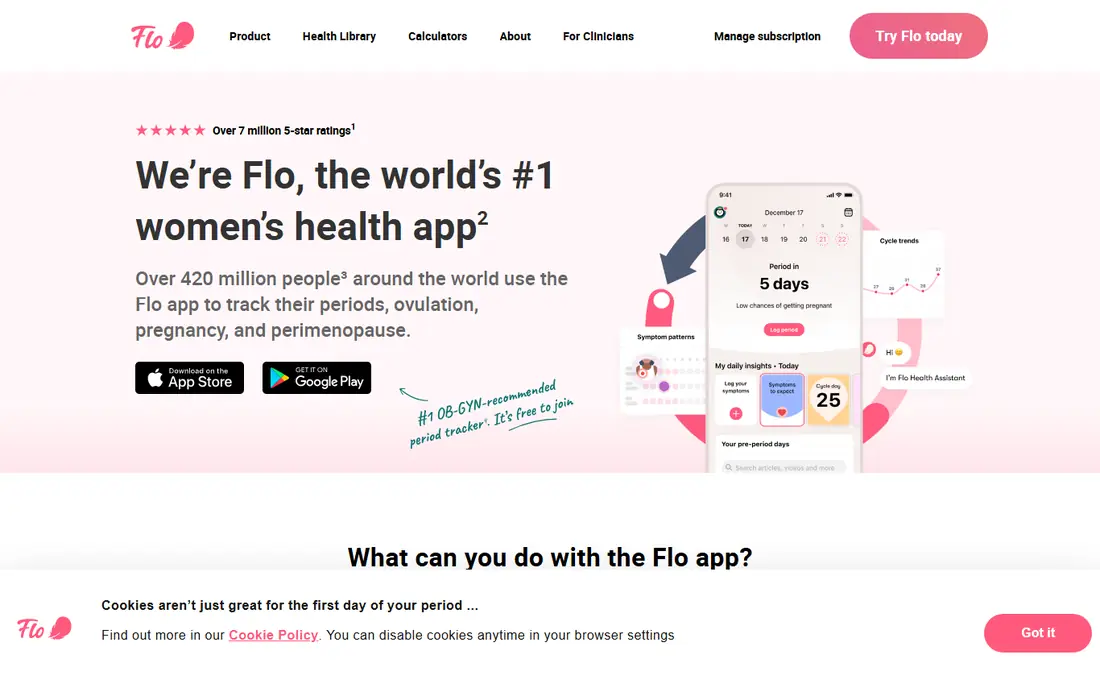
Flo is the easiest starting point for many people because the main screens are clear and the logging options cover periods, symptoms, moods, sleep and more. The app builds cycle and fertile window estimates from the data you enter, and it adds articles and health content alongside the calendar. That breadth helps if you want one app for periods, general cycle health and pregnancy tracking rather than a narrow ovulation tool.
The trade-off is that the free version feels like a gateway to Premium, where deeper insights and some content live. Flo also faced regulatory action in the past over data sharing, and it now offers an Anonymous Mode, so we suggest checking the current privacy settings before logging sensitive details. Used as a tracker, it is strong. Used as a medical tool, it is not a substitute for advice from a clinician.
- Wide symptom and mood logging
- Large content library
- Pregnancy mode
- Best insights sit behind Premium
- Past data-sharing history needs a careful privacy check
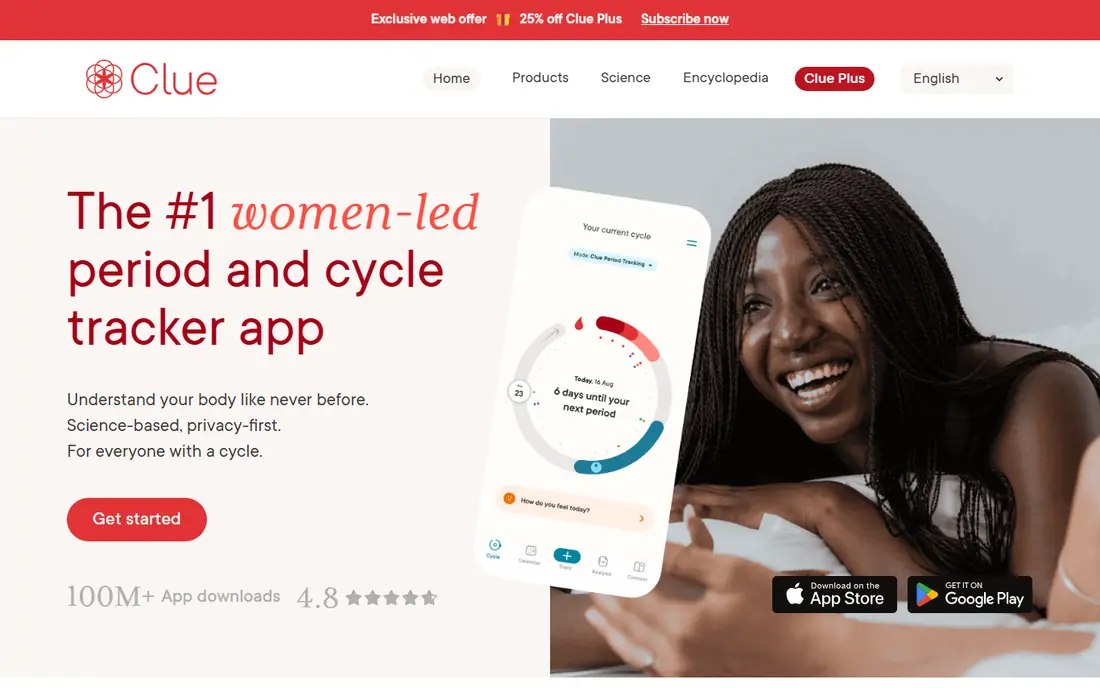
Clue takes a calmer, more clinical tone than most cycle apps, and that tone matches its design. You can log a wide range of signals, from bleeding and pain to sleep, exercise and cervical fluid, without wading through chatty content. The app then uses that history to estimate your cycle and fertile days, and it works well for people who like to see patterns over several months.
Clue Plus adds more analysis and forecasts, and the annual price reported in October 2026 listings was about $39.99 per year. The free tier covers core tracking, which is enough to test whether the interface suits you. Clue is not birth control in its standard form, and its separate birth control feature is a different product, so do not rely on the main tracker to prevent pregnancy.
- Clean design
- Detailed tracking categories
- Berlin-based privacy approach
- Ovulation prediction still depends on regular data entry
- Plus is needed for deeper analysis
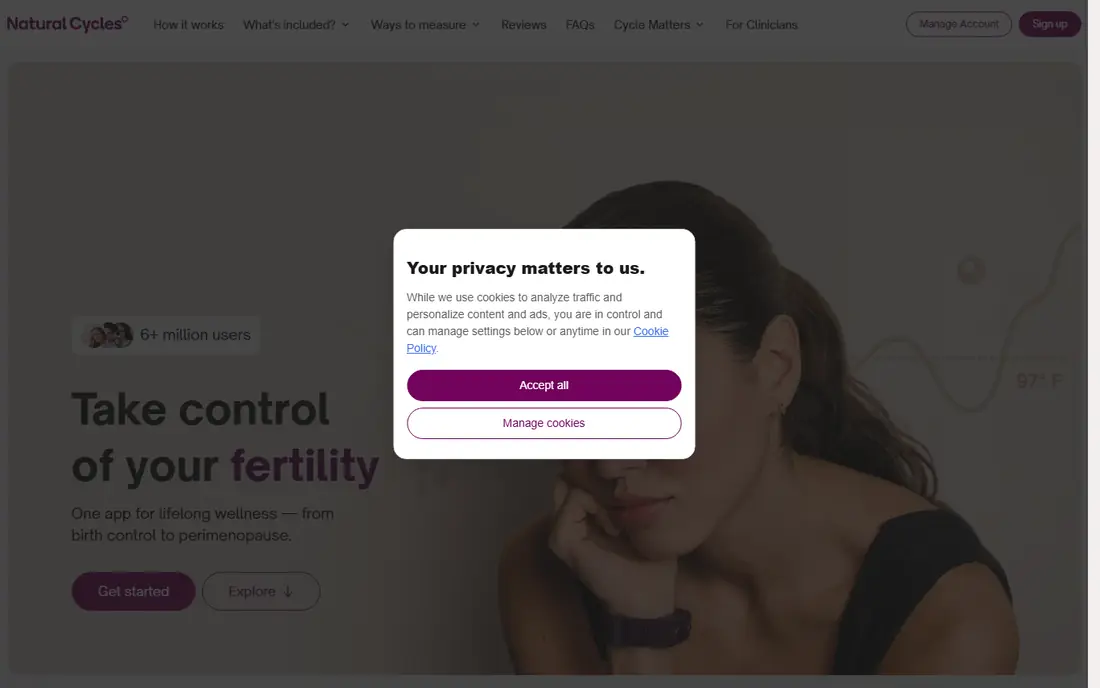
Natural Cycles is different from the other apps here because it is built around daily temperature readings and an algorithm that has received FDA clearance as a contraceptive method. You measure temperature each morning, or use a compatible wearable, and the app gives red days when pregnancy is possible and green days when it is not, based on its analysis. That structure appeals to people who want a defined method rather than a simple calendar guess.
The cost and the daily routine are real barriers. Listings in October 2026 showed about $149.99 per year, with an annual plan that can include a wearable band, and only a trial rather than a free tier. It also works best when cycles are fairly regular and temperature data is consistent. If you miss readings often, or your sleep is disrupted, the results will be less useful, and you should talk to a clinician before using any app as contraception.
- FDA-cleared algorithm for contraception
- Temperature confirms ovulation after it happens
- Clear red and green day system
- No lasting free tier
- Needs consistent temperature data
- Less helpful with very irregular cycles
Glow is built for people who are actively trying to conceive and want support beyond a calendar. It tracks periods, ovulation signs, symptoms and test results, and it lets a partner follow along, which can make the process feel shared rather than solitary. The community forums add another layer, with threads on trying to conceive, treatments and early pregnancy.
That community focus is also the main caution. Forum advice is not medical advice, and it can be stressful to compare your journey with others. The free tier covers core fertility tracking, while Premium adds more detailed analysis. If you want a quiet, private tracker, Glow may feel busy. If you want company while trying, it is one of the strongest choices here.
- Fertility tracking plus partner sharing
- Active community
- Pregnancy and baby modes
- Free version includes ads
- Premium is needed for deeper insights
Premom solves a specific problem well. Instead of asking you to judge a faint test line by eye, it scans a photo of your ovulation test strip and turns it into a numeric LH reading on a chart. That makes it easier to spot a surge and to look back at patterns across cycles. It also logs basal body temperature, cervical mucus and other fertility signs, so the strip data sits in context.
You do need to buy test strips to get the main benefit, and the free version is the practical starting point, with Premium adding more features. Premom has also faced regulatory action over data sharing in the past, so we recommend reviewing its current privacy policy and settings before you upload health data. For people who already use ovulation tests, it is the most focused tool in this list.
- Scans ovulation test strips and charts LH levels
- Clear ovulation timing
- Active trying-to-conceive community
- Best use needs test strips
- Past regulatory action over data sharing deserves a privacy check
Fertility Friend is the choice for people who love detail. It has long been used by fertility awareness charters, and it shows temperature charts, ovulation detection, cycle statistics and detailed logs in a way that simpler apps do not. If you track basal body temperature, cervical fluid and test results together, you can see how those signals line up over time.
The design is less polished than Flo or Clue, and that can put new users off at first. The free tier covers basic charting, while VIP adds deeper analysis and more chart types, with listings showing about $9.99 per month. It is not the best pick if you want a quick, pretty period tracker. It is a strong pick if you want to understand your own data in depth.
- Deep charting and data analysis
- Strong for basal body temperature users
- Detailed cycle history
- Interface feels dated
- VIP needed for full analysis
Ovia Fertility keeps the basics simple, with period and ovulation tracking, symptom logging and a fertile window estimate based on your entered data. The app is free to use for its core features, which makes it easy to try without a subscription. People who later become pregnant can move to related Ovia apps for pregnancy and parenting tracking.
The main point to check is data use. Ovia has offered employer-sponsored programs, so read whether your version shares data with an employer or insurer and what controls you have. If you use the standard consumer version and keep the privacy settings tight, it is a solid free tracker. If privacy is your top concern, Clue or Read Your Body may feel safer.
- Free core tracking
- Clear fertile window estimates
- Pregnancy tracking in the wider Ovia family
- Some features connect to employer programs
- Ads and offers can intrude
Read Your Body is made for people who follow a fertility awareness method and want full control over their charts. You can customise what you track, record temperature and other signs in detail, and keep your data with a privacy-first approach rather than an ad-supported model. That focus makes it appealing if you are uneasy about cycle data being used for advertising.
Beginners may find it less guided than Flo or Clue, because it assumes you know, or want to learn, a charting method. Listings showed about $4.99 per month, with a free trial to test the layout. If you want a simple prediction and little else, this is more tool than you need. If you want private, detailed charting, it is a thoughtful alternative to the big mainstream apps.
- Privacy-focused design
- Flexible charting for fertility awareness methods
- No ads in the paid app
- Smaller community
- Less hand-holding for beginners
- IOS and Android availability varies by feature
How we picked these
We compared official app pages, pricing and app store listings, privacy policies and public reviews, and we kept only apps that are available and working in October 2026 and that truly track ovulation or fertility. We gave weight to prediction method, ease of logging, price, free tier quality and privacy controls, and we left out apps that were only period calendars with no fertility focus. We did not claim hands-on testing, and prices can change, so check the vendor page before you pay.
What to check before you choose
Start with your goal, because that narrows the list fast. If you want a simple tracker, Flo, Clue or Ovia will do. If you are trying to conceive and use test strips, Premom is the focused pick. If you chart temperature, Fertility Friend or Read Your Body gives you more depth. If you want an app-based contraceptive method, Natural Cycles is the only one here with that specific clearance, and it needs daily temperature data and a clinician conversation first.
Privacy deserves the same attention as features. Check whether the app sells or shares data, whether it offers anonymous use, how long it keeps data, and how you can delete it. Also check cost over a year, not just the monthly headline, since several apps are cheaper on an annual plan. A short note on safety: these apps give general information only, not medical advice, and predictions are estimates. If your cycles are irregular, you have a fertility concern, or you need contraception you can rely on, talk to a healthcare professional.
Frequently asked questions
What is the best free ovulation tracker app?
Flo, Clue, Glow, Premom, Fertility Friend and Ovia all offer free core tracking, so the best free option depends on what you value. Clue is a good free start for clean tracking, Premom is best if you use test strips, and Flo is best if you also want articles and pregnancy mode. Paid plans add deeper analysis, but you can test the basics free in each case.
What is the best app to track ovulation when trying to get pregnant?
Premom, Glow and Fertility Friend are strong for trying to conceive, because they combine ovulation signs, test results and cycle history in one place. Premom helps most if you use ovulation tests, Glow adds partner sharing and community, and Fertility Friend adds detailed charting. No app can guarantee conception, and timing still depends on your own cycle signals.
Is there a best ovulation app to get pregnant free?
Yes, in the sense that free tiers from Flo, Clue, Glow, Premom and Ovia let you track fertile windows without paying. Free versions may show ads or limit deeper insights, but they cover the core job of logging periods and ovulation signs. If you need test strip scanning or detailed charts, Premom and Fertility Friend free tiers are useful starting points.
How accurate are ovulation app predictions?
Predictions are estimates based on past cycles and the signs you log, so they are most useful with regular cycles and consistent data. Temperature-based methods can confirm ovulation after it happens, while calendar-only predictions are weaker with irregular cycles. Treat any fertile window as a guide, not a certainty, and use ovulation tests or temperature charting for more detail.
What is the best period and fertility tracker app?
Flo and Clue are the most balanced period and fertility trackers here, because they cover period logging, symptoms, moods and fertile windows in one app. Flo has a wider content library, while Clue has a cleaner, science-led design. If you want charting depth rather than breadth, Fertility Friend is the stronger fertility-first choice.
Should I worry about privacy with ovulation apps?
Yes, it is worth checking, because cycle data is sensitive. Look at what data the app collects, whether it shares data with third parties, whether anonymous mode is available, and how to delete your account and data. Some apps in this category have faced past regulatory action over sharing, so read the current policy rather than relying on old headlines.
Sources
- https://flo.health
- https://helloclue.com
- https://www.naturalcycles.com
- https://glowing.com
- https://premom.com
- https://www.fertilityfriend.com
- https://www.oviahealth.com
- https://www.readyourbody.com
- https://www.go-go-gaia.com/blog/best-ovulation-tracker-app.html
- https://www.go-go-gaia.com/blog/clue-vs-flo-vs-natural-cycles.html
See where you really rank - block by block
ProMapRanker scans Google Maps across a grid of your service area. Simple monthly plans from $19, white-label on every plan.
Start freeKeep reading
 free alternatives to grok imagine
Free Alternatives to Grok Imagine in 2026
We compared the best free alternatives to grok imagine for image generation, from fast daily credits to design tools, so you can create without paying.
Read → best tools for instagram content creation
Best Tools for Instagram Content Creation in 2026
Compare the best tools for Instagram content creation, from Canva and CapCut to Later and Buffer, on design, video, planning, scheduling, and price in 2026.
Read → best tool to split pdf files
Best Tool to Split PDF Files in 2026
We compared the best tool to split pdf files on split modes, file limits, privacy and price, so you can split a PDF cleanly and keep every page in one go.
Read →