 ProMapRanker
Best Online Doctor App in 2026

Key takeaways
- Teladoc, MDLIVE, and Amwell are the broadest telehealth platforms, with wide insurance acceptance and 24/7 urgent care.
- Sesame and GoodRx Care suit cash-pay patients who want upfront prices without insurance.
- PlushCare and One Medical suit patients who want ongoing primary care with the same clinician.
- Doctor on Demand and Amwell add strong mental health and specialist options beyond urgent care.
- This article is general information only, not medical advice. For emergencies, call emergency services or go to the nearest emergency department.
Quick comparison
| Pick | Great for | Pricing starts at | Free tier | |
|---|---|---|---|---|
 Teladoc | Broadest general telehealth | See website | No | Visit |
 MDLIVE | Insurance based multi-specialty care | See website | No | Visit |
 Amwell | Urgent care plus mental health | See website | No | Visit |
 Doctor on Demand | Video visits and mental health | See website | No | Visit |
 Sesame | Upfront cash-pay pricing | See website | No | Visit |
 PlushCare | Ongoing primary care | See website | No | Visit |
 One Medical | Primary care with in-person options | See website | No | Visit |
 GoodRx Care | Low-cost cash visits | See website | No | Visit |
 HealthTap | Membership primary care by message | See website | No | Visit |
The best online doctor apps
We compared official feature pages, pricing pages, and insurance information for telehealth platforms available in the United States in October 2026. The list covers urgent care, primary care, mental health, and cash-pay options, because the best telehealth platform depends on whether you have insurance, need ongoing care, or need a one-off visit. This is general information only, not medical advice.
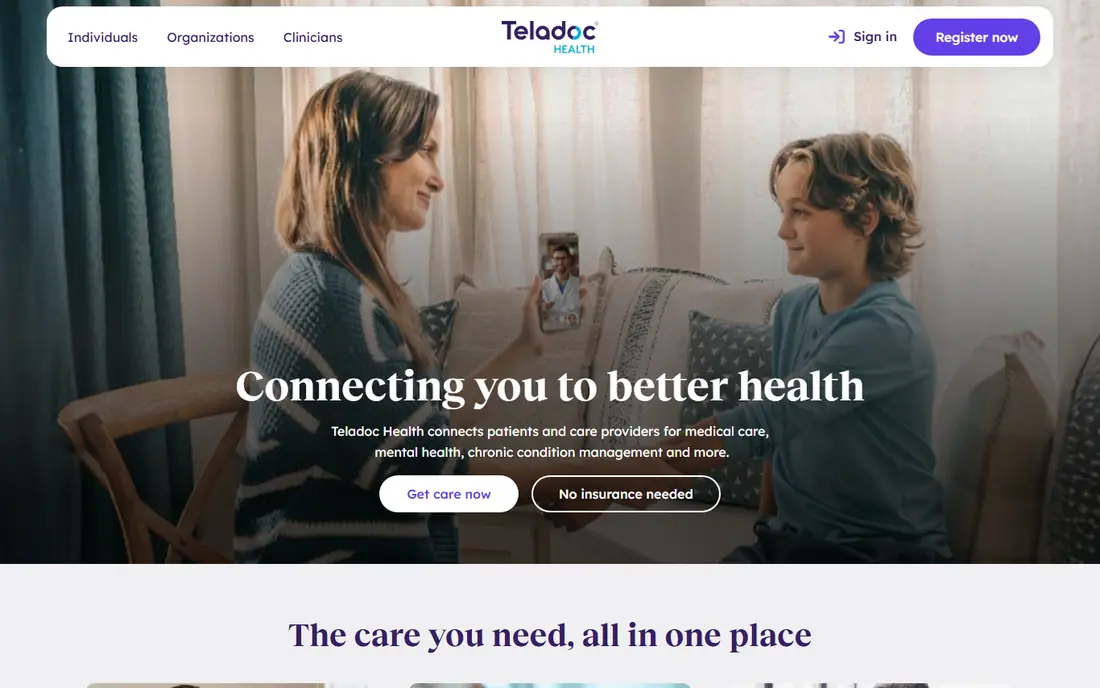
Teladoc is the largest general telehealth platform in this list, with urgent care, primary care, mental health, and dermatology in one app. It accepts many major insurance plans, and many employer plans include Teladoc visits at a low or zero copay. Urgent care is available around the clock, which helps for evening and weekend issues that cannot wait for an office visit.
Cash-pay visits cost more than dedicated cash-pay services such as Sesame, and you will usually see whichever clinician is available rather than a single dedicated doctor. Teladoc is best for insured patients who want breadth, speed, and one app for several types of care.
- Wide insurance acceptance
- Urgent, primary, mental health, and dermatology
- 24/7 access
- Cash price is higher than cash-pay rivals
- No dedicated doctor by default
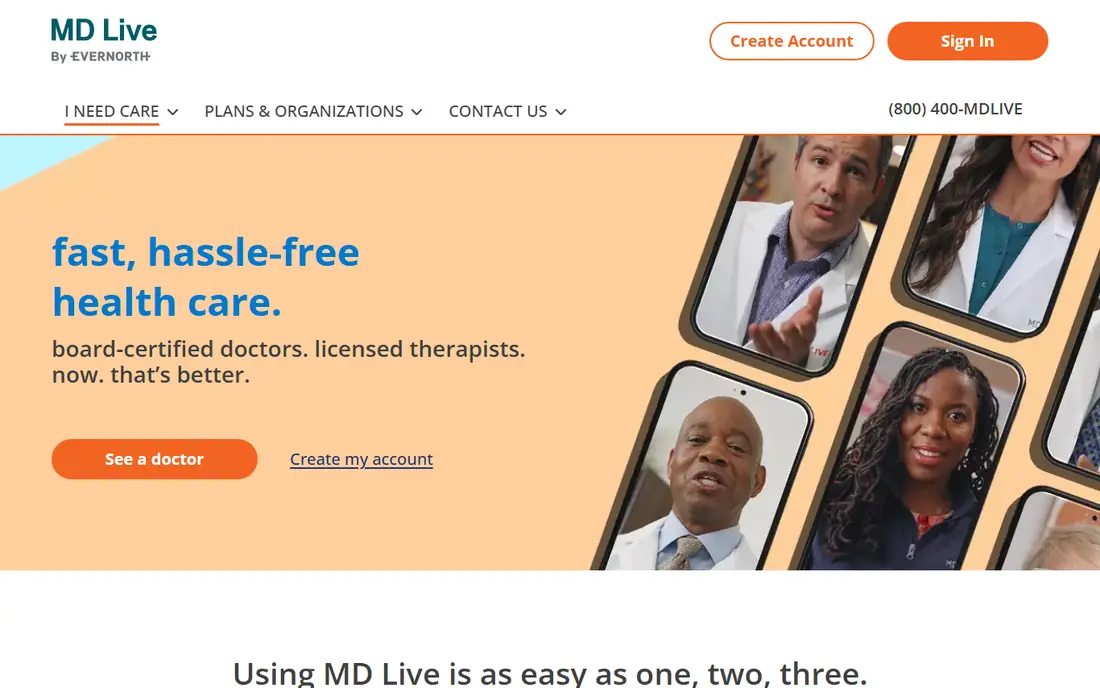
MDLIVE offers urgent care, primary care, dermatology, and mental health visits, with wide acceptance across commercial health plans and employer programs. That breadth makes it a strong alternative to Teladoc for insured patients, especially when an employer already includes MDLIVE in its benefits. Visits are available around the clock for urgent needs.
Cash prices vary by visit type, so check the price for your specific need before booking. Continuity also depends on clinician availability, as with most large urgent care platforms. MDLIVE suits insured patients who want a multi-specialty telehealth app with fast scheduling.
- Works with many commercial plans
- Urgent, primary, dermatology, and mental health
- 24/7 access
- Cash price varies by visit type
- Continuity depends on availability
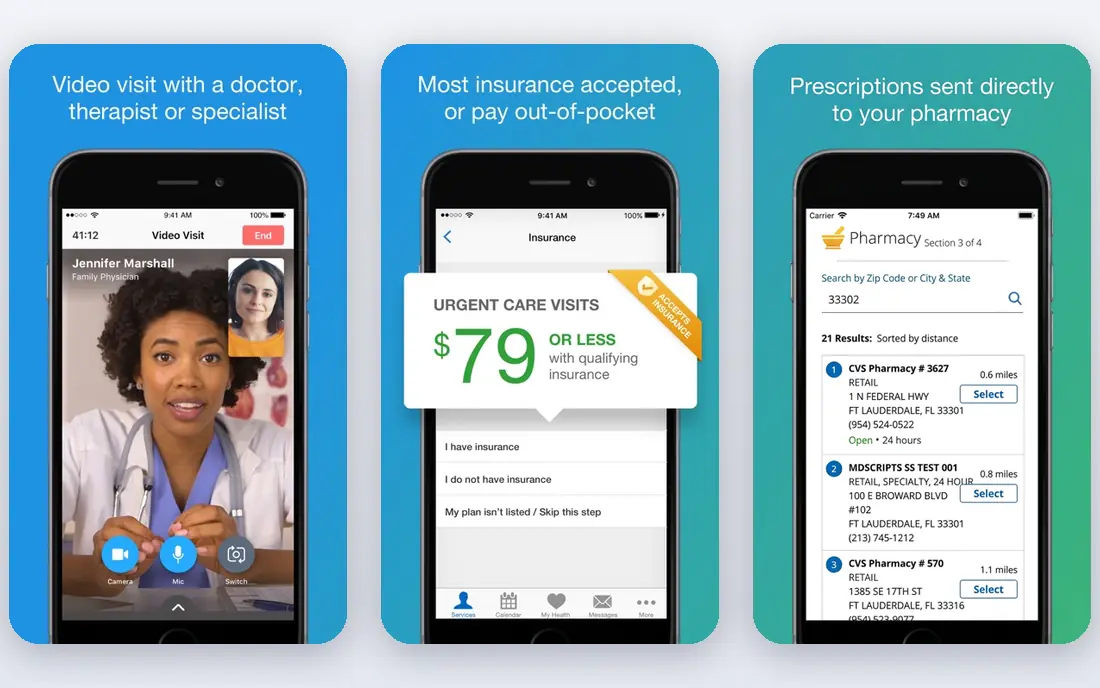
Amwell covers urgent care, therapy, psychiatry, and specialist visits, with links to many hospital systems and insurers. Its mental health depth is a clear strength. Psychiatrists on Amwell can prescribe in many states, including some controlled substances where allowed, which is less common in general telehealth apps.
Cash prices are higher than cash-pay rivals for urgent care, and psychiatry pricing varies by visit type. Amwell is best when mental health care with medication management is a priority, or when you want urgent care and therapy in one platform with insurance.
- Urgent care and strong mental health
- Psychiatry with prescribing in many states
- Hospital links
- Cash urgent care price is higher than some rivals
- Psychiatry costs vary widely
Doctor on Demand, part of Included Health, offers video visits with physicians for urgent and primary care needs, plus therapy and psychiatry. It accepts many major insurance plans, and video visits suit patients who prefer a face-to-face conversation over text-based care. Mental health services add depth beyond a simple urgent care app.
Cash prices vary by visit type, so check the current price on the vendor site before booking without insurance. Continuity is also limited by availability, as with other large platforms. Doctor on Demand suits insured patients who want video-first care with mental health options.
- Video physician visits
- Therapy and psychiatry
- Many major plans accepted
- Cash price varies
- No single dedicated primary care doctor by default
Sesame is a marketplace where providers list visit prices upfront, so cash-pay patients know the cost before booking. That transparency is its main advantage. You can compare providers by price, specialty, and availability, and book video or in-person visits without dealing with insurance billing.
It does not accept insurance, so insured patients may pay more than they would with an in-network platform. Prices also vary by provider and specialty. Sesame is best for uninsured patients, high-deductible patients, or anyone who wants a clear cash price before a visit.
- Prices shown upfront by provider
- No insurance needed
- Video and in-person options
- Does not accept insurance
- You pay the full listed price
PlushCare focuses on ongoing primary care, with an emphasis on seeing the same doctor over time. That continuity helps for chronic conditions, refills, and preventive care, where a clinician who knows your history matters more than the fastest available appointment. It accepts many major insurance plans, and offers membership options for frequent users.
Costs include visit fees and, in some cases, membership, so total cost can exceed a single urgent care visit. It is also less built for instant urgent care than Teladoc or MDLIVE. Choose PlushCare when ongoing primary care is the goal, not a single urgent visit.
- Same doctor continuity
- Primary care focus
- Accepts many major plans
- Visit and membership costs add up
- Less suited to one-off urgent needs
One Medical, part of Amazon, combines virtual primary care with in-person offices in many US cities. Members can book same-day video or in-person visits, message their care team, and get labs and referrals through the same system. Insurance is accepted for scheduled visits, while membership covers the service layer.
Membership adds a yearly fee on top of visit costs covered by insurance, so check the total cost for your plan. In-person offices are not in every city, though virtual care is widely available. One Medical suits patients who want ongoing primary care with the option to be seen in person when needed.
- Same-day video or in-person visits
- Offices in many cities
- Insurance accepted for visits
- Membership fee
- In-person offices not available everywhere
GoodRx Care offers online visits for common conditions at low cash prices, paired with GoodRx prescription discounts. That combination suits uninsured patients and high-deductible patients who need a simple visit and a prescription without a high bill. Visits cover common urgent and primary care needs.
It does not accept insurance, and its specialist range is narrower than Teladoc or Amwell. For complex or specialist care, a larger platform may fit better. GoodRx Care is best for straightforward cash-pay visits where low cost and prescription savings matter most.
- Low cash visit prices
- Prescription discounts
- Simple online visits
- Does not accept insurance
- Narrower specialist range than large platforms
HealthTap offers membership-based primary care with messaging, video visits, and an AI symptom checker to guide patients to the right care. Its low monthly membership options suit patients who want ongoing access without paying per visit each time. Messaging also helps for follow-up questions that do not need a full video visit.
Some patients prefer video or in-person care over messaging, and specialist depth varies by plan. HealthTap is best for patients who want low-cost, ongoing primary care access and are comfortable with messaging as a main channel, with video when needed.
- Membership primary care
- Messaging with clinicians
- Low monthly cost options
- Messaging model suits some patients less
- Specialist depth varies
How we picked these
We compared official feature pages, pricing pages, insurance information, and service ranges for telehealth platforms available in the United States in October 2026. We kept only platforms that were still operating and that offered real clinician visits, not just symptom checkers or health information alone. We favoured platforms with clear insurance or cash pricing, a stated service range, and coverage across many states. Where a price was not clearly published or varied by plan, we wrote See website rather than repeating a single figure that might not apply to your plan. This article is general information only, not medical advice.
What to check before you book
Start with insurance and need. If you have insurance, check which platforms are in-network first, since a covered visit can cost far less than a cash visit. If you do not have insurance, compare upfront cash prices on Sesame and GoodRx Care. Then match the platform to the need: urgent, primary, mental health, or specialist.
Urgent, primary, or mental health
Urgent care platforms such as Teladoc, MDLIVE, and Amwell suit one-off issues such as colds, rashes, urinary symptoms, and refills for stable conditions. Ongoing primary care platforms such as PlushCare, One Medical, and HealthTap suit chronic care and prevention. For therapy or psychiatry, Amwell and Doctor on Demand offer deeper mental health services than a general urgent care app alone.
Prescriptions, labs, and follow-up
Check whether the platform can send prescriptions to your pharmacy, order labs, and provide referrals. Some platforms handle refills well, while others are limited for controlled substances or complex conditions. Also check whether you can message the clinician after the visit, and how follow-up is handled if symptoms do not improve.
When not to use telehealth
Telehealth is not suitable for emergencies. For chest pain, trouble breathing, stroke symptoms, severe bleeding, major trauma, or other emergencies, call emergency services or go to the nearest emergency department. Conditions needing a physical exam, imaging, or urgent labs are also better seen in person. If you are unsure whether a symptom is an emergency, seek urgent in-person care promptly.
Frequently asked questions
What is the best online doctor app for most people?
Teladoc is a strong default for insured patients because of its breadth and wide insurance acceptance. MDLIVE and Amwell are close alternatives, with Amwell stronger for mental health. Uninsured patients should compare Sesame and GoodRx Care for upfront cash prices.
What are the best telehealth companies for ongoing primary care?
PlushCare, One Medical, and HealthTap suit ongoing primary care best, because they focus on continuity and regular access. Teladoc and MDLIVE are stronger for one-off urgent visits than for long-term primary care with the same clinician.
What are the best telehealth platforms for mental health?
Amwell and Doctor on Demand offer therapy and psychiatry alongside general care. Amwell is especially strong for psychiatry with prescribing in many states. Check insurance coverage and state rules, since prescribing rules vary.
How much does a telehealth visit cost without insurance?
Cash prices vary by platform and visit type. Sesame and GoodRx Care are among the lowest cash options, while large platforms such as Teladoc, MDLIVE, and Amwell charge more for cash urgent care. Check the current price on the vendor site before booking, since prices change.
Can telehealth prescribe medication?
Yes, for many common conditions, telehealth clinicians can prescribe and send prescriptions to a pharmacy. Rules vary by medication type and state, especially for controlled substances. Ask the platform about prescribing limits for your specific need before booking.
Is telehealth safe for children or older adults?
Telehealth can suit many routine needs for children and older adults, but suitability depends on the condition and the platform. Some platforms have paediatric or senior-focused services, while others are adult-focused. Check age coverage on the vendor site, and seek in-person care for emergencies or conditions needing a physical exam.
Sources
See where you really rank - block by block
ProMapRanker scans Google Maps across a grid of your service area. Simple monthly plans from $19, white-label on every plan.
Start freeKeep reading
 best resource management software
Best Resource Management Software in 2026
We compared the best resource management software for scheduling, capacity and utilization, with current pricing and free trials, to help teams choose well.
Read → best reporting tools
Best Reporting Tools in 2026
Compare the best reporting tools for dashboards, scheduled reports, and business insights, from Power BI and Tableau to Looker Studio for every team size.
Read → best remote support software
Best Remote Support Software in 2026
Looking for the best remote support software? We compare 9 tools on price, security, session controls, and fit for helpdesks, MSPs, and small teams in 2026.
Read →