 ProMapRanker
Best Network as a Service Provider in 2026

Key takeaways
- Megaport and Equinix suit teams that want on-demand cloud interconnection with published starting prices.
- Aryaka and Expereo fit managed wide-area networks where the vendor runs day-to-day operations.
- Most enterprise NaaS pricing is quote-based, so compare bandwidth, term length and included support before signing.
- PacketFabric, Console Connect and Graphiant are worth a close look for multi-cloud and pay-as-you-go use.
Quick comparison
| Pick | Great for | Pricing starts at | Free tier | |
|---|---|---|---|---|
 Megaport | On-demand cloud interconnection | $450 per month | No | Visit |
 Aryaka | Managed SD-WAN and SASE | See website | No | Visit |
 PacketFabric | Private multi-cloud connectivity | See website | No | Visit |
 Console Connect | Pay-as-you-go global interconnection | See website | No | Visit |
 Equinix Network Edge | Virtual network devices at the edge | $700 per month | No | Visit |
 Graphiant | Cloud-native multi-cloud networking | See website | No | Visit |
 Expereo | Managed global internet and SD-WAN | See website | No | Visit |
 GTT | Global managed networking | See website | No | Visit |
 Alkira | Cloud WAN as a service | See website | No | Visit |
The best network as a service providers
Network as a service turns connectivity into something you can order, change and cancel much like cloud computing. These nine providers cover different parts of that idea, from private cloud links to fully managed branch networks.
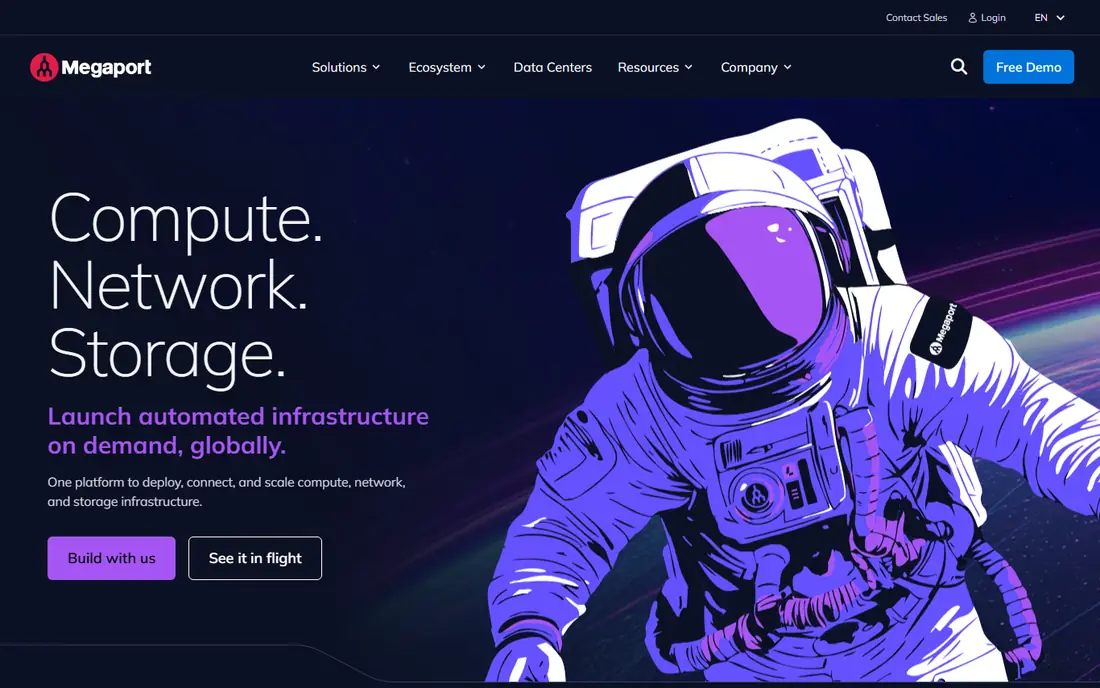
Megaport lets teams build private connections between data centers and cloud providers through a portal, with bandwidth that can be scaled up or down. Its published pricing starts from $450 per month for MegaIX, $615 per month for data center to cloud connections, and $780 per month for cloud to cloud connections. That transparency is rare in this market, and it helps buyers model a first deployment before talking to sales.
The catch is that the headline figure is only the start. Port charges, virtual cross connects and higher bandwidth tiers add to the bill, and a global WAN design still needs careful planning. For teams that already run workloads in more than one cloud, though, the ability to spin up a private link in minutes rather than waiting weeks for a circuit is the main reason to pick Megaport. It suits cloud-first IT teams more than small offices that need a managed branch network.
- Fast provisioning of private connections
- Broad cloud and data center reach
- Clear published entry prices for several services
- Costs rise quickly with bandwidth
- Enterprise features need portal familiarity
- No free plan
Aryaka runs a managed SD-WAN and SASE service over its own private core network, so customers hand over much of the day-to-day running to the vendor. The company has promoted entry pricing under $150 per site for smaller-enterprise offerings, which makes it one of the more approachable managed options for mid-size firms. Application optimization, multi-cloud connectivity and observability are bundled into the managed experience rather than sold as separate projects.
That managed model is both the strength and the trade-off. Teams with limited network staff gain a single accountable provider and consistent performance for cloud and SaaS applications. Teams that want direct control over every routing decision may find the managed approach restrictive. Ask for a quote that separates connectivity, security and support costs, and check how changes are requested and how quickly they are applied.
- Fully managed service with a private global backbone
- Combined networking and security
- Entry pricing aimed at smaller firms
- Pricing is not fully published
- Less suited to do-it-yourself network teams
- Contract terms need close reading
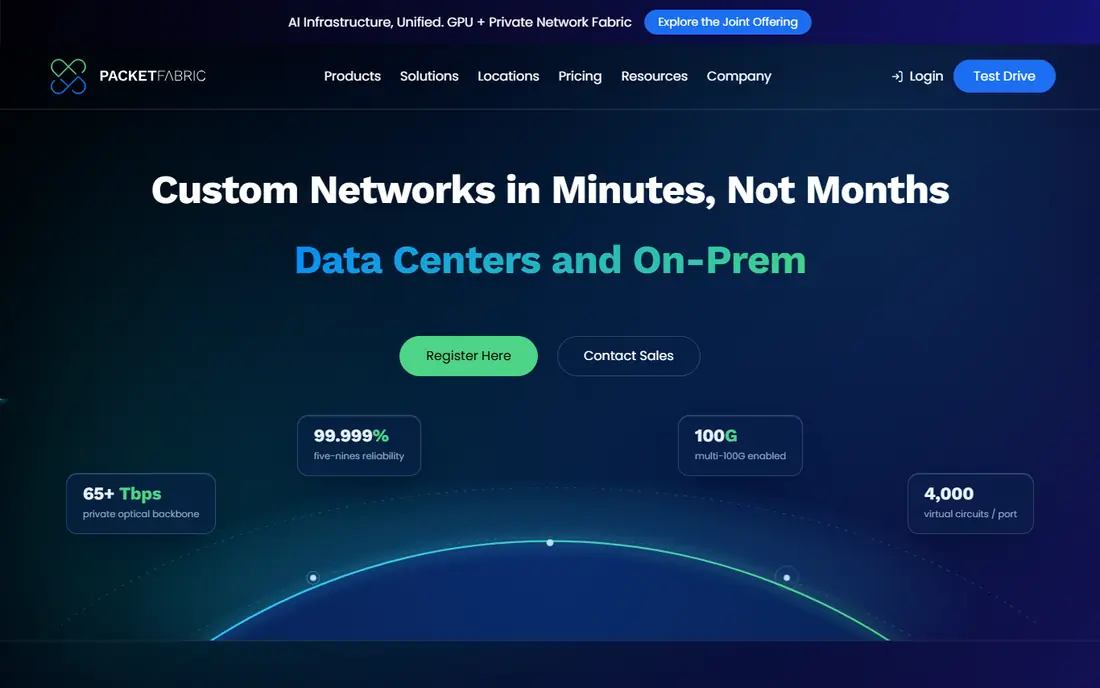
PacketFabric built its name on a network as a service platform that connects colocation facilities and clouds over private links. Its Cloud Router sits at the network edge and routes traffic between clouds without sending it over the public internet. For organizations moving workloads between providers or linking a data center to several clouds, that design cuts exposure and can improve performance.
The platform rewards teams that are comfortable with network concepts and APIs. Provisioning is fast once the design is set, but the first design still takes thought about ports, bandwidth and redundancy. Pricing is not a single published number, so request a quote for your exact routes. PacketFabric is a strong pick for infrastructure teams, and a less obvious pick for a business that wants a fully managed branch service.
- On-demand private network interconnection
- Cloud router for hybrid and multi-cloud designs
- API-driven provisioning
- Pricing varies by route and bandwidth
- Best suited to teams with network experience
- Smaller firms may need guidance
Console Connect, from PCCW Global, is a software-defined interconnection platform that lets users order bandwidth on demand between data centers, clouds and partners. Its CloudRouter product creates multi-cloud networks with pay-as-you-go pricing, which suits projects with changing bandwidth needs or seasonal traffic. The platform draws on a large carrier backbone spanning many cities and countries.
The main thing to verify is coverage and cost for your specific locations, since availability and pricing differ by market. A team with sites in Asia Pacific will likely see the strongest fit, given the platform history there. For US-only or Europe-only networks, compare Console Connect against Megaport and PacketFabric on the exact routes you need before committing.
- Pay-as-you-go bandwidth
- Strong Asia Pacific and global carrier reach
- Multi-cloud routing through CloudRouter
- Pricing is quote and usage based
- Coverage varies by market
- Enterprise onboarding takes planning
Equinix Network Edge lets teams deploy virtual network functions, such as routers and firewalls, inside Equinix data centers instead of shipping hardware. Published pricing starts at $700 per month for a one-CPU virtual device, rising with device size, with discounts for 12, 24 and 36 month terms. Billing is daily at minimum, so a device can be removed when it is no longer needed.
This is a natural choice for firms already colocated with Equinix or using Equinix Fabric for interconnection. It is less compelling as a standalone purchase for a team with no Equinix presence, since the value comes from placing virtual devices close to clouds and partners. Check vendor licensing carefully, since some virtual devices carry a separate subscription on top of the Equinix charge.
- Deploy virtual routers, firewalls and SD-WAN devices without hardware
- Published device pricing
- Global data center footprint
- Device pricing rises with size
- Licensing for some vendors is extra
- Works best inside the Equinix ecosystem
Graphiant offers network as a service without customer premises hardware, connecting sites and devices into its core network and onward to major clouds. Its pricing model is consumption based, using credits that map to core capacity and gateways, and the company highlights the absence of cloud egress charges across its network. For multi-cloud teams, the appeal is a single network fabric managed through one portal.
The trade-off is maturity. Graphiant is a younger company than Megaport or Equinix, so buyers should ask about coverage in their regions, support hours and reference customers in their industry. The credit model also needs a worked example for your traffic pattern, since a simple per-month figure does not capture it. For cloud-native teams willing to evaluate a newer platform, it is an interesting alternative to hardware-heavy WAN designs.
- Device-free, cloud-native design
- Consumption-based pricing model
- No cloud egress charges on its core network
- Newer vendor with a smaller footprint than incumbents
- Pricing is contract based
- Needs cloud networking skills
Expereo manages global internet, SD-WAN and SASE connectivity for enterprises with sites in many countries, sourcing and managing local carriers on the customer behalf. Its expereoOne platform gives a view of site and service health, and lets teams order, track and manage delivery in one place. That combination suits firms that struggle with procuring reliable internet in harder-to-reach locations.
The honest weakness is commercial transparency. Expereo does not publish prices, so budgeting starts with a direct quote, and buyers should ask early about circuit lead times and what happens when a carrier misses a maintenance notice. Review feedback also notes that reporting can feel inconsistent across regions. If your priority is one accountable partner for global sites rather than the lowest headline price, Expereo earns a place on the shortlist.
- Global managed internet sourcing across many carriers
- Self-service visibility through expereoOne
- SASE options
- No published pricing
- Lead times for new circuits can be long
- Reporting varies by region
GTT is a global network provider offering managed SD-WAN, internet, cloud connectivity and related services over its IP network. It fits multinational firms that want one provider for connectivity across many countries, with managed services layered on top. The breadth of the portfolio means a buyer can combine branch networking, cloud access and security services under one contract.
Breadth is also the risk. A GTT proposal can cover many services, so the scope needs to be pinned down line by line, including which parts are managed by GTT and which stay with the customer. Pricing is quote based, and the final figure depends heavily on locations and bandwidth. For a single-country business, a more focused provider may be simpler and cheaper.
- Large global IP backbone
- Managed SD-WAN, internet and cloud connectivity
- Experience with multinational networks
- Quote-only pricing
- Portfolio is broad and needs scoping
- Support experience varies by region
Alkira delivers a cloud WAN as a service, letting teams connect clouds, data centers and branches through cloud exchange points rather than building a private backbone themselves. Deployment is designed to be quick, with centralized policy, segmentation and visibility across the network. For firms already committed to cloud infrastructure, that model removes much of the hardware and circuit management of a traditional WAN.
The fit question is how much of your estate is cloud based. Sites with legacy MPLS contracts or unusual local access needs may still need separate arrangements, and Alkira pricing is quote based, so a worked quote matters. As a newer cloud networking vendor, it also deserves the usual checks on support coverage and reference customers. For cloud-first organizations, it is a credible alternative to incumbent managed WAN providers.
- Cloud-delivered WAN with fast deployment
- Multi-cloud connectivity
- Centralized policy and visibility
- Quote-only pricing
- Cloud-centric design may not suit legacy sites
- Smaller brand than telecom incumbents
How we picked these
We compared official product pages, pricing pages and public documentation, plus independent reviews and provider announcements, and kept only providers that offer network capacity or managed networking as a service in October 2026. We favored providers with a live platform, clear coverage information and a distinct use case, rather than listing every telecom carrier. Where pricing was not published, we wrote See website instead of estimating a figure.
What to check before you sign
Start with your traffic pattern, not the marketing. Map which sites, clouds and SaaS applications must connect, and how much bandwidth each needs at peak times. A provider that excels at cloud interconnection may be a poor fit for branch offices, and a managed SD-WAN provider may be overkill for two data centers that only need a private link.
Next, pin down the commercial terms. Ask whether bandwidth is billed per port, per site or by usage, what the minimum term is, and what happens when you scale down. Check whether support, monitoring and security features are included or charged separately, and who is responsible when a third-party carrier causes an outage. Finally, run a pilot on one or two real routes before moving production traffic, and measure latency, packet loss and failover behavior against the service levels in the contract.
Frequently asked questions
What is the best network as a service provider?
It depends on the job. Megaport and PacketFabric suit on-demand cloud interconnection, Aryaka and Expereo suit managed branch networks, and Equinix Network Edge suits virtual devices inside data centers. Shortlist two or three providers and compare them on your actual routes.
What are the best network as a service providers for small businesses?
Small firms usually do better with a managed service such as Aryaka, where the vendor runs the network, than with a raw interconnection platform that needs network staff. If the need is only one or two cloud links, a pay-as-you-go platform such as Console Connect may be cheaper. Get a quote based on site count and bandwidth before deciding.
How much does network as a service cost?
Entry points vary widely. Megaport publishes connections from $450 per month and Equinix Network Edge devices from $700 per month, while most managed providers price by quote. Bandwidth, locations, term length and included security features move the total more than any headline figure.
Is network as a service better than MPLS?
NaaS usually offers faster provisioning and more flexible scaling than traditional MPLS, and it fits cloud-heavy traffic well. MPLS can still make sense for sites that need highly predictable performance and have stable traffic patterns. Many firms run both during a migration.
Do I need network engineers to use NaaS?
Managed providers reduce that need, since the vendor handles design and operations. Interconnection platforms such as Megaport and PacketFabric still reward network knowledge, especially for routing, redundancy and security design. Budget for either vendor management time or in-house expertise.
How long does it take to set up a NaaS connection?
On-demand cloud and virtual connections can be ready in minutes or hours once ports and accounts exist. Physical circuits to a new site take longer, sometimes weeks, depending on local carrier availability. Ask each provider for a realistic lead time for your locations.
Sources
See where you really rank - block by block
ProMapRanker scans Google Maps across a grid of your service area. Simple monthly plans from $19, white-label on every plan.
Start freeKeep reading
 wpforms alternatives
Best WPForms Alternatives in 2026
We compare 9 wpforms alternatives for WordPress forms, with free and paid options, current pricing notes, and honest limits for small business sites in 2026.
Read → windows task scheduler alternatives
Best Windows Task Scheduler Alternatives in 2026
Looking for Windows Task Scheduler alternatives? We compare 9 schedulers for Windows and cross-platform work, from free tools to enterprise automation.
Read → which ai video service is best
Which AI Video Service Is Best in 2026
which ai video service is best? We compare 10 legitimate AI video services on price, avatars, editing and output quality to help you pick the right tool.
Read →