 ProMapRanker
Best Merchant Services for Small Business in 2026


Selling in person and online together · Pricing starts at: 2.6% + $0.10 in person
Key takeaways
- Flat-rate providers are simplest for low volume, while interchange-plus and subscription models usually win at higher volume.
- Monthly fees only make sense once your volume is high enough to offset them with lower per-sale costs.
- In-person and online rates differ, so compare the rate for the channel where most of your sales happen.
- Contract length, early termination fees and hardware leases matter as much as the headline rate.
Quick comparison
| Pick | Great for | Pricing starts at | Free tier | |
|---|---|---|---|---|
| Square | Selling in person and online together | 2.6% + $0.10 in person | Yes | Visit |
 Stripe | Online-first businesses and developers | 2.9% + $0.30 online | No | Visit |
 PayPal | Checkout conversion and buyer trust | 2.99% + $0.49 online | No | Visit |
 Helcim | Transparent interchange-plus pricing | Interchange + 0.40% + $0.08 in person | No | Visit |
 Payment Depot | High-volume subscription pricing | $79 per month | No | Visit |
 Stax | Subscription pricing for growing businesses | $99 per month | No | Visit |
 Dharma Merchant Services | Values-led interchange-plus processing | $25 per month | No | Visit |
 Clover | All-in-one restaurant and retail point of sale | See website | No | Visit |
The best merchant services for small business
Merchant services decide what you keep from every card sale, so a small rate difference adds up fast. The eight providers below cover flat-rate simplicity, interchange-plus transparency and subscription pricing, and they suit different mixes of in-person, online and high-volume sales. Fees and terms vary, so read the contract and check the full fee schedule before you sign.

Square is the default for shops, market stalls and food businesses that need to take cards today without a sales call. You get a free point-of-sale app, card readers and online checkout in one account, and standard processing has no monthly fee. For a new business, that speed and simplicity are worth more than a slightly lower rate elsewhere.
Standard in-person pricing was listed at 2.6% plus $0.10 per transaction, with online sales at 2.9% plus $0.30. The catch is volume: flat-rate pricing caps your downside on premium cards, but it costs more than interchange-plus once monthly sales grow, so revisit Square once you pass the low-volume stage.
- No monthly fee for standard processing
- Free point-of-sale tools
- Fast setup
- Flat rate gets pricey at high volume
- Account holds can frustrate some sellers
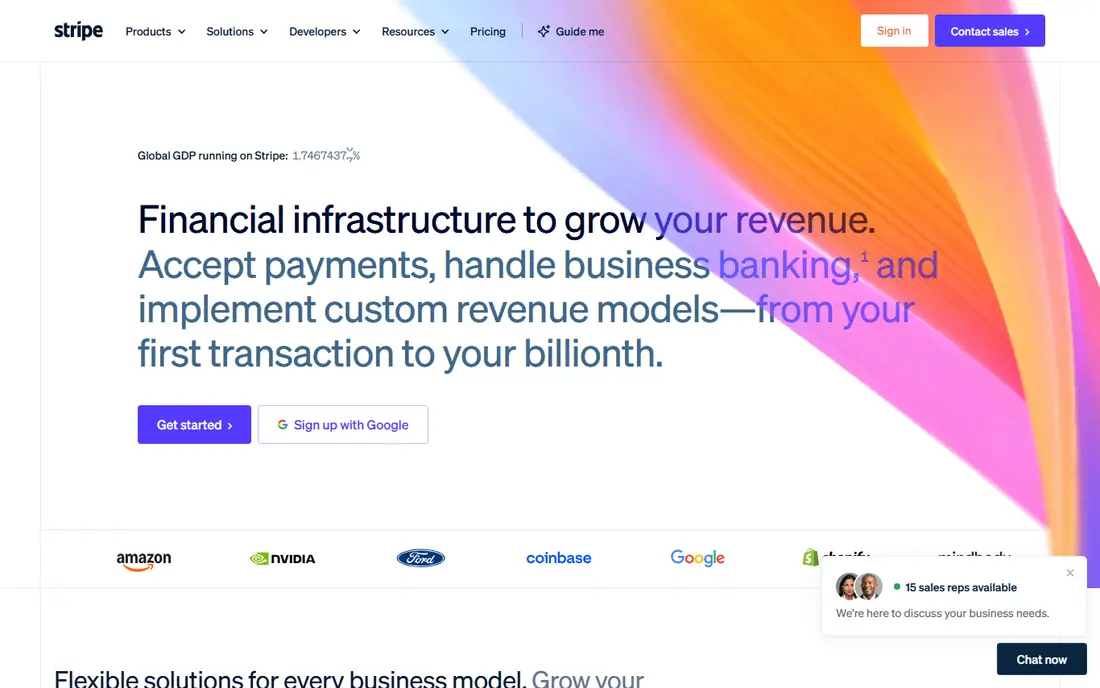
Stripe is the online-first pick for stores, software sellers and subscription businesses that need payments built into a website or app. Its APIs, billing tools and marketplace payouts are the reason so many online businesses start here, and it handles international cards and recurring payments without a separate gateway. If your sales are mostly online, Stripe deserves the first look.
Standard online pricing was listed at 2.9% plus $0.30 per successful card transaction, with in-person terminal pricing at 2.7% plus $0.05, and no monthly fee for standard processing. The catch is scale: the same flat rate that is simple at low volume becomes expensive as volume grows, and some advanced tools carry separate fees.
- Strong developer tools and APIs
- Subscriptions, invoicing and marketplaces in one system
- Global payments
- Flat rate rises with volume
- Advanced setup can feel complex for non-technical teams
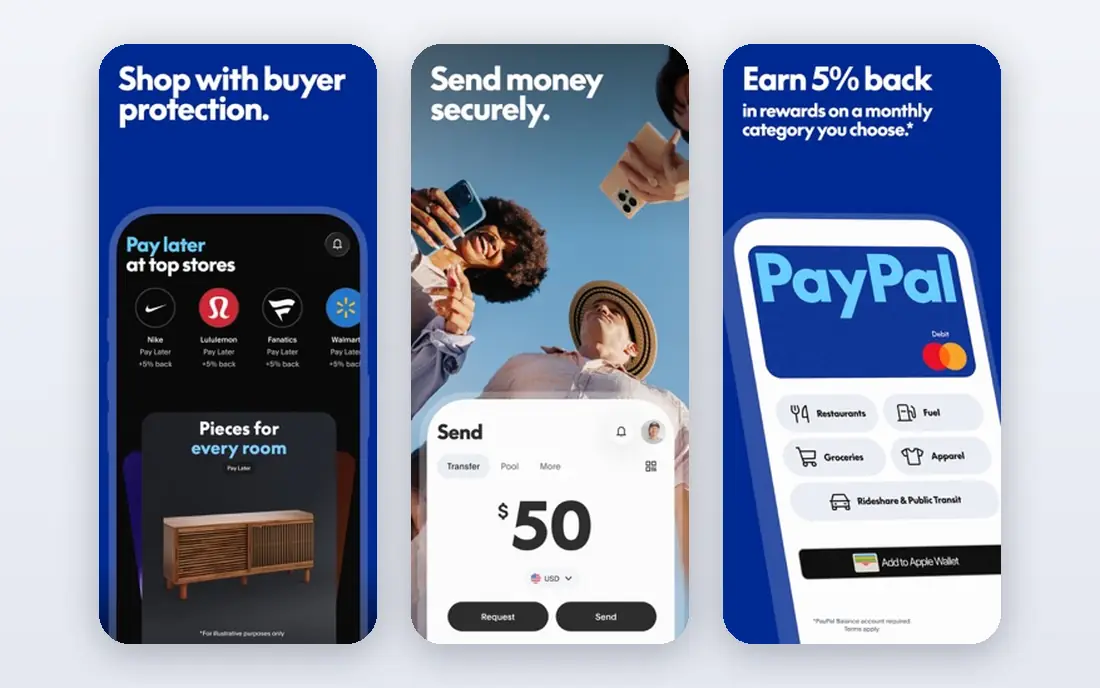
PayPal earns its place because buyers recognise and trust it at checkout, and that trust can lift conversion for online stores. Sellers get wallet payments, card processing and invoicing in one account, with no monthly fee for standard processing. For a store that already sees customers asking for PayPal, offering it is less a choice than a necessity.
Online card pricing was listed at 2.99% plus $0.49 per transaction in recent 2026 comparisons, with in-person pricing lower at 2.29% plus $0.09. The catch is cost and control: the online rate is higher than Stripe or Square, and PayPal holds and reserves are a real complaint among sellers, so keep a backup payout plan.
- Buyers trust the PayPal button
- Wallet and card checkout in one
- No monthly fee for standard processing
- Higher online card fees than some rivals
- Account holds and reserves affect some sellers
Helcim is the transparency pick for growing businesses that want to see what the card networks charge and what Helcim keeps. Its interchange-plus model passes network costs through and adds a small markup, with no monthly fee, and that markup can fall as your volume rises. For a business outgrowing flat-rate pricing, Helcim is often the first interchange-plus provider worth quoting.
In-person pricing was listed at interchange plus 0.40% plus $0.08, with online pricing higher at interchange plus 0.50% plus $0.25 in some comparisons. The catch is ecosystem size: Helcim has fewer ready-made integrations than Square or Stripe, so check your point-of-sale, store and accounting connections before switching.
- Interchange-plus with no monthly fee
- Margin falls as volume grows
- Clear reporting
- Smaller ecosystem than Square or Stripe
- Online markup is higher than in-person
Payment Depot suits businesses that process enough each month for a membership fee to pay for itself. Instead of a percentage markup, members pay a monthly fee and a small amount over interchange, which can cut the effective rate sharply at high volume. If your monthly sales are already strong, that structure is worth modelling against your current statement.
Membership was listed from $79 per month, with higher tiers for larger businesses, and per-transaction costs around interchange plus $0.08 to $0.15 depending on channel and tier. The catch is the break-even point: at low volume the monthly fee costs more than it saves, so run your actual monthly sales and average ticket through the comparison before joining.
- Subscription model with low markup over interchange
- Suits high monthly volume
- Monthly fee wastes money at low volume
- Membership tiers change the break-even point
Stax, formerly Fattmerchant, follows the same subscription idea as Payment Depot: pay a monthly fee, then pay interchange plus a small fixed amount per transaction, with no percentage markup. That model rewards businesses with steady, high volume, because every extra sale costs less in markup than it would under flat-rate pricing. It also includes billing and reporting tools that suit subscription and service businesses.
Plans were listed from $99 to $199 per month, with interchange plus about $0.08 to $0.18 per transaction depending on channel and plan. The catch is commitment: the monthly fee only makes sense above a clear volume threshold, and choosing the wrong tier can erase the saving, so compare at least two tiers against your last three statements.
- Zero percentage markup over interchange on subscription plans
- Strong for high volume
- Monthly fee from $99
- Annual options and tier choice add complexity
Dharma Merchant Services
Great for: Values-led interchange-plus processing
Dharma Merchant Services is an interchange-plus provider that appeals to businesses that want transparent pricing and a company with a clear social stance, including donations from its own revenue. Its month-to-month terms avoid long lock-ins, and its pricing suits businesses that have outgrown flat-rate processing but do not yet need a subscription model. For a values-led shop or service business, that combination is distinctive.
Pricing was listed at interchange plus 0.15% plus $0.08 in person and interchange plus 0.20% plus $0.11 online, with a $25 monthly fee. The catch is scale and tools: the monthly fee hurts at very low volume, and Dharma offers a narrower software ecosystem than Square or Stripe, so confirm your hardware and software fit first.
- Interchange-plus pricing
- Month-to-month terms
- Socially focused company stance
- Monthly fee adds up at very low volume
- Smaller provider with a narrower tool set
Clover, from Fiserv, is the hardware-led pick for restaurants and retailers that want a counter system, not just a payment account. Its terminals, kitchen displays and app market cover ordering, inventory and staff tools in one system, which is why many cafes and shops choose it over a phone-based reader. If your business needs a full till system, Clover is built for that job.
We list pricing as See website because Clover software plans, hardware costs and processing rates vary by plan, hardware choice and sales channel, and lease terms can change the total sharply. The catch is the contract: read the length, early termination terms and any hardware lease before signing, because a cheap monthly plan can hide a long commitment.
- Complete point-of-sale hardware and software
- Restaurant and retail features
- Wide app market
- Software plans and hardware leases vary widely
- Check contract length carefully
How we picked these
We compared published pricing pages and recent merchant service comparisons, and we kept only providers that serve US small businesses and publish usable rate information. Rates shown are standard published rates and will vary by card type, volume and business category, and interchange itself changes with the card used. We did not process payments through any provider for this guide, so service notes reflect published features and public reviews, not a live account test. Fees and terms vary, so read the contract and the full fee schedule before you sign.
How to choose a merchant service provider
Start with your sales mix. Add up in-person sales, online sales and average ticket size for the last three months, then compare providers on the channel that dominates. A provider that is cheapest online may be average in person, and the wrong comparison can cost more than any single rate difference.
Model your break-even point for monthly fees. A subscription or monthly fee only saves money once your volume passes a threshold, so calculate that threshold from your own statements rather than trusting a provider calculator. If you are below it, a no-monthly-fee flat-rate or interchange-plus provider is usually the safer choice.
Read the contract before the rate sheet. Check contract length, early termination fees, hardware leases, PCI compliance fees, chargeback fees and payout timing, and ask what happens if you pause or close the account. A low rate with a long lease and high exit fees is often the most expensive option over two years.
Frequently asked questions
What is the best merchant service for small business?
For most small businesses starting out, Square or Stripe is the simplest safe choice, with no monthly fee and published rates. Once volume grows, Helcim, Dharma, Payment Depot or Stax can lower the effective rate, but only after you model the change against your own statements.
What is the best merchant service for small businesses selling online?
Stripe and PayPal lead for online sales, with Stripe offering stronger developer tools and PayPal offering buyer trust at checkout. Compare online card rates and checkout conversion together, since a trusted payment button can be worth a slightly higher fee.
What is the best merchant account service for high volume?
Subscription providers such as Payment Depot and Stax, and interchange-plus providers such as Helcim, usually win at high volume, because their markup per sale is far lower than flat-rate pricing. Run at least three months of statements through each model before switching.
Do merchant services charge a monthly fee?
Some do and some do not. Flat-rate providers such as Square and Stripe charge no monthly fee for standard processing, while subscription providers charge $79 to $199 per month and interchange-plus providers may charge a smaller monthly fee. Always check for gateway, compliance and statement fees on top of the headline rate.
What should I check before signing a merchant services contract?
Check contract length, early termination fees, hardware leases, chargeback fees, payout timing and whether rates can change during the term. Fees and terms vary, so read the contract and the full fee schedule, and avoid signing a long lease for hardware you could buy outright.
Sources
See where you really rank - block by block
ProMapRanker scans Google Maps across a grid of your service area. Simple monthly plans from $19, white-label on every plan.
Start freeKeep reading
 top rated pdf scanner software
Best PDF Scanner Software in 2026
Looking for top rated pdf scanner software? We compare 8 scanner apps on scan quality, OCR, price, watermarks and privacy to find your best fit for daily use.
Read → expensify alternatives
Best Expensify Alternatives in 2026
Looking for expensify alternatives? We compare 8 top expense tools on price, cards, receipts and approvals to help your team pick the right one in 2026.
Read → best tools for drawing diagrams
Best Tools for Drawing Diagrams in 2026
Compare the best tools for drawing diagrams, from Lucidchart and Miro to free diagrams.net. See pricing, templates, and collaboration features for teams.
Read →