 ProMapRanker
Best Marketing Software in 2026


Teams that want CRM and marketing in one system · Pricing starts at: Free CRM; Marketing Hub Starter from $15 per seat per month on annual billing
Key takeaways
- HubSpot is our first pick for teams that want crm and marketing in one system, while Mailchimp stands out for beginners, newsletters, and small audiences.
- Prices range from free plans on several picks to paid plans from Starter from $15 per month on annual billing, so check the plan that matches your actual use.
- The best fit depends on format: live help, self-paced work, or a managed service change the experience more than a single feature.
- Check free plan limits, export options, and cancellation terms before committing, because headline prices rarely tell the full story.
- Start with a trial or a short plan, test it on a real task, and keep only the tool that clearly helps your workflow.
Quick comparison
| Pick | Great for | Pricing starts at | Free tier | |
|---|---|---|---|---|
| HubSpot | Teams that want CRM and marketing in one system | Free CRM; Marketing Hub Starter from $15 per seat per month on annual billing | Yes, free CRM | Visit |
 Mailchimp | Beginners, newsletters, and small audiences | Free plan for up to 500 contacts; Essentials from $13 per month | Yes, free plan | Visit |
 ActiveCampaign | Small businesses that want deep automation | Starter from $15 per month on annual billing | No; trial available | Visit |
 Brevo | Businesses with large lists and small budgets | Free plan; Starter from $9 per month | Yes, free plan | Visit |
 Klaviyo | Ecommerce brands that live on email and SMS revenue | Free plan for up to 250 contacts; paid from $20 per month | Yes, free plan | Visit |
 Constant Contact | Local businesses and nonprofits that want simple email | From $12 per month | No; trial available | Visit |
 GetResponse | Marketers who also run webinars | From $19 per month | No; trial available | Visit |
 MailerLite | Simple email marketing on a budget | See website | Yes, free plan | Visit |
The best marketing software
We compared email platforms, automation tools, and all-in-one suites, and the eight picks below cover solo senders, small teams, and growing companies.
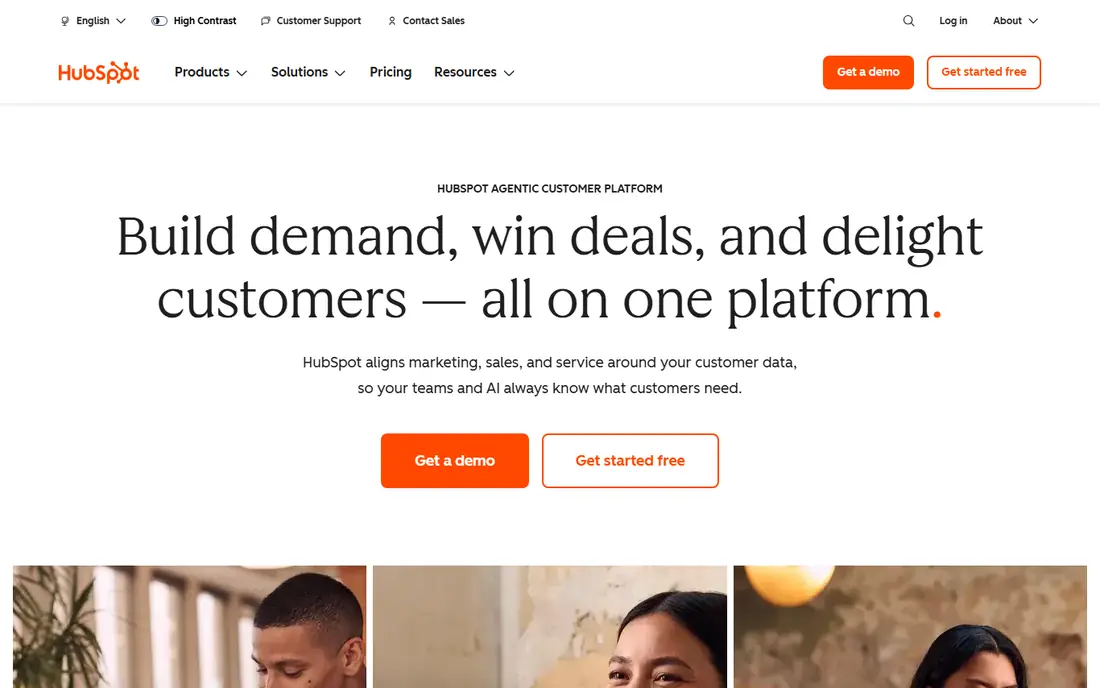
HubSpot combines a CRM with marketing, sales, and service tools in one system. Marketing Hub adds email campaigns, landing pages, lead scoring, and reporting on top of the shared contact record. It suits teams where marketing and sales must share one database, and it is more than most teams need for email alone. Pricing also matters here, because the starting price is Free CRM; Marketing Hub Starter from $15 per seat per month on annual billing, and the free plan status is Yes, free CRM. Compare that price at your real usage level, not just the entry tier, and check what is included before you pay. We would shortlist HubSpot for readers whose main need is teams that want crm and marketing in one system. If that need is not your priority, another pick on this list may fit better, and the comparison table above is a good place to start that second look.
- Free CRM with contacts and deals, email automation on paid tiers, and a large integration library
- Costs rise sharply on higher tiers, and contact-based pricing can grow with your list
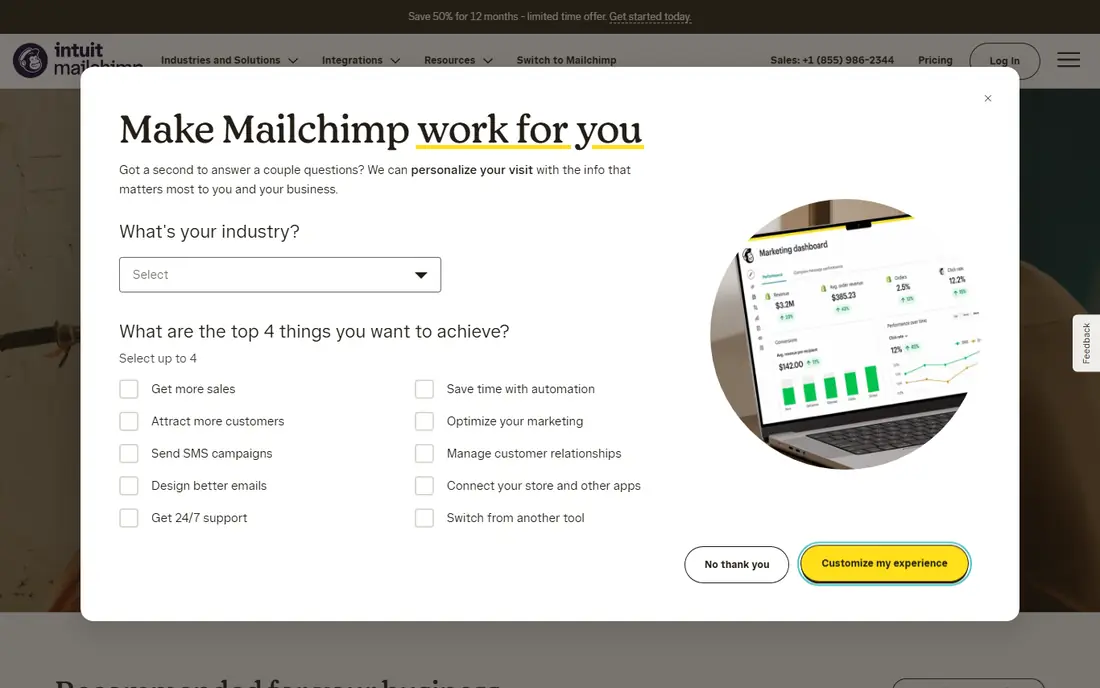
Mailchimp is a widely used email marketing platform for newsletters and campaigns. Its drag-and-drop editor and templates make it easy to send a polished campaign without design help. It is a strong first platform for small lists, and teams should model price at double their current list size. Pricing also matters here, because the starting price is Free plan for up to 500 contacts; Essentials from $13 per month, and the free plan status is Yes, free plan. Compare that price at your real usage level, not just the entry tier, and check what is included before you pay. We would shortlist Mailchimp for readers whose main need is beginners, newsletters, and small audiences. If that need is not your priority, another pick on this list may fit better, and the comparison table above is a good place to start that second look.
- Easy editor, templates, audience tools, and simple automation
- Pricing rises with contacts, and advanced automation is limited on lower tiers
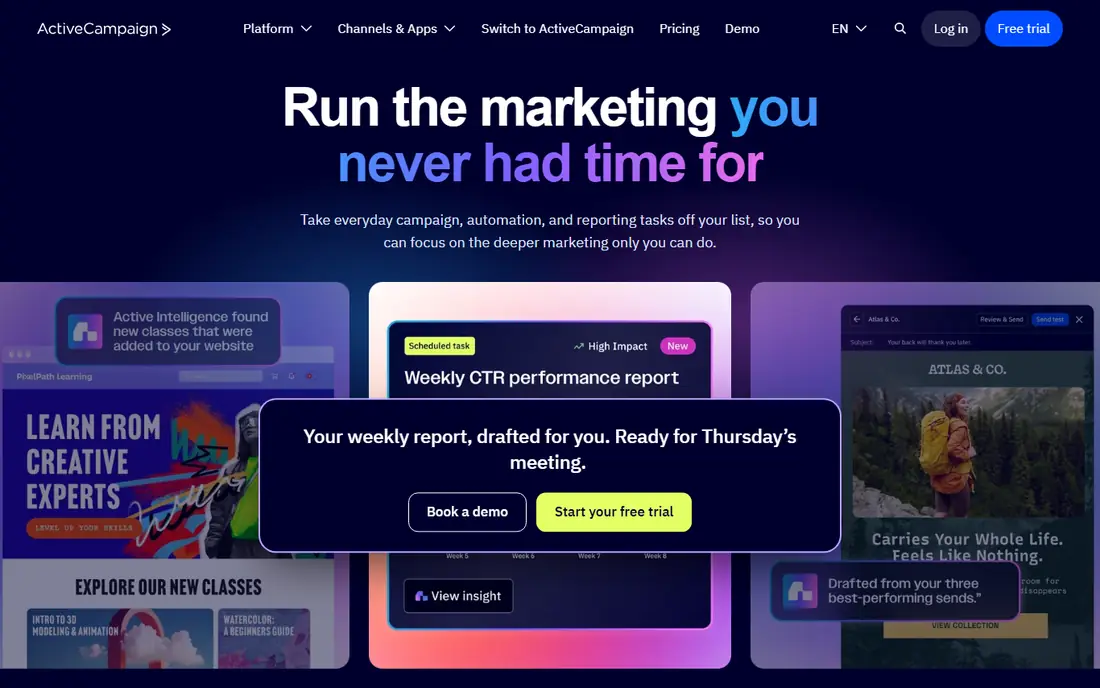
ActiveCampaign focuses on automation workflows that react to subscriber behaviour. Workflows can tag contacts, send follow-ups, and move deals through a pipeline based on actions. It suits teams that want automation depth without moving to an enterprise suite. Pricing also matters here, because the starting price is Starter from $15 per month on annual billing, and the free plan status is No; trial available. Compare that price at your real usage level, not just the entry tier, and check what is included before you pay. We would shortlist ActiveCampaign for readers whose main need is small businesses that want deep automation. If that need is not your priority, another pick on this list may fit better, and the comparison table above is a good place to start that second look.
- Strong automation builder, CRM features, and segmentation
- Learning curve is steeper than simple email tools, and setup takes time
Brevo, formerly Sendinblue, offers email marketing, SMS, and CRM tools. Its send-based pricing can suit businesses with large lists that send less often. Check send limits and contact handling on your plan, since pricing logic differs from contact-based rivals. Pricing also matters here, because the starting price is Free plan; Starter from $9 per month, and the free plan status is Yes, free plan. Compare that price at your real usage level, not just the entry tier, and check what is included before you pay. We would shortlist Brevo for readers whose main need is businesses with large lists and small budgets. If that need is not your priority, another pick on this list may fit better, and the comparison table above is a good place to start that second look.
- Email and SMS in one platform, pricing based on sends rather than contacts in many plans
- Templates and automation are simpler than some rivals, and support varies by plan
Klaviyo is built for ecommerce email and SMS, with strong Shopify and WooCommerce integrations. Its prebuilt flows cover welcome series, abandoned carts, and post-purchase follow-ups. It is the best fit when email and SMS revenue is central, and less useful for non-ecommerce newsletters. Pricing also matters here, because the starting price is Free plan for up to 250 contacts; paid from $20 per month, and the free plan status is Yes, free plan. Compare that price at your real usage level, not just the entry tier, and check what is included before you pay. We would shortlist Klaviyo for readers whose main need is ecommerce brands that live on email and sms revenue. If that need is not your priority, another pick on this list may fit better, and the comparison table above is a good place to start that second look.
- Deep ecommerce integrations, flows for abandoned carts and post-purchase, and segmentation
- Pricing rises with contacts and SMS use, and it is built mainly for ecommerce
Constant Contact
Great for: Local businesses and nonprofits that want simple email
Constant Contact focuses on simple email marketing for small businesses and nonprofits. It offers templates, contact management, and event promotion without a steep learning curve. It suits teams that send regular newsletters and event emails and do not need complex automation. Pricing also matters here, because the starting price is From $12 per month, and the free plan status is No; trial available. Compare that price at your real usage level, not just the entry tier, and check what is included before you pay. We would shortlist Constant Contact for readers whose main need is local businesses and nonprofits that want simple email. If that need is not your priority, another pick on this list may fit better, and the comparison table above is a good place to start that second look.
- Simple editor, event tools, and list management for local organisations
- Automation is more limited than ActiveCampaign or Klaviyo, and design options are basic
GetResponse combines email marketing with landing pages and webinar hosting. Its funnel tools help teams turn a campaign into a signup, webinar, and follow-up sequence. It is worth shortlisting when webinars are part of the marketing plan, not just an occasional extra. Pricing also matters here, because the starting price is From $19 per month, and the free plan status is No; trial available. Compare that price at your real usage level, not just the entry tier, and check what is included before you pay. We would shortlist GetResponse for readers whose main need is marketers who also run webinars. If that need is not your priority, another pick on this list may fit better, and the comparison table above is a good place to start that second look.
- Email marketing plus landing pages, funnels, and webinars
- Pricing depends on list size, and webinar limits vary by plan
MailerLite is a clean, budget-friendly email platform for newsletters and simple campaigns. Its editor and automation cover the core needs of small teams without a complex setup. It suits creators and small businesses that want a simple, low-cost email tool and can grow later if needed. Pricing also matters here, because the starting price is See website, and the free plan status is Yes, free plan. Compare that price at your real usage level, not just the entry tier, and check what is included before you pay. We would shortlist MailerLite for readers whose main need is simple email marketing on a budget. If that need is not your priority, another pick on this list may fit better, and the comparison table above is a good place to start that second look.
- Clean editor, simple automation, and landing pages
- Automation depth is limited compared with ActiveCampaign, and support is mainly online
How we picked these
We compared official feature pages, pricing pages, app store listings, privacy policies, and public reviews for each product, and we checked that each product exists and works today. We looked at core features, price, free plan limits, and fit for the topic, rather than popularity alone. We did not claim hands-on testing, lab testing, or daily use, and we did not invent prices, awards, user counts, or ratings. Where a price could not be verified from a clear public source, we wrote See website, so readers can check the current vendor page before buying.
How to choose marketing software
Start with the job email must do, then check whether you also need CRM, SMS, or webinars before paying for a suite. Price, format, and support should be weighed together, and a short trial is worth more than a long feature list when the choice is close.
Check the real cost
Add up the monthly price, any per-user or per-client charge, and fees for extra features, seats, or exports. Free plans help for testing, but they often limit the exact feature you will need most, so read the free plan limits on the vendor page.
Match the format to the work
A tool that fits your daily workflow will be used, while a more complete tool that feels awkward will sit unused. Check device support, integrations with tools you already use, and whether a team or a single user will run it.
Test before you commit
Run a real task through a trial, such as one lesson, one order, one report, or one poster, and judge the result on that task. Check support options, cancellation terms, and data export, because switching later is harder than testing now.
Frequently asked questions
What are the best marketing tools for small businesses?
The best marketing tools for small businesses are usually Mailchimp, Brevo, or MailerLite for email, plus HubSpot when a shared CRM matters. ActiveCampaign is the step up for automation. Pick the smallest tool that covers your current campaigns, and upgrade when a clear limit appears.
What is the best platform for email marketing?
For most small teams, Mailchimp is the easiest starting point, while Brevo suits large lists on a budget and Klaviyo suits ecommerce. HubSpot is stronger when email must run from CRM data. Compare price at your real list size, not the entry tier.
Are there best free AI tools for digital marketing in these platforms?
Several platforms include AI writing, subject line help, and send-time suggestions on paid or free tiers, but availability varies by plan. Treat AI output as a draft to edit, and check the plan page for what is included. Do not pay for AI features you will not use weekly.
What is the best email platform for business use?
For business use, HubSpot and ActiveCampaign offer stronger CRM and automation, while Mailchimp and Constant Contact suit simpler newsletter work. If sales follow-up matters, a CRM-based tool will save more time than a pure email tool.
When should a team move from email software to a full suite?
Move when marketing, sales, and support need one contact record, or when automation, scoring, and reporting are holding back growth. Until then, a focused email tool plus a simple CRM is often cheaper and faster to run.
Sources
See where you really rank - block by block
ProMapRanker scans Google Maps across a grid of your service area. Simple monthly plans from $19, white-label on every plan.
Start freeKeep reading
 zoom alternatives
Best Zoom Alternatives in 2026
Compare Zoom alternatives in 2026, with free meeting limits and prices, so you can pick the best alternative to Zoom for your team, class, or community.
Read → which software is best for remote work
Which Software Is Best for Remote Work in 2026
Answering which software is best for remote work, we compare Slack, Zoom, Asana, Notion, Teams and more, with pricing and honest tradeoffs in 2026 now.
Read → which ai tool is best for content writing
Which AI Tool Is Best for Content Writing in 2026
Wondering which ai tool is best for content writing? We compare ChatGPT, Claude, Jasper, Grammarly, and more on price, quality, and best use in 2026 now.
Read →