 ProMapRanker
Best Marketing Automation Software in 2026

Key takeaways
- HubSpot Marketing Hub is the best all-in-one pick for teams that want CRM and marketing in one system, with a free tier to start.
- ActiveCampaign offers the deepest automation for small businesses at $15 per month, with a steeper learning curve than rivals.
- Klaviyo is the best pick for ecommerce brands that live on email and SMS revenue, starting at $20 per month.
- Brevo is the budget champion for large lists, starting at $9 per month with a free tier.
- Pricing scales with contacts, sends or seats, so model your list at twice its current size before you compare entry prices.
Quick comparison
| Pick | Great for | Pricing starts at | Free tier | |
|---|---|---|---|---|
 HubSpot Marketing Hub | CRM-connected automation | Free | Yes | Visit |
 ActiveCampaign | Deep small business automation | $15 per month | Free trial | Visit |
 Brevo | Budget large lists | $9 per month | Yes | Visit |
 Klaviyo | Ecommerce email and SMS | $20 per month | Yes | Visit |
 Mailchimp | Beginners and newsletters | $13 per month | Yes | Visit |
 Customer.io | Product-led SaaS journeys | See website | Free trial | Visit |
 Omnisend | Ecommerce on a budget | See website | Yes | Visit |
 Keap | Sales pipeline plus automation | See website | Free trial | Visit |
 Salesforce Marketing Cloud | Enterprise scale | See website | No | Visit |
The best marketing automation software
Marketing automation now covers whole customer journeys, not just email blasts. The best tools score leads, trigger messages across email, SMS and in-app channels, and pass sales-ready contacts to your CRM. We compared pricing models, automation depth, CRM fit and ecommerce strength.
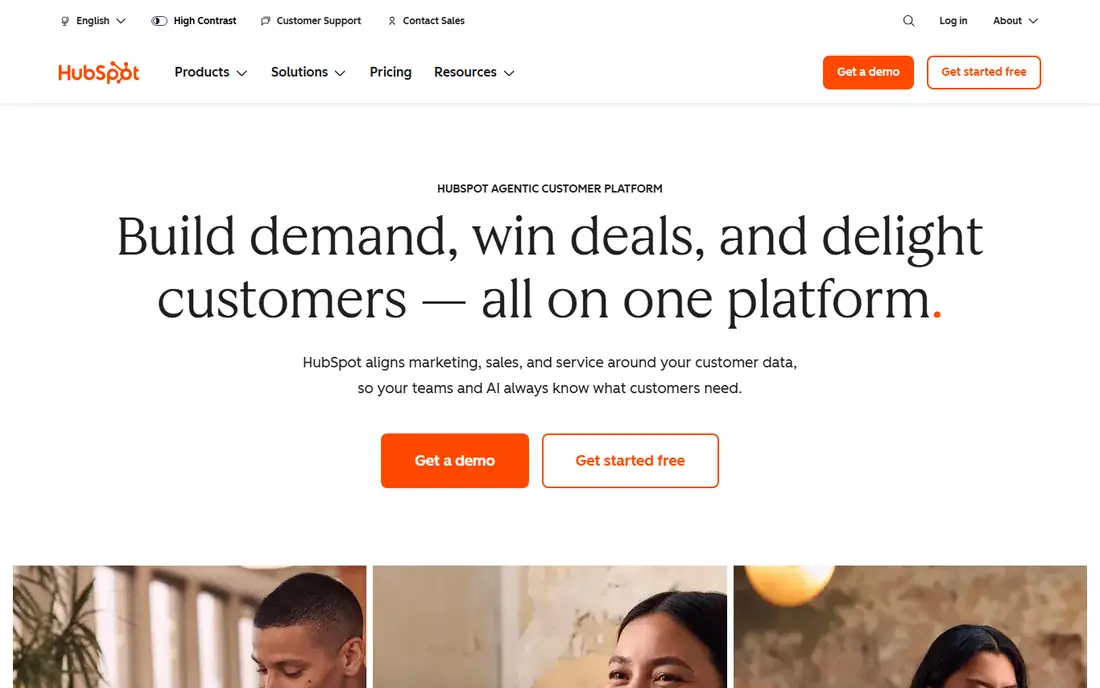
HubSpot is the easiest all-in-one to adopt. The free CRM covers contacts, deals and basic marketing tools, and Marketing Hub Starter adds email automation, landing pages and lead scoring for small teams. Because sales, marketing and service share one record, handoffs are cleaner than with a standalone email tool.
Costs rise later. Starter seats start at around $15 per seat per month on annual billing in recent listings, while Professional sits near $890 per month. Contact-tier pricing also punishes list growth. HubSpot suits teams that want one system for marketing and sales and have budget to grow, and it is overkill if you only need email.
- Free CRM with unlimited contacts
- Native sales and service tools
- Huge integration marketplace
- Professional features cost far more than Starter
- Contact-tier pricing grows with your list
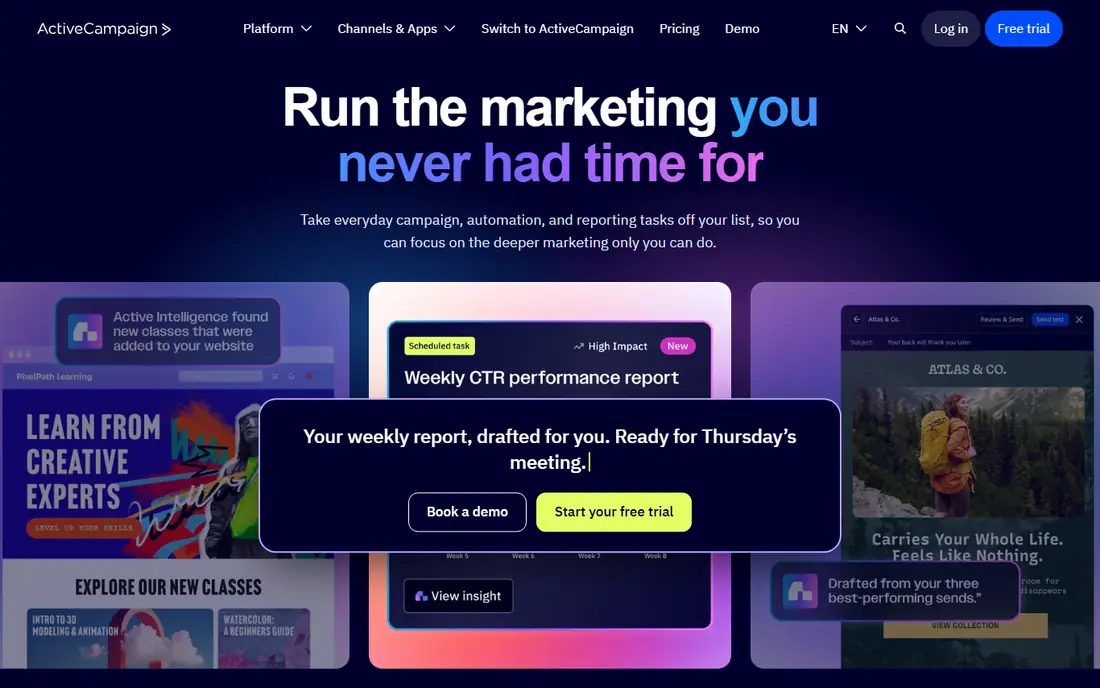
ActiveCampaign is our pick for small businesses that want the deepest automation for the money. The visual builder handles conditions, splits, goals and site tracking with a clarity that rivals struggle to match. Segmentation, lead scoring and predictive sending help a small team run journeys that feel personal at scale.
Starter pricing is $15 per month for 1,000 contacts in recent listings, with a 14-day trial and no free tier. The learning curve is real, especially for complex automations, and CRM depth on lower tiers is limited. If you will invest a few days in learning the builder, ActiveCampaign gives more automation per dollar than most rivals.
- Powerful visual automation builder
- Strong segmentation and predictive features
- Built-in CRM
- Steeper learning curve
- No free tier, only a trial
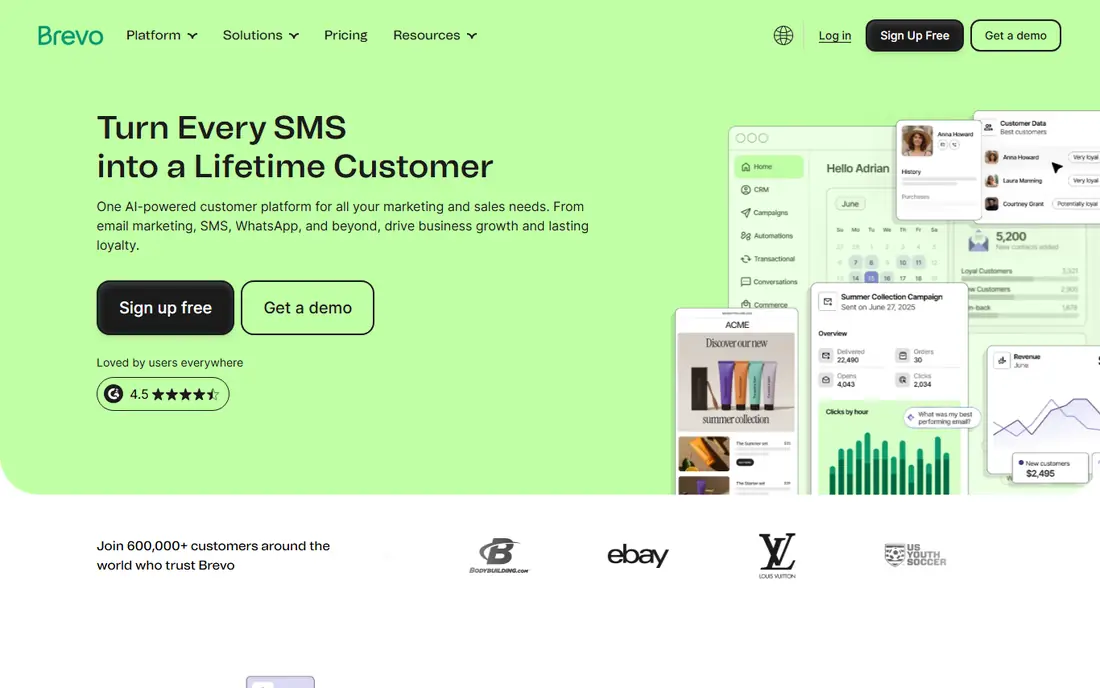
Brevo, formerly Sendinblue, is the budget champion for businesses with large lists and small budgets. Starter costs $9 per month, and paid plans do not charge per contact in the same way as HubSpot or ActiveCampaign, which helps when your list grows fast. The free tier covers 300 emails per day, enough to test the tool properly.
Advanced automation, landing page depth and reporting improve on higher tiers, and some features jump in price at the top end. Brevo suits newsletters, transactional email and simple journeys. Teams that need deep behavioural automation should compare ActiveCampaign before choosing Brevo on price alone.
- Low entry price
- Unlimited contacts on paid plans
- Free tier with 300 emails per day
- Advanced automation sits on higher tiers
- Interface is less polished than HubSpot
Klaviyo is built for ecommerce, and its flows show it. Abandoned cart, post-purchase, winback and browse abandonment flows come ready to adapt, with product data pulled directly from your store. Email and SMS live in one platform, so a store can coordinate both channels around the same customer journey.
Pricing starts at $20 per month for 500 contacts in recent listings, with a free tier for up to 250 contacts. Costs scale with active profiles and SMS sends, so a growing store should model both. For stores where email and SMS drive a large share of revenue, Klaviyo is the most store-focused automation pick here.
- Deep Shopify and WooCommerce integrations
- Strong ecommerce flows
- AI segmentation for stores
- Price rises with active profiles
- SMS costs add up quickly
Mailchimp remains the easiest entry point for newsletters and small audiences. The free tier covers 500 contacts, templates are polished, and landing pages and basic journeys are quick to set up. Beginners can send a professional campaign in an afternoon without training.
Growth is where Mailchimp frustrates. Automation depth lags ActiveCampaign, and pricing rises with contacts in a way that can surprise growing lists. Essentials starts at $13 per month in recent listings. Choose Mailchimp if you are starting out and you value simplicity, and plan to reassess when automation becomes central to your marketing.
- Easiest to start
- Free tier for 500 contacts
- Good templates and landing pages
- Automation is weaker than ActiveCampaign
- Costs rise as lists grow
Customer.io suits product-led SaaS teams that want journeys triggered by what users actually do in the product. Onboarding, trial conversion, feature adoption and churn prevention flows can react to events, not just email opens. That data-first approach is powerful for teams with a clear event model.
Pricing is custom and depends on profiles and sends, with a trial available. Setup takes more data work than Mailchimp or Brevo, so small teams without engineering help may struggle. If your product data is clean and your growth depends on in-product behaviour, Customer.io is a strong specialist pick.
- Behaviour-based journeys from product data
- Flexible data and API options
- Strong for SaaS onboarding
- Custom pricing
- Needs data setup before it shines
Omnisend gives ecommerce brands a Klaviyo-style tool at a lower entry point. Prebuilt flows cover welcome, cart abandonment, post-purchase and winback, with drag-and-drop editing and store integrations. Email and SMS can run in the same journey, which helps small stores coordinate campaigns without two vendors.
We list the price as See website because Omnisend pricing varies by contacts, sends and plan, and recent listings differ. A free tier is available for testing. Omnisend suits small and mid-sized stores that want ecommerce automation without Klaviyo pricing, while larger stores may still prefer Klaviyo depth.
- Ecommerce flows for Shopify and WooCommerce
- Email plus SMS in one tool
- Free tier to start
- Less depth than Klaviyo for large stores
- Pricing varies by contacts and sends
Keap, formerly Infusionsoft, suits service businesses that want a sales pipeline plus marketing automation in one place. Contacts, deals, appointments, invoices and automations live together, so a coach, agency or local service firm can follow a lead from enquiry to payment without stitching tools together.
Pricing is custom in recent listings, with past listings showing higher entry costs than ActiveCampaign or Brevo, and a trial is available. Setup takes effort, and Keap is overkill for a simple newsletter. Choose Keap when your business sells services through a pipeline and you want automation tied to deals, not just email lists.
- CRM, pipeline and automation in one tool
- Good for service businesses
- Appointments and payments included
- Higher entry cost than email-first tools
- Implementation takes time
Salesforce Marketing Cloud, now part of Agentforce Marketing in recent listings, is built for enterprises that personalize journeys for millions of contacts. It connects deeply to Salesforce CRM, handles complex data models and supports cross-channel journeys at a scale that small business tools cannot match.
Pricing is quote-based, with entry figures around $25 per user per month in some recent listings for related Salesforce marketing products, but enterprise contracts vary widely. Setup and admin require skilled staff or a partner. Small businesses should not start here. Enterprises already on Salesforce will get the most value from staying in that ecosystem.
- Enterprise journey orchestration at massive scale
- Deep Salesforce CRM integration
- Strong data and AI tools
- Quote-based pricing
- Complex setup and admin needs
How we picked these
We compared official pricing pages, automation depth, CRM fit and ecommerce strength for tools actively sold in October 2026. We included all-in-one platforms, ecommerce specialists, product-led tools and enterprise options, rather than nine email tools with similar features. Prices are US list prices before tax, and we note where contact, seat or send counts change the real cost.
What to check before you buy
Start with your journey, not your list size. Map the three journeys that matter most, such as welcome, trial conversion and cart abandonment, and check that the tool can build each one without workarounds. Then model price at twice your current list size, since contact-based pricing punishes growth.
Test deliverability and reporting
Send test campaigns to major inbox providers and check spam placement, open and click reporting and revenue attribution. A tool with weak deliverability wastes good automation. Check whether revenue reporting needs an integration, and whether that integration works with your store or CRM.
Check data and integrations
Confirm the tool connects to your CRM, store, forms and analytics without custom code, or budget for that work. Check data residency, consent handling and unsubscribe compliance for your markets. If you sell in the European Union, confirm GDPR tools and data processing terms before you import a list.
Plan migration honestly
Moving lists, templates, automations and historical data takes longer than vendors promise. Budget time to rebuild journeys, warm up sending domains and test flows before you switch off the old tool. Run both tools in parallel for one campaign cycle if you can, so a migration problem does not stop your marketing.
Frequently asked questions
What is the best marketing automation software?
HubSpot is best for all-in-one CRM and marketing, ActiveCampaign is best for deep small business automation, and Klaviyo is best for ecommerce. The right pick depends on whether you need CRM depth, automation depth or store revenue most.
What is the best marketing automation platform for small business?
ActiveCampaign at $15 per month offers the deepest automation for small businesses, while Brevo at $9 per month is the budget pick for large lists. HubSpot free is a good start if you want CRM and marketing together and you plan to grow into paid tiers.
Is there free marketing automation software?
Yes. HubSpot, Brevo, Klaviyo and Mailchimp all offer free tiers with limits on contacts, sends or features. Free tiers suit testing and small lists, while paid plans open up deeper automation, reporting and support.
How much does marketing automation cost?
Entry prices on this list range from free to $20 per month, but real costs scale with contacts, sends, seats and SMS. Enterprise tools are quote-based and far higher. Model your list at twice its size and include SMS and AI add-ons before you compare.
Do I need marketing automation if I only send newsletters?
No, if newsletters are your only need. A simple email tool such as Mailchimp free or Brevo free will cover that at lower cost. Choose automation when you need journeys triggered by behaviour, lead scoring or CRM handoffs that a newsletter tool cannot handle well.
Sources
See where you really rank - block by block
ProMapRanker scans Google Maps across a grid of your service area. Simple monthly plans from $19, white-label on every plan.
Start freeKeep reading
 zoom alternatives
Best Zoom Alternatives in 2026
Compare Zoom alternatives in 2026, with free meeting limits and prices, so you can pick the best alternative to Zoom for your team, class, or community.
Read → which software is best for remote work
Which Software Is Best for Remote Work in 2026
Answering which software is best for remote work, we compare Slack, Zoom, Asana, Notion, Teams and more, with pricing and honest tradeoffs in 2026 now.
Read → which ai tool is best for content writing
Which AI Tool Is Best for Content Writing in 2026
Wondering which ai tool is best for content writing? We compare ChatGPT, Claude, Jasper, Grammarly, and more on price, quality, and best use in 2026 now.
Read →