 ProMapRanker
Best Localization Companies in 2026

Key takeaways
- Smartling and Phrase suit large teams with complex workflows, while Crowdin and Lokalise suit product teams that ship often.
- Published starting prices vary widely, and word limits, seats, and machine translation usage change the real bill.
- A free plan or trial is useful for testing string workflows, but enterprise features usually need a sales conversation.
- Translation memory, glossaries, and integrations matter more than a long language list for most product teams.
- For full service work, Translated, Lionbridge, and RWS add human linguists and managed services on top of software.
Quick comparison
| Pick | Great for | Pricing starts at | Free tier | |
|---|---|---|---|---|
 Smartling | Enterprise content at scale | See website | Yes | Visit |
 Phrase | Software and content in one platform | $27 per month | Free trial | Visit |
 Lokalise | Product teams shipping apps | $144 per month | Free trial | Visit |
 Transifex | Continuous software localization | $139 per month | Free trial | Visit |
 Crowdin | Community and integration heavy teams | $59 per month | Yes | Visit |
 Translated | Managed translation services | See website | No | Visit |
 Lionbridge | Large enterprise language services | See website | No | Visit |
 RWS | Regulated and enterprise programs | See website | No | Visit |
The best localization companies
This guide is based on publicly reported factors such as product focus, published pricing, and service model. It is not a verified ranking, and no scores are claimed here. Prices change with billing period and plan limits, so confirm the current plan page before buying.
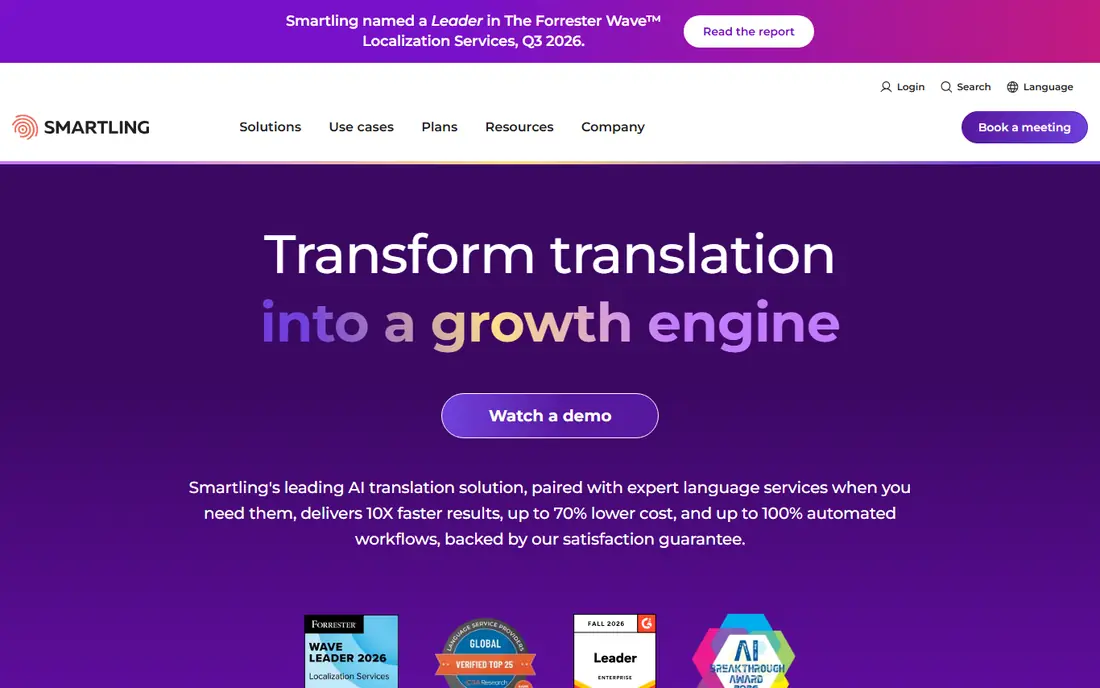
Smartling is a frequent pick for large companies localizing websites, apps, and documents at volume. Its visual context tools help translators see where a string appears, which cuts the back and forth that usually slows product releases. Integrations with content systems and code repositories also help larger teams keep translation inside their normal release process.
The catch is that Smartling is built for scale, and its full enterprise setup is not a quick self-serve purchase. Smaller teams should test the free core plan first and be honest about whether they need enterprise controls or just solid string management. If your volume is modest, a lighter platform may ship faster.
- Visual context for translators
- Broad integrations
- Enterprise workflow controls
- Enterprise pricing needs a quote
- Smaller teams may find it heavy
- Setup takes planning
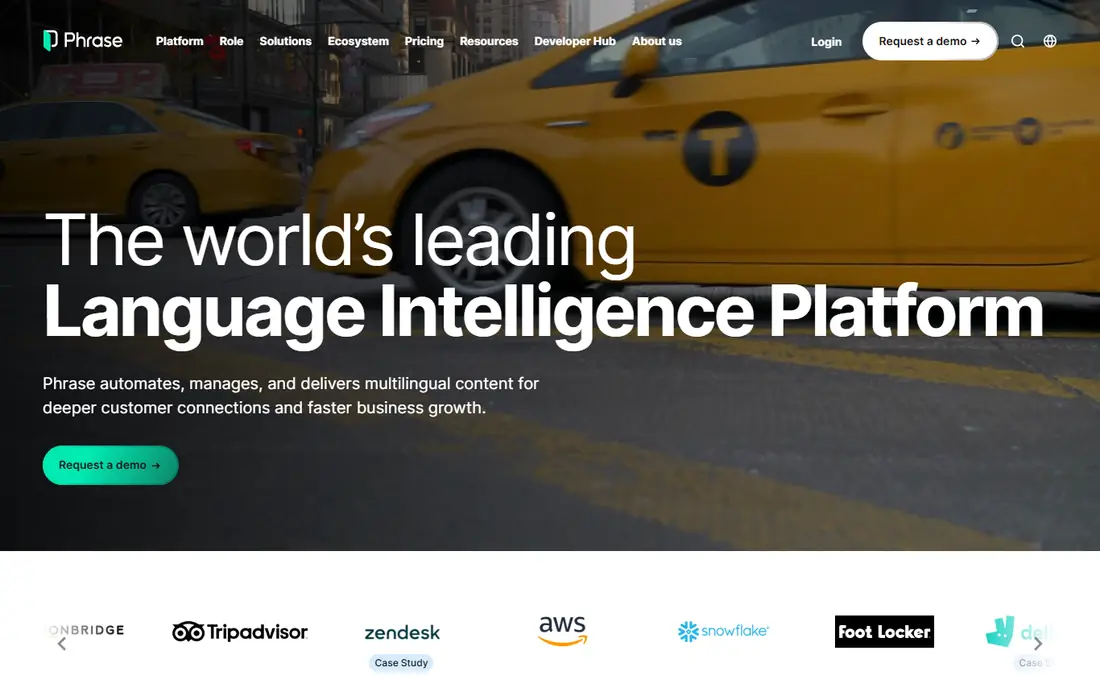
Phrase combines software string localization with longer content workflows, which suits teams that localize both an app interface and help content. Developers get repository integrations and continuous delivery support, while translators get translation memory and review tools. The low starting plan makes it possible to test real work before committing to a larger suite.
Costs rise with words, users, and workflow features, so the starting price is a floor, not a full budget. Map your string count, target languages, and reviewer seats before choosing a tier, and check whether machine translation usage is billed separately.
- String management plus content workflows
- Many integrations
- Freelancer plan for small teams
- Higher tiers are quote based
- Seat and word limits affect cost
- Setup needs care
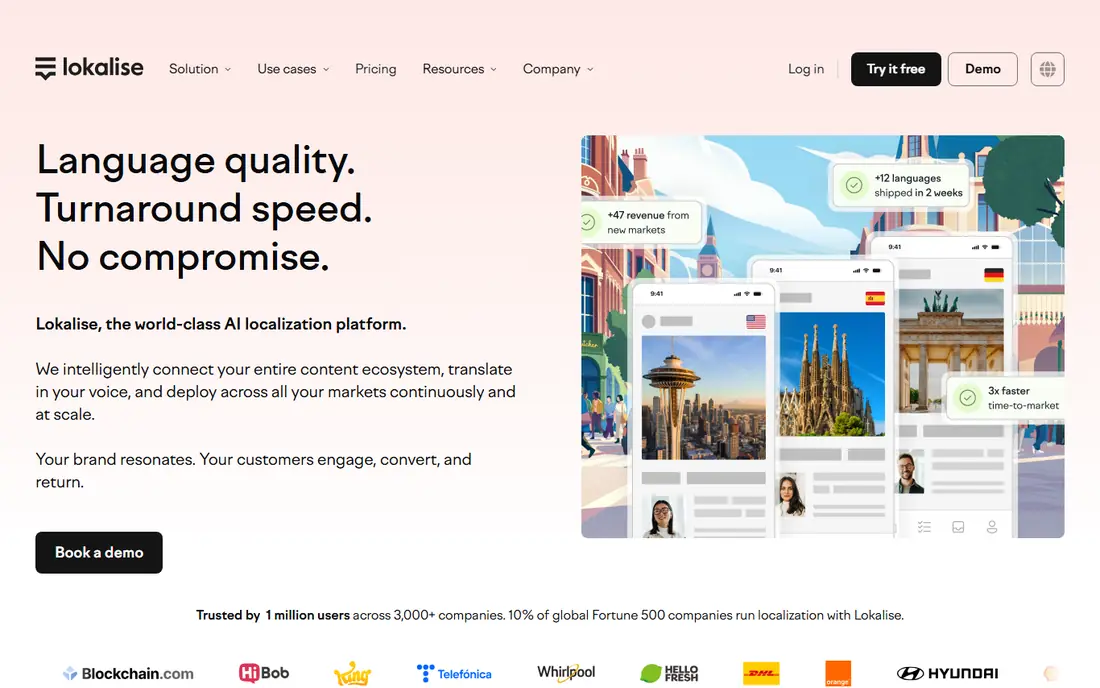
Lokalise is built for product teams that release mobile and web apps on a regular cycle. It connects with design tools and repositories, so new strings flow to translators and finished translations flow back without manual file handling. That automation is the main reason teams pick it over a generic translation tool.
Pricing deserves a close read. The entry plan suits a small product, but growth plans cost several times more, and processed words and advanced seats affect the total. Trial it with a real release cycle, not just a sample file, to see whether the workflow fits your team.
- Fast app and web workflows
- Design tool integrations
- Automation for releases
- Price rises quickly with growth tiers
- Limits need checking
- Enterprise features are quoted
Transifex suits software teams running continuous localization, where new strings arrive with every code change. Its integrations pull strings automatically and push translations back, which keeps releases moving without a weekly export task. Review workflows and translation memory help teams keep quality steady as volume grows.
The entry price is higher than Crowdin or Phrase, so it fits teams that already localize at a steady pace. Smaller teams with occasional releases may pay for capacity they rarely use. Confirm how AI translated words are counted, since that can change the bill.
- Continuous localization for SaaS teams
- Repository integrations
- Translator review tools
- Starting price is higher than some rivals
- Enterprise tiers are quoted
- AI word pricing varies
Crowdin appeals to teams that want many integrations and a strong community translation option, including open source projects. It connects with repositories, design tools, and content platforms, and it supports crowdsourced translation where a community helps localize a product. The free plan makes it easy to test the core workflow before paying.
As with other platforms, the headline price depends on hosted words and manager seats, so larger projects cost more than the entry tier suggests. Crowdin still offers good value for mid-size product teams, provided they check those limits against their actual string counts.
- Large integration library
- Community translation support
- Free plan for testing
- Paid tiers rise with words and seats
- Enterprise controls are quoted
- Interface takes learning
Translated blends translation technology with a managed service, which suits companies that want linguists handled for them rather than building an in-house translator team. Its platform supports translation memory and quality checks, while project managers can run larger or more specialised jobs. That mix helps marketing, legal, and product content that needs human review.
The trade-off is control and speed. A managed service adds a handoff, and pricing depends on language pairs, volume, and turnaround. Companies that want full self-serve control over every string may prefer a pure software platform, while companies that want work done for them will value the service layer.
- Human linguist network
- Managed service option
- Technology plus service model
- Service pricing needs a quote
- Less self-serve than pure software
- Turnaround depends on scope
Lionbridge is one of the largest language service providers, serving enterprises that need translation across many languages, content types, and regions. Its strength is managed programs at scale, with quality processes and specialist linguists for regulated and technical content. Large companies with ongoing, multi-region needs often choose this model over buying software alone.
Small teams should look elsewhere. Lionbridge is not a quick self-serve tool, and its value appears when volume, complexity, and governance justify a managed program. Ask for a pilot in one language pair before committing to a broad program.
- Very large linguist network
- Enterprise and regulated experience
- Managed programs
- Quote only pricing
- Not suited to small self-serve jobs
- Onboarding takes time
RWS offers language technology and services for enterprises, with particular strength in regulated sectors where accuracy, audit trails, and terminology control matter. Its Language Cloud and service teams support large programs that span product, legal, and compliance content. Companies in life sciences, manufacturing, and finance often need that level of control.
For a small app team, RWS will feel heavy and expensive. It fits organisations that already have governance requirements and a multi-year localization program, not teams localizing a first version. Confirm the exact platform, services, and support included, since RWS sells both technology and managed work.
- Enterprise language technology
- Regulated industry experience
- Large scale programs
- Quote only pricing
- Complex sales process
- Overkill for small projects
How we picked these
We compared official product and pricing pages, public plan summaries, and service descriptions, and we favoured vendors with distinct roles: self-serve software, managed services, and enterprise programs. We left out vendors whose pricing or live offering could not be confirmed, and we marked quote based enterprise pricing as See website rather than inventing a figure.
How to choose a localization partner
Count words, seats, and languages first
Before comparing features, total your source strings, target languages, translator seats, and reviewer seats. Most platforms meter some combination of those, so a cheap entry tier can become expensive once all four are counted. A short trial with real content reveals the true cost faster than a feature list.
Test the workflow, not just the editor
Import a real release, assign a translator, run a review step, and push the result back to your app or site. Check how translation memory, glossaries, and machine translation suggestions behave, and whether visual context reduces questions. If that loop feels slow in a trial, it will feel slower at scale.
Decide between software and service
Software platforms suit teams with translators or a community ready to work. Managed services suit teams that want linguists, project management, and quality checks handled for them. Some companies use both: software for product strings and a service provider for marketing and legal content.
Frequently asked questions
What are the best localization services providers?
The best localization services providers depend on whether you want software, a managed service, or both. Smartling, Phrase, Lokalise, Transifex, and Crowdin are software led, while Translated, Lionbridge, and RWS add managed linguist services.
Which localization company is best for a small app team?
Crowdin and Phrase are common starting points for small teams, thanks to lower entry prices and free plans or trials. Test with a real release cycle and check word and seat limits before committing.
How much does localization software cost?
Entry prices in this guide range from a free plan to about $144 per month for product platforms, while enterprise and managed services are quoted per program. Word volume, seats, and machine translation usage usually add to the entry figure.
Do I need human translators or is machine translation enough?
Machine translation suits internal drafts and high volume, low risk content, but customer facing product, marketing, and legal text usually needs human review. Most platforms combine machine suggestions with human editing and review steps.
What is continuous localization?
Continuous localization means new strings flow from code or content systems to translators automatically, and finished translations flow back without manual exports. It suits software teams that release often and want translations ready with each release.
Sources
See where you really rank - block by block
ProMapRanker scans Google Maps across a grid of your service area. Simple monthly plans from $19, white-label on every plan.
Start freeKeep reading
 wpforms alternatives
Best WPForms Alternatives in 2026
We compare 9 wpforms alternatives for WordPress forms, with free and paid options, current pricing notes, and honest limits for small business sites in 2026.
Read → windows task scheduler alternatives
Best Windows Task Scheduler Alternatives in 2026
Looking for Windows Task Scheduler alternatives? We compare 9 schedulers for Windows and cross-platform work, from free tools to enterprise automation.
Read → which ai video service is best
Which AI Video Service Is Best in 2026
which ai video service is best? We compare 10 legitimate AI video services on price, avatars, editing and output quality to help you pick the right tool.
Read →