 ProMapRanker
Best Local SEO Tools for RV Dealers in 2026
Direct answer
Synup is my first pick for RV dealers because it handles the messy part of this niche: keeping hours, departments and location details consistent across maps and directories while you manage reviews in the same place. It has no free plan stated, so check its pricing page. If your main problem is seeing where you rank around a dealership, look at Local Dominator, and if review requests are the gap, Broadly is worth a look.
I put this list together by reading vendor documentation and public sources, then matching features to how RV dealerships actually operate. I did not run hands-on tests, so treat this as a starting point for your own trial.
Key takeaways
- RV dealers usually sell from one large lot with several departments, so location data has to cover sales, service, parts and sometimes rentals separately.
- Seasonal demand means your Google Business Profile posts, photos and review replies need to move with camping season, not sit static all year.
- Rank tracking matters more than people think because buyers search from campgrounds and towns far from your lot.
- Review volume and recency carry a lot of weight for dealerships, so a request workflow beats occasional manual asks.
- Call tracking helps you see which map and directory listings actually produce phone calls from shoppers.
Quick comparison
| Pick | Great for | Pricing starts at | Free tier | |
|---|---|---|---|---|
 Synup | Listings and reviews in one place | See website | Not stated | Visit |
 Local Dominator | Grid rank tracking around the lot | See website | Not stated | Visit |
 Moz Local | Core directory listings | See website | Not stated | Visit |
 Trustpilot | A public review profile | See website | Free plan | Visit |
 Broadly | Review requests by text and email | See website | Not stated | Visit |
 CallRail | Tracking calls from listings | See website | Free trial | Visit |
 Whitespark | Citation research and building | See website | Not stated | Visit |
The best local SEO tools for RV dealers compared
Synup is a local marketing platform built around location data and reviews. For an RV dealer it fits because a single rooftop often has several customer-facing units: sales, service, parts, financing and sometimes rentals. Each one has its own hours and phone habits, and shoppers get confused when those details disagree across Google, Apple Maps and the big directories.
In practice you would load your dealership locations, confirm the core fields, then let the tool push consistent data outward. The review side lets you watch incoming reviews across locations and reply without logging into each platform. That matters in this niche because a service complaint about a warranty repair can sit next to a sales review, and both need a calm, factual answer.
The limit is that Synup is a platform, not a strategy. If your Google Business Profile categories, photos and posts are thin, listings alone will not fix visibility. Dealers who only want a single free listing check should skip it.
- Manages listings across many directories
- review monitoring and replies in the same dashboard
- location-level reporting for multi-site dealers
- Setup takes real work
- smaller dealers may not use every module
Local Dominator is a rank tracking tool built around grids of search points rather than a single city-level number. That suits RV dealers because your buyers are not all in one zip code. Someone browsing from a campground two hours away may see a different set of map results than a local resident.
You would set your dealership as the center point and watch how visibility fades as you move outward. That tells you which nearby towns and highway corridors deserve a dedicated landing page or a few more reviews. It is a measurement tool, so it will not write those pages or fix your listings.
Skip it if you only have one location and no interest in tracking beyond your own city. It also assumes your name, address and phone data is already clean, so fix that first.
- Grid-based visibility maps
- tracks rankings from many points around a location
- useful for spotting weak nearby towns
- Focused on tracking rather than listings
- needs accurate location data to be useful
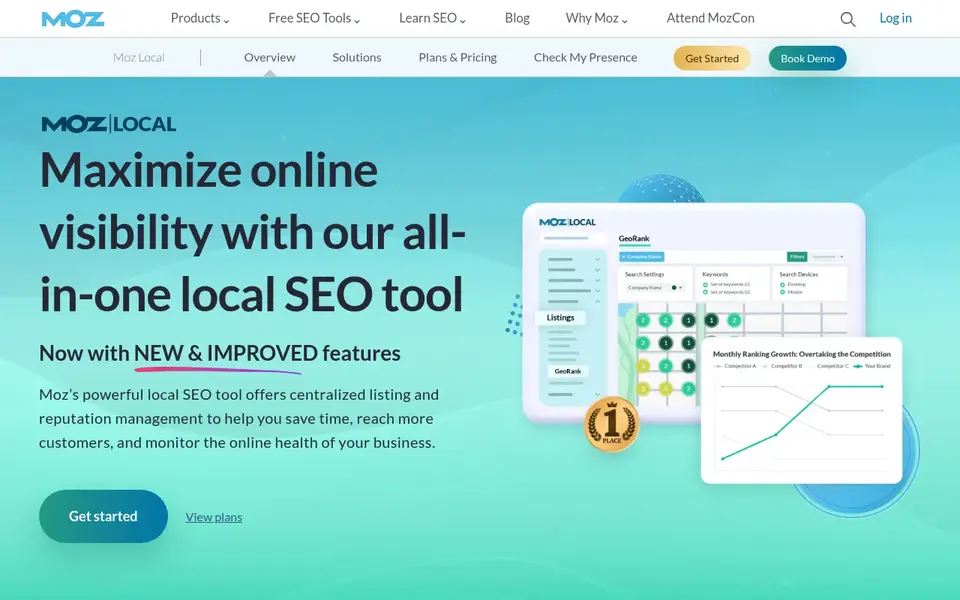
Moz Local focuses on getting your core business data into the main directories and keeping it consistent. For an RV dealer, that means the name, address, phone, hours and website that shoppers see when they check you on maps or a directory before driving over.
The workflow is simple: claim your listing, review what the tool finds, and correct mismatches. That is useful when a dealership has changed names, moved lots or added a second phone line for service. Consistency here supports everything else you do.
The limit is depth. Moz Local is not a review request engine and does not split sales and service into separate profiles. Dealers who need department-level control should look at a broader platform.
- Straightforward listing distribution
- checks data consistency
- familiar interface for Moz users
- Limited review request workflow
- not built for multi-department dealerships
Trustpilot gives you a third-party review profile that shoppers can find when they search your dealership name. RV buyers often research a dealer before a long drive, and a public review page with recent, specific feedback helps them decide whether to make the trip.
You would invite customers after a sale, a service visit or a warranty repair, then reply to reviews in a plain, factual tone. Keep invitations neutral and never filter who gets asked, since review gating breaks platform rules and Google's guidelines.
It does not manage your Google Business Profile or directory listings, so treat it as one layer. Dealers who want only maps visibility can skip it.
- Widely recognized review profile
- invitation tools for customers
- review widgets for your site
- Not a maps or listings tool
- needs a steady invitation habit
Broadly is a review management tool centered on requesting and handling customer feedback. RV dealerships have a natural advantage here: a sale or a service visit gives you a clear moment to ask. A text message a day or two after pickup tends to get read.
The practical setup is a request template, a send delay and a rule for who gets asked. Keep the ask neutral so every customer has the same chance to leave feedback, and route replies into one inbox so sales and service managers can respond.
Its limits are clear. Broadly does not fix your directory listings or track map rankings. It also depends on accurate customer phone numbers and emails, which is a data hygiene job before anything else.
- Automated review request workflows
- text and email outreach
- inbox for replying to reviews
- Needs clean customer contact data
- not a listings management tool
CallRail tracks phone calls so you can see which listings, pages and campaigns produce them. For an RV dealer, phone calls still matter a lot: a shopper wants to ask about a specific floor plan, towing capacity or service availability before driving over.
You would assign tracking numbers to your Google Business Profile, key directory listings and landing pages, then route calls to the right department. Over a season you can see whether map visibility or a specific directory is driving real conversations.
The caution is planning. Too many numbers confuse staff and customers, and call tracking is measurement, not a ranking fix. Dealers with no phone sales process should sort that out first.
- Call tracking numbers per source
- call recordings and routing
- connects calls to marketing channels
- Requires number planning
- call data alone does not improve rankings
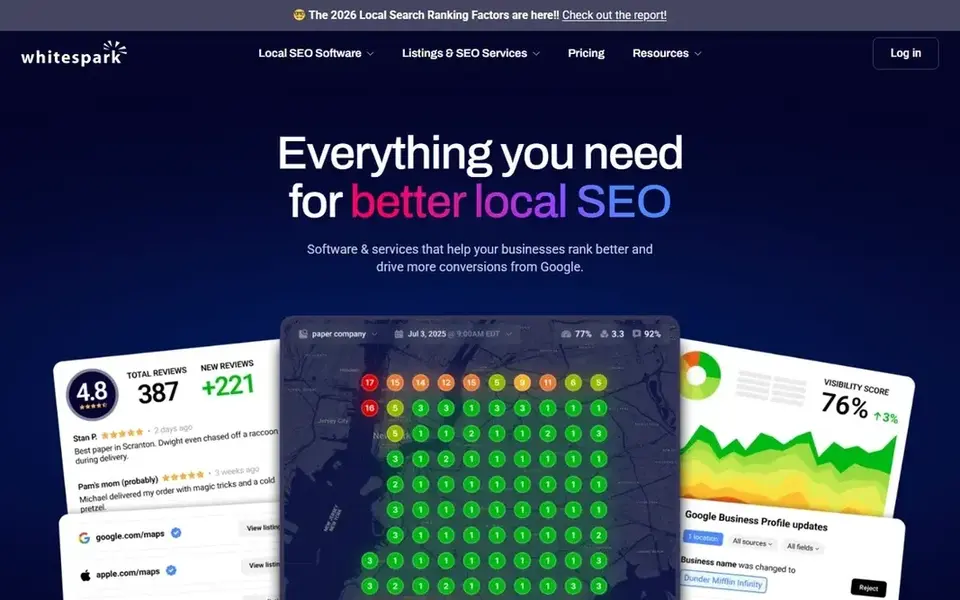
Whitespark is known for citation research and local search work. For an RV dealer it helps you find the directories and local sites where a dealership should appear, including niche and regional listings that generic tools miss.
The citation finder shows where your business is listed, where it is missing and where the data disagrees. From there you or a service can build and correct listings. This is slow, unglamorous work, but it supports map visibility over time.
It is not a set-and-forget platform. Someone has to review the opportunities and act. Dealers who want one dashboard for everything may find it too manual, but it pairs well with a listings tool.
- Citation finder and opportunity research
- local rank tracking options
- hands-on citation building service
- More manual than all-in-one suites
- requires someone to act on the findings
How I chose
I started from vendor documentation and public sources, then filtered for the jobs an RV dealer actually does: keeping location data straight across departments, asking for reviews after a sale or repair, watching map visibility across a wide trade area and seeing which listings produce calls. I did not run hands-on tests, so I leaned on what each vendor documents about its features and limits.
Fit mattered more than feature count. A tool that handles listings and reviews in one place is more useful to a single-rooftop dealer than a stack of specialist products. I also weighed limits honestly, because a rank tracker will not fix bad data and a review tool will not manage directories.
Where I was unsure about a free plan, I said so rather than guess. Pricing changes, so I point you to each vendor's page instead of quoting figures. Use this list to shortlist two or three tools, then trial them against your own locations.
What to check before you buy
- Confirm the tool can handle separate sales, service and parts details if your dealership presents them separately.
- Check whether it supports the directories that matter in your region, not just the biggest national ones.
- Ask how review requests are sent and make sure the process asks every customer, with no filtering.
- Test whether rank tracking covers the towns and highway corridors your buyers actually search from.
- Confirm call tracking can route to the right department without confusing staff or customers.
- Check export options so you are not locked in if you change tools next season.
Frequently asked questions
Do RV dealers need local SEO tools at all?
Yes, if you want to be found when someone searches for a dealer near a campground, a highway exit or their home town. Tools help keep your location data consistent, gather reviews and see where you rank. You can do some of this manually, but it gets hard to maintain across several directories and departments.
Which tool should a single-location dealer start with?
Start with a listings and reviews platform like Synup if you want one place to manage the basics. If your Google Business Profile is already solid and you mainly want to see visibility, a rank tracker like Local Dominator is a reasonable first buy. Match the tool to your biggest gap rather than buying everything at once.
How do reviews fit into local rankings for a dealership?
Reviews are one signal among many, and Google does not publish weights. What matters practically is steady, recent, specific feedback from real customers and calm replies from your team. Never filter who gets asked and never buy reviews. A request workflow after each sale or service visit keeps feedback coming in.
Can these tools manage multiple dealership locations?
Some can. Synup and Local Dominator both work with multiple locations, and CallRail can route calls per source. Moz Local and Whitespark are more limited for department-level setups. If you run several rooftops, check multi-location support and reporting before you commit.
What should I fix before buying a tool?
Clean your name, address, phone and hours everywhere first, and decide how sales, service and parts should appear. Gather customer contact data for review requests. Sort out who answers calls and reviews. Tools amplify what you already have, so fixing the basics makes any purchase more useful.
Sources
See where you really rank - block by block
ProMapRanker scans Google Maps across a grid of your service area. Simple monthly plans from $19, white-label on every plan.
Start freeBrowse all guides
← Best Local SEO Tools for Occupational Therapists in 2026Best Local SEO Tools for Sign Companies in 2026 →
 best local seo tools for notaries
Best Local SEO Tools for Notaries in 2026
A practical guide to the best local SEO tools for notaries in 2026, covering listings, reviews, maps tracking and citation building for mobile signing agents.
Read → best local seo tools for irrigation companies
Best Local SEO Tools for Irrigation Companies in 2026
A practical guide to the best local SEO tools for irrigation companies in 2026, covering listings, reviews, rank tracking and call tracking.
Read → best local seo tools for golf courses
Best Local SEO Tools for Golf Courses in 2026
A practical guide to the best local SEO tools for golf courses in 2026, covering Google Business Profile, reviews, citations and call tracking.
Read → what is solv local seo
What Is SoLV in Local SEO? Share of Local Voice Explained
SoLV (Share of Local Voice) measures how visible you are across a grid. Learn what it is and how to improve it.
Read → local seo for security system installers
Local SEO for Security System Installers
A local SEO guide for security system installers: Google Business Profile setup, reviews, and trust-building local SEO for security companies.
Read → local seo for yoga studios
Local SEO for Yoga Studios
A local SEO guide for yoga studios: Google Business Profile setup, reviews, and class schedule visibility in local search.
Read →More in Local SEO & Google Maps · All guides A to Z by date · Latest guides