 ProMapRanker
Best Local SEO Tools for Golf Courses in 2026


Rank tracking and GBP audit for one course · Pricing starts at: See website
Direct answer
SE Ranking is my first pick for golf courses because it combines local rank tracking, a Google Business Profile audit and competitor checks in one dashboard that suits a single course or a small group of clubs. It has no free plan stated, so check its pricing page before you commit. If your priority is review requests, look at Grade.us; if it is call tracking for tee-time and lesson enquiries, look at WhatConverts.
I compared these tools from vendor documentation and public sources, reading feature pages, help centres and published guides rather than running hands-on tests. I looked at how each one fits the way a golf course actually appears in local search: a main map result, secondary queries for lessons and the range, review flow after play, and phone enquiries for tee times. The order reflects fit for a course, not overall market size.
Key takeaways
- A golf course competes on more than one map result: the main club query, "golf course near me", plus lessons, driving range, pro shop and restaurant searches, so your tool needs multi-keyword local tracking.
- Google Business Profile categories and attributes (public course, driving range, lessons, club fitting) matter as much as your ranking position, and a tool that audits the profile saves manual checking.
- Review requests need to reach the right person after a round, a lesson or an event, which is why review software with email and SMS templates is worth considering.
- Citation consistency across golf directories, local guides and general business listings supports the map result, and listing tools handle that at scale.
- Call tracking shows which searches produce tee-time calls, but you must keep the main number on your profile consistent with Google's guidelines.
Quick comparison
| Pick | Great for | Pricing starts at | Free tier | |
|---|---|---|---|---|
| SE Ranking | Rank tracking and GBP audit for one course | See website | No free plan | Visit |
 Places Scout | Deep local rank tracking across a region | See website | No free plan | Visit |
 Uberall | Listing management for multi-course groups | See website | No free plan | Visit |
 SOCi | Reputation across several clubs | See website | No free plan | Visit |
 Grade.us | Review requests after rounds and events | See website | Free trial | Visit |
 WhatConverts | Tracking calls from tee-time searches | See website | Free trial | Visit |
 BrightLocal | Citations and local audits on a budget | See website | Free trial | Visit |
The best local SEO tools for golf courses compared
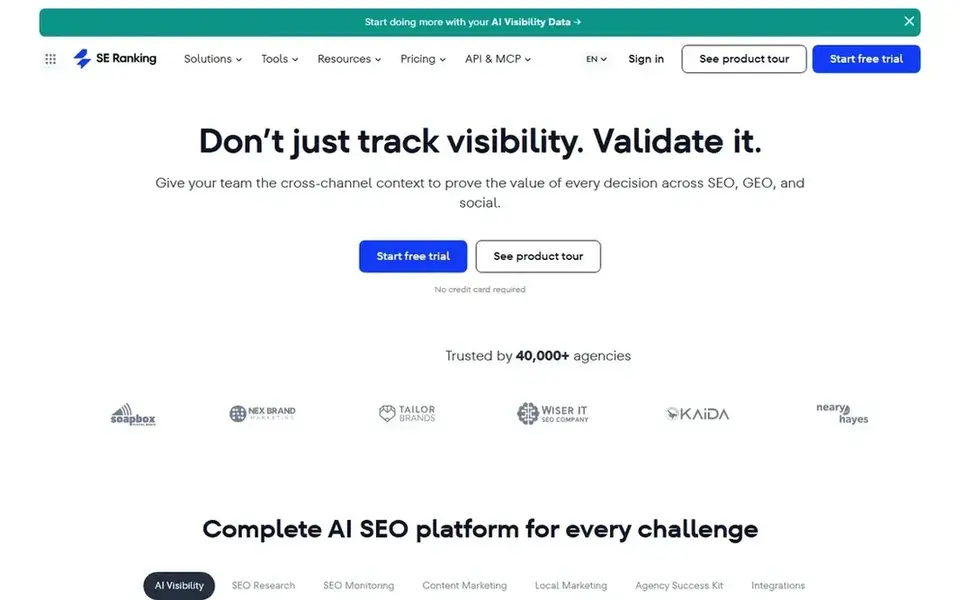
SE Ranking is a general SEO platform with a local module, and that combination suits a golf course that wants one login for its website and its map presence. A club typically has a small marketing team or one person handling it alongside other duties, so having rank tracking, a profile audit and competitor checks together reduces the number of tabs open on a Monday morning.
For a course, the useful part is tracking more than the club name. You can follow "golf course near me", "public golf course [town]", "golf lessons [town]" and "driving range near me" separately, then see how the map result moves by area. The profile audit flags missing categories and attributes, which matters because Google uses attributes like driving range, lessons and club fitting to match searches.
The limits are practical. If you only need review requests, this is more software than you need, and the local module sits inside a paid suite with no free plan stated. Skip it if your only goal is managing listings across many courses.
- Local rank tracking by map grid
- Google Business Profile audit and competitor view
- keyword research and site audit in one place
- Local features are part of a larger suite
- no free plan stated
Places Scout is a local rank tracking tool built around map grids, and it fits a course that draws players from several surrounding towns. Instead of one position for "golf course near me", you see how the club ranks across a grid of points, which shows whether players from the next town over find you.
For golf, that regional view is the point. A course on the edge of a city may rank well in its own postcode and poorly ten minutes away, and the grid makes that visible. It also helps when you compare against nearby clubs for queries like "golf course open to public" or "9 hole golf course". Reporting is useful if you answer to a committee or owner.
The trade-off is that it is a desktop application with more setup than a browser dashboard, and it is tracking-focused rather than a full profile manager. Skip it if you want one simple tool for reviews and listings.
- Grid-based local rank tracking
- competitor map analysis
- reporting for clients or owners
- Desktop application
- steeper setup than browser tools
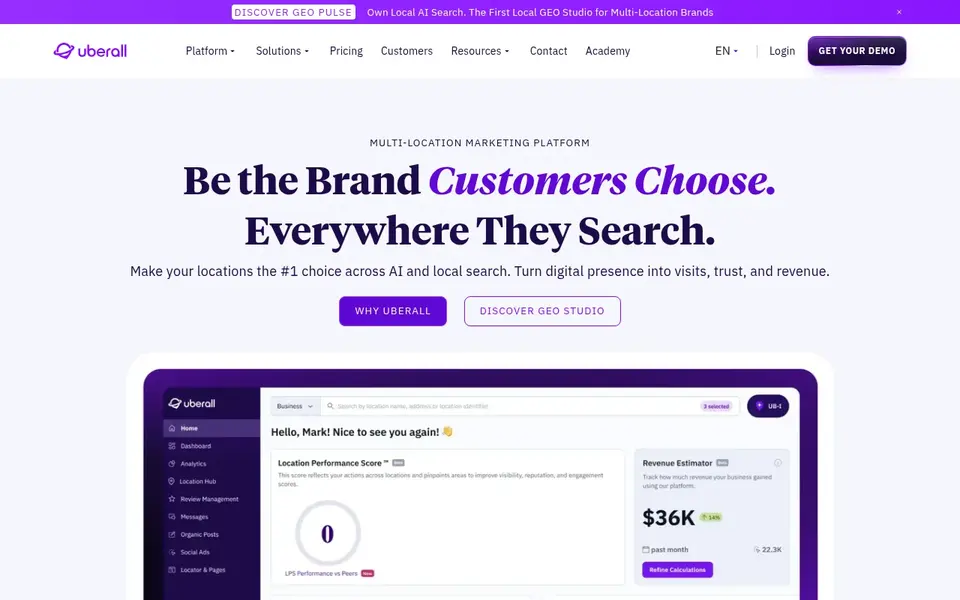
Uberall manages business listings and location data across directories, and it makes most sense for a group running several courses, ranges or clubhouses. Each venue gets consistent name, address, phone and hours, which is the foundation of a clean local presence.
A golf group often has overlapping locations: the main course, a separate academy, a range and a restaurant, each with its own hours that change by season. Uberall lets you update those details in one place and push them out, and it monitors reviews per location so a complaint about slow play at one club does not get lost. Location pages help each venue rank for its own town.
The limits are size and cost. A single independent course will find it heavier than needed, and pricing is quote-based, so a small club should weigh the overhead before asking for a demo.
- Central listing management across directories
- review monitoring alongside listings
- location pages for each venue
- Built for larger footprints
- pricing is quote-based
SOCi is a reputation and local marketing platform built for businesses with several locations. For a golf group, that means one place to watch reviews across clubs, respond from a shared queue and keep listings aligned.
Reviews matter differently for a course than for a shop. Players mention pace of play, greens condition, the pro shop and the halfway house, and those themes repeat across clubs. SOCi's review tools help a group spot patterns and respond consistently, while its listing features keep hours and contact details correct when seasons change. That combination suits an operator with a marketing lead overseeing several venues.
A single course with one profile will find it oversized, and pricing is quote-based. Treat it as a group-level tool rather than a starter option.
- Review monitoring and response tools
- listing management in the same platform
- workflows for multi-location teams
- Aimed at multi-location brands
- quote-based pricing
Grade.us focuses on getting reviews, which is the area where most golf courses leave value on the table. A player finishes a round, enjoys it, and never gets asked. Grade.us sends the request by email or SMS after the round, lesson or event and routes feedback into a review flow.
For a course, the timing and the list matter. You can import a day's tee sheet or an event roster, send requests the same evening and keep the message short. Asking every customer is fine under Google's guidelines; what you must avoid is offering incentives or filtering out unhappy customers before they reach Google. Grade.us supports straightforward request campaigns rather than gating.
Its limits are clear: it does not track map rankings or manage citations. If reviews are your main gap, start here; if you need a full local suite, pair it with something else.
- Automated email and SMS review requests
- campaign templates
- review monitoring in one inbox
- Limited local ranking features
- not a full SEO suite
WhatConverts tracks calls, forms and chats and ties each lead back to its source. For a golf course, the phone still matters: tee times, lesson bookings, society days and event enquiries often arrive by call, and without tracking you cannot tell which search produced them.
The workflow is to place tracking numbers on your site and ads, then review which keywords and pages generate calls. A course can see whether "golf lessons [town]" produces lesson calls while "golf course near me" produces tee-time calls, and adjust content accordingly. It also tracks form fills for online booking enquiries.
The limit is scope: it is a tracking tool, not a listing or review manager. Keep your main Google Business Profile number consistent and use tracking numbers on the website and campaigns, following Google's guidance on representable numbers.
- Call tracking with lead source attribution
- form and chat tracking
- reporting by source
- Call tracking focus only
- needs number setup
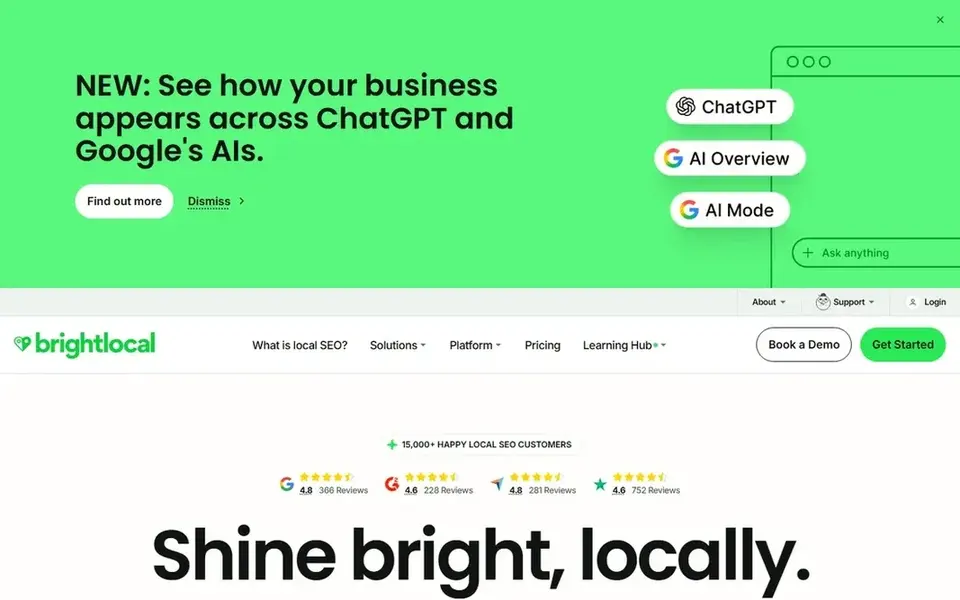
BrightLocal is a local SEO platform with citation building, citation audits, rank tracking and review tools. It suits an independent course or a small group that wants a broad local toolkit without a large commitment.
For golf, the citation audit is the practical starting point. Courses often appear in golf directories, local tourism guides and general business listings with different phone numbers or old addresses after a clubhouse move. BrightLocal finds those mismatches and helps you correct them. Rank tracking covers local terms, and review tools let you request feedback after play.
The limits are tier-based: some features and volumes are restricted on lower plans, and citation coverage depends on which directories the service submits to. Skip it if you need deep grid-based rank tracking or enterprise listing control.
- Citation building and audit
- local rank tracking
- review and listing tools in one place
- Some features limited on lower tiers
- citation reach varies by directory
How I chose
I built this list from vendor documentation and public sources: feature pages, help centre articles, published guides and the way each tool describes its own local features. I did not run hands-on tests, so I have not scored speed, support quality or interface polish. What I judged was fit for a golf course: whether the tool tracks the queries a course actually needs, whether it handles the Google Business Profile, and whether it supports reviews, citations or call tracking in a way that matches how players find and contact a club.
I also weighed limits. A single independent course does not need an enterprise listing platform, and a group with four venues will outgrow a simple review tool. Where a product is clearly built for larger footprints, I say so. Where pricing is quote-based or a free plan is not stated, I have not guessed. The order reflects suitability for this audience and theme, not a ranking of overall quality, and you should confirm current features and terms on each vendor's site before buying.
What to check before you buy
- Confirm the tool tracks local map rankings for several keywords, not just your club name, so lessons, range and restaurant queries are covered.
- Check whether it audits your Google Business Profile for categories and attributes such as public course, driving range and lessons.
- Ask how review requests are sent and whether the tool allows incentives or filtering; both breach Google's review policies.
- Confirm citation coverage includes golf and tourism directories where your course is likely listed, not only general business sites.
- Check call tracking setup so your main profile number stays consistent and tracking numbers are used on the website and ads.
- Match the plan to your footprint: one course, a club with a range and academy, or a group of venues with separate hours.
Frequently asked questions
Do golf courses need different local SEO tools than other businesses?
Not entirely different, but the keyword set is wider. A course appears for the club name, "golf course near me", lessons, driving range, society days and sometimes the restaurant. Tools that track several local keywords and audit Google Business Profile attributes fit better than single-purpose rank checkers.
Should I use review software for a golf course?
It helps if reviews are thin. A request sent after a round, lesson or event reaches people at the right moment. Use email or SMS requests for every customer, do not offer incentives, and do not screen out unhappy players before they can reach Google, since that breaks Google's review rules.
How do citations help a golf course rank locally?
Citations keep your name, address and phone consistent across directories, including golf and tourism listings. Mismatches, such as an old clubhouse address or a previous phone number, weaken confidence in your details. A citation audit finds those errors so you can fix them.
Can call tracking tell me which searches bring tee-time bookings?
Yes, if it is set up properly. Tracking numbers on your website and campaigns show which keywords and pages produce calls, so you can separate lesson enquiries from tee-time calls. Keep the main number on your Google Business Profile consistent and follow Google's guidance on the numbers you show.
What should a single nine-hole course start with?
Start with your Google Business Profile: correct categories, hours, attributes and photos. Then add rank tracking for your main local terms and a simple review request process. Citations come next. A full listing platform or enterprise reputation suite is usually more than a single course needs.
Sources
See where you really rank - block by block
ProMapRanker scans Google Maps across a grid of your service area. Simple monthly plans from $19, white-label on every plan.
Start freeBrowse all guides
← Best Local SEO Tools for Chimney Sweeps in 2026Best Local SEO Tools for Irrigation Companies in 2026 →
 best local seo software for pet stores
Best Local SEO Software for Pet Stores in 2026
A practical guide to the best local SEO software for pet stores in 2026, covering listings, reviews, rank tracking and citations for storefronts.
Read → best local seo software for managed service providers
Best Local SEO Software for MSPs in 2026
A practical guide to the best local SEO software for managed service providers in 2026, covering multi-location listings, reviews, rank tracking and reporting.
Read → best local seo software for laundromats
Best Local SEO Software for Laundromats in 2026
A practical guide to the best local SEO software for laundromats in 2026, covering listings, reviews, rank tracking and call tracking for multi-location wash-and-fold.
Read →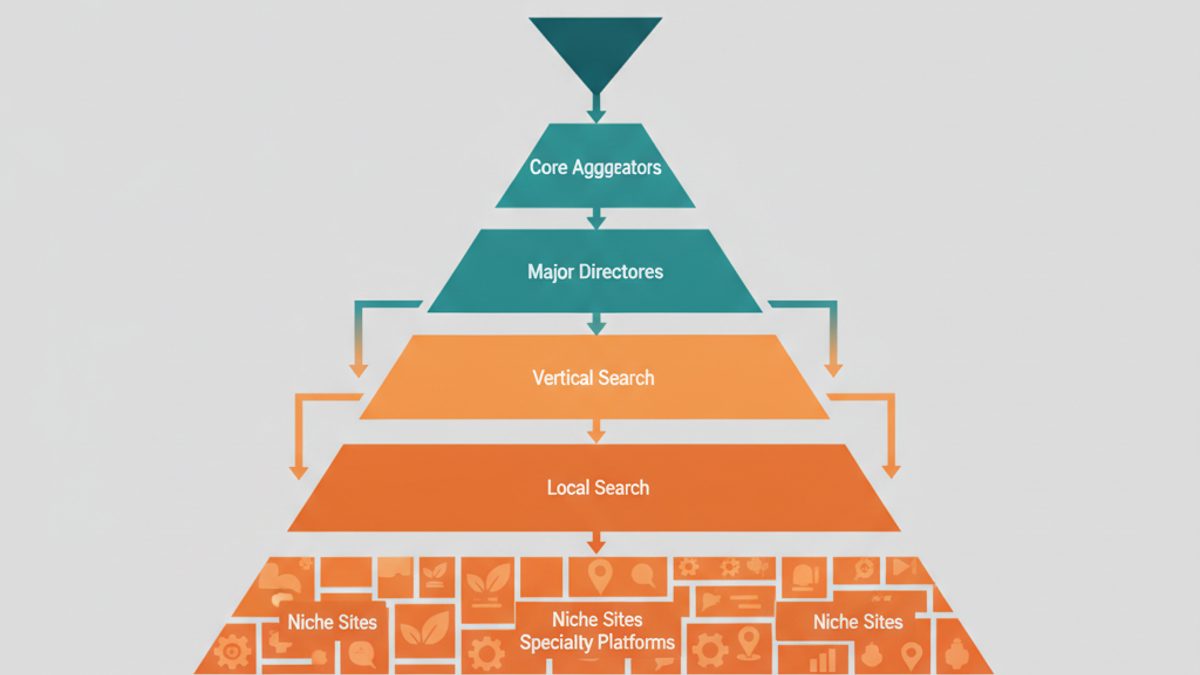 top local citation sites
Top Local Citation Sites Every Business Should Be On
The top local citation sites and data aggregators that feed the local ecosystem, with priorities.
Read → google maps rank tracker
Google Maps Rank Tracker: Track Your Map Pack Position Over Time
Track your Google Maps rankings over time with geo-grid scans and trend history. Here is how to do it right.
Read → best ai rank tracker software
Best AI Rank Tracker Software in 2026
Compare the best AI rank tracker software for tracking brand positions in AI answers daily, with pricing, engines, and reporting compared for teams today.
Read →More in Local SEO & Google Maps · All guides A to Z by date · Latest guides