 ProMapRanker
Best Local SEO Tools for Podiatrists in 2026


Citations and local rank tracking · Pricing starts at: See website
Direct answer
Whitespark is my first pick for podiatrists because its citation finder, review link builder and local rank tracker fit a clinic that serves several towns around one or two offices. Pricing is quote-based, so check its pricing page. If you need review requests tied to patient visits, look at GatherUp; if you want to manage listings across many locations, look at Uberall.
I put this list together from vendor documentation and public sources, not from hands-on testing. I looked at what each tool does for a clinic that depends on phone calls and booked appointments, and where each one stops being useful.
Key takeaways
- A podiatry practice usually competes in a small radius, so Google Business Profile accuracy and local citations matter more than broad national keywords.
- Review software should send requests after the appointment, not during booking, and should never filter out unhappy patients.
- Citation building for a clinic means consistent name, address and phone across medical directories, local chambers and general listings.
- Call tracking helps you see which profile or landing page produces appointment calls, but it must not replace the main practice number on your profile.
- Rank tracking should be set to your actual service towns, because "near me" results shift block by block.
Quick comparison
| Pick | Great for | Pricing starts at | Free tier | |
|---|---|---|---|---|
| Whitespark | Citations and local rank tracking | See website | Not stated | Visit |
 GatherUp | Review requests after appointments | See website | Free trial | Visit |
 Uberall | Multi-location listing management | See website | Not stated | Visit |
 Semrush Local | Local SEO inside a wider SEO toolkit | See website | No free plan | Visit |
 Moz Local | Listing distribution and accuracy | See website | Not stated | Visit |
 CallRail | Tracking appointment calls | See website | Free trial | Visit |
 Local Viking | Google Business Profile management | See website | Free trial | Visit |
The best local SEO tools for podiatrists compared
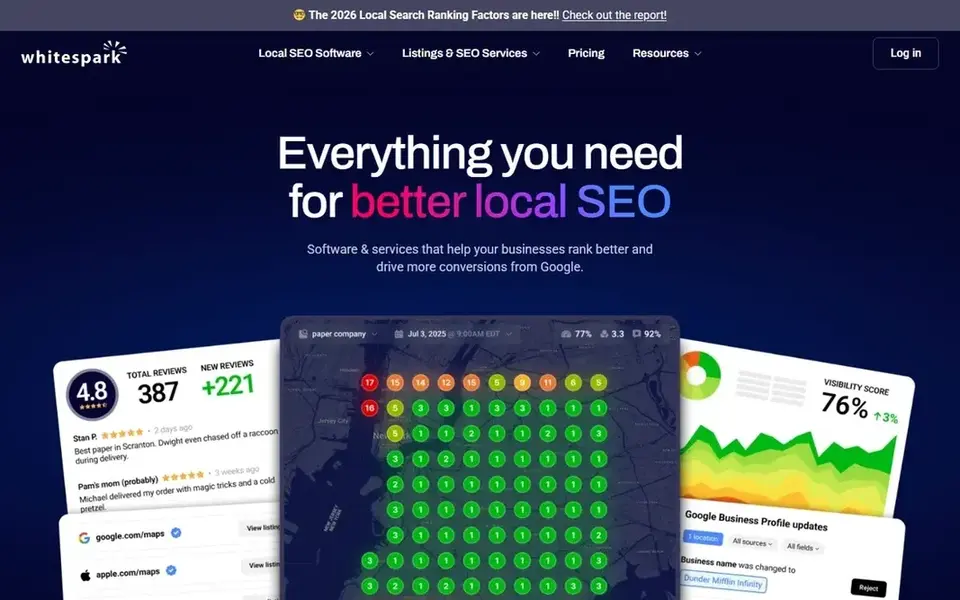
Whitespark is a local SEO toolkit built around citations, reviews and rank tracking. For a podiatrist, the most useful part is the citation finder, which searches for places where your practice name, address and phone number appear and flags mismatches. That matters when your clinic has moved or changed its phone number and old listings still show the previous details.
The rank tracker lets you set a grid around your office and see how you place in different neighbourhoods. A practice on the edge of town often ranks well near the clinic and poorly two suburbs over, and that view helps you decide whether to build pages for specific service towns. The review link builder gives you a short link to send after appointments, without any filtering of who gets asked.
The limits are practical. Citation cleanup is work you or an assistant has to do, and the tool does not book appointments or handle patient communication. A solo podiatrist with one location and no time for manual outreach may get more from a listing distribution service.
- Strong citation finder
- review link generator
- local rank tracker with grid views
- Citation outreach is manual
- no patient review workflow
GatherUp is a customer feedback and review management tool. For a podiatry clinic, the workflow is straightforward: after a patient visit, the front desk or your practice software triggers a request, and the patient lands on a page where they can leave a review on Google or another platform.
The part I like for clinics is that it can capture private feedback first. A patient with a billing complaint or a bad fitting orthotic gets a chance to tell you directly, and you can respond before it becomes a public review. That is not review gating as long as every patient is asked and nobody is blocked from posting publicly, so set it up that way.
GatherUp does not fix your citations or track rankings. It also depends on your front desk sending requests consistently, so decide who owns that task before you buy.
- Sends review requests by email or text
- simple review page
- feedback capture before public posting
- Review-focused, so it does not handle citations
- needs a clean patient list process
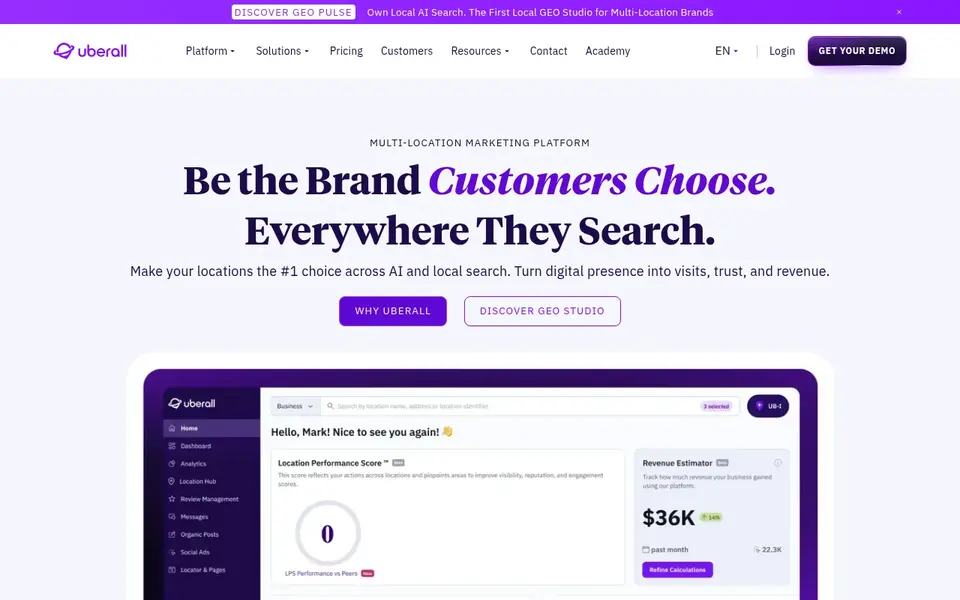
Uberall is a location marketing platform that keeps business listings consistent across directories and map services. It fits a podiatry group with several clinics, especially when each site has its own hours, practitioners and phone number.
For a group, the value is that a change to opening hours or a new podiatrist joining one branch can be pushed to listings rather than edited by hand in a dozen places. Review monitoring across locations also helps a practice manager spot a branch with a recurring complaint about waiting times.
A single-location podiatrist will find it heavy. The setup asks for more information than one clinic usually has, and the price reflects a multi-location product.
- Manages listings across many directories
- location pages
- review monitoring in one place
- Built for larger operations
- setup effort is high for one clinic
Semrush Local bundles listing management and review tools with the wider Semrush platform. It suits a podiatrist who also wants to see which foot and ankle topics bring traffic to the website, such as plantar fasciitis or ingrown toenail pages, and how those pages perform over time.
The listing side keeps your practice details consistent, and the position tracking can follow both local and organic terms. If you write patient education pages, the site audit and keyword data help you decide what to write next.
The downside is scale. You pay for a broad SEO suite when a clinic may only need listings and a rank check. If nobody on your team will use the keyword and audit tools, the extra cost is hard to justify.
- Listing management alongside keyword and site tools
- position tracking
- site audit
- Subscription covers much more than local
- can overwhelm a small clinic
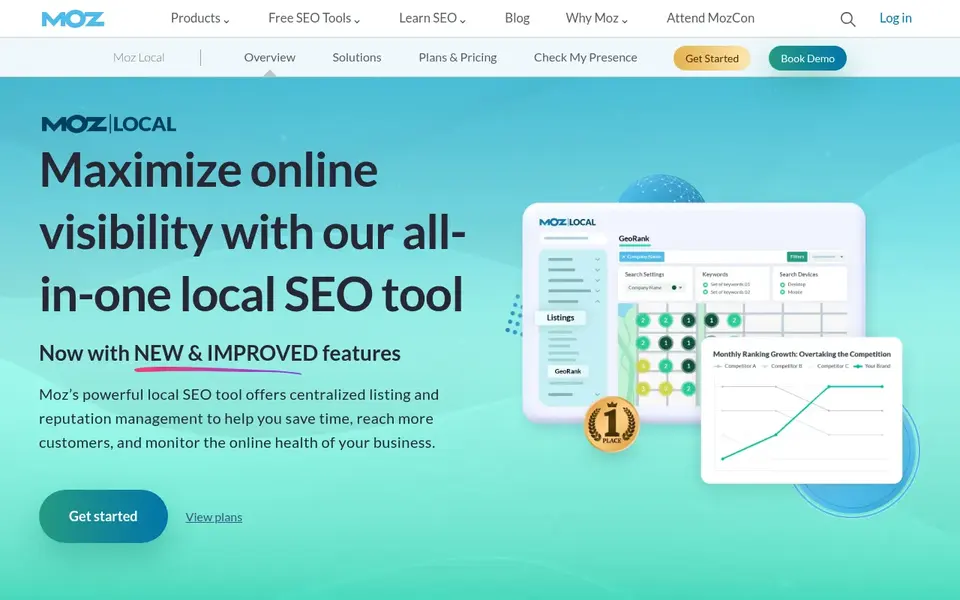
Moz Local focuses on making sure your practice name, address and phone number match across the directories that feed map and search results. For a podiatrist, that means fewer cases where a patient calls an old number or drives to a previous address.
The dashboard shows where your listing data is inconsistent and pushes corrections out to partner directories. It is a sensible starting point for a new clinic that has just opened and needs its details spread across the web.
Coverage depends on your country, so check the directory list before you commit. It is not a review request tool, and it will not write service pages for you.
- Checks listing accuracy
- distributes data to major directories
- simple dashboard
- Directory network varies by country
- limited review request workflow
CallRail is call tracking software. A podiatry practice lives on phone calls, and this tool shows which source produced each call, whether that was your Google Business Profile, a service page or a paid ad.
You can set up a tracking number on a landing page while keeping the main practice number on your Google profile. That way you learn which pages generate appointment calls without confusing patients who dial straight from Maps.
Call recording is available, but you need a clear consent process for patients, and you should check what your practice's privacy obligations require. The tool tracks calls; it does not manage listings or reviews.
- Call tracking with source attribution
- call recording options
- integrations with common tools
- Adds tracking numbers
- call recording needs patient consent handling
Local Viking is built around Google Business Profile management. For a podiatrist, that means scheduling posts about clinic news, uploading photos of the practice, and tracking how the profile ranks across a map grid.
The geo-grid view is useful when you want to know whether your profile shows up for "podiatrist" searches a few miles from the clinic. It also helps a group compare branches.
It does not handle citations, reviews or your website. If your main gap is profile activity and rank visibility, it is a focused choice; if you need listing cleanup, pair it with something else.
- Manages Google Business Profile posts and photos
- geo-grid rank tracking
- multi-location support
- Narrow focus on the profile
- not a full SEO suite
How I chose
I compared these tools using vendor documentation and public sources. I did not run hands-on tests, and I have not used every tool in a live podiatry practice. What I looked at was the job each tool does: keeping practice details consistent, asking patients for reviews in a way that follows Google's rules, tracking calls that turn into appointments, and showing local rankings around a clinic.
I weighted fit for a small healthcare business. A podiatrist usually has one or two locations, a front desk that is busy with patients, and no dedicated marketing team. Tools that need a large setup or a broad SEO subscription scored lower unless they solved a specific problem well. I also noted limits, because a tool that does listings will not fix reviews, and a review tool will not correct a wrong address.
What to check before you buy
- Confirm the tool can handle a healthcare business without asking patients for clinical details in review requests.
- Check that review requests go to every patient, with no filtering of unhappy patients, so you stay within Google's review policies.
- Verify directory coverage for your country, since citation networks differ between the US, UK, Canada and Australia.
- Ask whether the tool keeps your main practice number visible on Google Business Profile if you add call tracking.
- Check how many locations and users the plan includes, because a second clinic changes the setup.
- Look at whether the tool supports the service pages you need, such as heel pain, orthotics or diabetic foot care, rather than only listings.
Frequently asked questions
Do podiatrists need local SEO tools at all?
A small practice can do a lot by hand: claim the Google Business Profile, keep hours correct, add photos and ask patients for reviews. Tools help when you have several service towns, more than one clinic, or no time to check listings and rankings manually. Start with the profile, then add one tool for the biggest gap.
Which tool is best for getting more patient reviews?
GatherUp is the clearest fit because it sends requests after appointments and lets you capture private feedback first. The rule is simple: ask every patient, never block anyone from posting publicly, and never offer incentives for reviews. Respond to reviews in a plain, professional tone without discussing clinical details.
How do I handle citations for a podiatry clinic?
Use a citation tool such as Whitespark or a distribution service such as Moz Local to find and correct listings. Focus on medical directories, your local chamber of commerce, health insurance directories where relevant, and the major map and search platforms. Keep the practice name, address and phone number identical everywhere.
Can I use call tracking on my Google Business Profile?
Yes, but keep the main practice number as the primary number on your profile. Put a tracking number on website landing pages and ads instead. That gives you source data without sending patients to a number that looks unfamiliar. Check consent requirements if you record calls.
How often should I check local rankings?
Monthly is enough for most clinics. Check rankings around each office and in the towns you draw patients from, not just one central point. If a new podiatrist joins or you change hours, recheck the profile and listings the same week.
Sources
See where you really rank - block by block
ProMapRanker scans Google Maps across a grid of your service area. Simple monthly plans from $19, white-label on every plan.
Start freeBrowse all guides
← Best Local SEO Tools for Jewelry Stores in 2026Best Local SEO Tools for Preschools in 2026 →
 best local seo software for towing companies
Best Local SEO Software for Towing Companies in 2026
A practical guide to the best local SEO software for towing companies in 2026, covering listings, reviews, calls and Google Business Profile tools.
Read → best local seo software for self storage facilities
Best Local SEO Software for Self Storage Facilities in 2026
A practical guide to the best local SEO software for self storage facilities in 2026, covering listings, reviews, rank tracking and call tracking.
Read → best local seo software for painters
Best Local SEO Software for Painters in 2026
A practical guide to the best local SEO software for painters in 2026, covering Google Business Profile, reviews, citations and call tracking tools.
Read → local seo for pet groomers
Local SEO for Pet Groomers
A local SEO guide for pet groomers: Google Business Profile setup, reviews, and appointment booking and before/after photos.
Read → local seo for funeral homes
Local SEO for Funeral Homes: What Actually Works
A sensitive, practical local SEO guide for funeral homes: Google Business Profile, reviews, and search visibility done right.
Read → local seo 2017
Local SEO 2017: A Complete Guide
Everything you need to know about local seo 2017: what it is, why it matters for local SEO, and exactly how to act on it.
Read →More in Local SEO & Google Maps · All guides A to Z by date · Latest guides