 ProMapRanker
Best Local SEO Software for Arborists in 2026
Direct answer
Yext is my top pick for arborists who want one place to manage their Google Business Profile and directory listings across the towns they serve. Pricing is quote-based, so check its pricing page. For review requests after a tree removal or storm cleanup, Grade.us fits well, and for tracking map rankings across multiple service areas, Local Viking is the practical choice.
I put this comparison together from vendor documentation and public sources, not from hands-on testing. I looked at what each tool says it does, how it handles multi-town service areas, and where its limits sit for a small tree care business. Below is what I found.
Key takeaways
- Arborists usually serve several towns from one base, so listing accuracy across those areas matters more than a single optimized profile.
- Review requests sent right after a job finishes tend to land better than bulk email blasts weeks later.
- Google Business Profile management tools help you post seasonal content like storm prep or pruning reminders.
- Rank tracking for tree care is local by nature, so check that a tool supports the suburbs and small towns you actually drive to.
- Most tools here are priced by location or user, so count your service areas before you commit.
Quick comparison
| Pick | Great for | Pricing starts at | Free tier | |
|---|---|---|---|---|
 Yext | Managing listings across many service towns | See website | Not stated | Visit |
 Grade.us | Review requests after tree work | See website | Free trial | Visit |
 Local Viking | Tracking map rankings by town | See website | Free trial | Visit |
 Synup | GBP and listing management in one place | See website | Not stated | Visit |
 Localo | Simple Google Business Profile management | See website | Free trial | Visit |
 Uberall | Listing control for larger tree care firms | See website | Not stated | Visit |
 SE Ranking | Rank tracking plus site audits | See website | Free trial | Visit |
The best local SEO software for arborists compared

Yext is a listing management platform that pushes your business details to Google and a large set of directories from one dashboard. For an arborist working out of one yard but covering a dozen towns, the appeal is consistency: the same phone number, hours and service description everywhere, without editing each directory by hand.
In practice, you set your core business data once and Yext distributes it. That helps when you add a second crew or expand into a neighboring county. You can also keep your Google Business Profile hours and service categories aligned with the rest of the web, which matters when storm season changes your availability.
The limit is cost and complexity. Yext is quote-based and built for businesses that care about listings at scale. If you run a single crew and only want review requests, skip it and look at Grade.us instead.
- Central listing control
- wide directory network
- structured data for service areas
- Quote-based pricing
- more than a small crew may need
Grade.us is a review management tool that sends review requests to customers and collects feedback in one place. For arborists, the timing is the useful part: you finish a removal or a crown reduction, the customer is happy, and a request goes out while the job is still fresh.
You can set up campaigns that follow up once or twice, and route unhappy responses to a private form rather than a public review. That follows Google's rules because you are asking every customer, not screening for positive reviews only. You still need to reply to reviews yourself.
It does not manage your Google Business Profile or directory listings, so it works best alongside a listing tool. If reviews are your main gap, start here.
- Automated review request campaigns
- simple customer follow-up
- review monitoring
- Not a listing manager
- review-focused only
Local Viking tracks where your business appears in Google Maps across a grid of points around your service area. For an arborist, that is more useful than a single city-wide rank, because you might rank well in your home town and poorly two towns over where the work actually is.
The grid view shows which neighborhoods you cover and where competitors outrank you. You can schedule Google posts from the same dashboard, which helps with seasonal messages like spring pruning or storm damage response. It reads your Google Business Profile data, so claim and verify that first.
It does not build citations or manage directories. If your listings are a mess, fix those before spending time on rank grids.
- Grid-based local rank tracking
- GBP post scheduling
- multi-location support
- Focused on rankings, not citations
- needs a claimed profile
Synup combines local listing management with review monitoring and reporting. An arborist with one main location and a service-area business setup can keep the profile accurate and watch reviews from the same screen, which cuts down on tab-hopping.
The tool is built for businesses that manage several locations, so a single-yard operation may find parts of it unused. Where it helps is keeping your name, address and phone consistent while you add service areas or a second base.
Pricing is not published, so ask for a quote and compare it against what you actually need. If you only want rank tracking, Local Viking is a simpler fit.
- Listing sync across directories
- review monitoring
- location-level reporting
- Setup effort for many locations
- pricing not published
Localo is a Google Business Profile tool aimed at small businesses that want a clear dashboard rather than a deep platform. For an arborist who handles his own marketing between jobs, that simplicity is the point: check rankings, update hours, and post an update without a learning curve.
It includes local rank tracking and profile monitoring, so you can see whether a new service page or a batch of reviews moved the needle in a given town. The interface is built for people who are not full-time marketers.
Directory coverage is thinner than Yext or Uberall, so if citation consistency across many sites is your priority, look elsewhere. It suits one-location tree services best.
- Straightforward GBP dashboard
- rank tracking included
- easy for non-specialists
- Lighter directory coverage
- fewer advanced options
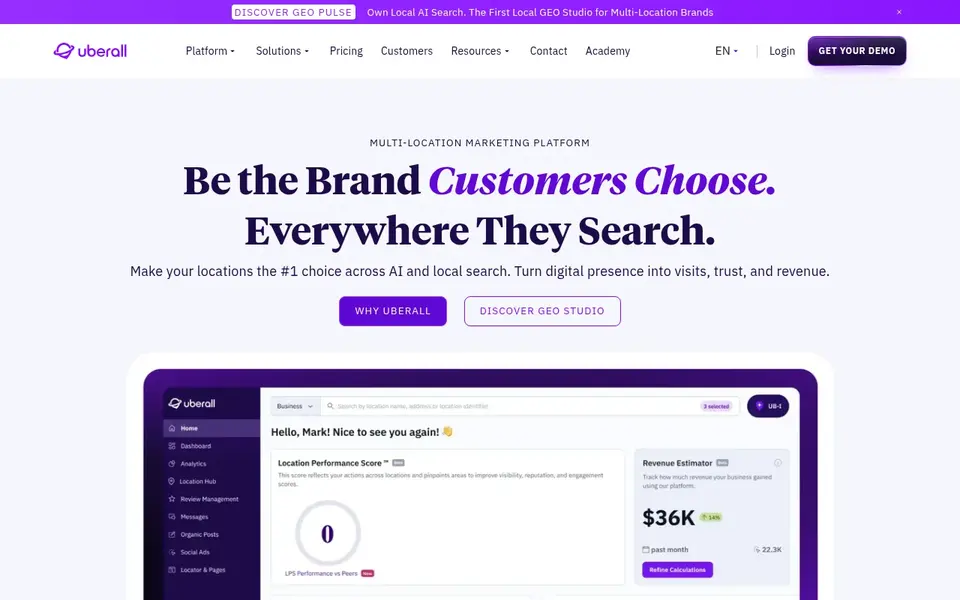
Uberall is a location management platform for businesses with multiple branches. A tree care company that has grown to several yards or franchise-like coverage can use it to keep listings, hours and service details consistent across every location and directory.
It also handles review monitoring and customer messaging, which helps when different crews serve different towns and customers expect a local reply. The value shows up when you have enough locations that manual updates become a chore.
For a single-crew arborist, it is more platform than you need. Pricing is quote-based, so the cost only makes sense once you have several locations to manage.
- Wide directory network
- location management at scale
- review and messaging features
- Built for larger businesses
- quote-based pricing
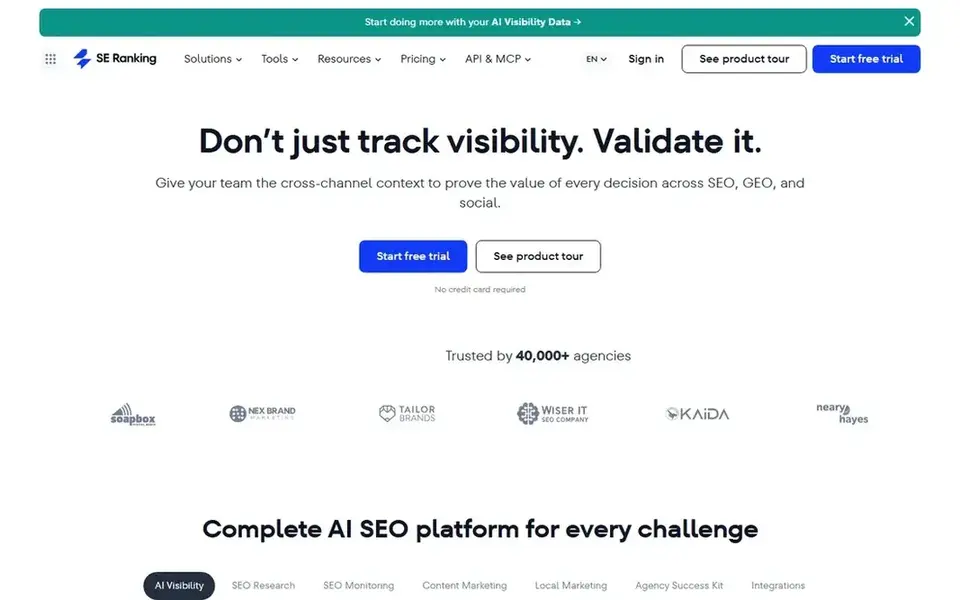
SE Ranking is an SEO platform with local rank tracking built in. For an arborist who also runs a website with service pages for each town, it lets you track both organic and map rankings and run audits to catch broken pages or missing meta descriptions.
The local features sit inside a larger toolkit, so you get keyword research and competitor tracking alongside local rankings. That suits a tree service that wants to grow organic traffic for terms like "tree removal" plus a town name, not just map visibility.
It is not a listing manager, and the local tools need a paid plan. If you only care about map grids, a dedicated tool is leaner.
- Local rank tracking
- site audit tools
- competitor tracking
- Broad suite, not local-only
- local features need a paid tier
How I chose
I picked these tools by reading vendor documentation and public sources, then matching each one to how a tree care business actually operates: one base, several service towns, seasonal demand, and customers who search on a phone after a storm. I did not run hands-on tests, so treat the notes as a starting point for your own trial.
I weighted three things: whether the tool handles multiple service areas, whether it covers the job you most need done (listings, reviews, or rankings), and whether the pricing model fits a small operation. I left out tools that only make sense for large multi-location brands unless they clearly earned a place. Where a tool's pricing is not published, I say so rather than guess.
What to check before you buy
- Count your service towns first, because most tools price by location or profile.
- Confirm the tool supports a service-area business setup, not just a storefront address.
- Check whether review requests can go to every customer, since filtering for positive reviews breaks Google's rules.
- Ask whether Google Business Profile posts and hours can be updated from the dashboard.
- Test whether rank tracking covers the small towns and suburbs you actually drive to.
- Read the cancellation terms before you commit, since seasonal businesses may want to pause in winter.
Frequently asked questions
Do arborists need local SEO software at all?
Not strictly, but it saves time. A tree service with one location can manage a Google Business Profile by hand. Software helps once you cover several towns, want review requests sent automatically after each job, or need to see map rankings across a service area rather than one city.
Which tool is best for getting more reviews after tree work?
Grade.us is built around review request campaigns and follow-ups, which fits the pattern of finishing a job and asking while the customer is pleased. Pair it with a listing tool so your profile details stay accurate. Always ask every customer, not just the ones you expect to be happy.
Can these tools help me rank in neighboring towns?
Rank tracking tools like Local Viking show where you appear across a grid, which tells you which towns need attention. Listings tools keep your details consistent, and profile posts keep the account active. None of them guarantee rankings, so treat them as measurement and housekeeping tools.
Is Yext worth it for a small tree care business?
It depends on how many towns and directories you manage. Yext is strong for keeping listings consistent at scale, but pricing is quote-based and it may be more than a one-crew operation needs. If you mainly want reviews, a review tool is a better first buy.
What should I fix before buying any of these?
Claim and verify your Google Business Profile, correct your name, address and phone everywhere, and add real photos of your work. Software amplifies what is already there, so a clean profile and accurate listings make every tool on this list more useful.
Sources
See where you really rank - block by block
ProMapRanker scans Google Maps across a grid of your service area. Simple monthly plans from $19, white-label on every plan.
Start freeBrowse all guides
← Best Local Rank Tracking Tools for Upholstery Shops in 2026Best Local SEO Software for Bounce House Rentals (2026) →
 best local rank tracking tools for piano teachers
Best Local Rank Tracking Tools for Piano Teachers in 2026
A piano teacher's guide to local rank tracking tools in 2026: how each one tracks your studio's map visibility, reviews and Google Business Profile.
Read → best local rank tracking tools for marinas
Best Local Rank Tracking Tools for Marinas in 2026
A practical guide to the best local rank tracking tools for marinas, covering map grid scans, GBP management and review tracking for 2026.
Read → best local rank tracking tools for garden centers
Best Local Rank Tracking Tools for Garden Centers in 2026
A guide to the best local rank tracking tools for garden centers in 2026, compared from vendor documentation and public sources by Shihab Mia.
Read → google maps ranking checker
Google Maps Ranking Checker: How to Check Where You Really Rank
Stop guessing your Maps rank. Learn why a geo-grid ranking checker shows your true position across every neighborhood.
Read → google my business categories
Google My Business Categories: How to Choose the Right Ones
How to choose the right Google My Business categories to maximize relevance and rankings.
Read → google my business optimization checklist
The Ultimate Google My Business Optimization Checklist
A complete Google My Business optimization checklist covering every field that affects ranking.
Read →More in Local SEO & Google Maps · All guides A to Z by date · Latest guides