 ProMapRanker
Best Local SEO Software for Bounce House Rentals (2026)

Local rank tracking with GBP checks · Pricing starts at: See website
Direct answer
SE Ranking is my top pick for bounce house rental companies because it combines local rank tracking, Google Business Profile checks and competitor monitoring in one dashboard that suits a small route-based operator. It offers a free trial, and pricing tiers are listed on its site. For listing accuracy across many towns, Uberall fits multi-location setups, and for review requests after a party, Reviewshake is the more focused choice.
I compared these tools from vendor documentation and public sources, not from hands-on testing. My focus was on what a bounce house rental operator actually does each week: updating Google Business Profile hours, checking rankings across nearby towns, chasing reviews after parties, and confirming that listings match everywhere. I left out tools that only make sense for large multi-brand chains.
Key takeaways
- Bounce house rentals compete on "near me" searches across several towns, so local rank tracking by grid point matters more than a single city ranking.
- Google Business Profile categories, service areas and photos do more for a party rental business than blog content.
- Review requests sent right after an event convert better than bulk email blasts weeks later.
- Listing consistency across Yelp, Facebook and local directories prevents duplicate profiles that split your visibility.
- Call tracking helps you see which towns and keywords actually produce booking calls, not just form fills.
Quick comparison
| Pick | Great for | Pricing starts at | Free tier | |
|---|---|---|---|---|
| SE Ranking | Local rank tracking with GBP checks | See website | Free trial | Visit |
 Uberall | Listing management across many towns | See website | Not stated | Visit |
 Reviewshake | Review requests after each party | See website | Not stated | Visit |
 Localo | Simple GBP management for one business | See website | Free trial | Visit |
 Moz Local | Directory listing cleanup | See website | Not stated | Visit |
 CallTrackingMetrics | Tracking calls from map listings | See website | Free trial | Visit |
 Rio SEO | Enterprise local marketing | See website | Not stated | Visit |
The best local SEO software for bounce house rentals compared
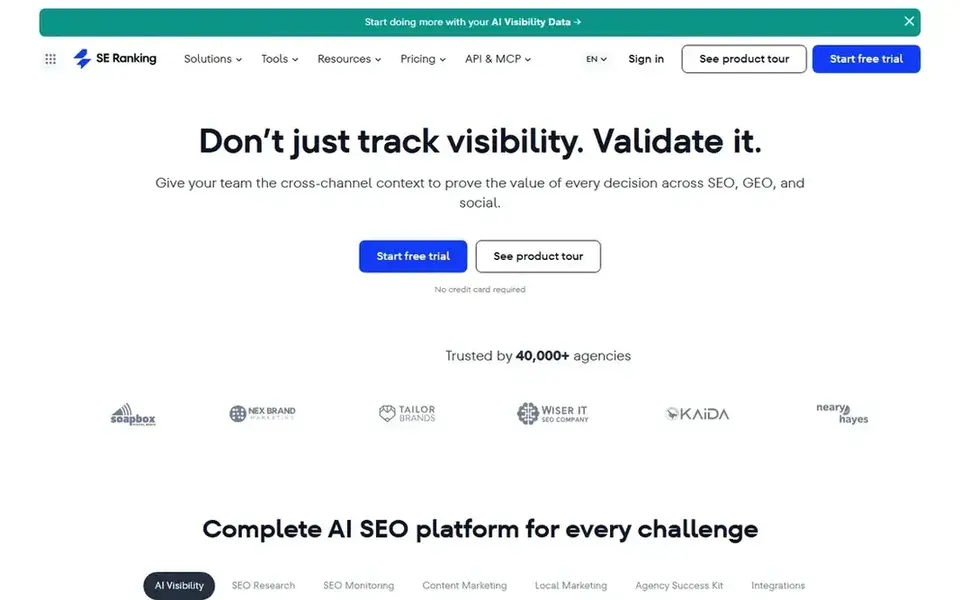
SE Ranking is a general SEO platform with a local module that tracks rankings from specific map points rather than one central location. For a bounce house business serving several suburbs, that matters, because you may rank well in your own zip code and barely appear two towns over. You can set up tracking for each service area and watch movement over time.
In practice, I would use it to monitor the keywords that match how parents search, such as "bounce house rental [town]" and "water slide rental near me". The GBP audit highlights missing categories, incomplete hours and photo gaps. Pair that with the competitor view to see which rival inflatable rental companies show up in the map pack for the same towns, then adjust your service area and categories accordingly.
The limits are mostly about time. The dashboard has a lot of screens, and a one-person operation may only need the local rank tracker and GBP audit. If you want a simple checklist tool with no analytics, this is more than you need.
- Grid-based local rank tracking
- Google Business Profile audit tools
- competitor visibility reports
- Dense interface for beginners
- local features sit in higher tiers
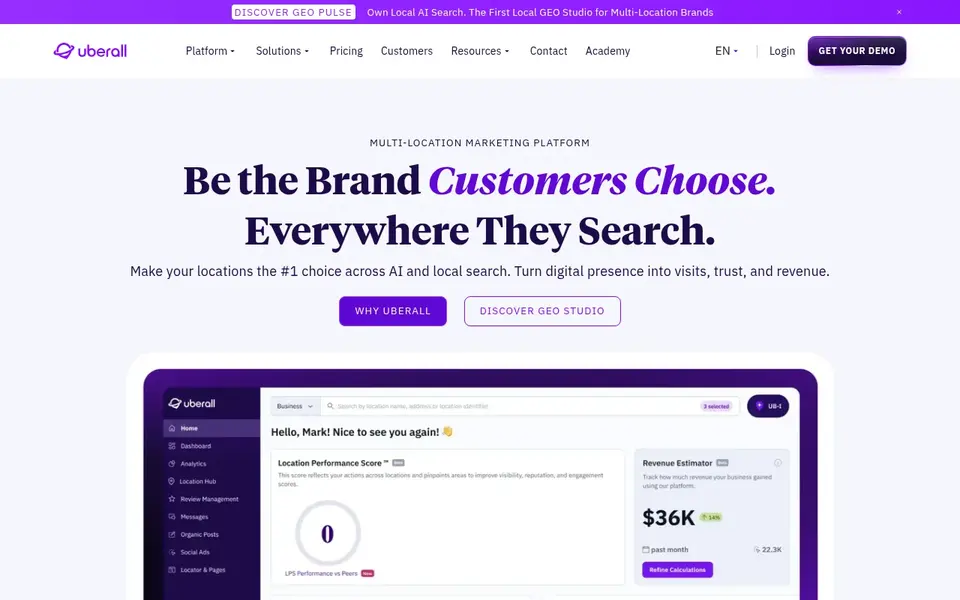
Uberall manages business listings and location data across directories and maps from one dashboard. Bounce house companies often list the same business under several town names to capture nearby searches, which creates duplicate and inconsistent profiles. Uberall is built to keep names, addresses, phone numbers and hours aligned everywhere.
For a rental business with trailers parked in different towns or multiple party zones, the location page feature lets you publish a page per service area without hand-building each one. Review monitoring pulls feedback from several platforms into one inbox, so you can respond to a bad party experience before it sits unanswered. That is useful when your reputation is tied to how a single event went.
The main limit is cost and complexity. Pricing is quote-based, and the platform is designed for businesses with several locations. If you run one warehouse and one GBP profile, the setup work will outweigh the benefit.
- Central listing sync across directories
- location pages for multi-area businesses
- review monitoring in one place
- Quote-based pricing
- more than a single-location operator needs
Reviewshake focuses on getting reviews after a customer interaction. For bounce house rentals, the natural trigger is the day after pickup, when the parent still remembers the party. You can set a campaign that sends a request by email or text and routes happy customers to Google while keeping the message the same for everyone, which stays within Google's review policies.
The tool also monitors incoming reviews across platforms and lets you reply from one place. That helps when a customer complains about a late delivery or a dirty unit, because a fast, calm reply often matters more than the original complaint. You can also schedule reminders for repeat customers ahead of summer season.
It does not track map rankings or manage listings, so it works as a companion to a local SEO platform rather than a replacement. Businesses that already get plenty of reviews may not need a dedicated tool.
- Automated review invites by email and SMS
- multiple review site support
- campaign scheduling
- Not a rank tracker
- pricing needs a demo request
Localo is a local marketing tool built around Google Business Profile. It gives you a checklist of profile improvements, tracks local rankings and helps schedule posts and review replies. For a bounce house operator who wants one screen instead of five, that simplicity is the appeal.
The workflow fits a seasonal business well. Before spring, you update hours, add fresh photos of the inflatables, and publish a post about new water slide inventory. During the season, you watch local rankings and respond to reviews. The rank tracking shows where you appear for town-level searches, which tells you whether to add a service area or a location page.
Its competitor analysis is thinner than what larger platforms offer, and it is built around a single GBP profile. If you run several locations under one brand, you will hit limits quickly.
- Straightforward GBP task list
- local rank tracking
- review and post tools in one place
- Lighter competitor analysis
- fewer integrations
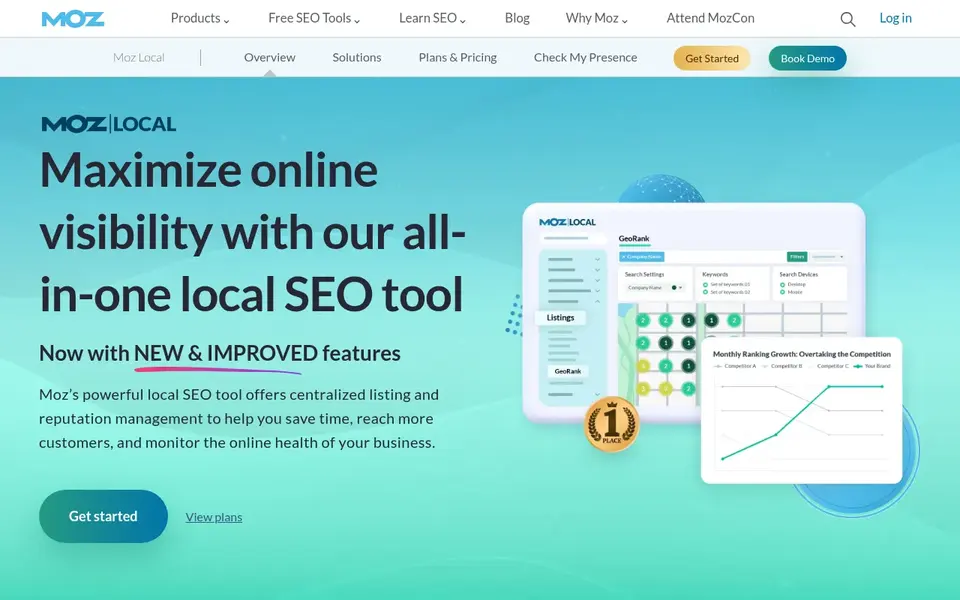
Moz Local handles the unglamorous part of local SEO: making sure your business name, address and phone number match across directories. Bounce house rentals often have old listings from a previous address or a second phone number, and those duplicates confuse both customers and search engines.
The duplicate detection is the feature I would use first. It scans major data providers and flags conflicting records so you can fix them. Once the core listings are clean, you can push updates from one place instead of editing each directory by hand. That saves hours during a busy booking season.
It does not replace a rank tracker or a GBP management tool, and its reporting is basic. Treat it as a foundation layer under a broader local SEO setup.
- Listing distribution to major directories
- duplicate detection
- simple dashboard
- Limited rank tracking
- not a full SEO suite
CallTrackingMetrics assigns different phone numbers to different traffic sources so you can see which listings and keywords produce calls. For a bounce house business, phone calls are often the first contact, especially for same-week bookings. Knowing whether a call came from your Google Business Profile, a directory or a paid ad changes where you spend time.
The dynamic number insertion swaps the displayed number based on how the visitor arrived, so your GBP listing shows one number while your website shows another. Call routing can send booking calls to a staffed line and overflow to a mobile. Recordings help you review how inquiries are handled, which is useful when a seasonal helper takes calls.
The setup takes thought, and per-number fees can grow if you track many sources. If almost all your bookings come through a form, the value is lower.
- Dynamic number insertion on your site
- call attribution by source
- call recording and routing
- Setup requires planning
- per-number costs add up
Rio SEO is an enterprise local marketing platform used by brands with many locations. It covers listings, local pages, reviews and analytics in one system. A bounce house rental company with a handful of warehouses and dozens of service areas could use it to keep each market consistent.
The location page builder is the part that fits party rentals, because you can publish pages for each town you deliver to and keep them updated as your delivery radius changes. Local analytics show how each market performs, which helps decide where to add inventory or run seasonal promotions.
For most independent operators, this is too much platform. Pricing is quote-based and aimed at larger organizations, so a single-location business should look at simpler tools first.
- Local listings at scale
- location pages
- local analytics
- Enterprise pricing
- heavy for small operators
How I chose
I built this list from vendor documentation and public sources, and I did not run hands-on tests of each tool. I started with the jobs a bounce house rental business does repeatedly: keeping Google Business Profile details correct, tracking rankings across several towns, collecting reviews after events, and cleaning up directory listings. Tools that only serve large multi-brand chains were set aside.
I also weighed limits honestly. Some tools are quote-based, some are built for one profile, and some are general SEO suites where local features are one module among many. I noted those trade-offs so you can match the tool to the size of your operation rather than the length of its feature list. Where I was unsure about a free plan, I said so instead of guessing.
What to check before you buy
- Confirm the tool tracks rankings by map grid point, not just one city, so you can see performance in each town you deliver to.
- Check whether it supports Google Business Profile categories and service areas, since party rentals often serve a radius rather than a storefront.
- Ask how review requests are sent and whether the tool follows Google's review policies, including no gating or incentives.
- Confirm listing sync covers the directories your customers actually use, such as Yelp, Facebook and Apple Maps.
- Check whether call tracking is included or a separate add-on, because phone bookings matter for same-week rentals.
- Ask about contract length and cancellation terms before committing, especially if your season is short.
Frequently asked questions
Do bounce house rental businesses need local SEO software?
Not strictly, but it helps. Most bookings start with a "near me" or town-level search, so keeping your Google Business Profile accurate and tracking where you appear across nearby towns saves manual checking. A small operator can start with a free trial of one tool and add others as booking volume grows.
Which tool is best for tracking rankings across several towns?
A platform with grid-based local rank tracking is the better fit, because it shows visibility from different map points instead of one central location. SE Ranking and Localo both offer local rank tracking, with SE Ranking giving more depth on competitors. Set up tracking for each town you deliver to and review it monthly.
How do I get more Google reviews for a party rental business?
Send a review request the day after pickup, when the event is fresh. Use a tool like Reviewshake to automate the message by email or text, and keep the request the same for every customer. Do not offer discounts for reviews or filter out unhappy customers, since both violate Google's policies.
Is listing management necessary if I only have one location?
It still helps, because duplicate and outdated listings appear even for single-location businesses. Old addresses, second phone numbers and stale hours confuse customers and search engines. Moz Local or Uberall can clean up and sync those records, though Uberall is aimed at businesses with several locations.
Can I use these tools together?
Yes, and many operators do. A common setup is a rank tracker and GBP tool for visibility, a review tool for post-event requests, and a listing tool for directory accuracy. Start with the gap that costs you the most bookings, then add tools as your season and budget allow.
Sources
See where you really rank - block by block
ProMapRanker scans Google Maps across a grid of your service area. Simple monthly plans from $19, white-label on every plan.
Start freeBrowse all guides
← Best Local SEO Software for Arborists in 2026Best Local SEO Software for Bowling Alleys in 2026 →
 best local rank tracking tools for upholstery shops
Best Local Rank Tracking Tools for Upholstery Shops in 2026
A practical guide to local rank tracking tools for upholstery shops in 2026, compared from vendor documentation and public sources, with limits noted.
Read → best local rank tracking tools for piano teachers
Best Local Rank Tracking Tools for Piano Teachers in 2026
A piano teacher's guide to local rank tracking tools in 2026: how each one tracks your studio's map visibility, reviews and Google Business Profile.
Read → best local rank tracking tools for marinas
Best Local Rank Tracking Tools for Marinas in 2026
A practical guide to the best local rank tracking tools for marinas, covering map grid scans, GBP management and review tracking for 2026.
Read → google maps pin ranking
Google Maps Pin Ranking: Why Your Pin Sits Where It Does
Understand what determines your pin's position on Google Maps and how it shifts based on where the searcher stands.
Read → local seo forum
Local SEO Forum: A Complete Guide
Everything you need to know about local seo forum: what it is, why it matters for local SEO, and exactly how to act on it.
Read → geo grid scan local seo
Geo-Grid Scan for Local SEO: How a Single Scan Reveals Everything
What a geo-grid scan is, what data it returns, and how one scan exposes your real local visibility.
Read →More in Local SEO & Google Maps · All guides A to Z by date · Latest guides