 ProMapRanker
Best Local Rank Tracking Tools for Piano Teachers in 2026

Google Business Profile and map visibility · Pricing starts at: See website
Direct answer
Localo is my first pick for most piano teachers because it is built around Google Business Profile management and local map visibility, which is exactly where a home studio shows up when a parent searches "piano lessons near me". It has no free plan stated, so check its pricing page. If you mainly want to watch grid rankings around your teaching address, look at Local Dominator, and if you also need to manage review requests from parents, Reviewshake is worth a look.
I put this list together by reading vendor documentation and public sources, not by running hands-on tests. My aim was to match each tool to how a small teaching studio actually works: one location, a handful of search terms, parents calling or filling in a form, and a Google Business Profile that needs regular attention.
Key takeaways
- Piano teachers compete in a small radius, so a grid-based map tracker tells you more than a single city-wide position number.
- Google Business Profile tools matter as much as rank tracking, because your profile categories, photos and posts drive map placement.
- Rank checks should use the search terms parents actually type, such as "piano lessons [town]" and "piano teacher near me".
- Review tools help you collect honest feedback from families, but asking only happy parents or offering rewards breaks Google's rules.
- Most tools price per location or per profile, so a single studio usually sits on the smallest plan.
Quick comparison
| Pick | Great for | Pricing starts at | Free tier | |
|---|---|---|---|---|
| Localo | Google Business Profile and map visibility | See website | Not stated | Visit |
 Local Dominator | Grid-based local rank tracking | See website | Not stated | Visit |
 Reviewshake | Review requests from parents | See website | Not stated | Visit |
 SE Ranking | All-in-one local SEO checks | See website | Free trial | Visit |
 Moz Local | Listing accuracy and GBP basics | See website | Not stated | Visit |
 Uberall | Multi-location listing management | See website | Not stated | Visit |
 CallTrackingMetrics | Tracking calls from enquiry ads | See website | Free trial | Visit |
The best local rank tracking tools for piano teachers compared
Localo is a local marketing tool centred on Google Business Profile work. For a piano teacher, that focus fits: your profile is the listing parents see in Maps, with your photos, lesson description, hours and reviews. The tool walks you through profile improvements and shows how your listing performs for chosen keywords in a grid around your location.
In practice, you would set your teaching address as the tracked location, add keywords like "piano lessons [your town]" and "piano teacher near me", and check the grid weekly. The audit section flags gaps such as missing categories or incomplete profile fields, which you can fix directly. That loop of check, fix, recheck is the useful part for a solo studio.
The limit is scope. If you want deep website rank tracking, backlink analysis or content planning, Localo will not cover it. Skip it if your main problem is your website rather than your map listing.
- Built around GBP management
- grid-style local rank checks
- profile audit and task suggestions
- Narrower than a full SEO suite
- pricing tiers scale with locations
Local Dominator is a rank tracking tool built for local search. It checks where a business ranks across a grid of points around a location, which suits a piano studio because families usually come from nearby streets and suburbs rather than the whole country.
For a teacher, the grid shows whether you appear in the top results in the streets closest to your studio and where a rival teacher a few blocks away outranks you. You can add competitors and compare their grid position with yours, then adjust your profile description, service list or review flow and watch the next check.
One limitation is interpretation. A grid is a picture, not an instruction, so you need to decide what to change. It also does not edit your Google Business Profile for you, so pair it with a profile tool if that matters.
- Grid heatmaps around a location
- competitor tracking in the same grid
- reporting for clients
- Grid data needs careful reading
- not a GBP editing tool
Reviewshake is a review management platform. It sends review requests by email or message and collects responses on the sites you choose. For a piano teacher, reviews are one of the strongest signals in the local map pack, and a steady flow of honest feedback from families helps.
The workflow is simple: after a term ends or a student passes a grade exam, you send a request to the parent. The tool tracks who was asked and who responded. Keep the request neutral and send it to all families, not just the ones you expect to be positive.
It does not track your map rankings, so it is a companion rather than a replacement. Skip it if you already have a review process that works and your problem is visibility, not reputation.
- Automated review request campaigns
- multiple review site support
- simple parent-facing flow
- Not a rank tracker
- request timing needs care
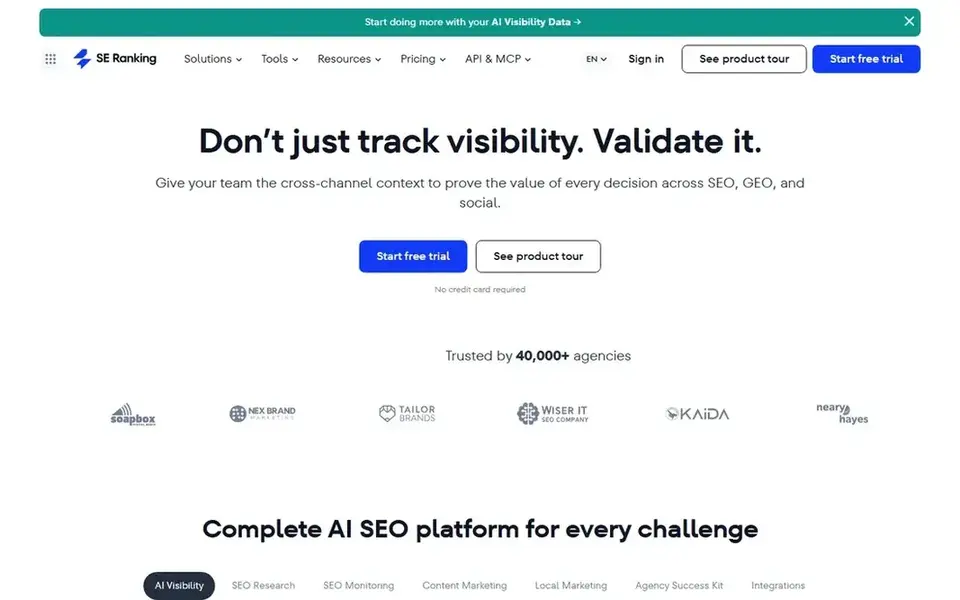
SE Ranking is a general SEO platform with a local marketing module. It tracks rankings for chosen keywords in a set location, audits your website for technical problems and shows what competitors rank for.
For a piano teacher with a simple website, the useful parts are the local rank checks for terms like "piano lessons [town]" and the site audit, which catches broken pages or missing titles on your lesson pages. You can also see which nearby teachers or music schools appear for the same terms.
The limit is size. A solo studio will use a fraction of the features, and the interface takes time to learn. Skip it if you want something narrow and quick to set up.
- Local rank tracking module
- site audit and keyword research
- competitor comparison
- Bigger than a single studio needs
- learning curve
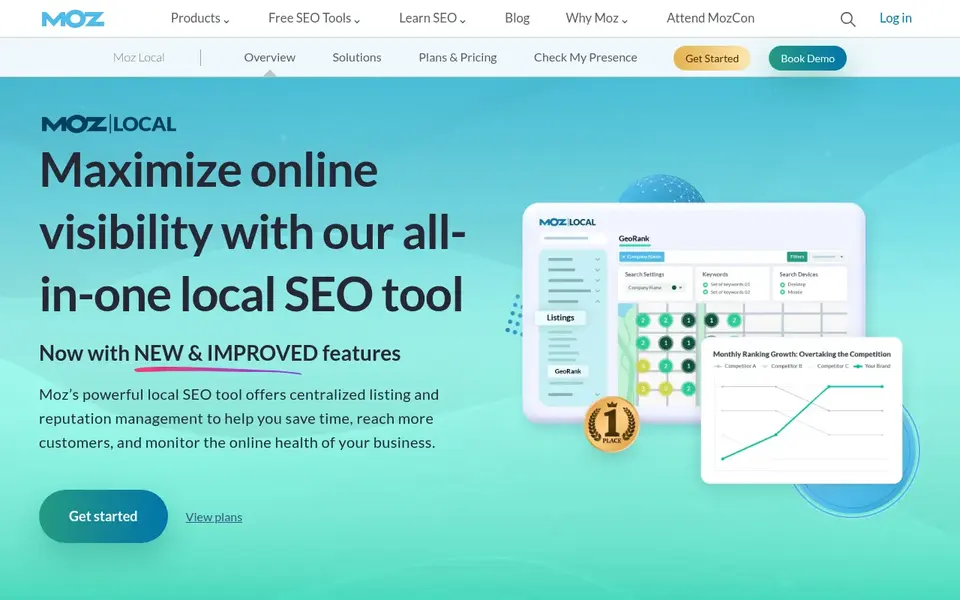
Moz Local focuses on making your business information consistent across directories. For a piano teacher, that means your studio name, address, phone number and hours match everywhere, which supports trust in local search.
If you have moved studios, changed a phone number or listed your teaching address in several places over the years, this kind of cleanup is worth doing before you worry about rank tracking. Inconsistent listings can hold back map visibility.
It is not a deep rank tracker. If your listings are already clean and you want grid-level position data, look at Local Dominator instead.
- Listing distribution and duplicate checks
- profile management basics
- clear data accuracy focus
- Limited rank tracking depth
- best value for businesses with messy listings
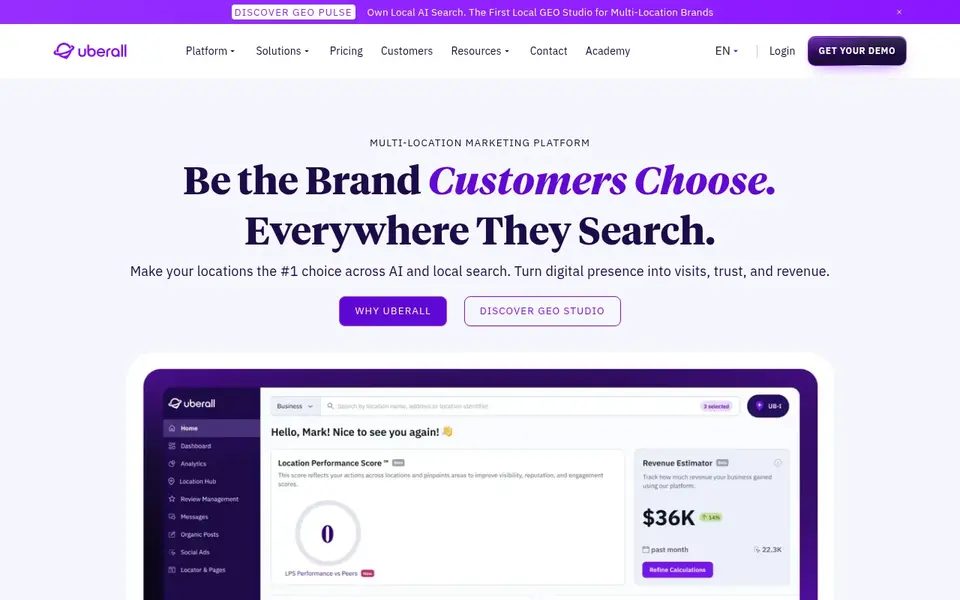
Uberall is a location marketing platform for businesses with several branches. A piano teacher running lessons from two or three studios, or a small music school with teachers at different addresses, is closer to its audience than a single home studio.
The value is central control: one place to update hours, descriptions and photos across locations, plus review handling. If you teach from a shared music shop or community centre and your address details change, that consistency helps.
For one home studio, it is more platform than you need, and pricing is quote-based, so ask for a quote before committing. Skip it unless you genuinely manage multiple teaching locations.
- Central listing management
- profile and review tools
- built for many locations
- Overkill for one studio
- quote-based pricing
CallTrackingMetrics records which marketing source produced a phone call. For a piano teacher, that matters if you run local ads or a directory listing and want to know whether enquiries come from search, a flyer QR code or a referral.
You would place a tracking number on your enquiry page or ad, then see how many calls came in and from where. Combined with rank tracking, it tells you whether better map visibility actually turns into enquiries from parents.
It is not a rank tracker and adds little if you get all your students by word of mouth. Skip it unless you are spending money on ads and need to know what works.
- Call tracking with source attribution
- form and call reporting
- works with ad campaigns
- Only relevant with paid campaigns
- adds a tracking number
How I chose
I started from vendor documentation and public sources for each tool, then asked one question: does this help a piano teacher see or improve where their studio appears in local search? That ruled out tools built only for large agencies or e-commerce.
I weighed four things: whether the tool tracks local or map rankings rather than only website positions, whether it supports Google Business Profile work, how much setup a solo teacher faces, and where each tool stops being useful. I did not run hands-on tests, so treat the notes as a starting point and check current features and pricing on each vendor's site.
What to check before you buy
- Confirm the tool tracks rankings in a grid or radius around your teaching address, not just one city-wide position.
- Check that it supports Google Business Profile insights or management, since your profile drives most map visibility for a studio.
- Test whether you can add the exact phrases parents use, such as "piano lessons [suburb]" and "piano teacher near me".
- Ask how many locations and keywords the smallest plan includes, because a single studio should not pay for ten branches.
- Look for review request features that let you ask every family honestly, with no filtering or incentives.
- Check the reporting: a simple weekly view you will actually read beats a dashboard you ignore.
Frequently asked questions
Do piano teachers really need a local rank tracking tool?
Only if parents find you through Google Maps or local search and you want to improve that. If all your students come from word of mouth and your schedule is full, a free Google Business Profile check once a month is enough. A paid tracker earns its place when you are trying to fill gaps in your timetable.
What keywords should a piano teacher track?
Track the phrases parents type: "piano lessons [your town]", "piano teacher near me", "piano lessons for beginners [suburb]" and "children's piano lessons [town]". Add a term for your specialty, such as exam preparation or adult beginners, if you teach it. Keep the list short and check it consistently.
Does my Google Business Profile matter more than my website?
For local map results, your profile usually carries more weight than a small website. Categories, hours, photos, service descriptions and reviews all feed into it. A rank tracker that shows profile data alongside map positions is more useful to a piano teacher than a website-only tool.
Can I ask parents for reviews?
Yes, if you ask all families honestly and without incentives. Do not offer discounts for reviews, do not ask only happy parents, and never write reviews yourself. A simple request after a term or exam, sent through a tool like Reviewshake, keeps the process fair and within Google's guidelines.
How often should I check my local rankings?
Weekly is enough for a small studio. Rankings move slowly, and checking daily leads to reacting to noise. Review the grid or position report weekly, make one profile or website change, then watch the next few checks to see whether it helped.
Sources
See where you really rank - block by block
ProMapRanker scans Google Maps across a grid of your service area. Simple monthly plans from $19, white-label on every plan.
Start freeBrowse all guides
← Best Local Rank Tracking Tools for Marinas in 2026Best Local Rank Tracking Tools for Upholstery Shops in 2026 →
 best local rank tracking tools for garden centers
Best Local Rank Tracking Tools for Garden Centers in 2026
A guide to the best local rank tracking tools for garden centers in 2026, compared from vendor documentation and public sources by Shihab Mia.
Read → best local rank tracking tools for assisted living facilities
Best Local Rank Tracking Tools for Assisted Living (2026)
A guide to local rank tracking tools for assisted living facilities, covering map grid tracking, review signals and multi-location reporting.
Read → best listing management software for welding shops
Best Listing Management Software for Welding Shops in 2026
A practical guide to the best listing management software for welding shops in 2026, covering GBP tools, directory sync, reviews and local rank tracking.
Read → google my business optimization checklist
Google Business Profile Optimization Checklist (2026)
The definitive Google Business Profile optimization checklist for 2026 covering every field, signal, and best practice.
Read → local seo for phone repair shops
Local SEO for Phone Repair Shops
A local SEO guide for phone repair shops: Google Business Profile setup, reviews, and mall-kiosk and storefront local SEO.
Read → google business profile hours not updating
Google Business Profile Hours Not Updating: How to Fix It
Why Google Business Profile hours fail to update and how to fix them so customers see accurate info.
Read →More in Local SEO & Google Maps · All guides A to Z by date · Latest guides