 ProMapRanker
Best Local Rank Tracking Tools for Law Firms in 2026
Direct answer
My top pick for law firms is Local Falcon, because its map-grid view shows how a practice ranks across a whole metro area rather than at one pin. It has no free plan stated, so check its pricing page. If you want rank tracking bundled with citation and listing management, BrightLocal is a strong second, and Semrush Local suits firms that already use Semrush for broader SEO work.
I put this comparison together from vendor documentation and public sources, not from hands-on testing. I looked at what each tool says it does for multi-location and service-area businesses, how it reports map rankings, and where its limits sit for a law firm with one office or several.
Key takeaways
- Law firms compete across a service area, not a single point, so grid-based map tracking matters more than a single keyword position.
- Practice-area keywords plus city names are the core set to track, for example "personal injury lawyer [city]" or "estate planning attorney [city]".
- Review counts and Google Business Profile categories affect local rankings, so pair rank data with profile and review monitoring.
- Multi-office firms need tools that support several locations under one account and can report per office.
- No tool guarantees rankings; use the data to guide profile, content and citation work that follows Google's guidelines.
Quick comparison
| Pick | Great for | Pricing starts at | Free tier | |
|---|---|---|---|---|
 Local Falcon | Grid-based map rank tracking | See website | Not stated | Visit |
 BrightLocal | Rank tracking with citations and reviews | See website | Free trial | Visit |
 Semrush Local | Firms already using Semrush | See website | Not stated | Visit |
 Whitespark | Citation building with local rank data | See website | Not stated | Visit |
 Ahrefs | Broader SEO with local keyword research | See website | Not stated | Visit |
 SE Ranking | Agencies managing several law firm clients | See website | Free trial | Visit |
 Google Business Profile | First-party profile performance data | See website | Free plan | Visit |
The best local rank tracking tools for law firms compared
Local Falcon is built around the idea that a Google Maps ranking changes depending on where the searcher stands. For a law firm, that matters: a personal injury practice in a large metro may rank well near its office and poorly across the river. The grid view shows those differences on a map so you can see which neighbourhoods and suburbs you actually reach.
In practice, I would set up a grid around each office and around the main suburbs or towns the firm serves. Track practice-area terms such as "car accident lawyer" and "will and estate lawyer" with the city attached. Repeat scans on a schedule let you see whether profile changes, new reviews or new service pages move the grid.
The limit is cost control. Each scan uses credits, and a dense grid over a big metro adds up. Firms that only need a single position per keyword, or that have one small service area, can skip it.
- Map-grid views across a service area
- scan scheduling for repeat checks
- competitor comparison on the grid
- Grid scans use credits
- less useful for firms that only want one keyword position
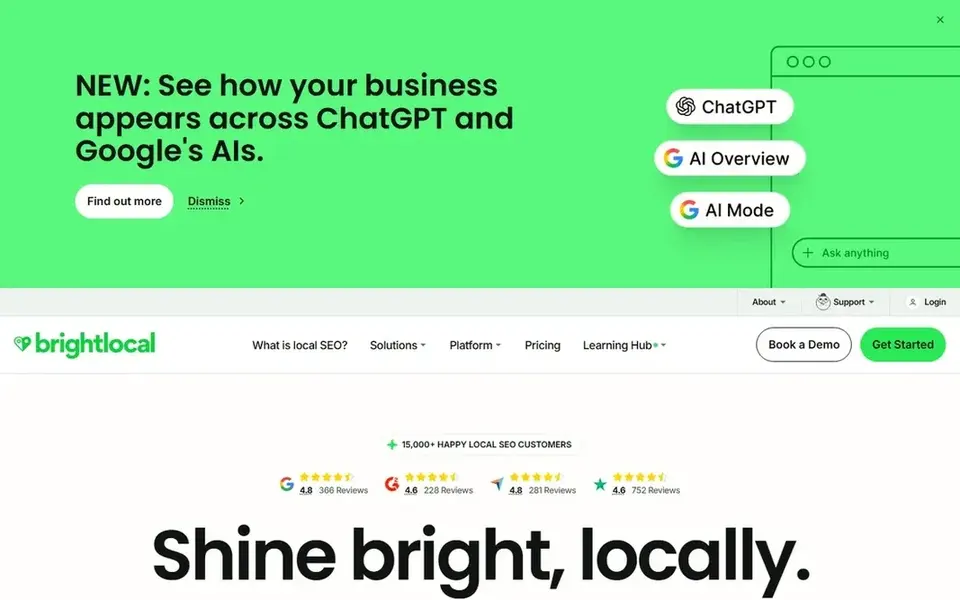
BrightLocal combines local rank tracking with citation building, listing audits and review monitoring. For a law firm, that combination is useful because local visibility depends on consistent name, address and phone data across directories, plus a steady flow of genuine client reviews.
The rank tracking side lets you follow practice-area keywords by location and see movement over time. Because the same account holds citation and review data, you can connect a ranking change to a fixed listing or a batch of new reviews without switching tools. Agencies running several law firm accounts can keep each client separate.
The main limit is that BrightLocal is most valuable when you use several of its features. A firm that only wants rank positions may find a narrower tracker cheaper. It is also not a replacement for legal directory profiles, which many firms maintain separately.
- Local rank tracking alongside citation and review tools
- multi-location reporting
- listing audit features
- Priced around bundles
- some features overlap if you already own other tools

Semrush is a large SEO platform, and its local features cover map rank tracking, listing management and review monitoring. A law firm that already uses Semrush for keyword research, competitor analysis or content planning can keep local tracking in the same place.
For a firm, the keyword research side is handy for finding which practice-area terms people actually search in each city, and the local rank tracking then shows whether the profile and site pages rank for them on the map. Reports can be shared with a marketing partner or managing partner.
The limit is scope. If all you need is a map grid, Semrush carries a lot you will not use. Small single-office firms may prefer a focused tracker.
- Local rank tracking inside a broad SEO suite
- keyword research for practice areas
- listing management features
- Local tools are part of a larger subscription
- overkill for a single small office
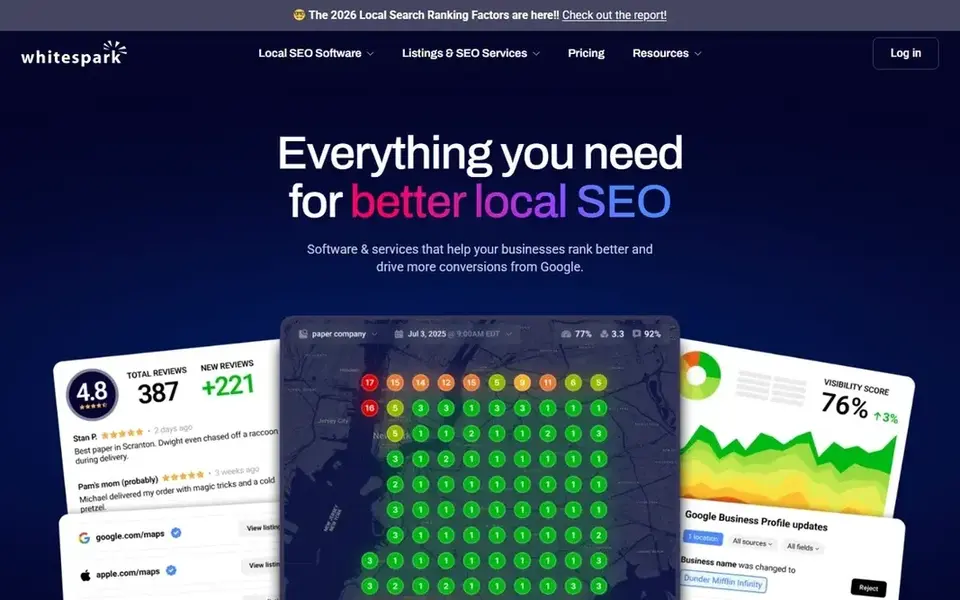
Whitespark is known for citation building and local search research, and it also offers local rank tracking with map-grid views. For a law firm, the citation side is relevant because legal directories, chamber of commerce listings and local business directories all feed the profile's consistency.
The rank grid shows how the firm appears across its service area, and the citation tools help fix inconsistent name, address and phone entries that can hold rankings back. I would use it when the priority is cleaning up listings and then watching whether map positions improve.
The limit is that Whitespark is not a general SEO suite. If you want content planning, backlink analysis and rank tracking in one place, you will need other tools alongside it.
- Strong citation and listing service
- local rank grid reporting
- directory research tools
- Citation services are the main product
- rank tracking is one part of the offer

Ahrefs is a well-known SEO platform with keyword research, competitor analysis, site audits and organic rank tracking. For a law firm, its value is in understanding which practice-area terms and questions people search, and which competing firms rank for them in organic results.
I would use Ahrefs to plan service pages and blog content around legal questions, then use a dedicated local tool for map positions. The organic rank tracking still helps because many legal searches end with a click on an organic result rather than the map pack.
The limit is clear: Ahrefs is not built around Google Maps grid tracking. A firm that mainly wants to know its map position by neighbourhood should start with a local tracker.
- Deep keyword and competitor data
- rank tracking for organic results
- site audit tools
- Local map-grid tracking is not its core
- needs pairing with a local tool
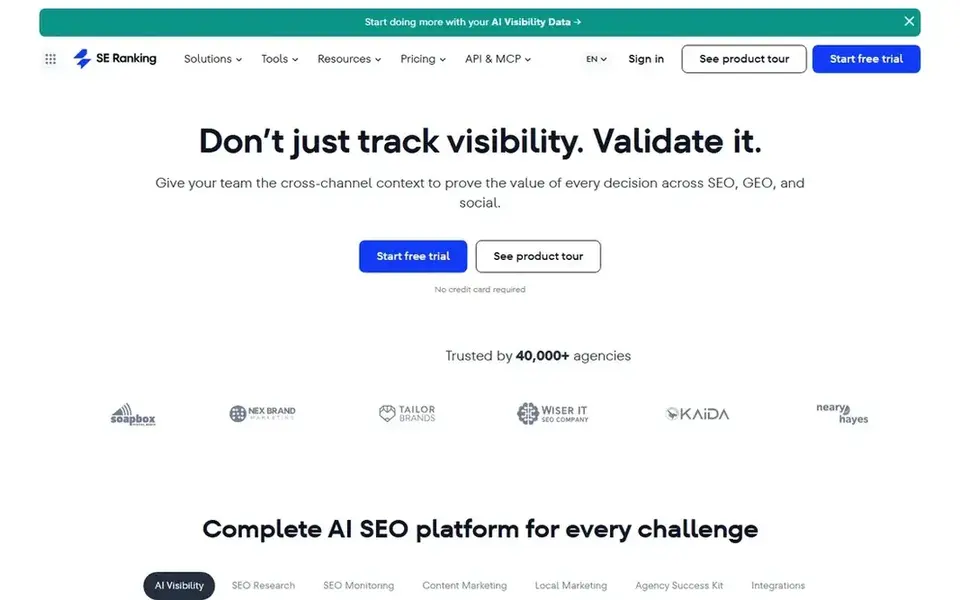
SE Ranking is an SEO platform with rank tracking, site audits and reporting, and it supports local rank views alongside organic positions. It suits an agency or a firm with several offices that wants one dashboard across projects.
For law firms, the useful part is keeping each office or practice area as its own project, tracking the relevant city keywords, and producing reports a partner can read. White-label reporting helps agencies present results to firm management.
The limit is the learning curve. The platform has many settings, and a small firm with one office may not need the depth. Check that the local tracking depth you need is included in the plan you choose.
- Rank tracking with local and organic views
- white-label reporting
- multi-project management
- Feature set takes time to learn
- local grid depth varies by plan
Google Business Profile is the source of the listing that appears in the map pack, so it belongs in any law firm's local tracking routine. The performance section shows how people found the profile, what they searched, and how many called or asked for directions.
I would check it monthly alongside a third-party tracker. It tells you which search terms triggered the profile and whether activity is rising after new reviews or posts. That context helps explain movement in a grid tool.
The limit is that it only covers your own profile. It does not show where you rank against competing firms, and the search-term data is summarised rather than a precise position. Use it with a dedicated tracker.
- Free and official
- shows calls, direction requests and profile views
- controls the profile that drives map rankings
- Does not show competitor rankings
- limited keyword-level rank data
How I chose
I chose these tools by reading vendor documentation and public sources and matching each one to how a law firm actually works: one or more offices, a service area that spreads across suburbs, practice-area keywords tied to city names, and a need to report to partners who are not SEO specialists. I did not run hands-on tests, so treat the notes as a starting point for your own trial.
I also weighed limits. Some tools are broad SEO suites where local tracking is one feature; others are focused local tools where citations or grid scans are the core. For a law firm, the right pick depends on whether you mainly need map visibility, listing consistency, review monitoring or a full SEO workflow. I left out any tool I could not confirm exists with an official site.
What to check before you buy
- Confirm the tool supports grid or radius tracking, because a law firm's rankings change across a metro area.
- Check how many locations one account allows if the firm has several offices.
- Make sure you can track practice-area keywords with city and suburb names attached.
- Look for review monitoring, since genuine client reviews affect local visibility.
- Check whether reports can be shared with partners or a marketing agency in a readable format.
- Confirm the tool follows Google's guidelines and does not promise ranking guarantees.
Frequently asked questions
What should a law firm track in a local rank tool?
Track practice-area keywords with the city attached, such as "family lawyer [city]" or "criminal defence lawyer [city]", plus the main suburbs the firm serves. Add the firm's brand name and a few broad terms. Review the positions monthly and connect changes to profile updates, new reviews or new service pages.
Is a map-grid tool better than a single-position tracker for a law firm?
For most firms, yes. A grid shows how rankings change across the service area, which matches how people search on their phones in different neighbourhoods. A single-position tracker can hide weak spots in nearby towns. Small firms with one compact service area may find a simpler tracker enough.
Do I need a paid tool if Google Business Profile is free?
Google Business Profile is essential but only shows your own profile data. A paid tracker adds competitor comparison, keyword-level positions and grid views. Many firms use both: the free profile data for first-party activity and a paid tool for competitive tracking and reporting.
Can rank tracking tools guarantee higher rankings for a law firm?
No. They measure positions; they do not create them. Rankings come from profile accuracy, relevant service pages, genuine reviews and consistent citations, all done within Google's guidelines. Use the data to find gaps and fix them, not as a promise of results.
How often should a law firm check local rankings?
Monthly is enough for most firms, with a closer look after major changes such as a new office, a profile update or a batch of reviews. Firms in competitive practice areas may check every two weeks. Avoid daily checks, because local rankings move slowly and daily data adds noise.
Sources
See where you really rank - block by block
ProMapRanker scans Google Maps across a grid of your service area. Simple monthly plans from $19, white-label on every plan.
Start freeBrowse all guides
← Best Local Rank Tracking Tools for HVAC Companies in 2026Best Local Schema Markup Generators in 2026 →
 best local rank tracking tools for hotels
Best Local Rank Tracking Tools for Hotels in 2026
A practical guide to the best local rank tracking tools for hotels in 2026, compared from vendor documentation and public sources by Shihab Mia.
Read → best local rank tracking tools for contractors
Best Local Rank Tracking Tools for Contractors in 2026
A contractor's guide to the best local rank tracking tools for 2026, compared on grid tracking, Google Business Profile data, reviews and reporting.
Read → best local rank tracking tools for agencies
Best Local Rank Tracking Tools for Agencies in 2026
A practical guide to the best local rank tracking tools for agencies in 2026, covering grid tracking, GBP insights, reporting and multi-client workflows.
Read → local seo for moving companies
Local SEO for Moving Companies
A local SEO guide for moving companies: Google Business Profile setup, reviews, and multi-location and service-area SEO for movers.
Read → ai overviews local business
AI Overviews and Local Business Visibility in 2027
How Google's AI Overviews are reshaping local search visibility and what local businesses should do about it.
Read → average map rank explained
Average Map Rank Explained: Reading the Number on Your Report
What average map rank means on your local SEO report and how to interpret changes over time.
Read →More in Local SEO & Google Maps · All guides A to Z by date · Latest guides