 ProMapRanker
Best LLM SEO Analysis Software in 2026


Enterprise AI visibility and reporting · Pricing starts at: See website
Key takeaways
- Profound and Peec AI are the strongest dedicated picks for tracking brand mentions across ChatGPT, Gemini, Perplexity and other AI answers.
- Semrush and SE Ranking are the best picks when you want AI visibility next to classic keyword, backlink and site audit data.
- Otterly.AI is the best low-cost entry point for a single brand that needs prompt-to-citation tracking without enterprise procurement.
- Ahrefs Brand Radar is the best pick for teams that already rely on Ahrefs for links and content and want AI brand data in the same workflow.
- No tool can guarantee a citation, so use these tools to find gaps, fix content and track change over time rather than chasing a single answer.
Quick comparison
| Pick | Great for | Pricing starts at | Free tier | |
|---|---|---|---|---|
| Profound | Enterprise AI visibility and reporting | See website | No | Visit |
 Peec AI | Dedicated LLM brand monitoring | See website | Free trial | Visit |
 Semrush AI Visibility Toolkit | AI visibility inside a full SEO suite | See website | Free trial | Visit |
 SE Ranking AI Search Toolkit | AI tracking plus classic rank tracking | See website | Free trial | Visit |
 Otterly.AI | Low-cost prompt and citation tracking | See website | Free trial | Visit |
 Ahrefs Brand Radar | AI brand data for Ahrefs users | See website | No | Visit |
 Scrunch AI | Citation and competitor analytics | See website | Free trial | Visit |
 AthenaHQ | AI visibility for lean teams | See website | Free trial | Visit |
The best LLM SEO analysis software
We compared official feature pages, pricing pages and public reviews for tools that track how a brand appears in AI-generated answers in October 2026. Every tool below genuinely tracks LLM or AI search visibility, citations or AI Overview presence. We did not pad the list with generic SEO tools that lack AI visibility features.
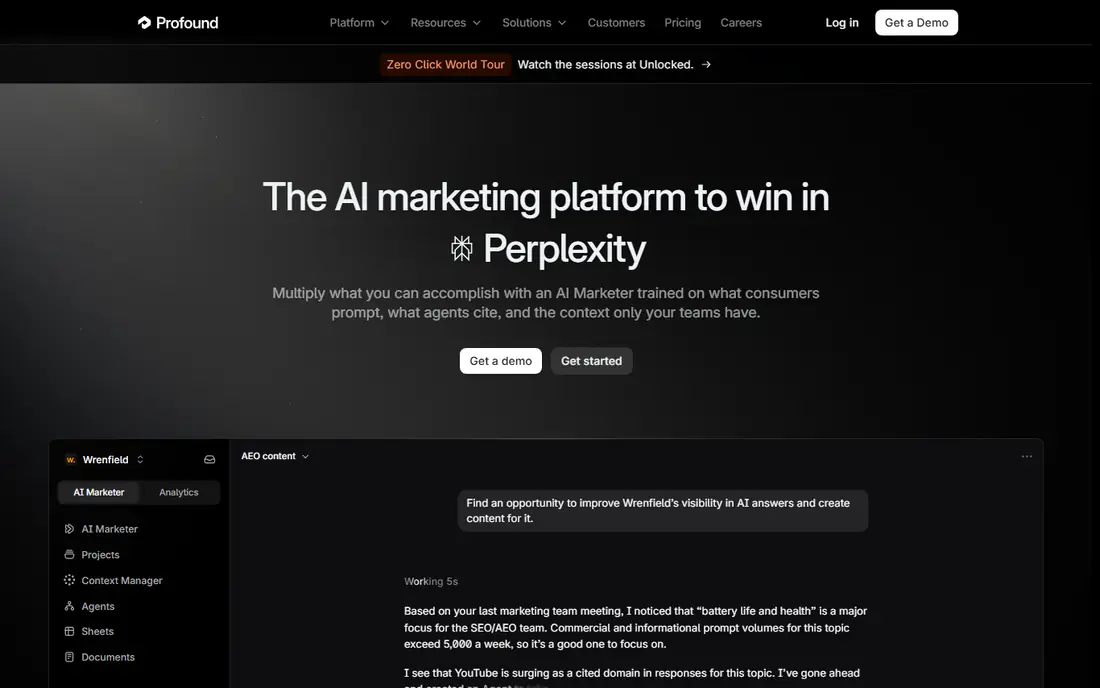
Profound is built for brands that need to show AI visibility to leadership, not just to an SEO team. It tracks brand mentions, citations and competitor presence across AI answers, and adds prompt demand analysis that shows what buyers actually ask, including how one question fans out into related queries. That view helps content teams decide which topics to cover, rather than guessing from keyword volume alone. The platform also covers Google AI Overviews and other surfaces on higher tiers, which matters when buyers move between Google and standalone assistants. Pricing is quote-based, with entry comparisons listing around 99 dollars per month for some plans and far higher enterprise pricing, so treat any roundup price as a guide and request a quote for your prompt volume. Profound fits best when you have many prompts, many competitors and a need for regular reporting.
- Broad engine coverage including ChatGPT, Perplexity and Gemini
- Prompt demand and query fan-out analysis
- Reporting suited to larger teams
- Pricing is quote-based and can be high for small teams
- Setup and prompt design take time to get right
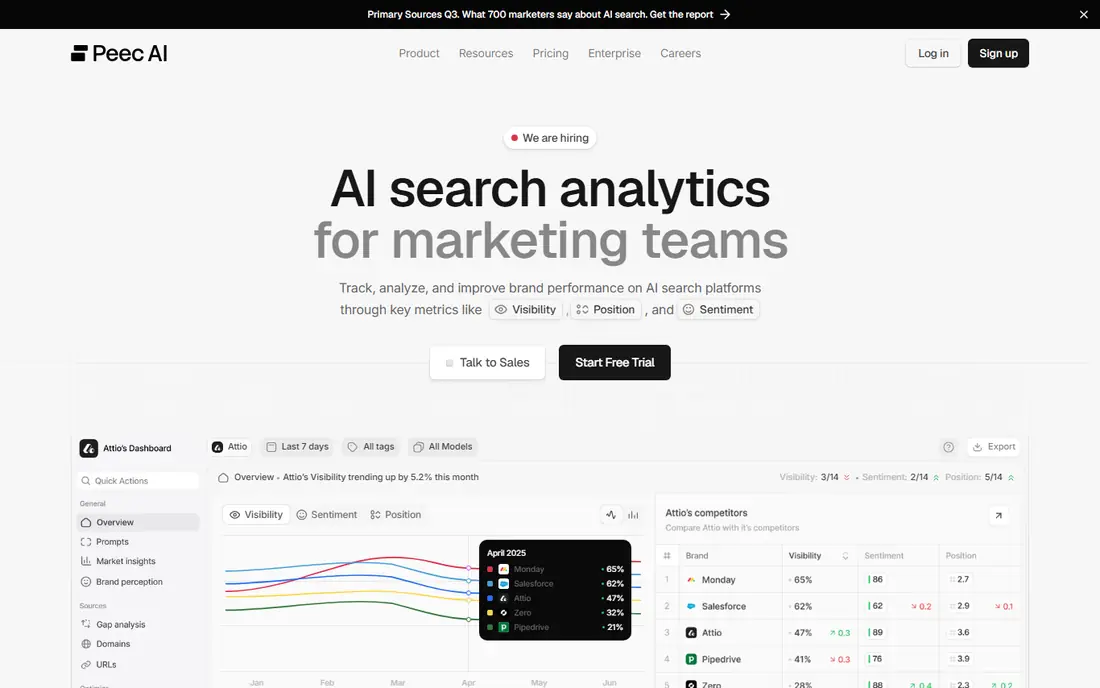
Peec AI is a dedicated AI search monitor, which means its whole product is about one job: showing where your brand appears in AI answers, which competitors get recommended, and which sources get cited. That focus makes it easier to learn than a full SEO suite, because the dashboard centres on prompts, answers, mentions and share of voice rather than on dozens of classic SEO modules. Entry pricing in comparisons is listed around 95 dollars per month, but current plans depend on prompts and engines, so check the Peec AI pricing page before you budget. Peec AI suits a marketing team that wants a specialist tracker and already has separate tools for keywords and links. It is less suited to a team that wants one login for all SEO work, since you will still need another tool for audits and backlinks.
- Built specifically for AI search monitoring
- Tracks ChatGPT, Claude, Gemini and Perplexity
- Clear competitor and citation views
- No classic SEO suite included
- Prompt volume limits affect cost as you scale
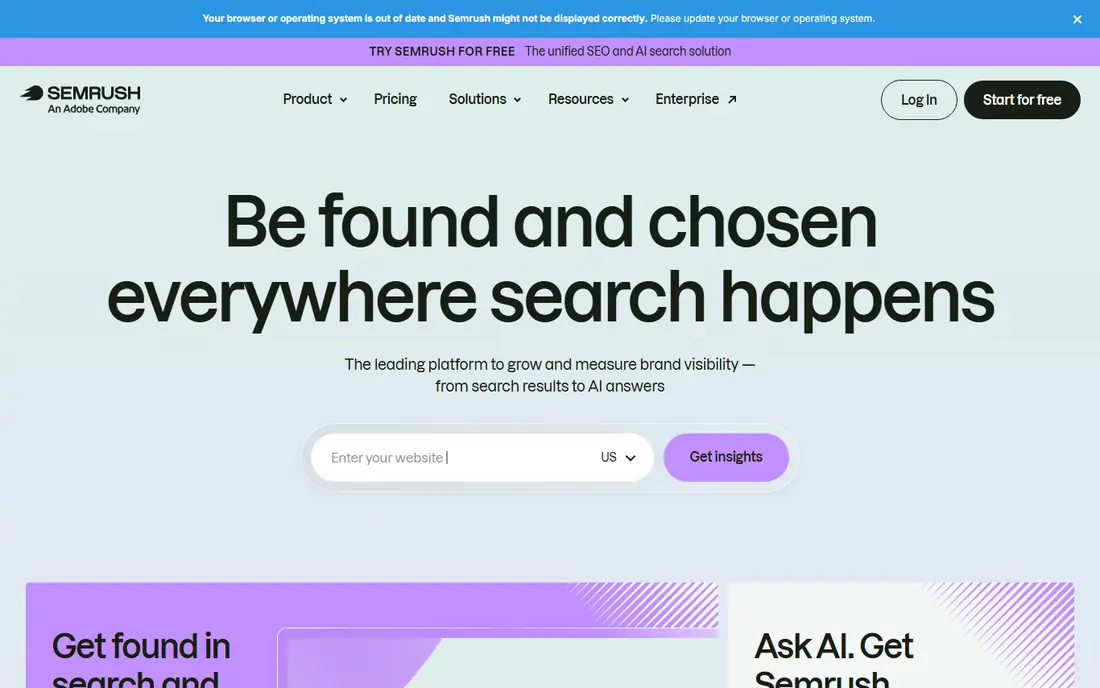
Semrush AI Visibility Toolkit adds AI mention and AI Overview tracking to the Semrush platform, so teams can see AI data next to the keyword and content data they already use. That combination helps when an AI gap is really a content or link gap: you can check whether the cited competitor also ranks, links or covers the topic better, without exporting data between tools. Semrush pricing depends on plan and add-ons, and AI visibility may cost extra on some tiers, so check the current Semrush pricing page for the toolkit specifically. The toolkit fits best for in-house and agency teams already paying for Semrush who want to add AI tracking without a second vendor. If you only need AI tracking and nothing else, a dedicated tool such as Peec AI or Otterly.AI may cost less.
- AI visibility next to keyword and backlink data
- Strong for teams already on Semrush
- AI Overview and ChatGPT tracking in the toolkit
- AI features may be an add-on on some plans
- Full suite cost is high for a single-brand tracker
SE Ranking, also described as SE Visible in some guides, layers AI search tracking onto a classic SEO suite. It tracks mentions, links and citations across Google AI Overviews, AI Mode, Gemini, Perplexity and ChatGPT in vendor comparisons, with historical data and daily updates. That breadth is useful for agencies that need to report both classic ranks and AI presence to clients in one place. Pricing in comparisons ranges widely, with some API-focused roundups listing 318 dollars per month for AI visibility API access, while standard plans cost less. Treat those figures as guides and check the current SE Ranking pricing page for the AI toolkit, since prompt and keyword limits drive cost. SE Ranking fits agencies and SMB teams that want AI tracking without losing classic rank data.
- AI Overviews, AI Mode, Gemini, Perplexity and ChatGPT coverage in comparisons
- Combines rank tracking with AI visibility
- API and reporting for agencies
- AI features sit inside a larger suite
- Entry cost rises with keywords and AI checks
Otterly.AI is the most accessible dedicated tracker on this list for a lean team or a single brand. It follows a simple workflow: add prompts, check answers across engines, see whether your brand or site is cited, and compare with competitors. A GEO audit feature helps teams spot content gaps that may explain why an AI answer cites a rival instead of you. Entry pricing in comparisons is listed from around 29 dollars per month, which is far lower than enterprise platforms, but current plans and engine add-ons can change that figure. Check the Otterly.AI pricing page for ChatGPT, Google AI Overviews, Perplexity and Copilot coverage, and note that Gemini and AI Mode may be add-ons. Otterly.AI is a good first tracker when you want real AI data without a large contract, and you can move to Profound or Peec AI later if prompt volume grows.
- Straightforward prompt-to-citation workflow
- Accessible entry price in comparisons
- GEO audit feature for content gaps
- Engine coverage on higher tiers needs add-ons for some surfaces
- Less enterprise reporting depth than Profound
Ahrefs Brand Radar adds AI brand visibility to the Ahrefs platform, which is already strong for backlinks, keywords and content. That matters because AI answers often cite pages with strong topical coverage and links, so seeing AI mentions next to link and content data helps you diagnose why a competitor is cited. Teams that already use Ahrefs for audits can add AI tracking without learning a new data model. Ahrefs pricing starts at around 129 dollars per month for the base plan in comparisons, with Brand Radar and AI features varying by plan, so check the current Ahrefs pricing page. Brand Radar is not the cheapest way to track AI mentions alone, and its AI Overview coverage is narrower than some dedicated trackers. It fits best when Ahrefs is already your SEO system of record and AI data needs to sit next to link and content work.
- AI brand visibility next to backlink and content data
- Strong for link and content diagnosis
- Useful for competitor citation analysis
- AI features are part of a paid Ahrefs plan
- Entry cost is high for AI tracking alone
Scrunch AI focuses on how AI answers cite brands and pages, and how that citation pattern compares with competitors. That focus helps content teams move from a vague goal such as get mentioned more to a specific task such as improve a page that rivals cite for a given prompt. The tool tracks answers across AI platforms and surfaces which sources appear, which is the core data an LLM SEO analysis needs. Pricing is not consistently published in roundups, so use See website and request current plan details for prompts, engines and reporting. Scrunch AI suits a team that already has a content plan and wants citation data to guide fixes. It is less suited to a team that needs classic rank tracking, site audits and backlink data in the same login, since you will need another tool for that work.
- Focus on citations and competitor presence in AI answers
- Useful for content teams fixing citation gaps
- Tracks multiple AI platforms
- Less classic SEO data than Semrush or Ahrefs
- Pricing and limits need a vendor check
AthenaHQ appears in LLM tracking comparisons as a leaner AI visibility option, with scores for coverage, citations and actionability that place it near other specialist tools. It tracks brand presence in AI answers and helps teams compare with competitors, without the enterprise procurement and reporting weight of larger platforms. That makes it worth a trial for a small team that wants AI data but does not need board-level reporting. Because AthenaHQ is less widely covered than Profound or Semrush, check the current feature page and pricing page carefully before you commit, including which engines are included and how many prompts each plan covers. Use a trial to test prompt quality, answer storage and export, since those details matter more than a marketing claim about engine count. AthenaHQ fits a team that wants a specialist tracker at a lower operational cost and is willing to verify coverage during a trial.
- Lean AI visibility tracking for smaller teams
- Competitor and citation views
- Easier onboarding than enterprise platforms
- Smaller vendor footprint than Profound or Semrush
- Feature depth varies by plan
How we picked these
We started with tools that genuinely track LLM or AI search visibility in October 2026, including brand mentions in ChatGPT, Gemini, Perplexity, Claude, Google AI Overviews or Google AI Mode, plus citations and competitor data. We compared official feature pages, pricing pages and public reviews, and we kept only tools with that AI visibility job at their core or as a named toolkit. We did not add generic rank trackers, content graders or chatbots that lack AI visibility tracking. We did not claim hands-on testing that did not happen. We compared what vendors publish about engine coverage, prompt tracking, citation parsing and reporting, and we marked quote-based pricing as See website where vendors do not publish a single rate. Pricing in this fast-moving category changes often, so verify prompts, engines and limits on the vendor page before you buy.
What to check before you buy an LLM SEO tool
Define the job before you compare engine counts
A high engine count helps only if those engines are where your buyers ask questions. List the surfaces that matter for your market, such as ChatGPT, Google AI Overviews, Gemini or Perplexity, then check whether each tool covers those surfaces on the plan you can afford. A tool that covers ten engines you do not need is not better than a tool that covers the three you do.
Test prompt quality, not just mention counts
Add prompts that reflect real buyer questions, including comparisons, best-of lists and problem questions, not just your brand name. Check whether the tool stores full answers, shows citations, and lets you compare with competitors over time. A mention count without the answer text and citation will not tell you what to fix.
Plan content fixes from citation gaps
Use citation data to find pages that rivals get cited for, then improve your own page with direct answers, clear facts, tables and sources that AI answers can quote. Track the same prompt set weekly, so you can see whether a fix changed the answer. No tool can force a citation, so treat tracking as a guide for content work, not as a ranking guarantee.
Frequently asked questions
What is the best LLM SEO analysis tool?
The best LLM SEO analysis tool depends on your existing stack. Profound and Peec AI are the strongest dedicated trackers, while Semrush and SE Ranking are better when you want AI data next to classic SEO data. Otterly.AI is the best low-cost start for a single brand. Trial two tools on the same prompt set before you commit to a yearly plan.
What is the best LLM SEO analysis software for a small team?
Otterly.AI is a strong small-team pick because of its accessible entry price and simple prompt-to-citation workflow. Peec AI is also workable for a small team that wants a dedicated tracker and can afford a higher entry price. Start with a small prompt set, check which engines are included, and expand only when you use the data weekly.
How do LLM SEO tools differ from classic rank trackers?
Classic rank trackers show where a page sits in blue-link results. LLM SEO tools show whether an AI answer mentions your brand, which sources it cites, and which competitors it recommends. Those are different outputs, so many teams run both: a rank tracker for classic results and an AI visibility tool for AI answers, AI Overviews and assistant responses.
Can an LLM SEO tool guarantee my brand gets cited?
No tool can guarantee a citation, because AI answers depend on the model, the prompt, the sources available and the question asked. A good tool shows where you appear, where rivals appear, and which pages get cited, so you can improve content and track change. Treat any vendor claim of guaranteed citations as a warning sign.
What is the best LLM SEO analysis tool for agencies?
SE Ranking and Semrush are strong agency picks because they combine AI visibility with classic rank tracking and client reporting. Profound is stronger for enterprise reporting and prompt demand analysis. For agencies, check prompt limits, multi-brand reporting, API access and export options, since those drive cost and workflow more than a single dashboard chart.
How many prompts should I track at first?
Start with 30 to 100 prompts that cover brand, comparison, best-of and problem questions for your core topics. That set is large enough to show patterns but small enough to review weekly. Add prompts only when you act on the data, since a large prompt set you never review wastes budget and hides the gaps that matter.
Sources
See where you really rank - block by block
ProMapRanker scans Google Maps across a grid of your service area. Simple monthly plans from $19, white-label on every plan.
Start freeKeep reading
 which software is best for pdf page removal
Which Software Is Best for PDF Page Removal in 2026
Find which software is best for pdf page removal, from free online tools to desktop editors, with page controls, privacy, safety, and pricing compared.
Read → when i work alternatives
Best When I Work Alternatives in 2026
Looking for when i work alternatives? We compare 8 scheduling apps for hourly teams, covering pricing, free plans, time clocks and the best fit for business.
Read → the best tool for keyword analysis
The Best Tool for Keyword Analysis in 2026
Find the best tool for keyword analysis with our 2026 comparison of 10 keyword analysis software tools on data depth, difficulty scores and price today.
Read →