 ProMapRanker
Best Learn to Read Apps Free in 2026


Completely free learning for ages 2 to 8 · Pricing starts at: Free
Key takeaways
- Khan Academy Kids is the best truly free option, with no ads and no subscription for ages 2 to 8.
- Teach Your Monster to Read is free on the web and teaches systematic phonics through a game children enjoy returning to.
- Duolingo ABC is another fully free phonics app for ages 3 to 8, with short lessons that suit daily practice.
- Several apps here are free to try rather than free forever, so check what stays free after the trial before a child gets attached.
Quick comparison
| Pick | Great for | Pricing starts at | Free tier | |
|---|---|---|---|---|
| Khan Academy Kids | Completely free learning for ages 2 to 8 | Free | Yes | Visit |
 Starfall | Systematic phonics with a free tier | Free | Yes | Visit |
 Teach Your Monster to Read | Free phonics game on the web | Free | Yes | Visit |
 Duolingo ABC | Free bite-size phonics lessons | Free | Yes | Visit |
 Reading Eggs | Structured reading progression | See website | Free trial | Visit |
 ABCmouse | Full early learning curriculum | See website | Free trial | Visit |
 HOMER | Personalized reading paths | See website | Free trial | Visit |
 Hooked on Phonics | Step-by-step phonics program | See website | Free trial | Visit |
The best learn to read apps free
Learning to read apps work best as a supplement to reading with a parent or teacher, not as a replacement for it. Short, regular sessions build letter sounds, blending, and sight words, while stories and read-aloud time build understanding. We compared official app pages, pricing pages, and age guidance for eight apps, and we marked clearly where free means free forever and where it means a trial.
A note for parents on privacy and age fit: check each app's age range, ad policy, and data practices before handing a device to a child, and keep sessions short and supervised for younger children. Apps aimed at ages 2 to 8 differ in reading level, voice, and content, so match the app to your child's stage rather than to a headline age label.
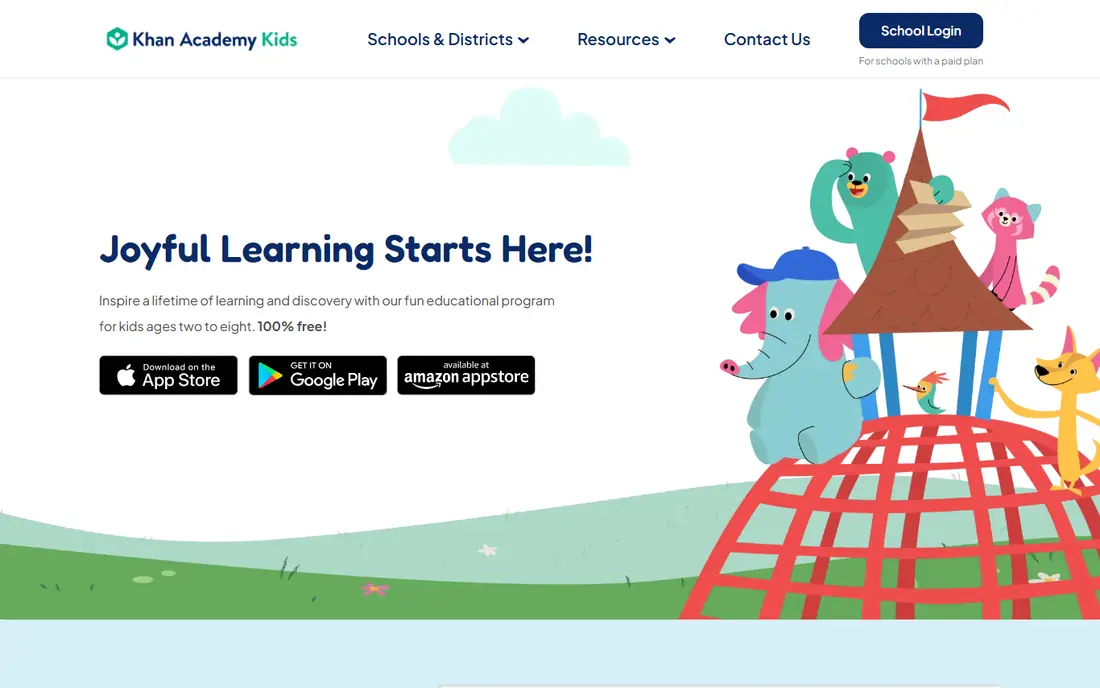
Khan Academy Kids is the first app to try for most families, because its free tier is the whole product rather than a sample. Children follow an adaptive path through letters, letter sounds, early words, and stories, alongside math and social-emotional activities. There are no ads and no purchases waiting behind a lesson, which removes the most common worry parents have about free kids apps.
The breadth is both a strength and a limit. A child who needs intensive phonics practice may progress faster in a dedicated phonics game, and Khan Academy Kids covers reading as part of a wider curriculum. For daily practice that a parent can trust without checking a subscription, though, it sets the standard that the other free apps are measured against.
- Completely free with no ads and no in-app purchases
- Covers reading, phonics, math, and social skills
- Adaptive learning path
- Broader than reading alone, so less specialized than a phonics-only app
- No web version for full play
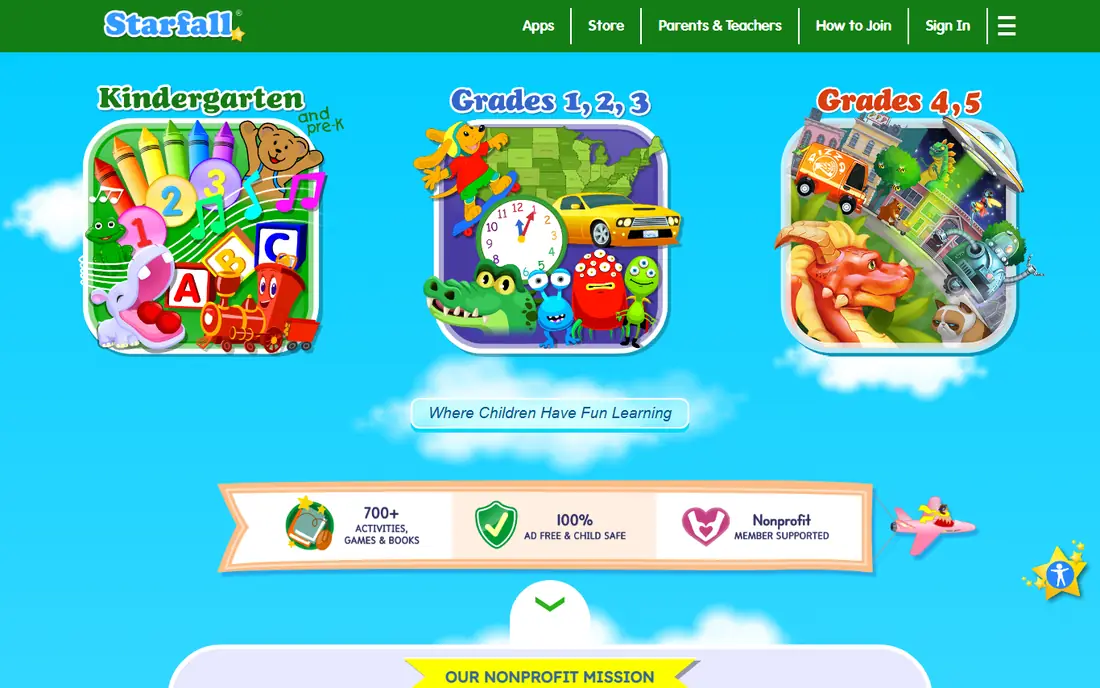
Starfall has taught early reading for years through a steady phonics sequence: letter sounds first, then blending, then simple books that children can read on their own. The free section covers many letter and early reading activities, which is enough to test whether a child likes the style before paying. The web version is particularly handy for classroom or home computer use.
Full access requires a paid membership, priced yearly, and the design looks older than newer rivals. Neither point should put off a parent whose child responds to its calm, predictable lessons, since consistency matters more than flashy graphics at this stage. Starfall remains a trusted phonics foundation, especially for kindergarten children.
- Clear systematic phonics sequence
- Free activities for letters and early reading
- Works on web and mobile
- Full membership is paid
- Interface looks dated next to newer apps
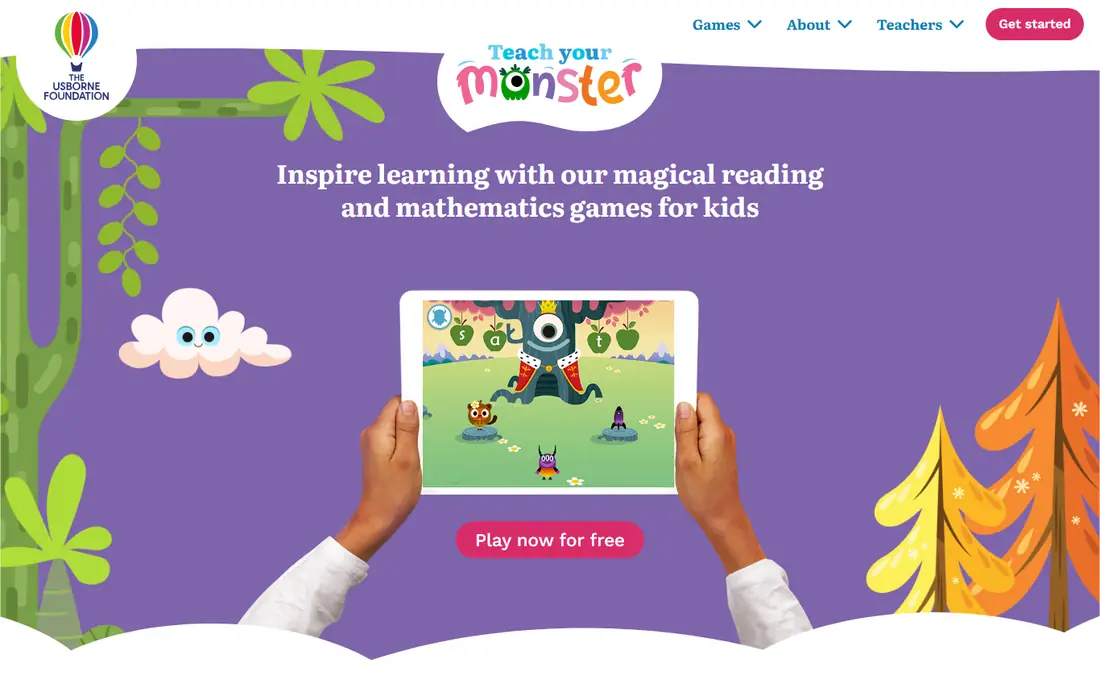
Teach Your Monster to Read turns systematic phonics into a game where children create a monster, travel through worlds, and learn letter sounds and blending as they play. The web version is free, which makes it one of the few genuinely free phonics programs with a full curriculum rather than a small sample. It covers roughly the first two years of reading development, from letters to early sentences.
Mobile apps carry a one-time purchase, so families who need tablet play should check the current app store price. Some US parents also note the British accent in the audio, though most children adapt quickly. For a child who learns best through play and needs a structured phonics path, the free web version is an excellent place to start.
- Free on the web
- Systematic phonics across two years of early reading
- Children design their own monster
- Mobile apps are paid
- Audio uses a British accent that some US children notice
Duolingo ABC brings the short-lesson style of its parent app to early reading, with phonics, letter tracing, sight words, and simple stories for ages 3 to 8. Lessons take only a few minutes, which suits young attention spans and a daily routine after school. There are no ads and no subscription, so parents do not need to watch for purchase prompts during play.
The app is designed for early reading, not for fluent readers moving into chapter books, so older children will outgrow it. It also has no full web version, which limits classroom computer use. As a free daily phonics habit for preschool and kindergarten children, Duolingo ABC is one of the cleanest options available.
- Completely free with no ads
- Short lessons for ages 3 to 8
- Clear phonics and sight word progression
- No web version
- Range ends before fluent chapter-book reading
Reading Eggs offers one of the most structured paths on this list, moving children from letter sounds through blending, sight words, and comprehension in sequenced lessons. A placement test sets the starting level, and parent reports show which skills a child has practiced and where they struggle. That structure helps parents who want a clear sense of progress rather than open-ended play.
Full access is paid, so treat the free trial as a test of fit rather than a free app. Check the trial length and the subscription price on the vendor's site before a child builds a routine around it. For families willing to pay for a guided reading program, Reading Eggs delivers a thorough progression that free apps only partly match.
- Structured lessons from letters to reading comprehension
- Placement test sets the starting level
- Progress reports for parents
- Full access is a paid subscription
- Trial length should be checked before starting
ABCmouse is the broadest curriculum on this list, with thousands of activities across reading, math, science, art, and music for ages 2 to 8. A step-by-step learning path guides children through levels, and a reward system keeps many children motivated to return. For a family that wants one app covering the whole early curriculum, ABCmouse is the most complete option here.
That breadth is also its weakness for reading specifically. A child can spend a session on art or music instead of phonics, so parents who want focused reading practice should steer sessions toward the reading path. Full access is paid after a trial, so check the current price and trial terms. As a full early learning library, it is strong, but it is not a free reading app in the same sense as Khan Academy Kids.
- Very large library across reading, math, and science
- Step-by-step learning path
- Tickets and rewards motivate children
- Full access is a paid subscription
- Breadth can distract from focused reading practice
HOMER, also known as Learn with HOMER, builds a reading path around a child's age, level, and interests, mixing stories, songs, and phonics activities. That personal touch helps children who engage more with topics they already like, such as animals or vehicles, and the parent dashboard shows activity and progress. It is designed for ages 2 to 8, covering the same early years as Khan Academy Kids and ABCmouse.
Full access requires a subscription after a trial, so check the current price before starting a routine. Personalization also depends on the setup answers a parent gives, so take a few minutes to answer them carefully rather than rushing through. For a family that wants a tailored reading journey and is willing to pay, HOMER is a thoughtful choice.
- Personalized path based on a child's age and interests
- Reading, stories, and songs in one app
- Parent dashboard
- Full access is a paid subscription
- Personalization needs accurate setup answers from a parent
Hooked on Phonics has taught reading through a step-by-step phonics method for decades, and its app carries that structure into short lessons with games, songs, and ebooks. Levels progress clearly from letters to sentences, which helps parents see exactly where a child stands. The program also offers books and print materials beyond the app for families who want offline practice.
Full access is paid after a trial, and the structured style suits children who like clear steps more than children who prefer open play. Check the trial and subscription terms on the vendor's site, since they change. For a parent who wants a proven, no-nonsense phonics sequence with a long track record, Hooked on Phonics remains a solid option.
- Long-running step-by-step phonics method
- Combines app lessons with printable and book options
- Clear level progression
- Full access is a paid subscription
- Program style suits structured learners more than free-play children
How we picked these
We compared official app pages, pricing pages, and age guidance for each app in October 2026, and we favored apps that are actively available today for young children. We included truly free apps, free-tier apps, and trial apps, and we labeled each one honestly so parents can tell the difference. We did not claim hands-on testing, and we wrote "See website" where subscription pricing was not clearly published on the vendor's own page.
How to use reading apps well at home
Keep sessions short and regular. Ten to twenty minutes a day, most days, builds reading skills better than a long weekend session that ends in frustration. Sit nearby for younger children, praise effort rather than speed, and stop while the child still enjoys it, so tomorrow's session starts with enthusiasm rather than resistance.
Pair the app with real books
Apps teach decoding, but books teach the joy and meaning of reading. Read aloud together every day, let the child choose books, and talk about the story afterwards. When a child reads a word in an app and then spots it in a picture book, that connection matters more than any score or reward inside the app.
Check privacy settings before first play
Before a child starts, review the app's privacy policy, ad settings, and account options, and use a parent account where one is offered. Prefer apps with no ads and no in-app purchase prompts for young children, and keep the device in a shared room during play. If an app asks for more personal data than reading progress needs, choose a simpler alternative.
Frequently asked questions
What is the best learn to read app that is completely free?
Khan Academy Kids is the best completely free option, with no ads and no subscription for ages 2 to 8. Duolingo ABC is also completely free, and Teach Your Monster to Read is free on the web. These three cover phonics and early reading without a paywall, which sets them apart from trial-based apps.
What is the best reading app for kindergarten?
Starfall and Teach Your Monster to Read are both strong for kindergarten, thanks to their systematic phonics sequences. Khan Academy Kids is the best free all-round choice for kindergarten, while Duolingo ABC suits short daily phonics practice. The best pick depends on whether your child needs a game, a calm lesson sequence, or a broad curriculum.
What is the best kids reading app for learning phonics?
Teach Your Monster to Read and Starfall lead on systematic phonics, moving from letter sounds to blending in a clear order. Duolingo ABC and Hooked on Phonics also teach phonics well, with Duolingo ABC free and Hooked on Phonics paid after a trial. Pair any phonics app with read-aloud time for the best results.
Are free reading apps safe for young children?
The free apps listed here from Khan Academy Kids and Duolingo ABC carry no ads, which is the safest setup for young children. Always check the current privacy policy and age guidance, supervise play, and avoid apps that show ads or purchase prompts to children. A parent account and a shared room add two simple layers of protection.
Can a reading app replace a teacher for learning to read?
No. Apps are a useful supplement that reinforces letter sounds, blending, and sight words, but they do not replace a teacher or parent. Children learn best when app practice is paired with read-aloud time, conversation about stories, and guided help when they get stuck. Use apps for short daily practice, not as the whole reading program.
Sources
See where you really rank - block by block
ProMapRanker scans Google Maps across a grid of your service area. Simple monthly plans from $19, white-label on every plan.
Start freeKeep reading
 free alternatives to grok imagine
Free Alternatives to Grok Imagine in 2026
We compared the best free alternatives to grok imagine for image generation, from fast daily credits to design tools, so you can create without paying.
Read → best tools for instagram content creation
Best Tools for Instagram Content Creation in 2026
Compare the best tools for Instagram content creation, from Canva and CapCut to Later and Buffer, on design, video, planning, scheduling, and price in 2026.
Read → best tool to split pdf files
Best Tool to Split PDF Files in 2026
We compared the best tool to split pdf files on split modes, file limits, privacy and price, so you can split a PDF cleanly and keep every page in one go.
Read →