 ProMapRanker
Best Laboratory Management Software in 2026

Key takeaways
- Testing and QC labs usually need a LIMS, while research labs often need an ELN, and some labs need both in one system.
- LabWare, STARLIMS and LabVantage lead at enterprise scale, while CloudLIMS, QBench and LabCollector are more accessible for smaller labs.
- Most enterprise LIMS pricing is quote based, so get implementation and validation costs in writing, not just the license price.
- Our pick for most growing labs is CloudLIMS for transparent SaaS delivery, with SciNote as the accessible research option.
Quick comparison
| Pick | Great for | Pricing starts at | Free tier | |
|---|---|---|---|---|
 LabWare | Enterprise QA and QC labs | See website | No | Visit |
 STARLIMS | Regulated multi industry labs | See website | No | Visit |
 LabVantage | Enterprise lab informatics | See website | No | Visit |
 Benchling | Biotech and pharma research | See website | Yes | Visit |
 SciNote | Academic and startup research labs | See website | Yes | Visit |
 CloudLIMS | SaaS testing and clinical labs | See website | No | Visit |
 QBench | Growing testing labs | $249 per user per month | No | Visit |
 LabCollector | Modular labs on a budget | $35 per user per month | Yes | Visit |
 Labguru | Research labs wanting ELN plus LIMS in one | See website | Free trial | Visit |
 Quartzy | Research purchasing and inventory | $50 per month | No | Visit |
The best laboratory management software
Laboratory management software covers sample tracking, test workflows, inventory, results and compliance. The category splits in practice. A LIMS tracks samples through testing, from receipt to result and report. An ELN records experiments, protocols and observations. Buying the wrong type is the most expensive mistake in this category, so start by naming your main workflow.
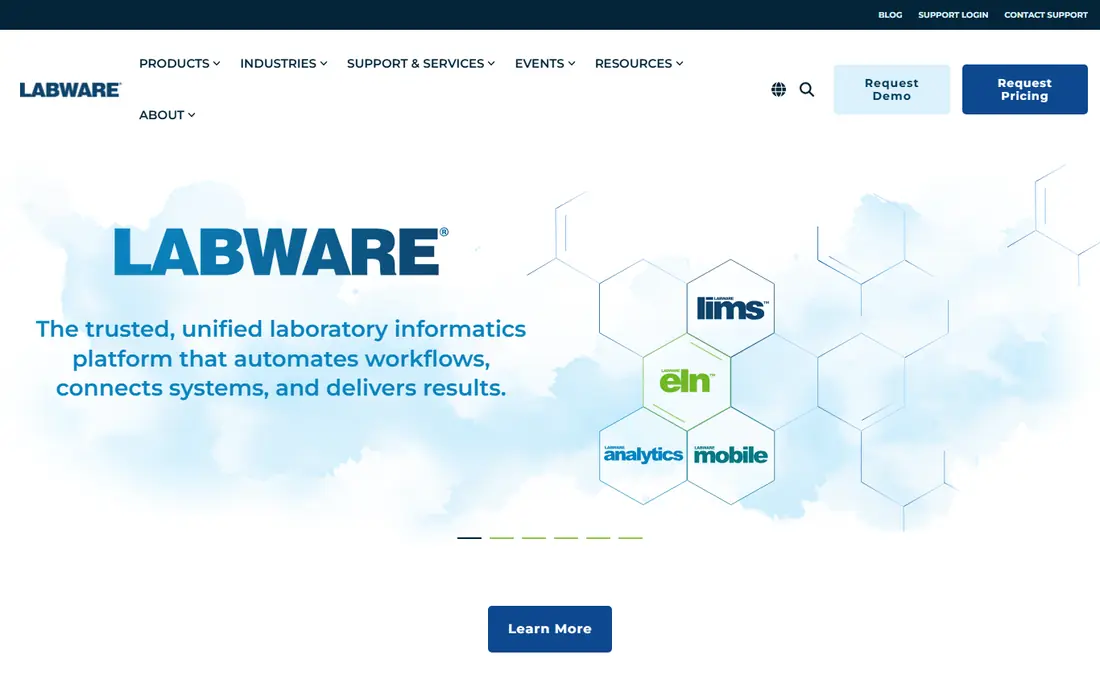
LabWare LIMS is the enterprise standard for many QA and QC laboratories in pharma, manufacturing and regulated testing. It handles sample management, workflow automation, instrument interfaces, results and compliance documentation at scale, across sites and complex test regimes. Labs with strict validation needs often shortlist it first.
That depth comes with enterprise weight. Licenses are quoted, services are usually needed, and implementation involves workflow analysis, interfacing and validation. A small lab will find the cost and timeline hard to justify. A large regulated lab, by contrast, may need exactly that configurability.
- Deep configurability for complex labs
- Multi site support
- Strong regulated industry track record
- Pricing is quote based
- Implementation can take months
- Overkill for small labs
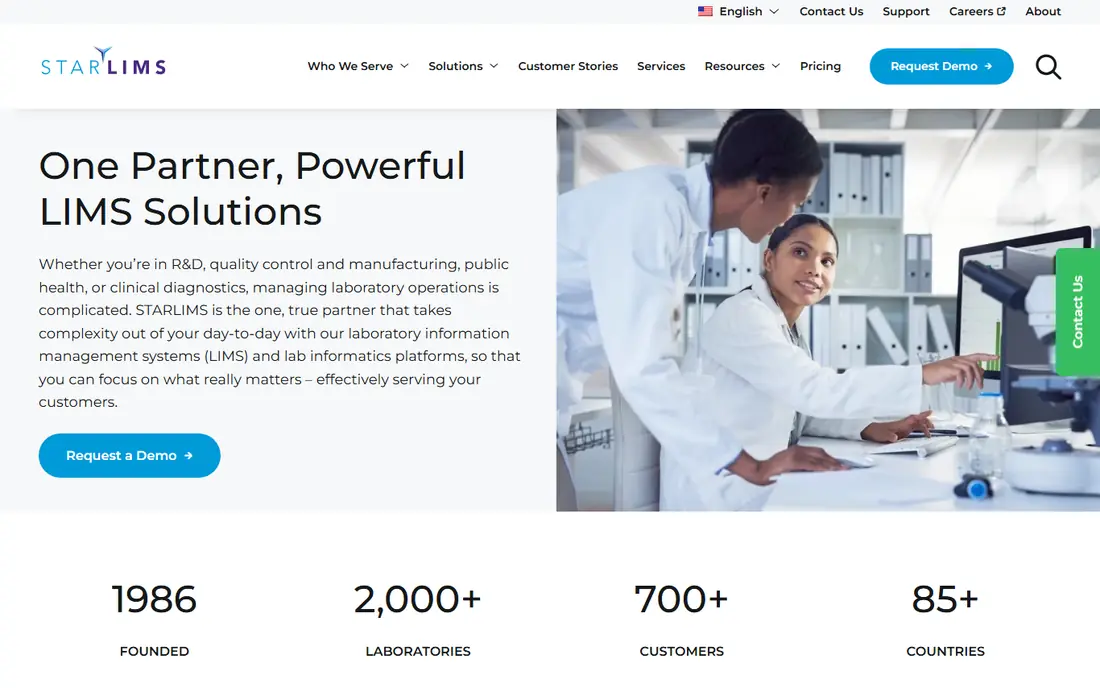
STARLIMS serves regulated laboratories across pharma, public health, food, environmental and clinical work. It combines sample management, workflow automation, quality and compliance tools in one informatics platform, which helps labs that must prove chain of custody, audit trails and result integrity.
Like LabWare, STARLIMS is priced for larger programs and needs a planned rollout. It is a strong choice when a lab must meet several regulatory frameworks at once and wants one vendor for the core system. Smaller labs should compare CloudLIMS or QBench first, since they can be live much faster.
- Broad industry coverage
- Compliance focused workflows
- Integrated informatics platform
- Pricing is quote based
- Implementation is a project
- Training needs time
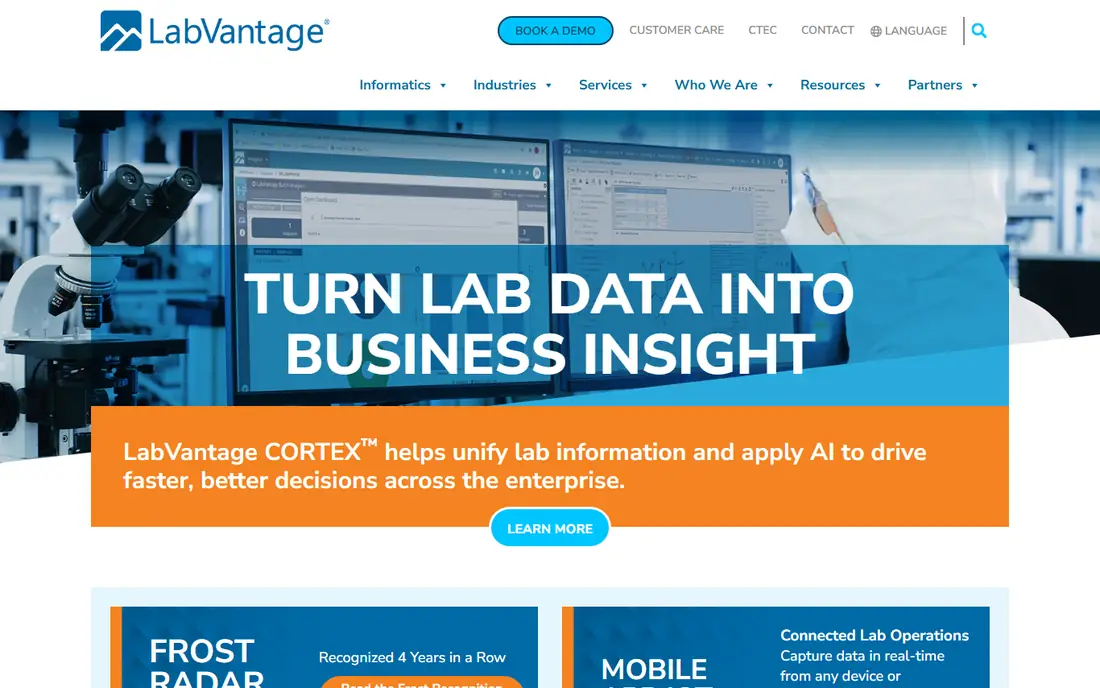
LabVantage offers LIMS, ELN and laboratory execution workflows on a single platform, with analytics layered on top. That breadth suits pharma and biotech labs that want research, testing and manufacturing data connected, rather than split across separate tools. Deployment can be cloud, hosted or on premises.
The trade off is scope management. A platform that can do everything needs clear ownership, or teams add modules they never fully use. LabVantage fits enterprise labs with informatics staff and a multi year plan. Research only labs will usually find Benchling, SciNote or Labguru simpler.
- LIMS, ELN and laboratory execution in one platform
- Analytics and AI tools
- Cloud or on premises options
- Pricing is quote based
- Platform scope needs governance
- Smaller labs may not use the full suite
Benchling is the leading research platform for biotech and pharma R and D. It centralizes sequence, plasmid, experiment and sample data, with workflows for molecular biology, cell line development and process work. Its academic plan is free, which has made it common in universities and startups.
Commercial pricing is quoted and can be substantial, so budget teams should get a written quote early. Benchling also leans research first. A pure testing lab that mainly needs sample accessioning and certificates of analysis may find a dedicated LIMS a better fit.
- Strong biotech research workflows
- ELN plus LIMS features
- Academic plan is free
- Commercial pricing is quote based
- Cost can be high for small teams
- Best fit is biotech, not general QC
SciNote helps research teams move from paper notebooks to an electronic lab notebook with inventory and compliance features. It supports protocols, results, electronic signatures and audit trails, which matter for academic, government and startup labs that need credible records without enterprise budgets.
The limit is focus. SciNote is ELN first, so a high volume testing lab that lives on sample throughput, instrument interfaces and certificates should not expect it to replace a full LIMS. For research labs, however, it is one of the most accessible compliant options in this list.
- Free plan with real compliance features
- ELN plus inventory
- Approachable for paperless moves
- ELN first, with LIMS as a companion
- Pricing for larger plans is quoted
- Heavy QC workflows need a dedicated LIMS
CloudLIMS is a pure SaaS LIMS for analytical testing, clinical diagnostics, biobanking, food, environmental and other testing labs. It covers sample lifecycle management, instrument integration, billing, client and patient portals, and a built in quality system, with industry specific editions that shorten setup.
Pricing is unusually transparent for the category, with per user rates that fall as user count rises. Small teams should still do the math, since a three user lab pays a premium per seat. CloudLIMS fits labs that want a real LIMS running quickly, without servers, hosting or a long enterprise project.
- True SaaS delivery with no infrastructure work
- Industry editions for testing and clinical work
- Published per user pricing
- Per user cost is high at small user counts
- No free trial in many cases
- Configuration still needs lab input
QBench is a modern cloud LIMS for internal QC and third party testing labs. It covers sample receiving, workflow automation, method worksheets, inventory, customer portals, billing and quality management, with an API for integrations. Labs that want to get running faster than an enterprise rollout, without giving up configurability, often shortlist it.
The starting price reflects that positioning. It is not a budget tool for a two person lab, and workflow design still takes time. For a growing testing lab that needs a configurable system, a customer portal and clear reporting, QBench is a strong middle option between SaaS simplicity and enterprise depth.
- Modern configurable cloud LIMS
- Customer portal and billing
- Workflow automation and API
- Starting price is high for very small labs
- Implementation needs workflow design
- Some modules add cost
LabCollector suits research labs that want LIMS and ELN functions without an enterprise budget. Its modular design lets a lab buy sample management, ELN, inventory and other packs as needed, and it runs in the cloud or on premises. A free startup pack helps very small labs get started.
The trade off is total cost as modules accumulate, and an interface that prioritizes function over polish. Labs should map the modules they will actually need in year one and price that bundle, not just the entry rate. For modular, budget conscious labs, LabCollector is hard to beat on starting price.
- Modular design, buy only what you need
- Low starting price
- Cloud or on premises options
- Modules add up as needs grow
- Interface is functional rather than polished
- Support and setup vary by module
Labguru combines an electronic lab notebook with LIMS and inventory management for research, biotech, pharma and QC labs. Scientists can document experiments, track samples and manage stocks in one place, which reduces the spreadsheet sprawl that grows around separate tools.
Some of the most useful automation, reporting and API features sit in higher tiers, so buyers should check which plan covers their workflow. Labguru is best for research labs that want one system for experiments and samples. High volume testing labs should still compare CloudLIMS and QBench for sample throughput.
- ELN, LIMS and inventory in one system
- Research focused workflows
- Reporting and automation in higher tiers
- Pricing is quote based
- Automation and API sit in higher tiers
- Testing labs may need a dedicated LIMS
Quartzy is not a full LIMS, and that distinction matters. It covers purchasing, inventory, requests and lab member coordination, which is exactly what many academic research labs struggle with day to day. Its academic plan starts at $50 per month billed annually, with an industry plan at $250 per month, giving a clear budget line.
A testing lab should not buy Quartzy expecting sample accessioning, instrument interfaces and certificates of analysis. A research lab that mainly needs to stop losing track of orders, stocks and requests will find it a practical, low cost addition alongside an ELN such as SciNote or Benchling.
- Clear academic and industry pricing
- Purchasing, inventory and requests in one place
- Easy for lab members
- Not a full LIMS
- Testing workflows are out of scope
- Larger labs may need more compliance depth
How we picked these
We compared official product pages, pricing pages and public documentation for laboratory management tools still sold in October 2026, covering LIMS, ELN and combined systems. We favored tools with clear sample, experiment or inventory workflows, compliance features where claimed, and a realistic fit for research, QC or clinical labs. We did not claim hands-on testing, and where pricing was quoted we wrote See website.
What to check before you buy
Start by writing down your core workflow in one sentence. If it is sample in, test, result out, you need a LIMS. If it is experiment in, protocol and result recorded, you need an ELN. If both sentences are true, shortlist combined systems like Labguru, Benchling or LabVantage, and test both workflows in the same trial.
Next, check compliance early. If you do FDA regulated work, confirm electronic signatures, audit trails and access controls cover your specific workflows, and ask for validation documentation. If you run ISO 17025, CLIA or similar work, check sample traceability, instrument interfacing and reporting against your accreditation needs.
Finally, cost implementation, not just licenses. Enterprise LIMS projects often take six to eighteen months with workflow analysis, interfacing, validation and training, while SaaS tools can be live in weeks. Ask for a written services estimate, a migration plan for existing samples and records, and a trial that uses your real sample types and test methods.
Frequently asked questions
What is the best laboratory management software?
There is no single winner, because research and testing labs need different systems. LabWare and STARLIMS lead for enterprise QC, Benchling leads for biotech research, and CloudLIMS and QBench are strong SaaS choices for growing testing labs. Start with your workflow, then shortlist by fit.
What is the difference between a LIMS and an ELN?
A LIMS tracks samples through testing workflows, including accessioning, analysis, results, storage and reporting. An ELN documents experiments, protocols, observations and results for research. Testing labs usually need a LIMS, research labs usually need an ELN, and some labs need both.
How much does laboratory management software cost?
Costs range from $50 per month for Quartzy academic plans and $35 per user per month for LabCollector, to quote based enterprise LIMS that can run into six figures a year plus services. CloudLIMS and QBench publish per user pricing, which makes budgeting easier for mid-size labs.
Do small labs need enterprise LIMS software?
Usually not. Small labs should start with LabCollector, CloudLIMS, QBench or SciNote, depending on whether they need LIMS or ELN features. Enterprise platforms make sense when sample volume, sites, regulations or validation needs exceed what SaaS tools can handle cleanly.
What is 21 CFR Part 11 and do I need it?
21 CFR Part 11 is a US FDA rule for electronic records and electronic signatures, covering audit trails, access controls and signature integrity. If your lab does FDA regulated work, you need a system that supports it for your specific workflows. Confirm the claim with validation documentation before buying.
How long does a LIMS implementation take?
SaaS products can be live in weeks for standard workflows. Enterprise platforms typically take six to eighteen months, including workflow analysis, instrument interfacing, validation and training. The interfacing and validation work, not installation, usually takes the most time.
Sources
See where you really rank - block by block
ProMapRanker scans Google Maps across a grid of your service area. Simple monthly plans from $19, white-label on every plan.
Start freeKeep reading
 wpforms alternatives
Best WPForms Alternatives in 2026
We compare 9 wpforms alternatives for WordPress forms, with free and paid options, current pricing notes, and honest limits for small business sites in 2026.
Read → windows task scheduler alternatives
Best Windows Task Scheduler Alternatives in 2026
Looking for Windows Task Scheduler alternatives? We compare 9 schedulers for Windows and cross-platform work, from free tools to enterprise automation.
Read → which ai video service is best
Which AI Video Service Is Best in 2026
which ai video service is best? We compare 10 legitimate AI video services on price, avatars, editing and output quality to help you pick the right tool.
Read →