 ProMapRanker
Best IRA Companies in 2026

Key takeaways
- Fidelity, Charles Schwab and Vanguard lead for low cost self directed IRAs, with no annual account fee and no commission on stocks and ETFs at major brokers.
- Betterment and Wealthfront suit hands off investors who want a managed portfolio for a small annual advisory fee.
- The best IRA company for you depends on whether you want to pick investments yourself, use a managed portfolio, or get human advice.
- Disclaimer: this is not financial advice. Fees, rates and fund costs vary, and investment values can fall as well as rise. Check current terms before opening an account.
Quick comparison
| Pick | Great for | Pricing starts at | Free tier | |
|---|---|---|---|---|
 Fidelity | Best overall self directed IRA | Free | Yes | Visit |
 Charles Schwab | Full service IRA with branches | Free | Yes | Visit |
 Vanguard | Low cost index investing | Free | Yes | Visit |
 Betterment | Hands off managed IRA | 0.25% per year | No | Visit |
 Wealthfront | Automated managed IRA | 0.25% per year | No | Visit |
 Merrill Edge | Bank linked IRA investing | Free | Yes | Visit |
 E*TRADE | Active IRA trading tools | Free | Yes | Visit |
 SoFi | Beginner friendly IRA app | Free | Yes | Visit |
 Robinhood | Mobile first IRA with match | Free | Yes | Visit |
The best IRA companies
We compared official fee schedules, account pages and public reviews to find IRA providers that operate in the United States in October 2026. All of the companies below offer Traditional and Roth IRAs unless noted, and all allow stocks and ETFs in some form. Managed portfolios, where offered, charge an advisory fee on top of fund costs.
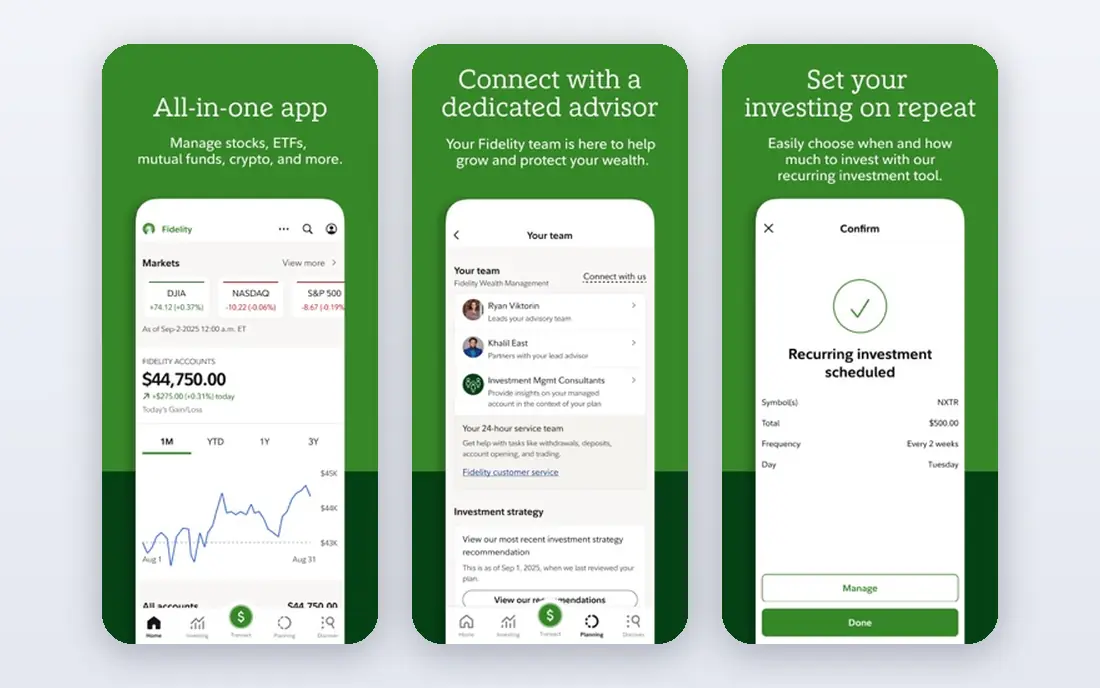
Fidelity is our pick for most IRA savers because it combines low cost with wide choice. You can open a Traditional or Roth IRA with no account minimum in many cases, trade stocks and ETFs without commission, and choose from thousands of funds, including Fidelity zero expense index funds. Fidelity Go offers managed portfolios for investors who prefer automation.
The platform is large, so new investors may find the research and tool range busy at first. That breadth becomes a strength as you learn, since you rarely need to move providers to access a new investment type. For a low cost, flexible IRA, Fidelity is hard to beat.
- No annual IRA fee and no stock or ETF commission
- Wide fund choice including zero expense index funds
- Managed option for beginners
- Research tools can feel busy for new investors
- Managed fees apply above a threshold
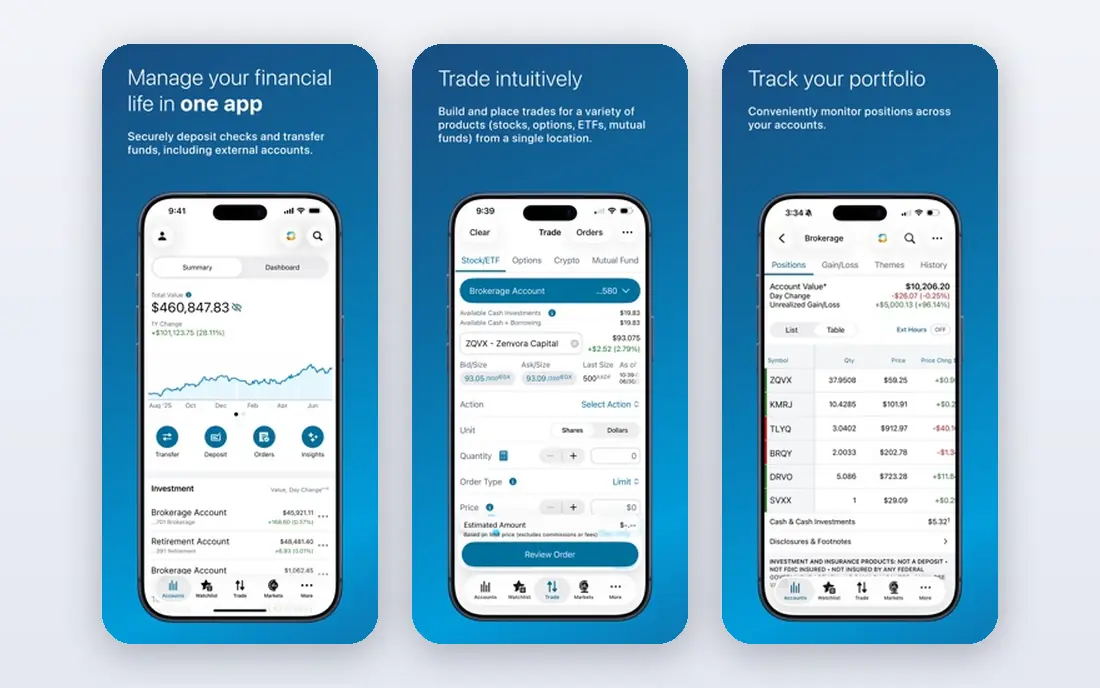
Charles Schwab suits investors who want a full service broker with branches, phone support and strong education. Its self directed IRAs carry no annual fee and no stock or ETF commission, with a wide fund range and good research tools. Schwab Intelligent Portfolios offers managed investing for investors who prefer automation.
Managed portfolios require a higher minimum than some rivals, and the cash allocation in those portfolios should be understood before you invest. If you value in person help, clear education and a broad platform, Schwab is one of the best IRA investment companies to consider.
- No annual IRA fee and no stock or ETF commission
- Branches and human advice
- Strong research and education
- Managed portfolio needs a higher minimum
- Cash allocation in managed portfolios deserves a read
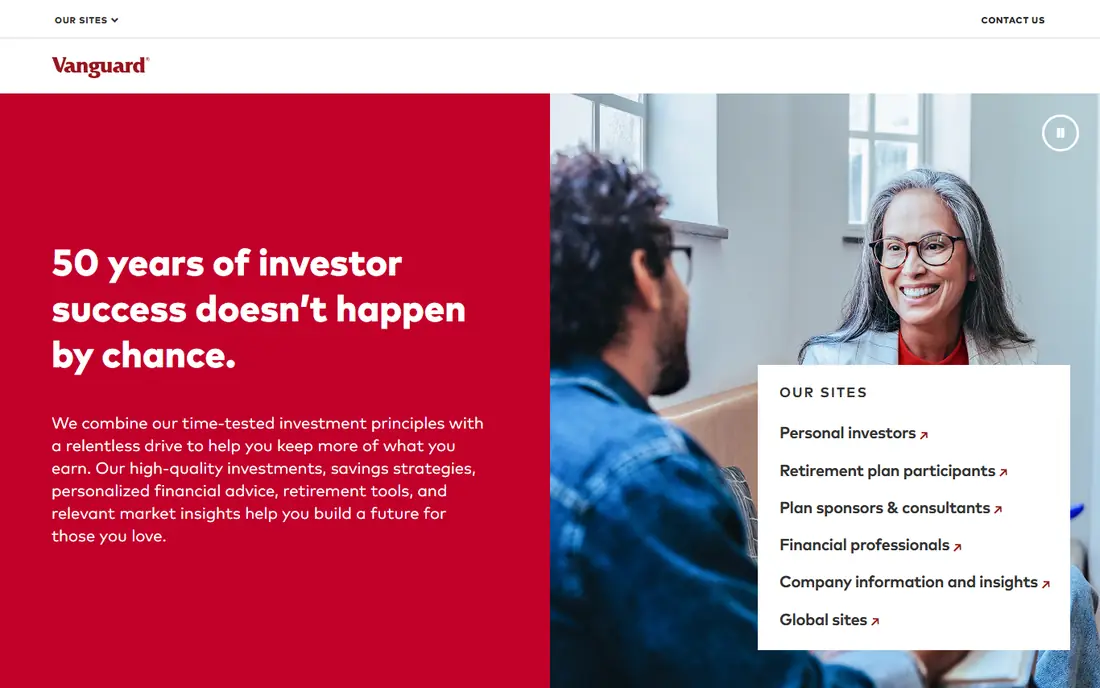
Vanguard is the classic choice for buy and hold index investors. Its own index funds and ETFs are among the lowest cost available, and its IRA accounts carry no annual fee in many cases, with no commission on stocks and ETFs. That low cost focus suits savers who plan to hold broad market funds for decades.
The website and app feel dated next to Fidelity or Schwab, and managed advice options need higher minimums. If you know you want Vanguard funds and a simple, low cost portfolio, Vanguard remains an excellent pick. If you want a polished app and branches, Schwab or Fidelity may fit better.
- Very low cost index funds and ETFs
- No annual IRA fee in many cases
- Strong buy and hold culture
- Interface feels dated compared with rivals
- Managed advice needs a higher minimum
Betterment is for investors who want a managed IRA without picking funds themselves. You answer questions about goals and risk, and Betterment builds a diversified ETF portfolio, rebalances it automatically, and adjusts it over time. Retirement planning tools help you check whether your savings pace matches your goals.
The cost is an annual advisory fee, plus underlying fund costs, which adds up over decades compared with a self directed low cost fund. Control is also limited, since you do not pick individual stocks. If hands off investing helps you stay invested, Betterment is one of the best companies for IRAs in that style.
- Automated diversified ETF portfolios
- Automatic rebalancing
- Retirement planning tools
- Advisory fee applies every year
- Less control over individual investments
Wealthfront offers automated, diversified ETF portfolios for Traditional, Roth and SEP IRAs, with automatic rebalancing and planning tools. Its approach suits investors who want a set portfolio strategy without daily decisions, and its interface is clean and modern. Tax loss harvesting is a feature for taxable accounts, though it does not apply inside an IRA in the same way.
As with Betterment, you pay an annual advisory fee plus fund costs, and you give up individual stock picking. If you prefer a modern automated platform and are comfortable with a managed fee, Wealthfront is a strong alternative to Betterment.
- Automated ETF portfolios
- Tax loss harvesting features for taxable accounts
- Clear planning tools
- Advisory fee applies every year
- Managed minimums and features need checking
Merrill Edge suits Bank of America customers who want investing and banking in one place. IRAs can be self directed or guided, with research, education and Preferred Rewards benefits for qualifying bank customers. That link can simplify money movement and give fee benefits on banking products for some customers.
Full human advice sits on higher tiers, and the fund range, while broad, is less index centred than Vanguard. If you already bank with Bank of America and want a linked IRA, Merrill Edge is a practical, well supported choice.
- No annual IRA fee in many cases
- Bank of America integration
- Research and guided options
- Full advice needs higher tiers
- Fund choice is broad but less index focused than Vanguard
E*TRADE suits IRA savers who trade more actively or want strong charting and research tools. Its IRAs offer stocks, ETFs, mutual funds and options in some cases, with no annual fee in many cases and no stock or ETF commission. Research, screeners and mobile tools are a step up from simpler apps.
Beginners may find the platform busy, and managed portfolio options need checking for minimums and fees. If you want active tools inside an IRA and you are comfortable with a fuller platform, E*TRADE is a strong pick. If you want simple index investing, Fidelity or Vanguard will feel easier.
- No annual IRA fee in many cases
- Strong trading tools and research
- Wide fund range
- Platform can feel complex for beginners
- Managed options need checking for minimums
SoFi is a good first IRA for beginners who want a simple app and clear setup. You can open a Traditional or Roth IRA, invest in stocks and ETFs, and use automated investing options, with education content aimed at new savers. The app is modern and easy to navigate, which helps if larger broker platforms feel intimidating.
Investment choice is narrower than Fidelity, Schwab or Vanguard, and human advice is more limited. If you want a simple start and plan to hold broad ETFs, SoFi works well. If you later want a wider fund range or complex strategies, a major broker may be a better long term home.
- Simple app and IRA setup
- No annual fee in many cases
- Education and planning tools
- Investment choice is narrower than major brokers
- Advice options are more limited
Robinhood stands out for its IRA contribution match, which is unusual among retail brokers. Its mobile app is simple, with no commission on stocks and ETFs, and a low barrier to opening an account. That combination appeals to mobile first savers who want to start small and build a habit.
The trade off is choice. Robinhood IRAs focus on stocks and ETFs, with limited or no mutual fund access, and research tools are lighter than major brokers. Match offers also carry terms, limits and holding conditions that must be read carefully. If a mobile app and a match motivate you to save, Robinhood is worth a look, provided you accept its narrower range.
- Simple mobile app
- IRA contribution match offers
- No commission on stocks and ETFs
- Investment choice is narrower, with no mutual funds in many cases
- Match terms and limits need checking
How we picked these
We compared official fee schedules, account pages and public reviews, and kept only providers that offer IRAs in the United States in October 2026. We covered self directed brokers, managed robo advisors and bank linked options, so readers can match the provider to their investing style. Where a fee or minimum could not be confirmed on the provider page, we wrote See website rather than guessing, since fees and offers change often.
Roth or Traditional: a simple way to choose
A Roth IRA uses after tax contributions, with qualified withdrawals in retirement generally tax free. A Traditional IRA may offer a tax deduction now, with withdrawals taxed in retirement. Younger savers who expect higher income later often favour Roth, while higher earners who expect lower income in retirement often favour Traditional. Tax rules depend on income, age and filing status, so check current IRS rules or speak to a tax professional before you decide.
Check costs in three layers
First, account and trading fees, which are now zero at many major brokers. Second, fund expense ratios, the ongoing cost of owning a fund, which matters most over decades. Third, advisory fees for managed portfolios, which add a yearly percentage. A low cost index fund in a free account is often the cheapest long term path, while a managed portfolio trades cost for convenience.
Frequently asked questions
What is the best Roth IRA company?
Fidelity, Charles Schwab and Vanguard are the most cited best Roth IRA companies, thanks to no annual fees, no stock or ETF commissions, and low cost funds. Fidelity leads for overall choice, Schwab for service and branches, and Vanguard for index fund focus.
What is the best IRA company for beginners?
SoFi and Fidelity are strong for beginners. SoFi offers a simple app, while Fidelity offers a simple start plus room to grow into wider funds and managed options as you learn.
What is the best Roth IRA app?
Robinhood and SoFi offer the simplest mobile IRA apps, while Fidelity and Schwab offer fuller apps with more research. The best Roth IRA app for you depends on whether you want simplicity or depth.
Are there fees for opening an IRA?
Many major brokers charge no annual IRA fee and no commission on stocks and ETFs, but fund expense ratios and managed advisory fees still apply. Check the current fee schedule, transfer fees and managed minimums before you open an account.
Can I have more than one IRA?
Yes, you can hold multiple IRAs, but total contributions across all IRAs are limited by annual IRS rules. Check current contribution limits and income rules before you contribute to more than one account.
Sources
See where you really rank - block by block
ProMapRanker scans Google Maps across a grid of your service area. Simple monthly plans from $19, white-label on every plan.
Start freeKeep reading
 free alternatives to grok imagine
Free Alternatives to Grok Imagine in 2026
We compared the best free alternatives to grok imagine for image generation, from fast daily credits to design tools, so you can create without paying.
Read → best tools for instagram content creation
Best Tools for Instagram Content Creation in 2026
Compare the best tools for Instagram content creation, from Canva and CapCut to Later and Buffer, on design, video, planning, scheduling, and price in 2026.
Read → best tool to split pdf files
Best Tool to Split PDF Files in 2026
We compared the best tool to split pdf files on split modes, file limits, privacy and price, so you can split a PDF cleanly and keep every page in one go.
Read →