 ProMapRanker
Best Inventory Software in 2026


Small sellers who want the most for the least · Pricing starts at: $29 per month
Key takeaways
- Zoho Inventory is the best inventory software for most small sellers, with a free plan and low paid pricing.
- Square for Retail suits shops that already use Square POS, since stock updates at the till in real time.
- Manufacturers need different tools from resellers, so check bills of materials and production planning before you buy.
- Watch order, user and location caps, since those limits decide when a low priced plan stops fitting.
Quick comparison
| Pick | Great for | Pricing starts at | Free tier | |
|---|---|---|---|---|
| Zoho Inventory | Small sellers who want the most for the least | $29 per month | Yes | Visit |
 Square for Retail | Brick and mortar stores running Square POS | Free | Yes | Visit |
 Sortly | Teams tracking equipment and supplies visually | See website | Yes | Visit |
 inFlow Inventory | Wholesale and B2B sellers who need structure | $129 per month | Free trial | Visit |
 Katana | Product businesses that also manufacture | See website | Yes | Visit |
 Cin7 Core | Scaling multi-channel brands | $349 per month | Free trial | Visit |
 Odoo Inventory | Businesses that want a customizable ERP suite | Free | Yes | Visit |
 Shopify | Online stores already running on Shopify | $29 per month | Free trial | Visit |
The best inventory software
Inventory software tracks stock levels, purchase orders, sales and locations, so you know what you have and what to reorder. We compared official pricing pages and 2026 inventory guides, focusing on small business fit, channel sync and plan limits.
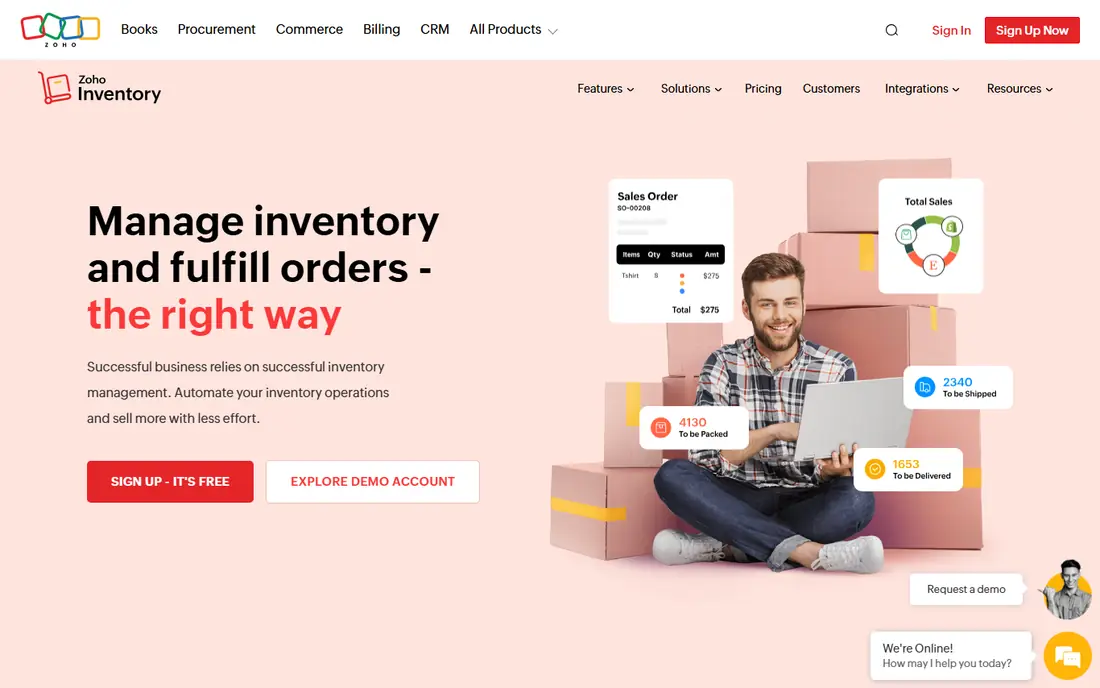
Zoho Inventory is the first tool to check for a small online seller. The free plan handles 50 orders a month for one user at one location, which is enough for a new store to run properly. The Standard plan at $29 per month billed annually raises that to 500 orders, 3 users and 2 locations, with pricing per organization rather than per seat.
The catch is the tier structure. Order volume, user count and warehouse limits all rise with the plan, so a business that grows past 500 orders a month moves to Professional at $79 per month. If you already use Zoho Books or Zoho CRM, the shared data makes the value case even stronger.
- Free plan for 50 orders per month
- Flat per organization pricing
- Multi-channel sync
- Paid plans cap orders, users and locations
- Advanced automation sits on higher tiers
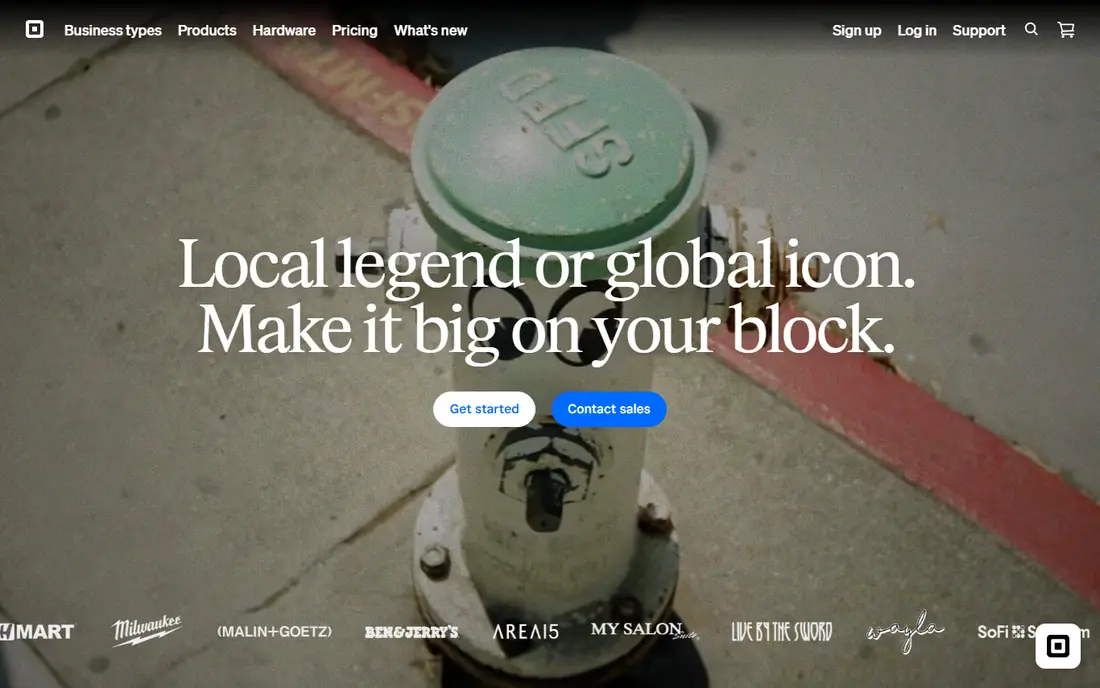
Square for Retail suits a shop that already takes payments through Square. When an item sells at the till, stock updates at once, which removes manual reconciling at the end of the day. Low stock alerts, bulk import and vendor management help a small retail team stay on top of replenishment.
Advanced warehouse features are thinner than Cin7 or Fishbowl, and the Plus plan is priced per location. Square is best for single or few location retail, not for complex multi-warehouse distribution. If Square POS is already in place, the inventory add-on is a natural fit.
- Real time POS synced stock
- Low stock alerts
- Bulk import and vendor tools on Plus
- Limited advanced warehouse tools
- Plus plan costs $49 per location per month in guides
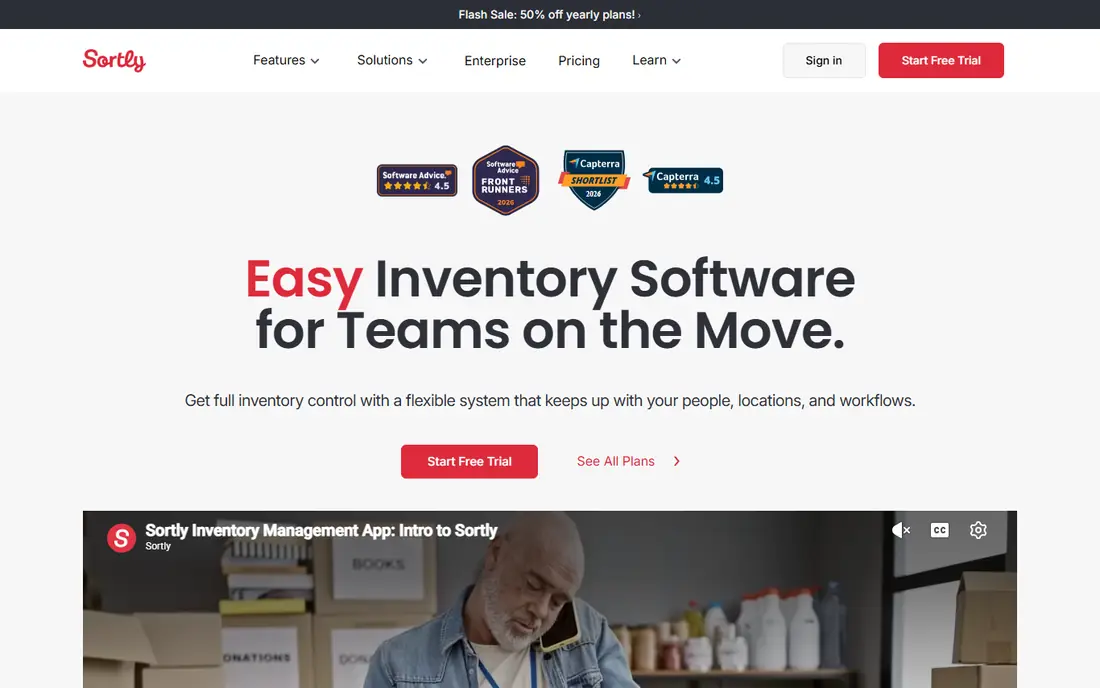
Sortly is different from most inventory tools here, because it is built around visual tracking. Staff can photograph items, scan barcodes and check stock from a phone, which suits equipment, supplies and materials more than fast online sales. Setup is quick, and the mobile app is easy for field teams to use.
For high volume ecommerce, Sortly is less strong than Zoho or Cin7, with fewer order and channel automation features. It is best for teams that need to know where physical items are, what condition they are in, and who has them, rather than for sellers processing hundreds of orders a day.
- Photo based mobile catalog
- Barcode scanning
- Simple setup for non specialists
- Less strong for high volume sales
- Advanced plans cost more than basic inventory tools
inFlow Inventory is built for wholesale and distribution, with structured order, purchasing and showroom features. B2B portals let customers see their own products and prices, which reduces manual quoting. Barcoding, reorder management and multi-location support help wholesalers keep stock accurate across sites.
The entry price is higher than Zoho, at $129 per month in some guides, or $99 per month billed annually in others, so check the current plan before you buy. There is no free plan, only a 14 day trial. inFlow suits B2B sellers who need that structure, not a side business with a few orders a month.
- Private B2B portals with per customer prices
- Barcoding and reorder tools
- Multi-location support
- Higher entry cost than Zoho
- 14 day trial only, no free plan
Katana, now known as Katana MRP in some listings, is the best inventory app for makers who also manufacture. It links raw materials, production orders and finished stock, with bills of materials that show what each product needs. That production view is missing from most reseller tools, and it matters for food, furniture, cosmetics and other made products.
Pure resellers will find Katana more complex than needed, and paid plans are costly for a small maker. The free plan for up to 30 SKUs is useful for testing, but growing makers should check paid pricing early. If you make what you sell, Katana is worth a close look.
- Production planning and bills of materials
- Free plan for up to 30 SKUs
- Shop floor tools
- Overkill for pure resellers
- Paid plans are costly for small makers
Cin7 Core, formerly Cin7, is built for brands that have outgrown basic tools. It syncs stock across online stores, marketplaces and warehouses, automates replenishment and supports multi-location tracking at scale. With hundreds of integrations, it can tie inventory to accounting, shipping and sales channels in one system.
The price reflects that scale, at $349 per month for Core in published guides, with only a free trial. Implementation also takes longer than a simple tool, especially for multi-warehouse setups. Cin7 is best when order volume and channel complexity have already outgrown Zoho or Square.
- Deep automation and multi-location stock
- Many integrations
- B2B portal add-on
- High entry price
- Implementation takes time for complex setups
Odoo Inventory is part of a larger open source ERP suite, which makes it highly flexible. The Inventory app alone is free in published guides, with barcode scanning, warehouse management and stock moves built in. Businesses can add accounting, CRM, manufacturing and other apps as they grow, keeping data in one system.
Flexibility comes with complexity. Setup and customization take more time than a focused tool like Zoho, and full ERP pricing rises with users and apps. Odoo suits teams that want one customizable platform and have time to configure it, not teams that want a ready made inventory app in an afternoon.
- Free for one app
- Highly flexible modules
- Barcode and warehouse tools
- Steeper learning curve
- Full ERP pricing rises with users and apps
Shopify includes native inventory management for stores on its platform, which is a strong reason to use it if you already sell there. Stock updates as products sell, return or exchange online or in person, and purchase orders, transfers and low stock alerts are built in. Inventory reports show sell-through and how long stock will last.
Shopify is not a standalone inventory tool for non-Shopify sellers, and there is no free plan, only a short trial in published guides. The Basic plan starts at $29 per month billed annually. If your store is on Shopify, its native tools may be enough, with apps added only for forecasting or multi-warehouse needs.
- Native inventory for online and in-person sales
- Purchase orders and transfers
- Sell-through reports
- No free plan, only a short trial
- Advanced inventory apps cost extra
How we picked these
We compared official pricing pages and 2026 inventory guides that verified prices on vendor pages in August and October 2026. We favored tools with clear small business plans, stock tracking, purchase orders and channel sync, and we kept a mix of retail, wholesale, manufacturing and online store tools. We left out pure accounting tools that only track stock as a side feature.
What to check before you choose
Start with how you sell. A single shop needs POS synced stock, an online seller needs multi-channel sync, a wholesaler needs B2B portals and price lists, and a maker needs bills of materials. Buying a tool built for a different model will force workarounds that cost more time than the subscription saves.
Next, check caps that matter in six months, not just today. Order limits, user limits, SKU limits and location limits all decide when you must upgrade. Run your current order volume and a growth scenario through each plan, and note the price of the next tier, not just the entry tier.
Finally, test barcode scanning, purchase orders and a stock count with real products. Import a small set of SKUs, scan items in and out, create a purchase order and run a low stock report. If that loop feels slow or confusing, the tool will not survive a busy sales period, even if its feature list looks strong.
Frequently asked questions
What is the best inventory software for small business?
Zoho Inventory is the best small business inventory management software for most small sellers, thanks to its free plan and $29 Standard plan. Square for Retail suits shops on Square POS, while Sortly suits visual tracking. The best software for inventory management for you depends on sales channels and order volume.
What is the best inventory management app for a shop?
Square for Retail is the best inventory app for a shop already using Square, since stock updates at the till in real time. Sortly is a good mobile app for equipment and supplies tracking. For a shop that also sells online, Zoho Inventory or Shopify may fit better, depending on where sales happen.
What is the best software for inventory management with manufacturing?
Katana is the best pick for light manufacturers, with production planning and bills of materials. Odoo Inventory also covers manufacturing inside a wider ERP suite. Pure reseller tools lack production planning, so makers should check that feature first, not just stock counts.
Is there free inventory software?
Yes, Zoho Inventory offers a free plan for 50 orders a month, Square for Retail offers a free plan, Sortly offers a limited free plan, and Odoo Inventory is free for one app. Free plans suit new or side businesses, but order, user and location caps mean growing businesses will need a paid plan.
How much does inventory software cost?
Entry prices in this guide range from free to $29 per month for Zoho and Shopify, $129 per month for inFlow, and $349 per month for Cin7 Core. Your total depends on users, locations, order volume and add-ons, so compare the plan that fits your actual volume, not just the cheapest headline price.
Sources
See where you really rank - block by block
ProMapRanker scans Google Maps across a grid of your service area. Simple monthly plans from $19, white-label on every plan.
Start freeKeep reading
 zoom alternatives
Best Zoom Alternatives in 2026
Compare Zoom alternatives in 2026, with free meeting limits and prices, so you can pick the best alternative to Zoom for your team, class, or community.
Read → which software is best for remote work
Which Software Is Best for Remote Work in 2026
Answering which software is best for remote work, we compare Slack, Zoom, Asana, Notion, Teams and more, with pricing and honest tradeoffs in 2026 now.
Read → which ai tool is best for content writing
Which AI Tool Is Best for Content Writing in 2026
Wondering which ai tool is best for content writing? We compare ChatGPT, Claude, Jasper, Grammarly, and more on price, quality, and best use in 2026 now.
Read →