 ProMapRanker
Best Internet Service in 2026

Key takeaways
- Availability decides most choices: fiber providers win where they reach your address, and cable or 5G home internet wins elsewhere.
- Starting prices vary widely by address and promotion, so always check the price for your exact home before signing up.
- Fiber plans usually offer matching upload and download speeds, which helps video calls, gaming and working from home.
- No-contract and price-guarantee offers matter: read the term length, equipment fees and post-promotion price.
Quick comparison
| Pick | Great for | Pricing starts at | Free tier | |
|---|---|---|---|---|
 Xfinity | Widely available cable internet | See website | No | Visit |
 Spectrum | No-contract cable internet | See website | No | Visit |
 AT&T Fiber | Fiber with matching speeds | See website | No | Visit |
 Verizon Fios | Reliable fiber in the Northeast and Mid-Atlantic | See website | No | Visit |
 Google Fiber | Simple, fast fiber pricing | See website | No | Visit |
 Cox | Cable internet with broad bundles | See website | No | Visit |
 Frontier Fiber | Low starting prices for fiber | See website | No | Visit |
 T-Mobile Home Internet | 5G home internet without a wired line | See website | No | Visit |
 Optimum | Cable and fiber in its regions | See website | No | Visit |
The best internet service
Availability comes first with internet service. Start with the providers that reach your address, then compare speed, price and contract terms among those few.
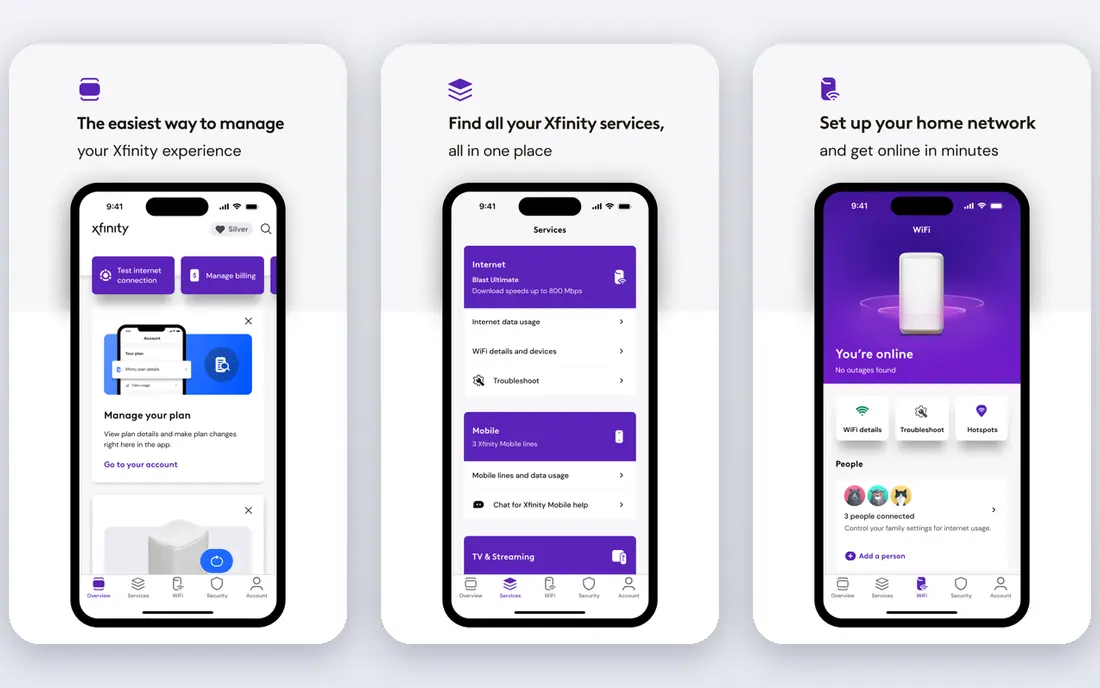
Xfinity is the practical default in many US neighbourhoods because it reaches so many homes. Its cable plans cover everyday streaming, remote work and gaming for most households, and its app gives useful control over Wi-Fi, devices and parental settings. Self-installation is an option in many areas, which avoids a technician visit.
The downside is variation. The plan, speed and price offered at one address can differ sharply from another street away, and promotional prices usually rise after the term ends. Compare the full monthly cost, including equipment, and note the post-promotion price before you commit.
- Very wide availability
- Fast cable speeds in many areas
- App-based setup and Wi-Fi controls
- Prices and speeds vary by address
- Equipment and fee details need a careful check
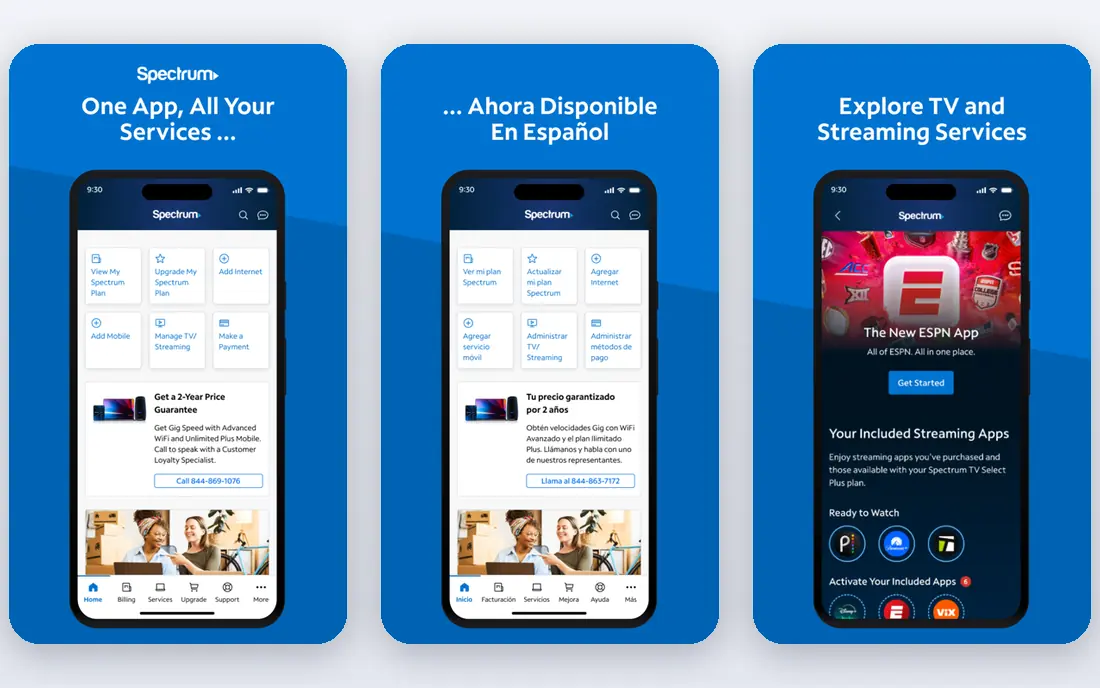
Spectrum appeals to people who dislike contracts. Its internet plans are available across a large cable footprint, and the absence of a long contract gives you freedom to switch if a better option arrives. Speeds are strong enough for busy households with several streams running at once.
Cable upload speeds are the weak spot compared with fiber, which matters if you upload large files or run video calls all day. Promotional pricing also changes over time, so confirm the standard rate and any equipment charge for your address, not just the headline offer.
- No contracts on many plans
- Wide cable coverage
- Unlimited data on internet plans
- Upload speeds lag behind fiber
- Price after promotions needs checking
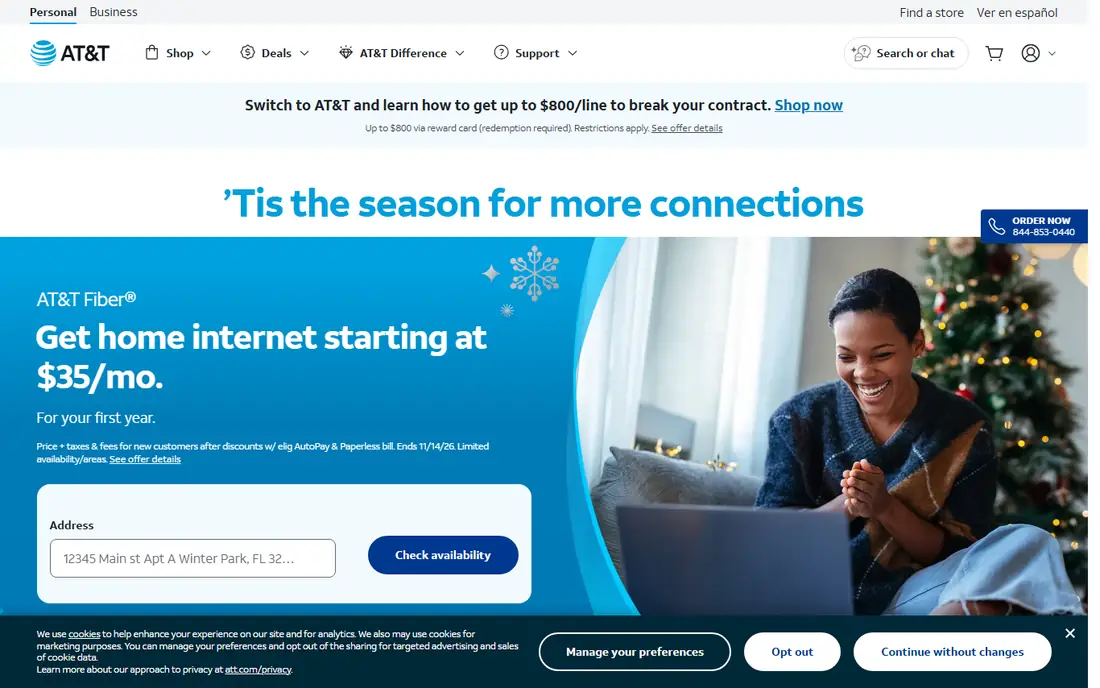
AT&T Fiber is a strong pick where it is available. Fiber gives matching upload and download speeds, which keeps video calls steady while others stream, and unlimited data removes the worry of overage charges. Its footprint is among the largest for fiber in the US, so it is worth checking even if you assume it is not offered.
Availability is the catch. Many AT&T addresses still get older, slower service rather than fiber, and the two should not be confused. Enter your exact address on the provider site and confirm the word fiber appears in the plan name before you compare speeds or prices.
- Matching upload and download speeds
- Wide fiber footprint
- Unlimited data on fiber plans
- Fiber is not available at every AT&T address
- Some homes only get slower non-fiber service
Verizon Fios has a long record for steady fiber performance, and it suits households that want a connection that simply stays up. Matching upload and download speeds help remote work and gaming, and selected plans carry multi-year price guarantees that make budgeting easier. Equipment is often included in the advertised price.
Fios only serves parts of the country, mainly in the Northeast and Mid-Atlantic, so many readers cannot get it at all. The best advertised prices often assume a Verizon mobile plan or autopay, so a standalone internet price may be higher than the headline figure suggests.
- Strong fiber reliability
- Matching speeds
- Frequent price guarantees on selected plans
- Limited geographic footprint
- Mobile bundles affect the best prices
Google Fiber, now often shown as GFiber, is loved for its simplicity. Plans are easy to understand, there are no data caps, and speeds are high without a maze of bundles and fees. For a household that wants fast internet with minimal sales pressure, it is hard to beat where it reaches.
The problem is reach. Google Fiber serves a limited set of cities and neighbourhoods, so most US homes cannot order it. Even inside a served city, some streets are still waiting for build-out. Check your exact address, and have a backup provider in mind if your street is not yet covered.
- Straightforward plans with no data caps
- Very fast speeds
- Simple pricing with few add-ons
- Available in a small number of cities
- Installation waits can occur in new areas
Cox is a solid cable choice in the states it serves, with a range of speed tiers from basic browsing to busy multi-device homes. Bundles with television and mobile can simplify billing for households that already use those services, and its app helps manage Wi-Fi and data use.
Data caps are the main drawback, since some Cox plans include a monthly allowance with extra charges beyond it. That matters less for light users but can bite a household that streams in 4K all day. Check the cap, the overage terms and the post-promotion price for your market before signing.
- Wide cable availability in its regions
- Bundle options with TV and mobile
- Varied speed tiers
- Data caps apply on some plans
- Prices vary by market
Frontier Fiber stands out on starting price, with entry fiber plans that undercut many rivals in the areas it serves. Higher tiers reach multi-gigabit speeds for households with heavy use, and fiber plans carry unlimited data. For a budget-minded household in a Frontier fiber area, it is a strong value pick.
Frontier's footprint is mixed. Some addresses get full fiber, while others still sit on older service, so the address check matters more than the brand name. Installation and equipment terms also vary, so read the order summary closely and confirm the speed tier you are actually buying.
- Competitive starting prices
- Fiber speeds up to multi-gigabit in served areas
- Unlimited data on fiber
- Availability is uneven
- Older non-fiber areas should not be mistaken for fiber
T-Mobile Home Internet suits renters, rural homes and anyone who wants internet without a technician drilling holes. A gateway connects over the 5G network, so setup is usually a matter of plugging it in near a window and following the app. It is a welcome option where cable is slow or fiber has not arrived.
Wireless speed is less predictable than wired speed. Performance depends on signal strength, tower load and time of day, and heavy gamers or large households may notice the difference. Try it during the return window, test at peak evening hours, and keep your old service until you are sure it holds up.
- No wired installation needed
- Simple flat pricing in many cases
- Useful where cable and fiber are weak
- Speeds vary with signal and congestion
- Not ideal for heavy gaming or very large households
Optimum covers a mix of cable and fiber homes across its regions, with entry prices that can beat larger national rivals locally. Households that want TV, mobile and internet on one bill may find its bundles convenient, and higher tiers suit families with many devices online at once.
Because Optimum is regional, national comparisons can mislead. The plan available at your address may be cable rather than fiber, and fees differ by market. Confirm the connection type, the standard price after any promotion, and the equipment charge before you judge it against a fiber-only rival.
- Mix of cable and fiber plans
- Competitive entry prices in served areas
- Bundle options
- Footprint is regional
- Plan details and fees vary by market
How we picked these
We compared official feature pages, pricing pages, privacy policies and app store listings for each option. We kept only products that are still offered in October 2026 and that fit the topic directly. We checked whether a free tier or trial is real, what the paid plan adds, and where each product falls short, so the list reflects trade-offs rather than marketing claims alone.
How to choose an internet plan for your home
Match speed to your household, not to the biggest number on the page. A one- or two-person home that streams and browses can manage on a modest tier, while a home with several 4K streams, video calls and gaming at the same time needs more headroom. Upload speed matters too: fiber plans with matching uploads handle video calls and cloud backups far better than cable plans with the same download figure.
Read the whole price, not the promotion. Ask what the monthly total is after the introductory term, whether equipment is included, whether autopay is required for the quoted price, and whether a data cap applies. A plan that looks cheap for twelve months and jumps sharply afterwards can cost more over two years than a steadier, slightly higher-priced plan.
Finally, test the service properly in the first weeks. Run speed tests at peak evening times, try video calls from the rooms you actually work in, and check Wi-Fi coverage across the home. If the gateway location or a mesh system is the problem, fixing that is cheaper than switching providers.
Frequently asked questions
Which internet service is best overall?
There is no single winner for every address, because availability decides the shortlist. Fiber providers such as AT&T Fiber, Verizon Fios and Google Fiber usually lead on speed and reliability where they reach your home, while Xfinity and Spectrum lead on cable coverage elsewhere.
What are the best deals on internet service?
The best deals depend on your address, current promotions and whether you bundle mobile service. Compare the total monthly price after the promotion ends, not just the first-year price, and check for price guarantees, equipment fees and data caps before you choose.
How much speed do I really need?
Most households do well with a few hundred megabits per second for streaming, browsing and video calls. Larger households, 4K streaming on several screens, competitive gaming and heavy uploading push the need higher, and fiber helps most on the upload side.
Is fiber better than cable?
Fiber usually offers matching upload and download speeds, lower latency and no data caps on many plans. Cable can still be fast for downloads and is far more widely available, so it remains the right choice in areas without fiber.
Can I get internet without a contract?
Yes, several providers offer no-contract plans, including Spectrum on many plans and T-Mobile Home Internet. Read the terms anyway: no contract does not always mean the price is fixed, and equipment or installation charges may still apply.
Sources
See where you really rank - block by block
ProMapRanker scans Google Maps across a grid of your service area. Simple monthly plans from $19, white-label on every plan.
Start freeKeep reading
 free alternatives to grok imagine
Free Alternatives to Grok Imagine in 2026
We compared the best free alternatives to grok imagine for image generation, from fast daily credits to design tools, so you can create without paying.
Read → best tools for instagram content creation
Best Tools for Instagram Content Creation in 2026
Compare the best tools for Instagram content creation, from Canva and CapCut to Later and Buffer, on design, video, planning, scheduling, and price in 2026.
Read → best tool to split pdf files
Best Tool to Split PDF Files in 2026
We compared the best tool to split pdf files on split modes, file limits, privacy and price, so you can split a PDF cleanly and keep every page in one go.
Read →