 ProMapRanker
Best Horoscope App in 2026: 8 Apps Compared

Key takeaways
- Co-Star is our pick for most people, with a free daily reading, a full birth chart, and friend comparisons.
- CHANI suits readers who want warm, human-written astrology and learning content rather than short alerts.
- The Pattern suits people who prefer personality and timing content without heavy astrology terms.
- Sanctuary suits people who want to ask a real astrologer, with live readings charged on top of a free daily horoscope.
Quick comparison
| Pick | Great for | Pricing starts at | Free tier | |
|---|---|---|---|---|
 Co-Star | Daily horoscopes and friend charts | Free | Yes | Visit |
 CHANI | Human-written readings and learning | See website | No | Visit |
 The Pattern | Personality and timing without jargon | Free | Yes | Visit |
 Nebula | Daily horoscope, chart, and tarot in one app | Free | Yes | Visit |
 Sanctuary | Live readings from real astrologers | Free | Yes | Visit |
 TimePassages | Deep birth charts and transits | Free | Yes | Visit |
 Astro Future | Widgets and transit charts | Free | Yes | Visit |
 AstroSage | Vedic astrology and detailed charts | Free | Yes | Visit |
The best horoscope apps
These eight apps cover daily horoscopes, birth charts, compatibility, and live readings. Horoscopes are entertainment, not advice, and they should not guide medical, financial, or major life decisions. Birth times matter for chart accuracy, so enter yours carefully if you know it.
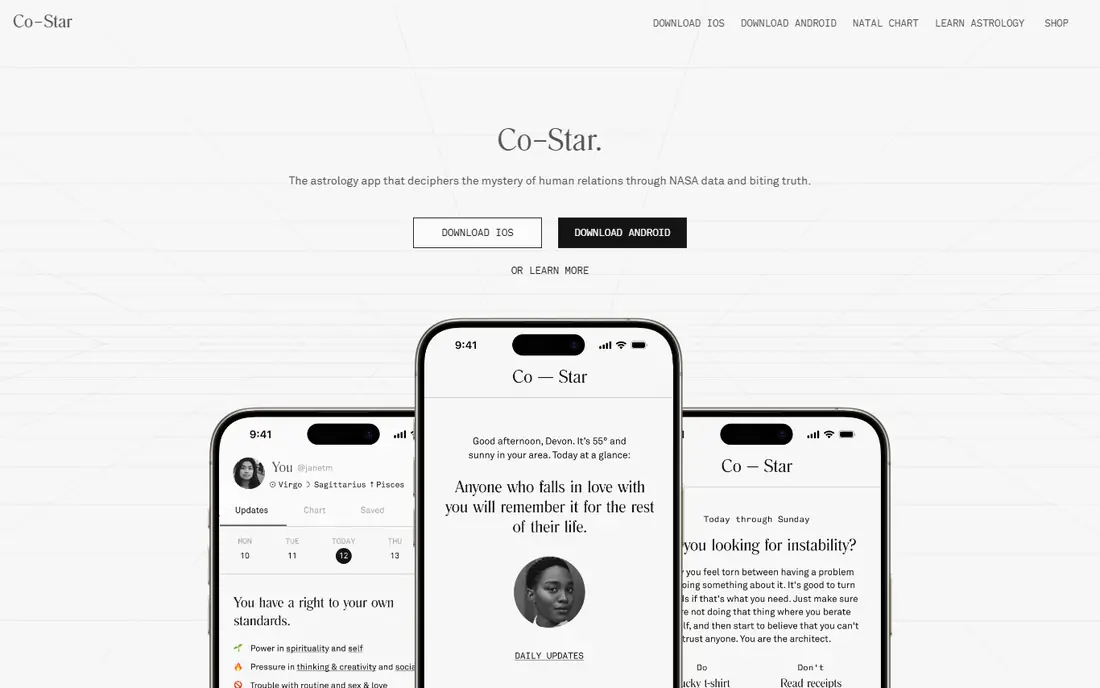
Co-Star remains the most popular daily horoscope app for a reason. It builds a natal chart from your birth date, time, and place, then sends a short daily reading tied to that chart rather than a generic sign paragraph. Adding friends lets you compare charts and see compatibility, which turned the app into a social habit for many users.
The tone is the main divider. Co-Star's daily copy is direct, sometimes cold, and it does not soften bad days. Some readers love that honesty, while others prefer a warmer voice. If the tone puts you off, CHANI or The Pattern may suit you better, but for a free, chart-based daily, Co-Star is hard to beat.
- Free daily reading based on your birth chart
- Full natal chart from birth data
- Friend comparison and compatibility features
- Tone is blunt and can feel harsh
- Some reports and features sit behind a paid tier
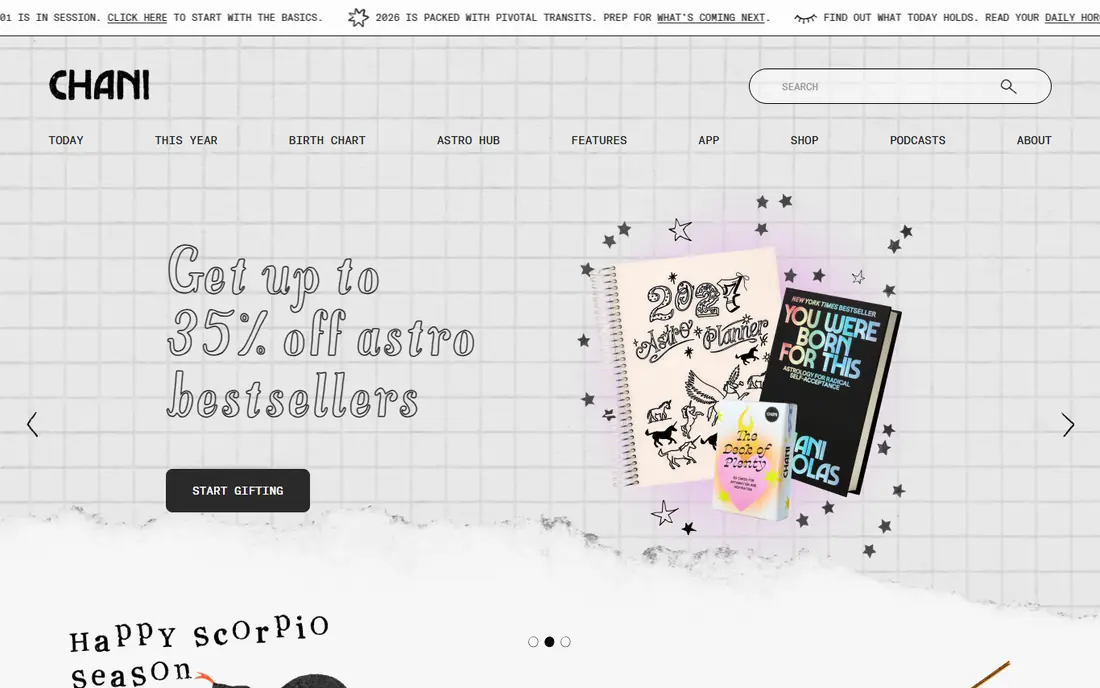
CHANI is the app for readers who want astrology as a learning practice, not just a morning alert. Its readings are written by human astrologers, and the app pairs them with meditations, workshops, and explanations of transits and chart placements. That depth suits people who want to understand why a reading says what it says.
The cost model is different from Co-Star's. CHANI uses a subscription with a free trial, so it suits committed readers more than casual daily checkers. If you only want a quick free horoscope, start with Co-Star or Nebula. If you want to learn astrology properly, CHANI is the strongest pick here.
- Readings written by human astrologers
- Guided meditations and learning content
- Warm, traditional voice
- Paid subscription model with a trial, rather than a full free tier
- Deeper content takes time to explore
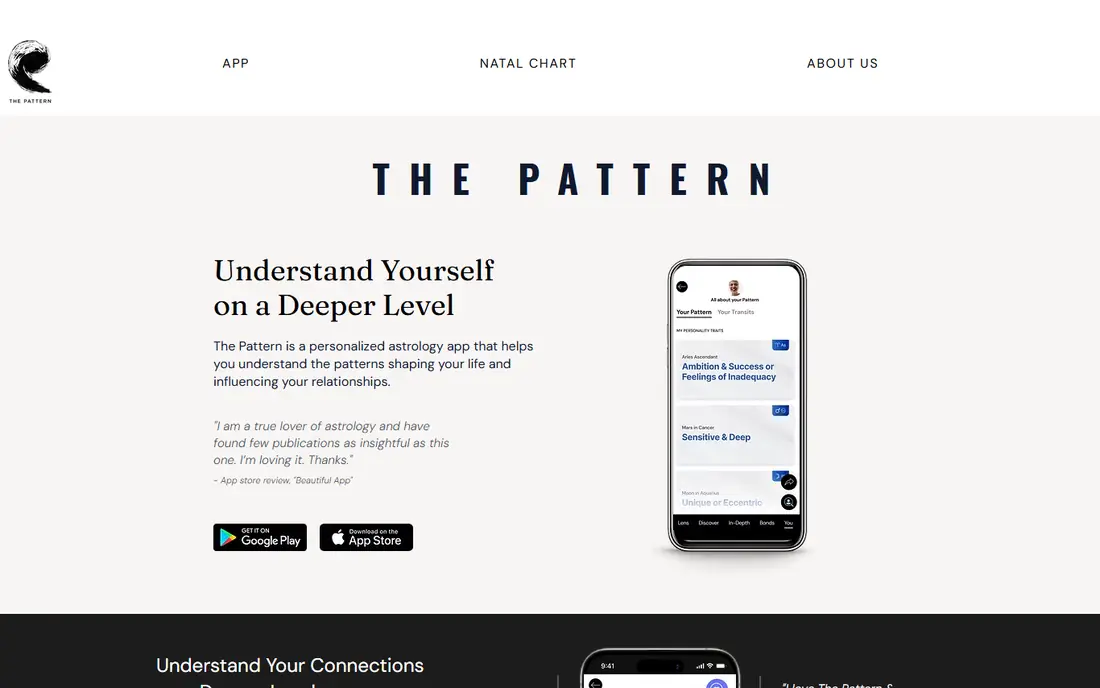
The Pattern drops most astrology vocabulary and reads more like a personality profile. It focuses on timing cycles and patterns in your life, which appeals to readers who are curious about astrology but bounce off terms for houses, aspects, and transits. The plain language makes it easy to share with friends who do not follow astrology at all.
Traditional astrology fans may find it thin. It does not offer the chart depth of TimePassages or the Vedic detail of AstroSage, and its paid tier covers the deeper timing content. For a gentle, jargon-free introduction, though, The Pattern is an excellent first app.
- Plain-language personality and timing content
- No heavy astrology terms
- Friend patterns and timing cycles
- Less traditional chart detail than TimePassages
- Deeper content sits behind a paid tier
Nebula packs a lot into one app: daily horoscopes, a birth chart tool, tarot readings, and access to live astrologers. That breadth suits readers who want to try several approaches without installing three separate apps. The free tier gives a useful sense of the daily horoscope and chart features.
The honest catch is pricing. Public reviews have criticised upsells and subscription terms, so read the current terms in the app store listing carefully before subscribing, and check what is free versus paid. Used free, or with a clear eye on the paid terms, Nebula is a useful all-in-one option.
- Daily horoscopes, birth chart, and tarot in one place
- Live astrologer marketplace
- Broad content range
- Some pricing and upsells have drawn criticism in public reviews
- Check current subscription terms before paying
Sanctuary suits readers who want a human to ask. Its daily horoscopes are written by people, and the app offers live readings with real astrologers by chat or video. That human layer is the main difference from apps that rely only on generated daily copy, and it matters when you want a question answered rather than a paragraph to read.
Live readings cost extra, so Sanctuary works best as a free daily app with occasional paid readings, rather than a daily live-reading habit. Check per-session pricing before booking, and treat any reading as entertainment, not as guidance for medical, financial, or legal decisions.
- Daily horoscopes written by people
- Live chat and video readings with real astrologers
- Horoscope by sign plus personal chart content
- Live readings are charged per session or through credits
- Costs add up if you use live readings often
TimePassages is the deep-chart pick. It offers detailed natal charts, current transits, and progressions, with explanations that help serious students learn the system rather than just reading a daily line. If you already know your chart basics, or you want to learn them properly, this app gives you far more detail than a daily horoscope app.
Beginners may find the interface dense at first. Start with the free chart and daily content, and explore transits gradually, rather than trying to read every placement on day one. For chart depth, TimePassages is the strongest app on this list.
- Detailed natal charts with transits and progressions
- Strong learning content
- Respected among serious astrology students
- Interface feels dense for beginners
- Some chart features are paid
Astro Future earns its place through widgets. If you want your daily horoscope on your Home Screen without opening an app, its widgets put it there, alongside transit charts for readers who follow planetary timing. That convenience suits daily users who check their horoscope as part of a morning routine.
It does not have Co-Star's social features or CHANI's learning library, so it works best as a daily widget and chart companion rather than a full social app. Pair it with TimePassages if you want both widgets and deep chart study, or use it alone if a quick daily glance is enough.
- Home Screen widgets for daily horoscopes
- Transit charts and timing tools
- Clean chart views
- Smaller community than Co-Star
- Some features sit behind in-app purchases
AstroSage is the Vedic astrology pick, and it is comprehensive. It offers Kundli charts, planetary positions, daily horoscopes, and panchang data, with a depth of free information that Western apps rarely match for Vedic users. Readers who follow Vedic astrology, or who want to compare Vedic and Western charts, will find a lot here.
The interface is data-heavy, which can overwhelm newcomers. It is also built around the Vedic system, so Western astrology readers should pair it with Co-Star or TimePassages for a Western chart. For Vedic depth, though, AstroSage is the clear choice on this list.
- Comprehensive Vedic charts, Kundli, and panchang content
- Daily horoscopes by sign
- Large free data range
- Interface is dense and data-heavy
- Western astrology users may prefer a Western chart app
How we picked these
We compared official app pages and app store listings for horoscope and astrology apps that are available in 2026, offer a daily horoscope, and have a distinct strength. We favoured apps with chart-based readings, human-written content, or live astrologers over generic sign paragraphs, and we included both Western and Vedic options. We did not claim hands-on testing, and we based the write-ups on published features, pricing, and public reviews.
How to choose the best daily horoscope app
Start with how much you want to read. A short daily alert suits a morning routine, while a learning app suits readers who want to understand transits and chart placements. Try the free tier of two apps for a week, and keep the one whose tone you actually enjoy, since a horoscope you skip is useless no matter how detailed it is.
Check birth data and privacy
A chart-based reading needs your birth date, time, and place, so enter them accurately if you know them, and check what the app stores and shares. Read the privacy policy before adding friends or payment details, especially in apps with live readings or social features. A daily sign horoscope needs no birth data at all, if you prefer to share less.
Keep horoscopes in perspective
Horoscopes are entertainment, not advice. Enjoy the daily reading, the chart study, or the live chat for what it is, and do not use it to decide medical treatment, investments, or major life changes. If a reading causes worry, step back, and talk to a qualified professional for decisions that matter.
Frequently asked questions
What is the best horoscope app?
Co-Star is the best horoscope app for most people, with a free chart-based daily reading and friend comparisons. CHANI suits human-written learning content, The Pattern suits plain-language timing content, and Sanctuary suits live readings from real astrologers.
What is the best daily horoscope app?
Co-Star offers a strong free daily horoscope app experience, with a short daily reading tied to your birth chart. Nebula and Astro Future also offer daily horoscopes, with Astro Future adding Home Screen widgets. Try two free options for a week and keep the tone you enjoy most.
What are the best astrology apps?
The best astrology apps here are Co-Star for daily use, CHANI for learning, TimePassages for deep charts, AstroSage for Vedic astrology, and The Pattern for personality-first timing content. Sanctuary adds live human readings, while Nebula packs horoscopes, charts, and tarot into one app.
Are horoscope apps free?
Many horoscope apps offer a free tier, including Co-Star, The Pattern, Nebula, Sanctuary, TimePassages, Astro Future, and AstroSage. CHANI uses a subscription with a trial, and most free apps charge for deeper reports, live readings, or extra features. Check the current store listing before subscribing.
Are horoscopes accurate?
Horoscopes are entertainment, not verified predictions, and there is no scientific evidence that they predict events. Chart-based apps can be accurate about planetary positions and chart calculations, but the interpretation is subjective. Enjoy them as reflection and fun, not as advice for important decisions.
Sources
See where you really rank - block by block
ProMapRanker scans Google Maps across a grid of your service area. Simple monthly plans from $19, white-label on every plan.
Start freeKeep reading
 which software is best for pdf page removal
Which Software Is Best for PDF Page Removal in 2026
Find which software is best for pdf page removal, from free online tools to desktop editors, with page controls, privacy, safety, and pricing compared.
Read → when i work alternatives
Best When I Work Alternatives in 2026
Looking for when i work alternatives? We compare 8 scheduling apps for hourly teams, covering pricing, free plans, time clocks and the best fit for business.
Read → the best tool for keyword analysis
The Best Tool for Keyword Analysis in 2026
Find the best tool for keyword analysis with our 2026 comparison of 10 keyword analysis software tools on data depth, difficulty scores and price today.
Read →