 ProMapRanker
Best Grocery Delivery Service in 2026

Key takeaways
- Instacart wins on store choice, because one app covers many retailers in most metro areas.
- Walmart+ wins on everyday price, because it uses Walmart in-store prices with no grocery markup described on its own pages.
- Shipt suits Target shoppers best, with no markup on most items for Target Circle 360 members in recent comparisons.
- Amazon Fresh suits Prime members who already pay for Prime and live in a covered area.
- Check item prices, service fees, and the free-delivery minimum together, because a cheap membership can still cost more per order.
Quick comparison
| Pick | Great for | Pricing starts at | Free tier | |
|---|---|---|---|---|
 Instacart | Widest store selection | Free | Yes | Visit |
 Walmart Grocery | Lowest everyday prices | Free | Yes | Visit |
 Amazon Fresh | Prime members in covered areas | Free | Yes | Visit |
 Shipt | Target and partner store shoppers | Free | Yes | Visit |
 Kroger Delivery | Kroger loyalty shoppers | Free | Yes | Visit |
 DoorDash | Groceries plus restaurant delivery in one app | Free | Yes | Visit |
 Uber Eats | Grocery plus restaurant delivery | Free | Yes | Visit |
 FreshDirect | Premium fresh food in the Northeast | Free | Yes | Visit |
 Thrive Market | Organic and natural groceries | Free | Yes | Visit |
The best grocery delivery services
Grocery delivery is not one product. Some services sell their own store stock, while others send a shopper into a partner store. That difference shapes prices, substitutions, and speed, so we compare both kinds below.
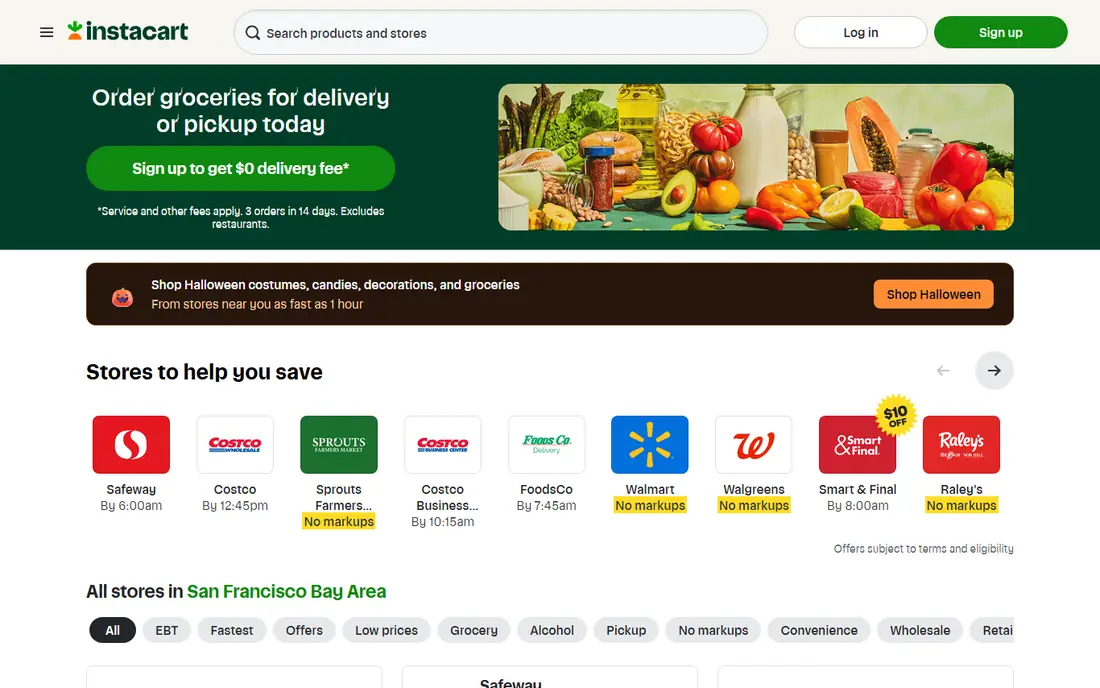
Instacart is the default choice when store choice matters more than a single store price. It partners with grocers, warehouse clubs, pharmacies, and specialty shops, so a household can order from Costco, Aldi, Publix, or a local grocer without switching apps. Delivery can arrive in as little as an hour in many areas, and shoppers can message about substitutions while they shop.
The catch is the total bill. Per-delivery fees start from $3.99 in many listings, Instacart+ costs $99 per year or $9.99 per month, and a service fee still applies even for members on many orders. Item prices are set by each retailer, and some are higher than in-store prices, so compare a full basket before judging the service on fees alone.
- Many retailers in one app
- Same-day delivery in most metro areas
- Instacart+ at $99 per year for free delivery on qualifying orders
- Item prices vary by retailer and some are marked up
- A service fee still applies on many orders
- Quality depends on the individual shopper
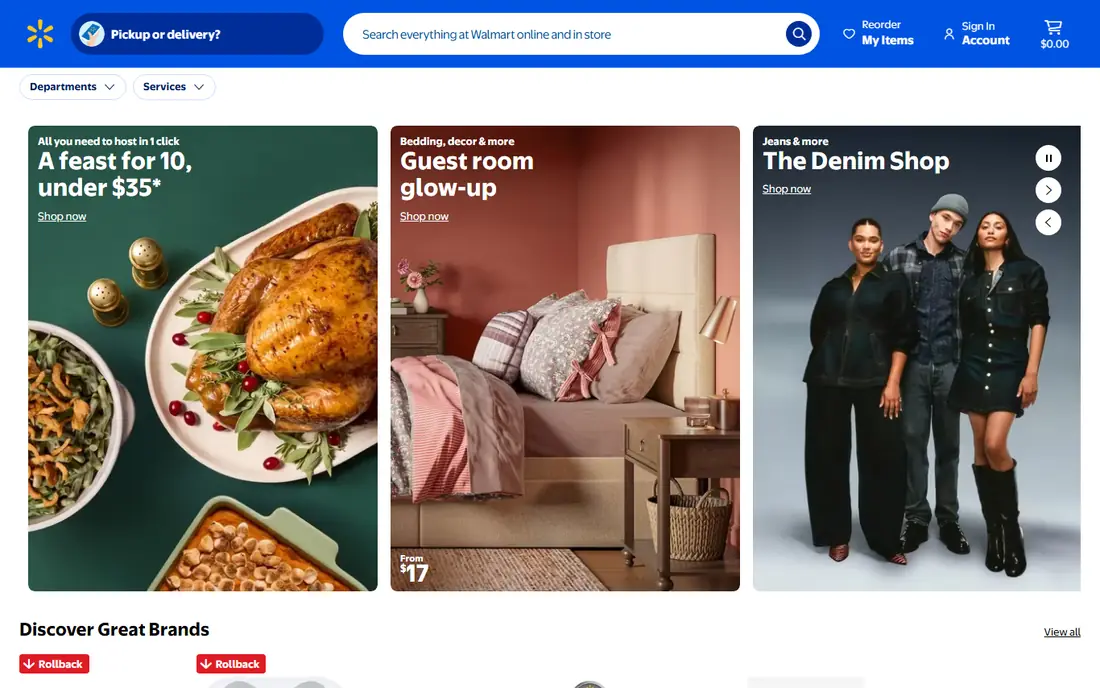
Walmart Grocery is the value pick for a standard weekly shop. Orders come from Walmart stores, prices follow Walmart pricing, and Walmart+ members get free delivery on orders of $35 or more, with express options for a fee. For families that already shop at Walmart, the app changes little except the trip itself.
The limit is range. Walmart covers everyday groceries, household goods, and many pantry staples well, but it is not a specialty grocer, and shoppers who want a particular local bakery, butcher, or organic market will need another service. Non-members pay a delivery fee that typically runs from $7.95 to $9.95, so occasional users should check the fee at checkout before assuming delivery is cheap.
- Walmart in-store prices with no grocery markup described by Walmart
- Large national store network
- Walmart+ at $98 per year
- Free delivery with Walmart+ needs a $35 order
- Express delivery costs extra
- Selection follows Walmart stock, not specialty grocers
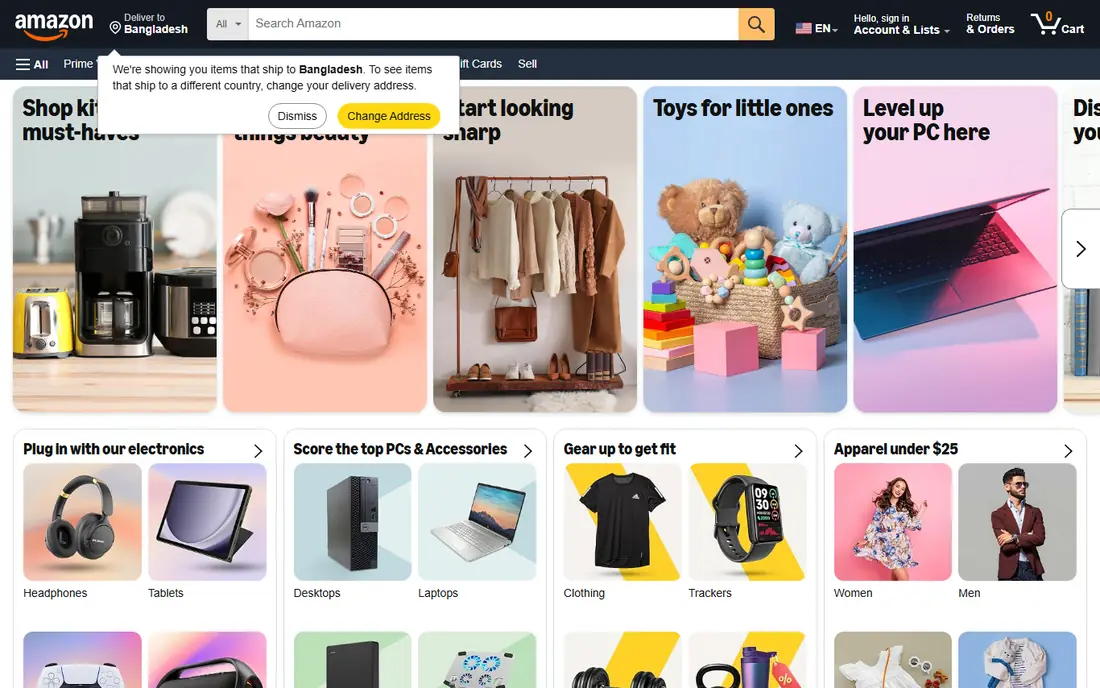
Amazon Fresh makes most sense for households that already pay $139 per year for Prime. Prime members can get free delivery on qualifying Amazon Fresh orders above the stated minimum, and Whole Foods orders can be placed through the same Amazon account. That pairing suits a shop that mixes everyday groceries with Whole Foods organic and prepared items.
The catch is geography and fine print. Amazon Fresh does not cover every town, and delivery windows, fees, and minimums differ between Amazon Fresh and Whole Foods orders, so read the checkout summary for the exact order. Shoppers outside a covered area will get more value from Instacart or Walmart.
- Low prices for Prime members on qualifying orders
- Whole Foods delivery through the same account
- SNAP and EBT accepted in many areas
- Coverage is limited to major metro areas
- Non-Prime delivery terms are less generous
- Free delivery minimums vary by order type
Shipt, owned by Target, is built around a personal shopper who picks the order and delivers it the same day. Target shoppers get the clearest benefit, because recent comparisons note no markups on most items for Target Circle 360 members, while other retailers may vary slightly. Members get free delivery on orders over $35, with a smaller fee under that amount.
The trade-off is coverage. Shipt serves thousands of cities, but its retailer list is narrower than Instacart, so shoppers in areas without a partner store may find fewer choices. It is a strong pick for a Target-first household, and a secondary option for everyone else.
- Same-day delivery from Target and partner retailers
- Membership at $99 per year or $10.99 per month
- Dedicated shopper model
- Smaller store network than Instacart
- Non-member delivery costs $10 per order in many listings
- Item prices can vary slightly by retailer
Kroger Delivery suits shoppers who already earn fuel points and use Kroger digital coupons. Orders come from Kroger and its banners, including Ralphs, Fred Meyer, and Harris Teeter in their regions, and loyalty benefits stay attached to the account. Boost membership, listed at $59 per year in recent comparisons, gives free delivery on qualifying orders.
The limit is geography. Kroger does not serve every state, and delivery in some areas comes from a fulfillment center rather than a nearby store, which can change substitution and freshness handling. Check delivery availability by ZIP code before moving a full weekly shop to Kroger.
- Fuel points and digital coupons carry over
- Boost membership at $59 per year in recent listings
- Wide Kroger banner coverage
- Limited to Kroger banners and regions
- Delivery fees apply without Boost
- Fresh quality varies by fulfillment center
DoorDash started with restaurants, but its grocery offer now covers many national and local grocers. That mix suits households that want one app for a grocery order on Monday and a restaurant order on Friday. DashPass costs $9.99 per month and reduces delivery fees on qualifying orders, with a service fee still applying on many grocery orders.
The catch is cost control. Grocery fees, service fees, and retailer price differences add up, and DashPass only saves money if orders are frequent enough to cover the monthly fee. Compare a DoorDash basket with Instacart or Walmart before making it the default grocery app.
- Wide restaurant and grocery coverage
- DashPass at $9.99 per month
- Fast delivery in many cities
- Delivery and service fees vary by store
- Grocery prices vary by retailer
- Membership only pays off with frequent orders
Uber Eats works best as a convenience add-on rather than a primary weekly grocer. It lists grocery partners in major metro areas, and Uber One members get reduced fees on qualifying orders. For a household that already uses Uber for rides or restaurant delivery, keeping groceries in the same account is simple.
The limit is depth. Grocery selection and store coverage do not match Instacart or Walmart in most areas, and fees can rise at busy times. Use Uber Eats for a top-up shop or a missing ingredient, and use a dedicated grocer for the main weekly order.
- Grocery partners in major metro areas
- Uber One at $9.99 per month
- One account for rides, food, and groceries
- Grocery coverage is thinner than Instacart in many areas
- Fees vary by store and time
- Minimums and service fees apply
FreshDirect is a different kind of grocer, built around its own warehouses and a strong fresh and prepared range. Shoppers in New York City and nearby parts of New Jersey, Connecticut, Delaware, and Pennsylvania get produce, meat, seafood, bakery, and ready meals that many national apps do not match for quality. DeliveryPass, listed from $79 per year in recent comparisons, reduces per-order delivery costs for frequent shoppers.
The obvious limit is geography. FreshDirect does not serve most of the country, so it is a regional pick, not a national one. Delivery fees and time slots also vary by order size and area, so check the fee before checkout.
- Strong produce, meat, seafood, and prepared foods
- DeliveryPass from $79 per year in recent listings
- Curated local and specialty items
- Northeast only, centered on New York City
- Delivery fees from about $5.99 to $15.99
- Standard orders need a $35 minimum in many listings
Thrive Market suits pantry-first organic shopping. Members browse organic, gluten-free, vegan, and natural brands, often at prices below standard retail, and get free delivery on orders over $49. It works well for shelf-stable goods, snacks, supplements, and household items that do not need same-day delivery.
The catch is that Thrive Market is not a same-day fresh grocer. Households that need fresh produce, meat, or dairy today will still need Instacart, Walmart, or a local store. Treat Thrive Market as a pantry supplement, and judge the $59.95 per year membership on pantry savings alone.
- Organic and natural brands at member prices
- Free delivery on orders over $49
- Membership at $59.95 per year in recent listings
- No fresh meat or produce delivery in the same way as a local grocer
- Membership is needed for full prices
- Shipping takes longer than same-day delivery
How we picked these
We compared official service pages and recent 2026 comparisons that checked vendor pricing in September and October 2026, focusing on services that operate in the United States today, offer delivery or pickup, and state membership and fee terms plainly. We favored national coverage, store choice, price transparency, and fresh food handling, and we used See website in other articles where a fee could not be verified. We did not claim hands-on testing, and delivery fees can vary by ZIP code, time, and order size.
How to choose a grocery delivery service
The cheapest membership is not always the cheapest shop, so compare the full basket.
Start with your store, not the app
List the stores you actually buy from, then pick the service that covers them. A wide app helps only if it includes your grocer, and a cheap single-store service helps only if that store matches your list.
Add up fees, minimums, and markups
Check the delivery fee, the service fee, the free-delivery minimum, and the item price for a typical basket. A service with free delivery can still cost more if its item prices run higher than a rival store.
Test substitutions and fresh handling
Order a small shop first, and note how substitutions are handled and how fresh items arrive. A service that communicates well during picking is worth more than a slightly lower fee, because a wrong substitution can waste a whole meal plan.
Use pickup when delivery fees pile up
Many grocers offer pickup at a lower fee or for free above a minimum. If delivery fees make a weekly shop too costly, pickup from the same store often keeps the online convenience without the delivery charge.
Frequently asked questions
Which grocery delivery service is the cheapest overall?
Walmart Grocery is often cheapest for everyday items, because it uses Walmart prices without a grocery markup described by Walmart. Instacart can still win when a household needs stores Walmart does not carry, so compare a real basket rather than a membership price alone.
Is Instacart+ worth it?
Instacart+ at $99 per year suits households that order at least once or twice a month and use partner stores regularly. Occasional shoppers usually save more by paying per-delivery fees, because a service fee still applies on many orders.
What is the best grocery delivery service for Prime members?
Amazon Fresh is the natural pick for Prime members in covered areas, because Prime already covers the membership cost and qualifying orders get free delivery above the minimum. Shoppers outside Amazon Fresh coverage should use Instacart or Walmart instead.
Can I use SNAP or EBT for grocery delivery?
Many services accept SNAP and EBT for eligible grocery items in covered areas, including Amazon Fresh and Instacart partner stores. Check the service page for your state and store, because acceptance varies by retailer.
Is grocery pickup better than delivery?
Pickup is often cheaper, because it avoids a delivery fee and a tip, while keeping online ordering and substitution choices. Delivery wins for households without a car, with limited time, or with mobility needs that make a store trip hard.
Sources
See where you really rank - block by block
ProMapRanker scans Google Maps across a grid of your service area. Simple monthly plans from $19, white-label on every plan.
Start freeKeep reading
 zoom alternatives
Best Zoom Alternatives in 2026
Compare Zoom alternatives in 2026, with free meeting limits and prices, so you can pick the best alternative to Zoom for your team, class, or community.
Read → which software is best for remote work
Which Software Is Best for Remote Work in 2026
Answering which software is best for remote work, we compare Slack, Zoom, Asana, Notion, Teams and more, with pricing and honest tradeoffs in 2026 now.
Read → which ai tool is best for content writing
Which AI Tool Is Best for Content Writing in 2026
Wondering which ai tool is best for content writing? We compare ChatGPT, Claude, Jasper, Grammarly, and more on price, quality, and best use in 2026 now.
Read →