 ProMapRanker
Best Google Business Profile Software for Campgrounds in 2026
Direct answer
Synup is my top pick for campgrounds because it handles multiple listings, seasonal hours and review responses from one dashboard, which fits a property with several locations or sub-areas. It has no free plan stated, so check its pricing page. If reviews matter most, Grade.us is a strong second, and Local Viking suits owners who mainly want to track map rankings around their campground.
I compared these tools using vendor documentation and public sources, and I did not run hands-on tests. My focus was on how each one fits the way a campground actually operates: seasonal hours, multiple listings, review flow after a stay, and local searches from campers planning a trip.
Key takeaways
- Campgrounds often manage several listings at once, such as the main office, a camp store or multiple properties, so bulk editing saves real time.
- Seasonal hours, holiday closures and site-type details change often, so pick software that lets you update them quickly across listings.
- Review requests work best when sent right after a stay, so look for tools that schedule requests and let you reply in one inbox.
- Local rank tracking shows whether you appear for searches like "campground near [town]" or "RV park near [lake]", which is how campers actually search.
- No tool replaces accurate, guideline-compliant profile data, so check that any vendor follows Google's rules on reviews and business names.
Quick comparison
| Pick | Great for | Pricing starts at | Free tier | |
|---|---|---|---|---|
 Synup | Multi-location profile management | See website | Not stated | Visit |
 Grade.us | Review requests after a stay | See website | Not stated | Visit |
 Local Viking | Local map rank tracking | See website | Free trial | Visit |
 Yext | Large listing networks | See website | Not stated | Visit |
 Uberall | Multi-property listing consistency | See website | Not stated | Visit |
 SE Ranking | Local SEO and rank checks | See website | Free trial | Visit |
 WhatConverts | Call tracking from profile calls | See website | Free trial | Visit |
The best Google Business Profile management software for campgrounds compared
Synup is a listing and profile management platform built for businesses with more than one location. For a campground that runs a main office listing plus separate listings for a camp store, marina or second property, that structure helps. You keep profile details in one place and push updates out, rather than logging into each listing separately.
For campgrounds, the useful part is handling change. Site amenities, seasonal opening dates and holiday hours shift through the year, and Synup lets you update those details in bulk. Review monitoring puts guest feedback in one inbox so you can reply to comments about site size, hookups or quiet hours without hunting through each profile.
The limit is scale. A single small campground with one listing may find the platform more than it needs, and pricing is quote-based, so ask for a demo before committing.
- Bulk editing across listings
- review monitoring and replies
- listing sync to many directories
- Pricing requires a quote
- more than a single small campground may need
Grade.us is a review management tool. It fits campgrounds because the best moment to ask for a review is right after a guest checks out, while the stay is fresh. You can set up campaigns that send a request by email or text and route guests to your Google review page.
The workflow suits seasonal operations. You can turn campaigns on for peak months and pause them in the off-season, and you can reply to reviews from a single dashboard. That matters when a guest mentions a specific loop, bathhouse or rule, because a reply shows future campers you pay attention.
Skip it if you mainly need to fix listing data across directories. Grade.us is about reviews, not full profile management, and it has no free plan stated.
- Automated review request campaigns
- one inbox for replies
- simple reporting
- Not a full listing manager
- review-focused rather than profile-wide
Local Viking tracks where your campground appears in local map results across a grid of points around your location. That is useful because campers search from nearby towns, from the road, and from farther away when planning. A grid view shows whether you show up for "campground near me" in the towns that feed your site.
It also supports geo-tagged photo uploads, which can help you show sites, facilities and surroundings. For a campground with a distinctive setting, like a lake or forest edge, that visual content supports the profile.
The limit is scope. Local Viking is a tracking tool, not a full listing manager, so most campgrounds pair it with a profile management platform. It offers a free trial.
- Grid-based local rank tracking
- geo-tagged photo posting
- simple dashboards
- Tracking focus rather than full profile editing
- best paired with another tool
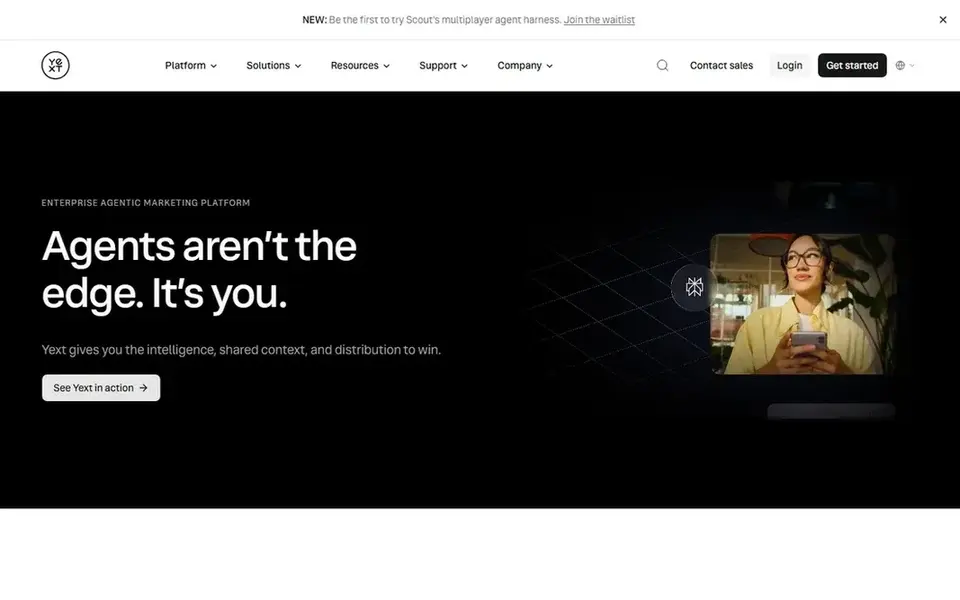
Yext is a listings platform that pushes business data to a large network of directories and maps. For a campground group or a resort with several properties, that consistency helps, because campers often find you through third-party sites before they reach Google.
The platform gives you control over structured details such as amenities, hours and location data, and it keeps those details aligned across the network. For a campground with cabins, RV sites and tent sites under one brand, that structure is worth reviewing.
For a single small campground, Yext can be more than you need, and pricing is quote-based. Ask whether the directory coverage matches where your campers actually search.
- Wide directory coverage
- structured data control
- enterprise features
- Can be heavy for one property
- pricing is quote-based
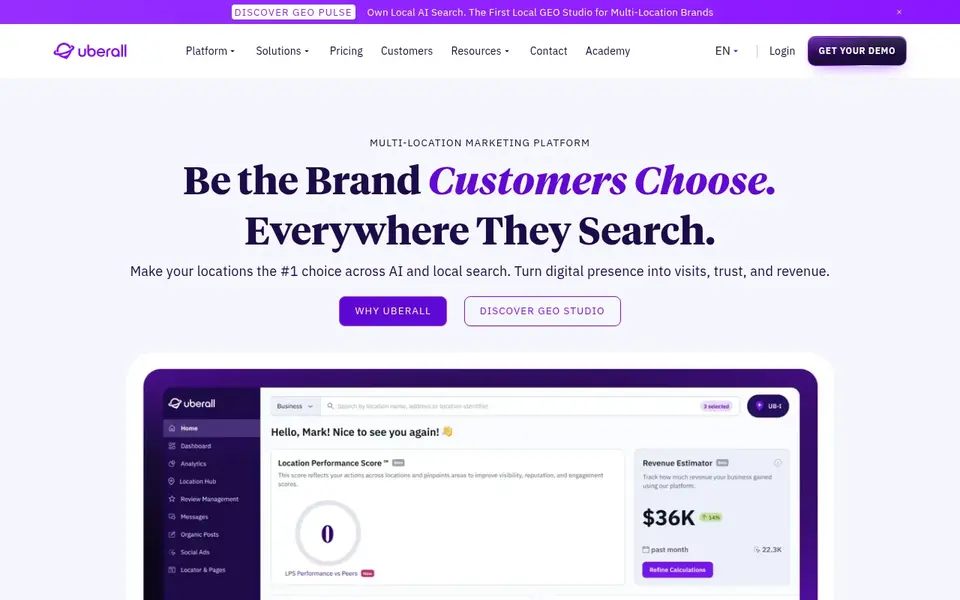
Uberall is a location marketing platform for businesses with multiple sites. A campground with several properties, or a group of parks under one owner, can keep names, addresses, hours and descriptions consistent everywhere.
The review tools let you collect and reply to feedback in one place, and location pages give each property a consistent web presence. For campgrounds, that helps when campers compare your park against others in the region and check details like pet rules or hookup types.
Setup takes planning, and pricing is quote-based. A single-location campground with a simple profile may not need this level of tooling.
- Listing sync across many platforms
- review management
- location pages
- Setup requires planning
- pricing is quote-based
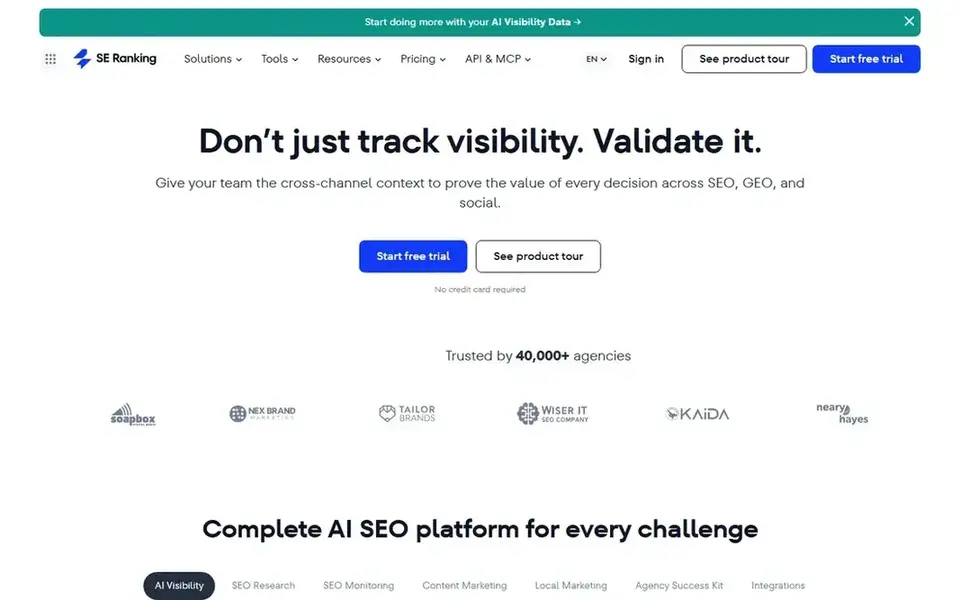
SE Ranking is an SEO platform with local rank tracking built in. You can check where your campground ranks for searches in specific towns or regions, which helps when you want to know whether you appear for campers coming from a nearby city.
The broader toolkit covers keyword research and competitor checks, so you can see which campgrounds rank for terms like "RV park near [lake]" and plan content around them. That is useful for a campground website that lists site types and local attractions.
It is not a dedicated profile manager, so you still need a way to edit and sync listings. It offers a free trial.
- Local rank tracking by location
- competitor checks
- broader SEO toolkit
- Not a dedicated profile manager
- requires SEO know-how
WhatConverts is a lead tracking tool that records calls and form submissions and ties them to their source. For campgrounds, phone calls still matter, because campers call to ask about availability, site size or rules before booking.
If your Google profile shows a phone number, call tracking shows how many calls come from that listing and what they are about. That helps you decide whether to invest more in the profile, the website or a booking system.
It does not edit your profile, so treat it as a measurement layer alongside a listing tool. It offers a free trial.
- Tracks calls and form leads
- ties leads to marketing source
- call recording options
- Not a profile editor
- adds a layer beyond listing management
How I chose
I started from vendor documentation and public sources, then checked each tool against how a campground actually runs. The questions I asked were practical: can it handle seasonal hours, can it manage more than one listing, does it help with reviews after a stay, and does it show local rankings in the towns that feed the park?
I also looked at limits. Some tools are full listing managers, some are review platforms, some are rank trackers and some are measurement layers. A campground does not need all of them, so I noted where each one stops. I did not run hands-on tests, and I did not rely on client results or case studies. The comparison is based on documented features and public information, and you should confirm current details on each vendor's site before buying.
What to check before you buy
- Confirm the tool can handle seasonal hours and holiday closures, since campground schedules change through the year.
- Check whether it supports multiple listings if you run a camp store, marina or second property.
- Ask how review requests are sent and whether you can pause them in the off-season.
- Confirm local rank tracking covers the towns and regions your campers search from.
- Check that the vendor follows Google's guidelines on reviews and business names, with no review gating or keyword stuffing.
- Ask about call tracking if phone bookings are a big part of your business.
Frequently asked questions
What is the best Google Business Profile management software for a campground?
Synup is my top pick for campgrounds that manage more than one listing, because it handles bulk edits and review replies in one place. Grade.us is a strong choice if reviews after a stay are your main focus, and Local Viking fits owners who mainly want to track map rankings around the park.
Can I manage a campground profile without paid software?
Yes. Google lets you claim and edit your profile directly, and for a single small campground that is often enough. Paid software helps when you have several listings, need to send review requests at scale, or want to track local rankings across a region. Start with the free option and add tools as the work grows.
How do I handle seasonal hours on my profile?
Update hours before each season and around holidays, and keep the same details on your website and any booking pages. If you use a listing manager, set the changes once and push them across listings. Accurate hours reduce wasted calls and avoid campers arriving after the gate closes.
Should a campground ask guests for reviews?
Yes, asking is fine as long as you do not offer incentives or filter out unhappy guests. Send the request after checkout, keep it simple, and reply to both positive and negative reviews. Do not buy reviews or gate them, because that breaks Google's rules and can hurt the profile.
Do I need local rank tracking for a campground?
It helps if you want to know whether you appear for searches from nearby towns and cities. Campers often search before they travel, so a grid view shows where you are visible. If you already rank well and bookings are steady, you can skip it and focus on reviews and profile accuracy.
Sources
See where you really rank - block by block
ProMapRanker scans Google Maps across a grid of your service area. Simple monthly plans from $19, white-label on every plan.
Start freeBrowse all guides
← Best Call Tracking Software for Window Installers in 2026Best Listing Management Software for Art Galleries in 2026 →
 best call tracking software for shoe repair shops
Best Call Tracking Software for Shoe Repair Shops in 2026
A practical guide to call tracking software for shoe repair shops, comparing tools for call recording, missed-call follow-up and local search reporting.
Read → best call tracking software for mobile mechanics
Best Call Tracking Software for Mobile Mechanics in 2026
A practical guide to the best call tracking software for mobile mechanics in 2026, compared from vendor documentation and public sources.
Read → best call tracking software for kennels
Best Call Tracking Software for Kennels in 2026
A practical guide to the best call tracking software for kennels in 2026, covering booking calls, after-hours enquiries and which tools fit a boarding business.
Read → scaling local seo for agencies
How to Scale Rank Tracking Across Dozens of Local Clients
Practical systems for scaling geo-grid rank tracking across dozens of clients without ballooning costs.
Read → local rank tracker for agencies
Local Rank Tracker for Agencies: Scaling Across Many Clients
What agencies need from a local rank tracker: white-label reports, multi-client scaling, and predictable costs.
Read → moz pro alternatives
Moz Pro Alternatives in 2026
Searching for Moz Pro alternatives? We compare 8 SEO tools on keyword research, backlinks, rank tracking, and local SEO, with current prices inside now.
Read →More in Local SEO & Google Maps · All guides A to Z by date · Latest guides