 ProMapRanker
Best Fulfillment Companies in 2026

Key takeaways
- ShipBob and ShipMonk suit fast-growing direct-to-consumer brands, while Red Stag suits heavy, bulky, and high-value goods.
- Most fulfillment pricing is quote-based, so compare total cost per order, including storage, pick and pack, and shipping.
- eFulfillment Service and Fulfillrite suit smaller brands with no large order minimum, while ShipFusion suits larger brands.
- Fulfillment by Amazon suits Amazon sellers first, and multi-channel sellers should confirm channel and packaging rules.
Quick comparison
| Pick | Great for | Pricing starts at | Free tier | |
|---|---|---|---|---|
 ShipBob | Growing DTC brands | See website | No | Visit |
 ShipMonk | Subscriptions and multichannel | See website | No | Visit |
 Flexport | International and multichannel | See website | No | Visit |
 Red Stag Fulfillment | Heavy and high-value goods | See website | No | Visit |
 ShipFusion | Larger DTC brands | See website | No | Visit |
 Fulfillrite | Small brands and crowdfunding | See website | No | Visit |
 eFulfillment Service | First-time 3PL users | See website | No | Visit |
 Fulfillment by Amazon | Amazon sellers | See website | No | Visit |
The best fulfillment companies
A fulfillment company stores your products, picks and packs orders, ships them, and handles returns. The right partner depends on order volume, product size, sales channels, and how much support you need, so compare the full cost per order, not just the headline pick fee.
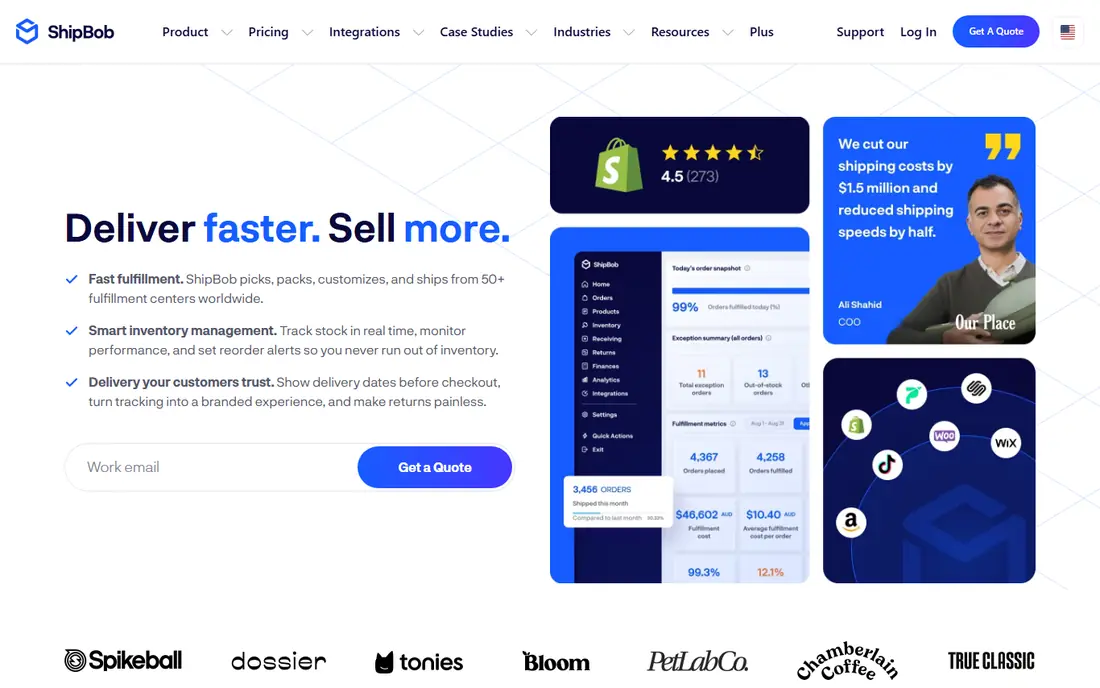
ShipBob is a strong pick for direct-to-consumer brands that are growing fast and need stock closer to customers. Its network spans many locations, which can shorten delivery times, and its dashboard covers inventory, orders, and analytics in one place. Integrations with Shopify and other platforms keep order flow simple.
Pricing is custom, and small sellers should confirm minimum spend and setup costs before signing. ShipBob fits brands that have steady volume and want a network that can scale, rather than a brand shipping a handful of orders a month.
- Large global warehouse network
- Inventory and analytics tools
- Integrations with major ecommerce platforms
- Quote-based pricing
- Monthly spend expectations can exclude very small sellers
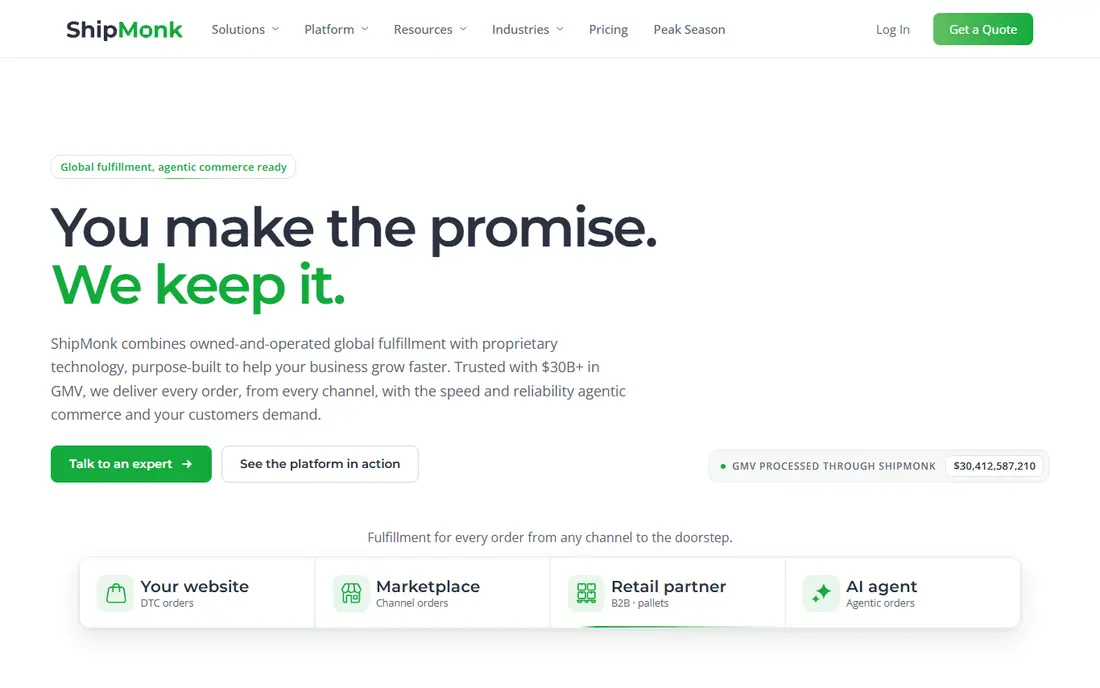
ShipMonk suits brands with subscription boxes, crowdfunding campaigns, and multichannel sales. Its software handles inventory, order routing, and branded pack-outs, and its post-purchase tools help with tracking and customer updates. That mix is useful when orders are not just single items in a box.
Get a full quote that includes storage, pick and pack, packaging, and any technology fees. ShipMonk is best for brands with regular volume and complex orders, rather than a simple single-SKU shop that needs the lowest possible per-order cost.
- Strong subscription box and kitting support
- Many platform integrations
- Post-purchase tools
- Monthly minimum applies
- Packaging and add-on fees need a careful quote
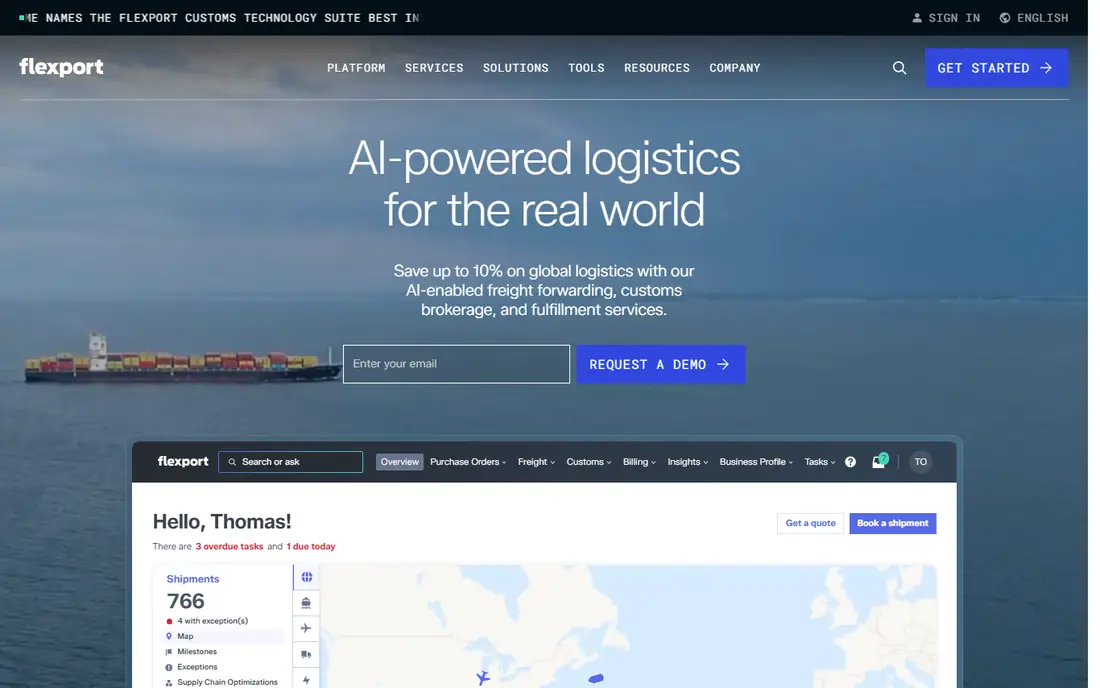
Flexport, which includes the former Deliverr fulfillment network, suits brands that import goods and sell across channels. Combining freight, customs, and destination fulfillment under one provider can simplify international supply chains, and its Shopify and multichannel integrations keep orders flowing.
Domestic-only brands may find Flexport heavier than they need. It is best when international shipping, customs, or multi-country fulfillment is part of the plan, not just a future idea.
- Freight, customs, and fulfillment in one provider
- Multichannel support
- Global logistics network
- More complex than a domestic-only warehouse
- Pricing is program-based
Red Stag is the pick for big, heavy, or high-value products that standard parcel fulfillment handles poorly. Its warehouses are company-operated, and its guarantees around accuracy and shrinkage give brands confidence when a single error costs real money. Kitting, retail, and returns support round out the service.
Small, light, low-value catalogs may find cheaper options elsewhere, since Red Stag is built for accuracy on costly goods. If your products are bulky or valuable, that focus is worth paying for.
- Accuracy and shrinkage guarantees
- Handles bulky and heavy products
- Company-operated US warehouses
- Quote-based pricing
- Less suited to cheap, lightweight parcels
ShipFusion suits larger direct-to-consumer brands that need specialist handling. Temperature-controlled storage, lot and expiry tracking, and retail support help food, supplement, and regulated product brands that cannot use a generic warehouse. Dedicated account support also helps as order volume grows.
Smaller brands should check volume expectations early, since ShipFusion typically serves higher-volume clients. For a brand that has outgrown a small warehouse and needs specialist facilities, ShipFusion is a strong shortlist option.
- Temperature-controlled storage
- Lot and expiry tracking
- Dedicated account support
- Typical client volume is high
- Quote-based pricing
Fulfillrite is a good fit for small ecommerce brands and Kickstarter campaigns that want personal service. A dedicated contact, clear pick-and-pack pricing, and experience with campaign surges help first-time founders avoid common fulfillment mistakes. The East Coast location also suits brands whose customers cluster in that region.
A single main warehouse means delivery times to the West Coast will be longer than with a multi-node network. Fulfillrite is best for smaller brands that value service and simplicity over nationwide two-day coverage.
- Dedicated account contact
- East Coast warehouse focus
- Crowdfunding campaign experience
- Single main warehouse location
- Less suited to brands needing many nodes
eFulfillment Service is one of the friendliest first steps into third-party fulfillment. With no order minimum and no setup fee advertised, a small brand can test outsourcing without a large commitment. Shopify integration, kitting, and returns support cover the basics well.
The network is smaller than ShipBob or ShipMonk, so brands needing fast nationwide delivery from many nodes should compare transit times. For a first-time 3PL user, the low barrier and clear pay-as-you-go model are strong advantages.
- No order minimum advertised
- No setup fee advertised
- Shopify integration and returns support
- Smaller warehouse network
- Fewer enterprise features than larger providers
Fulfillment by Amazon, known as FBA, is the natural pick for sellers whose main channel is Amazon. Products stored in Amazon warehouses can qualify for Prime delivery, and Amazon handles customer service for those orders. That reach is hard to match for an Amazon-first brand.
Fees depend on size, weight, storage time, and service level, so total cost needs a careful read. Multi-channel fulfillment is available, but packaging and channel rules differ from a dedicated 3PL. FBA is best when Amazon sales drive the business, not as a generic warehouse for every channel.
- Access to Prime customers
- Large logistics network
- Customer service for Amazon orders
- Fees by size, weight, and storage
- Limited brand customization on packaging
How we picked these
We compared official company pages, service descriptions, and published pricing models for fulfillment providers serving US ecommerce brands in October 2026. We kept providers with a real warehouse and fulfillment service, not just shipping software, and we mixed large networks, specialist providers, and small-brand options. Since most providers price by quote, we wrote See website for starting prices and focused comparisons on network, minimums, and service fit.
How to compare fulfillment quotes fairly
Ask every provider for the same total cost per order. That total should include receiving, storage, pick and pack, packaging materials, shipping, account fees, and returns handling. A low pick fee with high storage or shipping costs can be more expensive than a higher pick fee with better carrier rates.
Also check service terms that affect customers. Confirm delivery speed from each warehouse to your main customer regions, return handling, inventory accuracy guarantees, and how support works during peak season. Send a trial batch before moving all stock, and track accuracy, damage, and delivery times for at least a few weeks. A fulfillment partner is hard to change mid-peak, so the trial matters more than the sales call. During the trial, also test returns and customer support, since a smooth outbound flow can hide a slow returns process that frustrates buyers later. Ask how inventory counts are reported, how damaged stock is handled, and what happens when a product runs out mid-order. Check whether the provider can handle gift messages, inserts, and branded packaging if those matter to your brand, and confirm any extra fees for those services in writing. A clear trial scorecard, with accuracy, speed, damage, and support response time, makes the final choice much easier to defend.
Frequently asked questions
What is the best fulfillment company?
ShipBob and ShipMonk are strong all-round picks for growing DTC brands, Red Stag is best for heavy and high-value goods, and eFulfillment Service is best for smaller brands starting with a 3PL. The best pick depends on volume, product size, and sales channels.
What is the best ecommerce fulfillment service for small businesses?
eFulfillment Service and Fulfillrite suit smaller brands, thanks to low minimums and personal service. ShipBob and ShipMonk suit small brands that are growing fast and can meet monthly spend expectations.
How much does fulfillment cost?
Most providers price by quote, based on storage, pick and pack, packaging, shipping, and order volume. Ask for a total cost per order, including all fees, and compare that figure across providers rather than comparing a single fee line.
Should I use Fulfillment by Amazon or a 3PL?
Use Fulfillment by Amazon if Amazon is your main sales channel and Prime delivery matters most. Use a 3PL such as ShipBob, ShipMonk, or Red Stag if you sell mainly on your own store or across many channels and want more packaging control.
What is the best online fulfillment company for subscription boxes?
ShipMonk is a strong pick for subscription boxes and kitting, thanks to its handling of recurring orders and branded pack-outs. Fulfillrite also has crowdfunding and campaign experience that helps with subscription launches.
Do fulfillment companies handle returns?
Most providers on this list handle returns, including receiving, inspection, and restocking or disposal, but fees and processes vary. Confirm return fees, inspection standards, and restock timelines in writing before you sign.
Sources
See where you really rank - block by block
ProMapRanker scans Google Maps across a grid of your service area. Simple monthly plans from $19, white-label on every plan.
Start freeKeep reading
 best rank tracking software
Best Rank Tracking Software in 2026
Searching for the best rank tracking software? We compare 8 tools for daily keyword tracking, local rankings, client reports, and competitor checks in 2026.
Read → best platform for ecommerce website
Best Platform for Ecommerce Website in 2026
Find the best platform for ecommerce website builds in 2026. We compare Shopify, WooCommerce, BigCommerce, Wix and more on price, fees and scale for stores.
Read → best math apps
Best Math Apps in 2026: 8 Apps Compared
Find the best math apps for homework, revision, and deeper study in our 2026 comparison of 8 free and paid solvers, courses, and visual tools for students.
Read →