 ProMapRanker
Best Food Delivery Company in 2026


Widest restaurant and retail choice · Pricing starts at: $9.99 per month
Key takeaways
- DoorDash and Uber Eats offer the widest national coverage, while Grubhub can be cheaper for Prime members.
- Specialist services suit specific needs, such as independent pizzerias, office catering or Texas-only delivery.
- Memberships save money only if you order often enough to cover the monthly cost.
- Restaurant-direct ordering can be cheaper, but it lacks the tracking and choice of a marketplace.
Quick comparison
| Pick | Great for | Pricing starts at | Free tier | |
|---|---|---|---|---|
| DoorDash | Widest restaurant and retail choice | $9.99 per month | Free trial | Visit |
 Uber Eats | City ordering and Uber One members | $9.99 per month | No | Visit |
 Grubhub | Value ordering, especially with Prime | See website | No | Visit |
 Slice | Independent pizzerias | See website | No | Visit |
 ChowNow | Direct ordering for independent restaurants | See website | No | Visit |
 Favor Delivery | Texas delivery | See website | No | Visit |
 Delivery.com | Food plus alcohol and everyday items | See website | No | Visit |
 ezCater | Office and group catering delivery | See website | No | Visit |
The best food delivery companies
Food delivery companies differ more than their apps suggest, because coverage, restaurant choice, fees and membership deals vary by city. This guide covers national marketplaces, specialist pizza and catering delivery, and a regional option, so you can match the service to how you actually order.
Fees change often and vary by restaurant, distance and time of day, so compare the final checkout total, not only the delivery fee shown at the top of the menu. A service that looks cheap on one order can be dearer on the next, once service fees, small-order fees and tips are added, so a single comparison is worth more than a general claim about price.
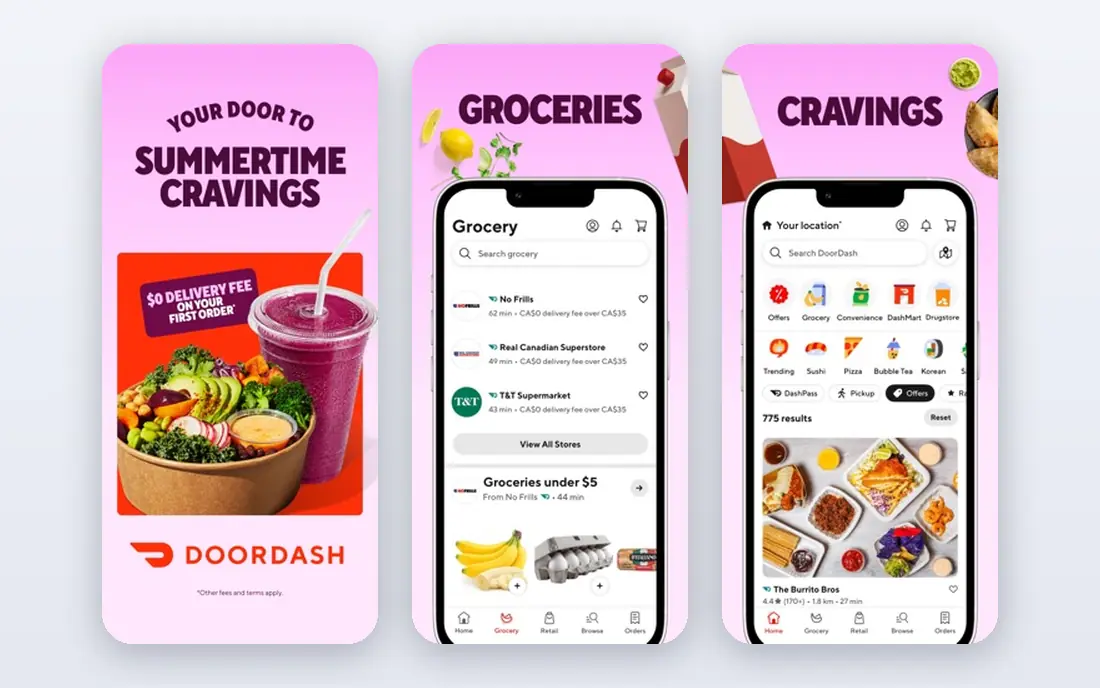
DoorDash is the default pick for most US households, because it lists restaurants, groceries and retail goods across a very wide area. DashPass members get a zero delivery fee on eligible orders and a free trial period, which can save regular orderers money.
Without a membership, delivery and service fees can add a lot to a small order, so compare the checkout total before ordering. Before you order regularly, compare the checkout total on two services for the same restaurant, and check whether a membership actually saves you money at your order frequency.
- Widest US coverage in public guides
- DashPass cuts delivery fees
- Grocery and retail delivery too
- Fees stack up without DashPass
- Menu prices can exceed in-store prices
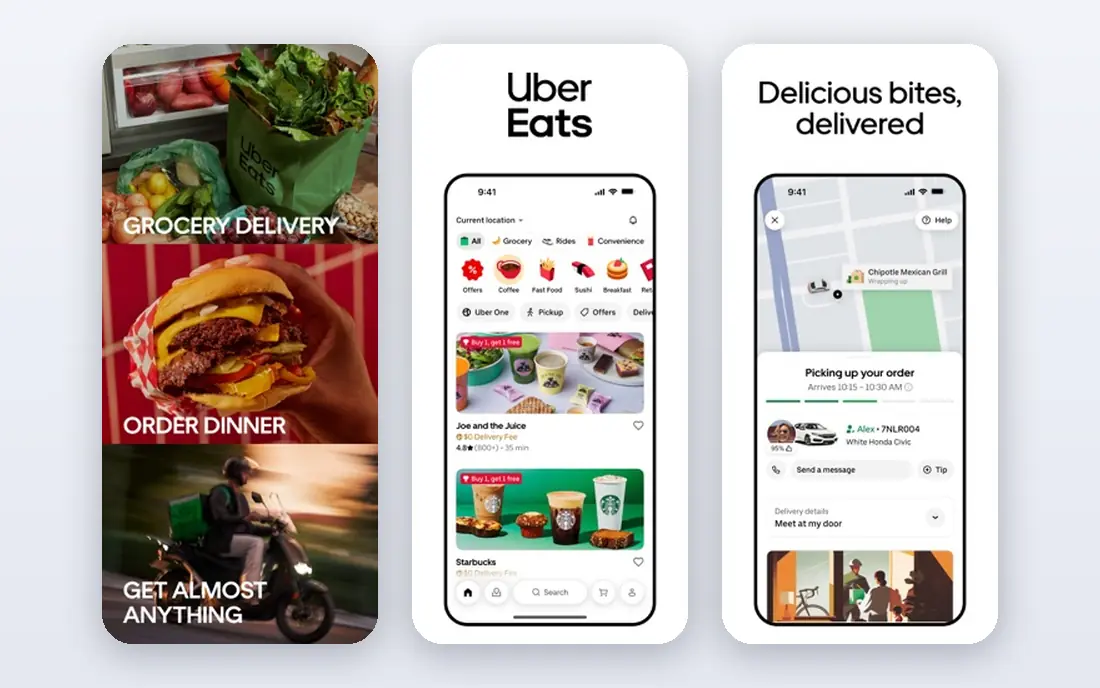
Uber Eats suits city dwellers and existing Uber users, especially those who already pay for Uber One. Its app ties ride and delivery membership benefits together, and tracking is clear from restaurant to door.
Demand-based fees can raise costs at peak times, so check the total before confirming a peak-hour order. Before you order regularly, compare the checkout total on two services for the same restaurant, and check whether a membership actually saves you money at your order frequency.
- Strong urban coverage
- Uber One bundles ride and delivery benefits
- Live order tracking
- Fees vary by demand
- Coverage thinner in some rural areas
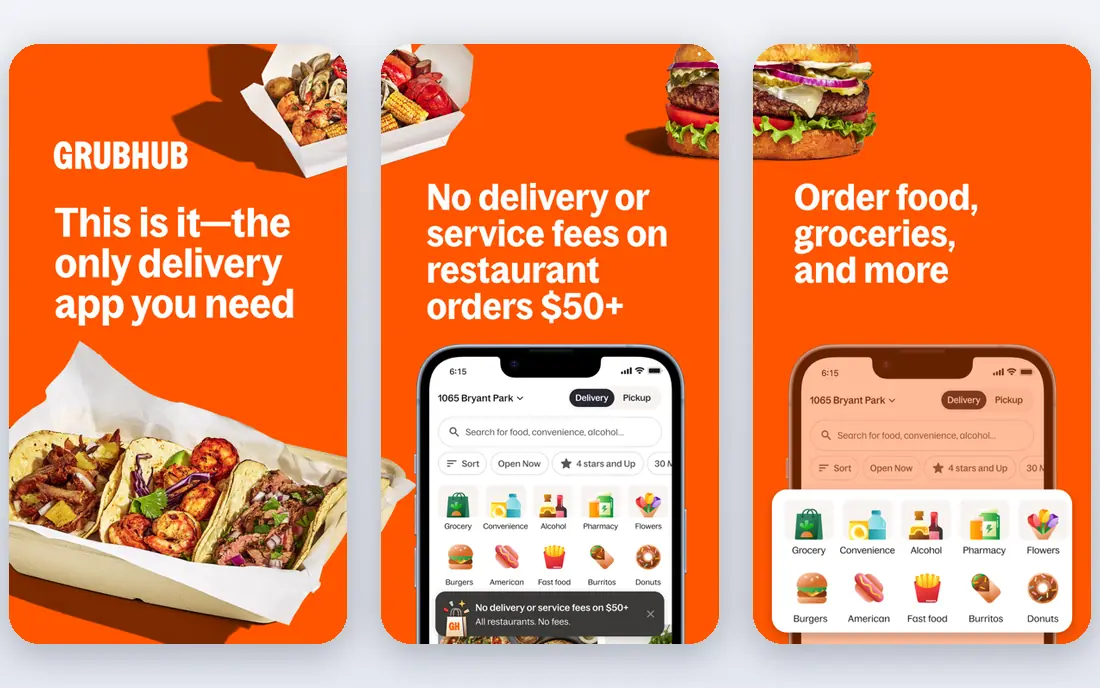
Grubhub suits value-focused orderers, especially Amazon Prime members who can get Grubhub Plus access at no extra charge as reported in public guides. Its restaurant network remains large, with perks and rewards for regular users.
Coverage and restaurant choice vary more by city than DoorDash, so check your address before relying on it as a main service. Before you order regularly, compare the checkout total on two services for the same restaurant, and check whether a membership actually saves you money at your order frequency.
- Large restaurant network
- Grubhub Plus benefits
- Free Plus access reported for Prime members
- Coverage narrowing in some areas
- Fees vary by restaurant
Slice suits pizza lovers who want to support independent pizzerias rather than only large chains. Its platform gives small pizza shops ordering and delivery tools they could not easily build alone.
It only covers pizza, so it works as a second service alongside a general marketplace, not as a replacement. Before you order regularly, compare the checkout total on two services for the same restaurant, and check whether a membership actually saves you money at your order frequency.
- Focused on independent pizza shops
- Ordering tools for small pizzerias
- Nationwide pizza coverage
- Pizza only
- No general restaurant choice
ChowNow suits diners who order regularly from independent restaurants and want more of the order value to stay with the restaurant. Its direct ordering model avoids marketplace commission on direct orders, with a flat fee model for restaurants.
Delivery depends on the restaurant, so speed and coverage vary, and you order from one restaurant at a time. Before you order regularly, compare the checkout total on two services for the same restaurant, and check whether a membership actually saves you money at your order frequency.
- Commission-free direct ordering model
- Restaurant owns customer data
- Branded ordering pages
- Restaurant must use ChowNow
- Delivery arranged by the restaurant
Favor Delivery suits Texas residents who want a local service built around Texas cities and restaurants. Its coverage spans hundreds of Texas cities, with restaurant and everyday-item delivery in its home state.
It is useless outside Texas, so travellers and people moving out of state will need a national service as well. Before you order regularly, compare the checkout total on two services for the same restaurant, and check whether a membership actually saves you money at your order frequency.
- Texas-focused service
- Hundreds of Texas cities
- Restaurant and retail delivery
- Texas only
- No use outside Texas
Delivery.com suits people in its covered cities who want food, alcohol and everyday services in one place. Its pass option can cut fees for regular users, and its range goes beyond restaurant meals.
Coverage is far narrower than the national leaders, so check your city first before counting on it. Before you order regularly, compare the checkout total on two services for the same restaurant, and check whether a membership actually saves you money at your order frequency.
- Food, alcohol and laundry options in covered cities
- Delivery pass option
- Coverage limited to covered cities
- Choice varies by area
ezCater suits offices, events and group orders, where one order must feed many people reliably. Its marketplace lists many restaurants for catering, with tools for business ordering and receipts.
It is not built for a single dinner for one, so households should use a general marketplace for everyday meals. Before you order regularly, compare the checkout total on two services for the same restaurant, and check whether a membership actually saves you money at your order frequency.
- Catering-focused marketplace
- Many restaurants for group orders
- Business ordering tools
- Not for single-meal delivery
- Catering minimums may apply
How we picked these
We compared official service pages and public coverage and fee guides for each company. We did not claim hands-on delivery tests, and we used See website where fees vary by restaurant, distance and time and cannot be stated as a single fixed price.
How to pick a food delivery company for your household
Start with coverage in your area. A national leader means little if your favourite restaurants are not on it, so search your address on two or three services before choosing. Regional services can beat national ones in their home area, especially for local restaurants.
Compare the full checkout total. Delivery fees, service fees, small-order fees and tips stack up, and menu prices can differ from in-store prices. Order the same meal on two services once, compare the totals, and use that real comparison for future orders.
Do the membership maths. A monthly membership that cuts delivery fees only pays off if you order often enough, so count your orders from the last month before subscribing. Cancel if your ordering drops, and watch for price changes at renewal.
Think about the restaurant too. Marketplaces charge restaurants commission, which can raise menu prices, while direct ordering or specialist services can leave more with the restaurant. If you have a regular local spot, check whether it offers direct delivery or pickup at a lower total.
Frequently asked questions
What is the best food delivery company?
For most US households, DoorDash offers the widest restaurant choice, while Uber Eats is strong in dense cities and for Uber One members. Grubhub can be the value pick for Prime members. The best choice for you depends on coverage and checkout totals in your area.
Which food delivery company is cheapest?
It varies by restaurant, order size and membership, so no service is cheapest everywhere. Compare the full checkout total, including fees and tip, for the same order on two services. Memberships and promotions can change the answer week to week.
Do food delivery companies deliver groceries too?
Many large services now deliver groceries, convenience items and retail goods alongside restaurant food. DoorDash and Uber Eats both list grocery and convenience options, though range varies by city. Specialist grocery services may still offer a wider grocery range.
Can I order alcohol through a food delivery company?
Some services deliver beer, wine and spirits in states and cities where it is allowed, with age checks at delivery. Availability depends on local law and the restaurant or store, so check your address in the app. You must be of legal drinking age, and the driver will check identification at the door.
Should I use a restaurant direct ordering service?
Direct ordering can be cheaper and leaves more revenue with the restaurant, but it usually offers less choice and tracking than a marketplace. It suits regular orders from a favourite spot, while marketplaces suit browsing many restaurants at once.
Sources
See where you really rank - block by block
ProMapRanker scans Google Maps across a grid of your service area. Simple monthly plans from $19, white-label on every plan.
Start freeKeep reading
 wpforms alternatives
Best WPForms Alternatives in 2026
We compare 9 wpforms alternatives for WordPress forms, with free and paid options, current pricing notes, and honest limits for small business sites in 2026.
Read → windows task scheduler alternatives
Best Windows Task Scheduler Alternatives in 2026
Looking for Windows Task Scheduler alternatives? We compare 9 schedulers for Windows and cross-platform work, from free tools to enterprise automation.
Read → which ai video service is best
Which AI Video Service Is Best in 2026
which ai video service is best? We compare 10 legitimate AI video services on price, avatars, editing and output quality to help you pick the right tool.
Read →