 ProMapRanker
Best Financial Close Automation Software in 2026

Key takeaways
- FloQast suits mid-market teams that want close checklists and reconciliations without a long enterprise project.
- BlackLine and Trintech suit large, multi-entity teams with heavy reconciliation and control needs.
- Numeric and SolveXia suit growing teams that want modern, faster setup and clearer variance work.
- Workiva and OneStream suit teams that need close data linked to reporting, consolidation or planning.
- Pricing is mostly quote-based, so ERP fit and implementation time matter as much as the feature list.
Quick comparison
| Pick | Great for | Pricing starts at | Free tier | |
|---|---|---|---|---|
 FloQast | Mid-market close management | See website | No | Visit |
 BlackLine | Enterprise reconciliation and controls | See website | No | Visit |
 Trintech | Complex global close | See website | No | Visit |
 Numeric | Modern AI-assisted close | See website | No | Visit |
 Workiva | Close linked to reporting | See website | No | Visit |
 OneStream | Close plus consolidation | See website | No | Visit |
 HighRadius | Close with receivables automation | See website | No | Visit |
 SolveXia | Flexible reconciliation automation | See website | No | Visit |
 LiveFlow | Spreadsheet-connected reporting | See website | Free trial | Visit |
The best financial close automation software
Financial close software replaces the month-end spreadsheet chase with checklists, reconciliations, journal workflows and an audit trail. The tools below differ in scale, ERP fit and how much automation they apply to matching, variance review and approvals. This article is general information only, not tax, financial or legal advice.
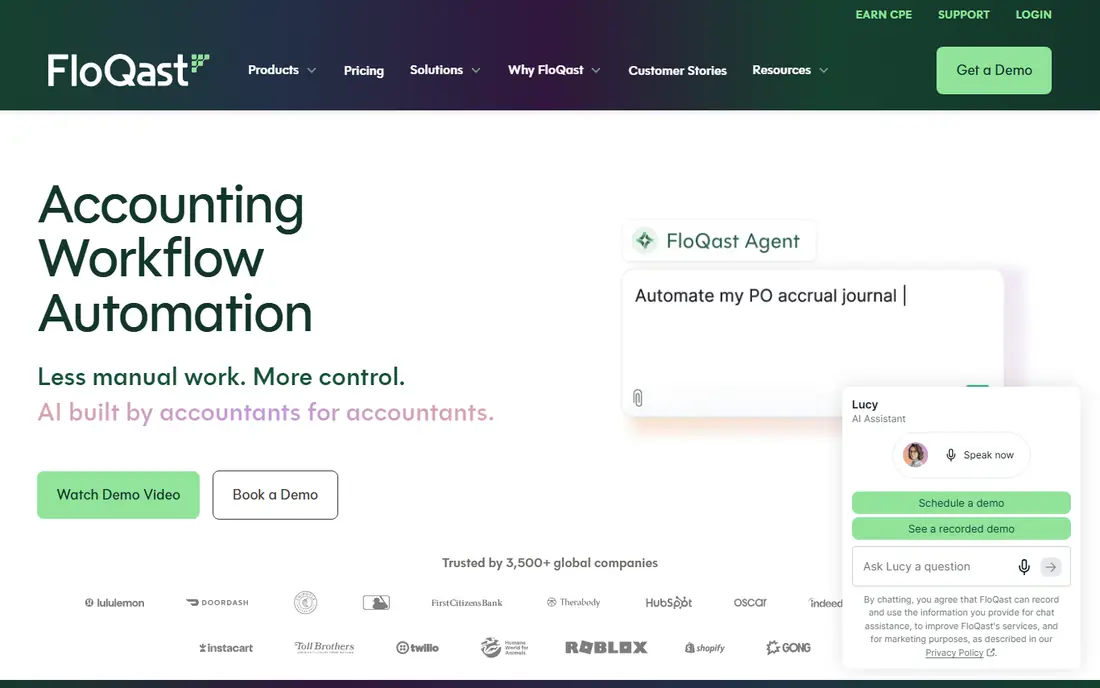
FloQast is the most common first close system for growing accounting teams, and the reason is practical. It organizes the close around checklists, owners and due dates, while reconciliations pull from the ERP so preparers and reviewers work from the same balances. Teams that lived in shared spreadsheets usually feel the change in the first close cycle.
The limit is scale. Very large firms with complex intercompany work and strict control frameworks may need deeper tools below. For mid-market teams that want faster closes without a six-month implementation project, FloQast is a sensible shortlist leader.
- Clear close checklists and task ownership
- Reconciliations tied to ERP balances
- Audit-ready documentation
- Pricing is quote-based
- Enterprise control depth trails BlackLine for very large firms
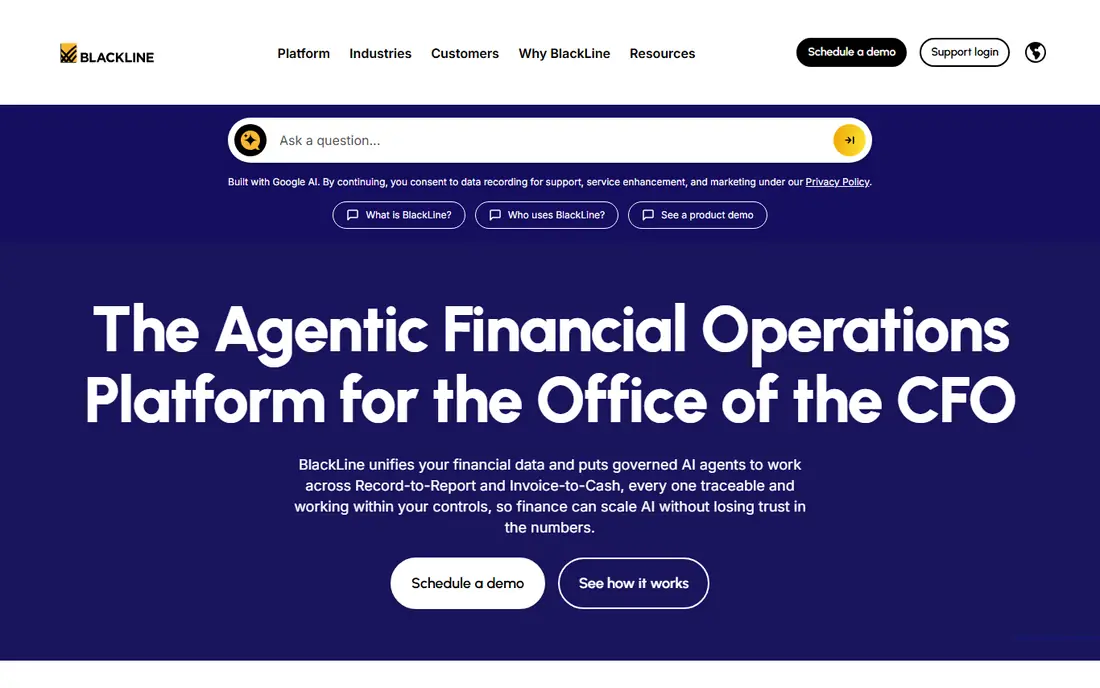
BlackLine is built for enterprises that close across many entities, systems and currencies. Its reconciliation, matching, journal and intercompany tools are designed to hold up under audit, with controls and evidence trails that smaller tools cannot match at the same depth. Large SAP and Oracle shops are a natural fit.
That depth brings a heavier project. Implementation, configuration and training take real time and budget, and small teams will find the platform oversized. For a large finance function that needs standardization and control above all, BlackLine remains the benchmark.
- Deep account reconciliation and transaction matching
- Strong controls and audit trails
- Broad ERP coverage
- Implementation can take months
- Cost and complexity suit larger firms

Trintech, through its Cadency platform, suits global teams with high transaction volumes and many legal entities. It brings close orchestration, reconciliations, matching, journals and controls into one system, which helps when the close spans ERPs and regions. Finance leaders who need one governed process across entities tend to value that unity.
Like BlackLine, Trintech is an enterprise project, not a quick install. Teams should budget for design, data work and change management. If your close is already complex and growing, that investment is justified. If it is simple, a lighter tool will close faster.
- Unified close, reconciliation and matching
- Strong multi-entity and intercompany support
- Long enterprise track record
- Quote-based pricing
- Implementation needs planning for complex environments
Numeric is the modern option many growing teams compare against FloQast. It covers close checklists, reconciliations, flux and variance analysis, and reporting, with AI-assisted help for investigation and drafting. The interface feels current, and setup is generally quicker than legacy enterprise platforms.
The honest catch is history. Numeric does not have the decades-long enterprise record of BlackLine or Trintech, so very large, highly regulated teams may want deeper references. For fast-growing mid-market teams on NetSuite or QuickBooks, it is a strong, modern shortlist pick.
- Modern close workflows with variance analysis
- Reconciliations and reporting in one place
- Faster setup than legacy tools
- Newer vendor with less enterprise history
- Pricing varies by plan
Workiva fits teams where the close does not end with balanced accounts, but with filings, board reports and disclosures. It links live data to documents, so a number that changes in the close can flow to the report without manual retyping. Public and pre-IPO companies gain the most from that link.
It is not the first pick for pure high-volume matching, where BlackLine or Trintech lead. Pair Workiva with a strong reconciliation tool, or choose it when reporting control is the main pain. For governance-led finance teams, the connected reporting model is the selling point.
- Connects close data to filings and reports
- Controlled collaboration and audit trails
- Strong for public companies
- Not a pure reconciliation engine
- Pricing is quote-based
OneStream suits groups that want close, consolidation and planning on a single platform rather than three separate systems. Account reconciliations, journals and controls sit alongside consolidation, so multi-entity results can be prepared and reported without repeated data moves. That unity appeals to CFOs standardizing a group finance stack.
The scope is enterprise-grade, with matching cost and implementation effort. Smaller teams will find it heavy, and teams that only need checklists should look at FloQast or Numeric first. For large groups, OneStream can replace several point tools at once.
- Consolidation, planning and close in one platform
- Broad ERP connectors
- Strong for multi-entity groups
- Enterprise scope and cost
- Needs skilled implementation
HighRadius is best known for receivables automation, and its close tools benefit from that strength in matching and exception work. Teams with very high transaction volumes can automate much of the matching, then focus staff on exceptions that need judgment. When close and receivables share data, that pairing saves time.
The platform is broad, so teams that only need a close checklist may find it more than they need. Enterprises that want close bundled with order-to-cash automation, however, will see the value in a single vendor for both sides of the ledger.
- Strong transaction matching at volume
- Close tools alongside receivables automation
- AI-assisted exception handling
- Broad platform can be complex
- Enterprise pricing is quote-based
SolveXia suits finance teams whose reconciliation data does not arrive in a neat, standard form. It can pull from varied sources, automate matching and reporting, and apply controls without forcing every account into the same template. That flexibility helps teams with spreadsheets, legacy systems and mixed ERPs.
It is a smaller name than BlackLine or Trintech, so enterprise buyers should ask for references in their industry and ERP mix. For mid-market teams with messy data and a clear close process, SolveXia offers automation without a full enterprise rebuild.
- Automates reconciliations from varied data sources
- Flexible reporting and controls
- Suits non-standard data
- Less well known than the largest vendors
- Needs clear process design
LiveFlow takes a different route: it keeps spreadsheets, but connects them live to accounting data. Finance teams can build reports, dashboards and consolidation views in Google Sheets that update as the ledger changes, instead of exporting and pasting each month. For spreadsheet-led teams, that is a low-friction upgrade.
It does not replace close checklists, approvals and control workflows in the same way FloQast or BlackLine do. Use LiveFlow when reporting speed is the pain, and use a dedicated close tool when task ownership, reconciliations and audit controls are the pain. Some small teams use both.
- Live accounting data inside Google Sheets
- Fast reporting and consolidation views
- Low learning curve for spreadsheet teams
- Not a full close management platform
- Depth trails dedicated close tools
How we picked these
We compared official product pages, pricing pages, analyst and review listings, and close-focused buyer guides for tools live in October 2026. We kept tools that cover close tasks, reconciliations or reporting as a core job, and we mixed enterprise, mid-market and modern options. We did not claim hands-on testing, and we used quote-based pricing where vendors do not publish a standard price. This article is general information only, not tax, financial or legal advice.
How to choose a close tool
Start with your ERP and entity structure. A tool that connects cleanly to your ERP and handles your intercompany volume will save more time than a tool with a longer feature list but weak integration. List your ERPs, entity count, close calendar and the accounts that cause the most late adjustments, then test vendors against that list.
Next, map the close process, not just the software. Who prepares, who reviews, and what evidence does audit need for each account. A checklist tool helps when ownership is the problem. A matching engine helps when volume is the problem. A reporting platform helps when filings are the problem. Buying the wrong type will leave the real bottleneck in place.
Finally, ask for implementation time, total cost and reference customers at your size. Enterprise tools can take months, while modern tools often go live in weeks. Get the full quote, including implementation and support, and run a pilot close on one entity before rolling out company-wide.
Frequently asked questions
What is financial close automation software?
It is software that organizes month-end close tasks, reconciliations, journals and approvals in one governed workflow, replacing scattered spreadsheets and email follow-ups. It tracks who owns each task, whether accounts are reconciled, and what evidence supports each balance. The goal is a faster, more reliable close with a clear audit trail.
Which tool is best for a mid-market company?
FloQast and Numeric are the most common mid-market shortlist picks, since they offer close checklists, reconciliations and variance work without a long enterprise project. FloQast suits teams that want a proven close system, while Numeric suits teams that want a modern, AI-assisted approach. Compare ERP fit and setup time before choosing.
Do I still need my ERP if I buy close software?
Yes. Close software sits alongside your ERP, it does not replace it. It pulls balances, organizes tasks and reconciliations, and sends journals or results back, while the ERP remains the system of record. Confirm the integration for your exact ERP version during a demo.
How long does implementation take?
Modern mid-market tools often go live in weeks, while enterprise platforms like BlackLine and Trintech can take several months for complex, multi-entity environments. Time depends on entity count, ERP mix, data quality and control design. Ask each vendor for a dated plan based on your close, not a generic estimate.
Is close software worth it for a small finance team?
It can be, if late closes, missed reconciliations or audit findings are a recurring problem. Small teams should start with a focused tool like FloQast, Numeric or LiveFlow, depending on whether tasks, reconciliations or reporting are the pain. If the close already runs on time with clean evidence, a new tool may add cost without a clear gain.
Sources
See where you really rank - block by block
ProMapRanker scans Google Maps across a grid of your service area. Simple monthly plans from $19, white-label on every plan.
Start freeKeep reading
 wpforms alternatives
Best WPForms Alternatives in 2026
We compare 9 wpforms alternatives for WordPress forms, with free and paid options, current pricing notes, and honest limits for small business sites in 2026.
Read → windows task scheduler alternatives
Best Windows Task Scheduler Alternatives in 2026
Looking for Windows Task Scheduler alternatives? We compare 9 schedulers for Windows and cross-platform work, from free tools to enterprise automation.
Read → which ai video service is best
Which AI Video Service Is Best in 2026
which ai video service is best? We compare 10 legitimate AI video services on price, avatars, editing and output quality to help you pick the right tool.
Read →