 ProMapRanker
Best ETL Tools in 2026: 8 Tools Compared

Key takeaways
- The best ETL tools differ by billing model: row-based, volume-based, capacity-based, and compute-based pricing suit different data patterns.
- Managed tools such as Fivetran and Stitch suit teams that want low maintenance, while open tools such as Airbyte suit teams that want control.
- Cloud-native tools such as AWS Glue and Azure Data Factory suit teams already committed to one cloud provider.
- Model your costs at normal, peak, and double volume before buying, because usage-based ETL bills can rise faster than expected.
Quick comparison
| Pick | Great for | Pricing starts at | Free tier | |
|---|---|---|---|---|
 Fivetran | Hands-off managed data ingestion | See website | Yes | Visit |
 Airbyte | Open-source flexibility and connector building | $10 per month | Yes | Visit |
 Talend | Enterprise integration with data quality tools | See website | Free trial | Visit |
 Informatica | Large enterprises with governance and compliance needs | See website | Free trial | Visit |
 AWS Glue | Serverless ETL inside AWS | See website | No | Visit |
 Azure Data Factory | Microsoft and hybrid data integration | See website | No | Visit |
 Hevo Data | Simple real-time pipelines for mid-size teams | $239 per month | Yes | Visit |
 Stitch | Simple affordable data replication | $100 per month | Free trial | Visit |
The best ETL tools
We compared ETL and data integration tools with live plans in 2026, using vendor pricing pages and 2026 ETL comparisons. ETL here covers extraction, transformation, and loading, including modern ELT patterns where transformation happens in the warehouse.
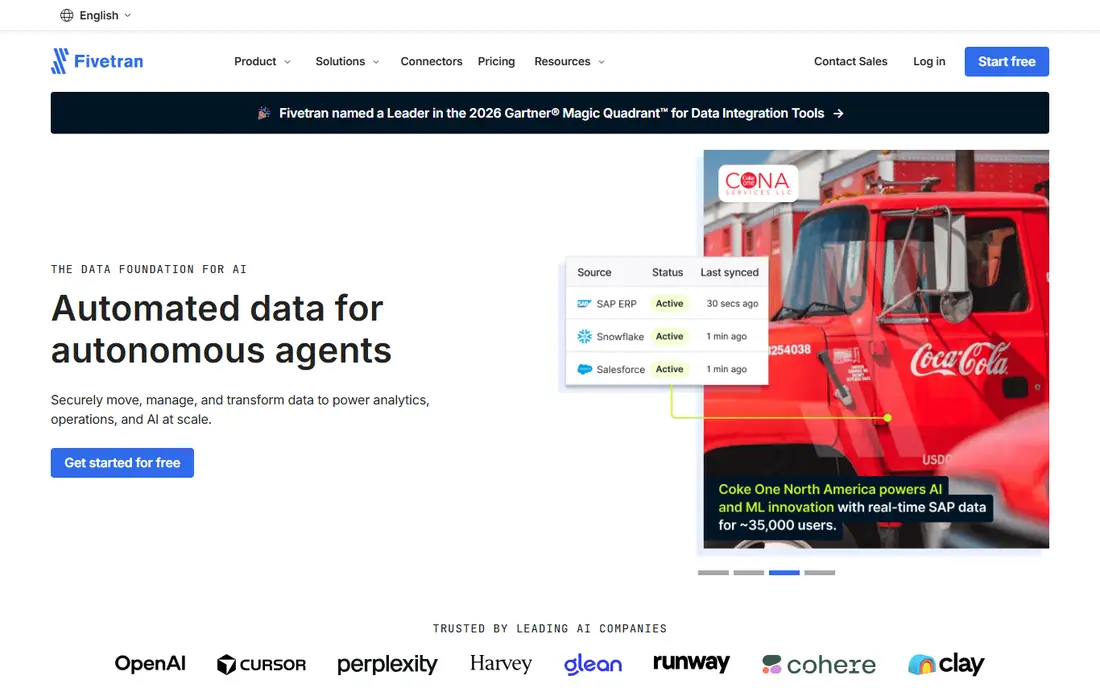
Fivetran is the best pick for a team that wants data pipelines to run with little daily care. It offers a large library of managed connectors for SaaS apps, databases, and files, and it handles schema changes, retries, and maintenance automatically. That low-maintenance model suits analytics teams that need reliable warehouse data without hiring a dedicated pipeline engineer for each source. A free tier for small monthly active row volumes lets a small team test real pipelines before paying.
The main risk is cost predictability. Fivetran bills on monthly active rows and related usage, so a table with frequent updates can cost more than a stable table of the same size. Teams should model costs for their highest-churn tables, not just total row counts. Fivetran is also stronger on ingestion than on complex custom transformation, so teams with heavy transformation logic may pair it with a transformation tool. For reliable, low-touch ingestion, Fivetran remains a leading choice.
- Large connector library
- Automated schema changes and maintenance
- Free tier for small volumes
- Usage-based pricing can be hard to predict at high volume
- Transformation options are more limited than full code tools
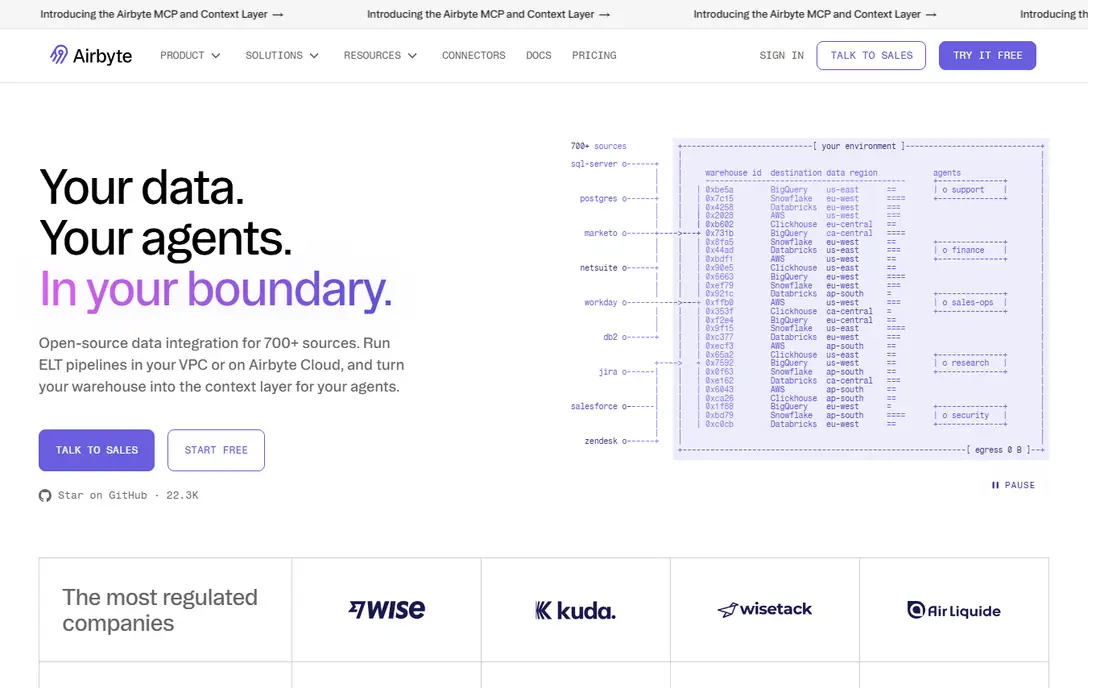
Airbyte suits teams that want control over their data stack without paying enterprise prices at the start. The open-source version can be self-hosted for free, apart from your own infrastructure costs, and the cloud version starts from a low monthly base with usage-based caps. Its connector builder, including AI-assisted help, makes it easier to build a custom connector for an internal app or a niche SaaS tool. For a data team with engineering skill, Airbyte offers a flexible middle path between a fully managed tool and hand-written scripts.
Self-hosting is the trade-off. You own upgrades, monitoring, scaling, and security, which takes engineering time that a managed tool would save. Cloud pricing also depends on volume and capacity, so a team must test with real data volumes before committing. If your team has data engineering capacity and wants to avoid vendor lock-in, Airbyte is a strong and cost-effective pick.
- Open-source self-hosted option
- Cloud plans from a low monthly base
- AI-assisted connector builder
- Self-hosting needs infrastructure skill
- Cloud costs depend on volume and capacity choices
Talend, now part of Qlik, is built for enterprises that need more than simple replication. Its visual design tools, data quality checks, and governance features help large teams move data between many systems while keeping definitions consistent. That matters in regulated industries, where a pipeline must be documented, tested, and audited, not just run. Talend also covers a broad range of enterprise sources, including legacy systems that simpler tools may not support.
The cost and effort are higher than a managed SaaS ingester. Talend needs training, design time, and often a longer implementation, and its pricing is not a simple published starter plan. A small analytics team with a few SaaS sources will find Talend heavy. A large enterprise with complex sources, quality rules, and governance needs will find that depth worth the investment.
- Strong data quality and governance features
- Visual pipeline design
- Broad enterprise connector coverage
- Higher total cost and training needs
- Implementation can take longer than a simple managed tool
Informatica is the enterprise standard for many large organisations that need data integration, governance, and quality in one platform. Its Intelligent Data Management Cloud covers ingestion, transformation, cataloguing, and governance, with AI assistance for data discovery and preparation. For a regulated bank, insurer, or healthcare organisation, that breadth helps a data team prove where data came from, how it changed, and who can access it. Deployment options also cover cloud, hybrid, and on-premises needs.
The trade-offs are price and complexity. Informatica pricing is custom and enterprise-scale, and a full deployment needs planning, skilled staff, and time. A mid-size team with simple pipelines will pay for depth it never uses. An enterprise with many sources, strict compliance rules, and a large data team will get the most value from Informatica, and should budget for implementation as well as licences.
- Deep governance, catalog, and quality features
- AI-assisted data management
- Broad enterprise deployment options
- Custom enterprise pricing
- Complex setup and long implementation for large deployments
AWS Glue is the natural ETL choice for a team already running on AWS. It is serverless, so jobs scale without provisioning servers, and its Data Catalog helps teams discover and describe data across S3, Redshift, and other AWS services. For a data lake or warehouse built on AWS, Glue removes the need to move data to an outside tool for transformation. Integration with AWS security, logging, and scheduling also suits teams that already use AWS controls.
Costs and skills are the limits. Glue bills by compute units and job time, so long or inefficient jobs can cost more than expected, and pricing needs monitoring. Custom jobs need Python or Scala skill, so a non-technical analytics team may struggle without engineering help. Glue also ties you more closely to AWS, which matters if you plan a multi-cloud strategy. For an AWS-first team with engineering skill, Glue is a powerful and flexible ETL tool.
- Serverless scaling with no servers to manage
- Data Catalog for discovery
- Strong fit for AWS data lakes and warehouses
- Pay-per-use costs need careful monitoring
- Needs Python or Scala skill for custom jobs
- AWS lock-in
Azure Data Factory suits teams that live in Microsoft tools, from SQL Server and Dynamics to Azure Synapse and Microsoft Fabric. Its visual data flows let analysts build many pipelines without writing code, while code options remain for engineers who need custom logic. Hybrid support also helps organisations that still run on-premises databases beside cloud warehouses. For a Microsoft shop, Data Factory keeps data movement inside familiar security and monitoring tools.
The pricing model needs attention, because it combines pipeline activity, data movement, and compute, so a simple per-job estimate can miss part of the bill. Data Factory is also Azure-centric, so a multi-cloud team may prefer a neutral tool such as Airbyte or Fivetran. If your data already sits in Microsoft systems, Data Factory is a practical and well-integrated ETL choice.
- Visual, code-free data flows for many tasks
- Strong Microsoft and hybrid source coverage
- Consumption-based pricing
- Azure-centric design
- Pricing combines pipeline runs, movement, and compute, so estimates need care
Hevo Data is built for teams that want real-time data without a complex engineering project. Pipelines are simple to set up, with automatic schema handling and monitoring, and data can flow in near real time rather than on a nightly batch. That freshness matters for operational dashboards, such as sales, support, or product usage, where yesterday's data is too late. Pricing tiers are event-based and published, which helps a team estimate costs from its source volumes.
The entry price is higher than Airbyte cloud or Stitch, so a very small team may find Hevo costly at the start. Hevo is also cloud-only, which may not suit organisations that need on-premises deployment. High-churn sources will raise event costs, so model your busiest tables before buying. For a mid-size team that needs fresh data and simple setup, Hevo is a strong and reliable pick.
- Real-time and near real-time replication
- Simple pipeline setup
- Transparent event-based pricing tiers
- Higher entry price than some rivals
- Cloud-only deployment
- Event costs rise with high-churn sources
Stitch, from Talend, is the simplest tool in this list for straightforward replication. It connects common SaaS apps and databases to a warehouse, runs on a schedule, and handles basic replication without a large engineering effort. Row-based pricing is easy to explain to a finance team, and the setup time is short compared with an enterprise platform. For a small analytics team that needs warehouse data from a handful of sources, Stitch is a practical and affordable starting point.
The limits are depth and scale. Stitch offers fewer advanced transformation, quality, and governance features than Talend or Informatica, and row costs can rise if source tables update frequently. Teams with complex transformation logic will need a second tool, such as a warehouse transformation layer. If your goal is simple, reliable replication at a clear price, Stitch is a good fit.
- Simple setup for common SaaS and database sources
- Row-based pricing is easy to understand
- Reliable scheduled replication
- Fewer advanced transformation features than larger platforms
- Row costs rise with frequent updates
How we picked these
We compared ETL tools with live plans in 2026, using vendor pricing pages and 2026 ETL comparisons. We mixed managed, open-source, cloud-native, and enterprise tools, because ETL buyers range from a solo analyst to a large enterprise data team. We kept only tools that move data from real sources to a warehouse or lake, and we noted billing models clearly, since price is the most common source of surprise in this category.
What to check before you buy
Start with your sources, destinations, and data patterns, not with a feature list. List every source, its update frequency, and its largest tables, then check whether each tool has a maintained connector for it. Next, model costs at normal, peak, and double volume, using the tool's billing unit, whether rows, events, volume, or compute. Finally, check who will own the pipelines. A tool that needs engineering skill will stall if no engineer is assigned to it.
Managed or self-hosted
Managed tools such as Fivetran, Hevo, and Stitch suit teams that want pipelines to run with little care, and they are usually worth the higher price when engineering time is scarce. Self-hosted tools such as Airbyte open source suit teams with data engineering capacity that want control and lower licence costs. A hybrid approach also works: use a managed tool for standard SaaS sources, and a code-based tool for custom or sensitive sources.
Transformation in the pipeline or warehouse
Modern ETL often means ELT, where data is loaded raw into the warehouse and transformed there with SQL. That pattern suits teams with strong SQL and warehouse skills, and it keeps transformation logic close to analytics. Traditional ETL, where transformation happens before loading, suits teams that need to clean, mask, or join data before it reaches the warehouse. Check where each tool transforms data, and whether that matches your team's skills.
Frequently asked questions
What is the best ETL tool for a small business?
For a small business, Airbyte cloud or Stitch are often the best starting points, because both offer simple setup and a clear entry price. Fivetran is also strong if you want the lowest maintenance and you can model row-based costs. Start with your top five sources, test a trial with real data, and expand only when the first pipelines run reliably.
What is the difference between ETL and ELT?
In ETL, data is extracted, transformed, and then loaded into a warehouse in a cleaned form. In ELT, data is extracted and loaded raw, then transformed inside the warehouse, usually with SQL. ELT suits modern cloud warehouses with strong compute, while ETL suits cases where data must be cleaned or masked before it is stored.
How much do ETL tools cost?
Costs vary widely by billing model. Open-source tools can be free apart from infrastructure, cloud tools may start around $10 to $100 per month, mid-market tools often start around $100 to $239 per month, and enterprise tools are custom priced and can reach six figures a year. Model your costs at peak volume, because usage-based bills rise with row churn, events, or compute time.
Do I need coding skills to use an ETL tool?
Not always. Managed tools such as Fivetran, Hevo, and Stitch, and visual tools such as Azure Data Factory, let many teams build pipelines without code. Custom connectors, complex transformations, and cloud-native jobs in AWS Glue usually need Python, SQL, or Scala skill. Check the skill needs for your specific sources before buying.
Which ETL tool is best for AWS or Azure?
AWS Glue is the best fit for an AWS-first team, because it is serverless and integrated with AWS data services. Azure Data Factory is the best fit for a Microsoft and Azure team, because it covers Microsoft sources and hybrid data well. A multi-cloud team should consider a neutral tool such as Fivetran or Airbyte instead of locking pipelines to one cloud.
Sources
See where you really rank - block by block
ProMapRanker scans Google Maps across a grid of your service area. Simple monthly plans from $19, white-label on every plan.
Start freeKeep reading
 best virtual meeting platform
Best Virtual Meeting Platforms in 2026
Searching for the best virtual meeting platform? We compare 9 video meeting tools on price, free plans, capacity, and features for teams of all sizes.
Read → best social media reporting tools
Best Social Media Reporting Tools in 2026
Compare the best social media reporting tools in 2026, with pricing and free plans, and the right pick for creators, agencies, and large marketing teams.
Read → best social media platforms for business
Best Social Media Platforms for Business in 2026
We compared the best social media platforms for business, from Facebook and Instagram to LinkedIn and TikTok, with ad strengths and who each platform suits.
Read →