 ProMapRanker
Best Ecommerce Platform for SEO in 2026

Key takeaways
- WooCommerce offers the most SEO control for content-driven stores, because WordPress gives full access to URLs, plugins and content.
- BigCommerce offers strong built-in SEO controls with less plugin dependence, which suits mid-market and B2B stores.
- Shopify offers reliable technical SEO and speed with less hands-on work, but URL paths are more rigid.
- A platform sets an SEO ceiling, not a ranking guarantee. Content, site speed, internal links and product data still decide results.
Quick comparison
| Pick | Great for | Pricing starts at | Free tier | |
|---|---|---|---|---|
 WooCommerce | Content-driven SEO control | Free | Yes | Visit |
 Shopify | Hands-off technical SEO | See website | Free trial | Visit |
 BigCommerce | Built-in SEO for growth | See website | Free trial | Visit |
 Adobe Commerce | Large complex catalogs | See website | No | Visit |
 Wix eCommerce | Small stores, simple SEO | See website | No | Visit |
 Squarespace Commerce | Design-led small stores | See website | Free trial | Visit |
 Ecwid | Adding a store to a site | Free | Yes | Visit |
 Shift4Shop | Built-in SEO with processing | See website | No | Visit |
The best ecommerce platform for seo
We compared official platform pages, pricing pages and SEO feature documentation for platforms that run online stores in the US in October 2026. The list covers self-hosted, hosted and enterprise options, with a focus on URL control, sitemaps, redirects, structured data, blogging and speed.
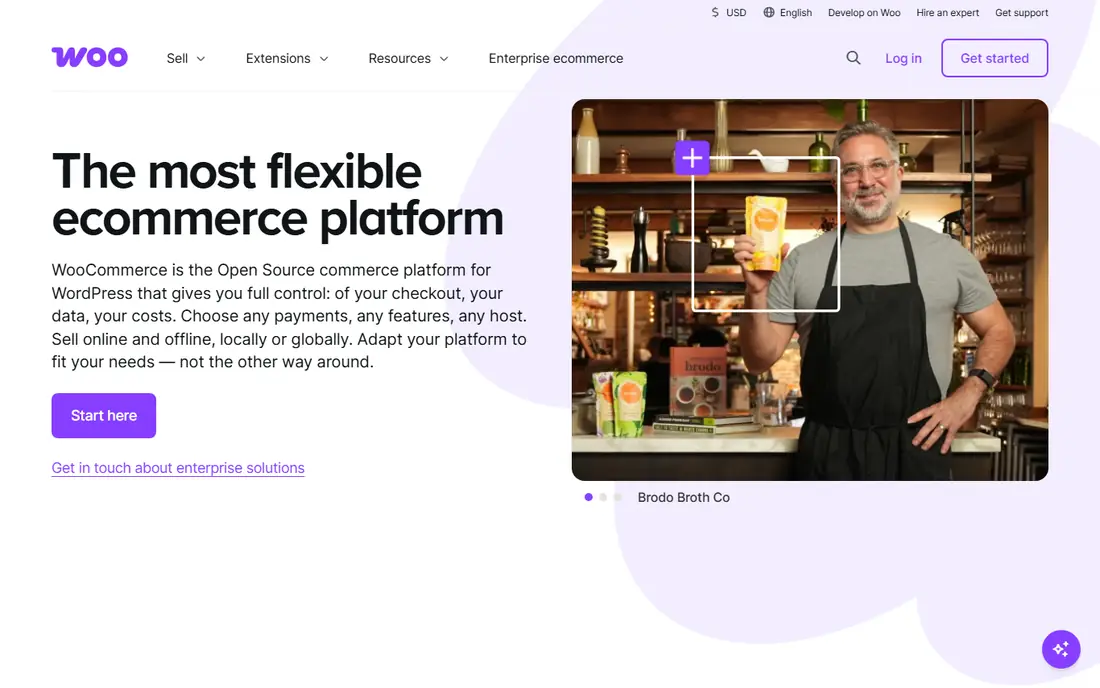
WooCommerce is a free WordPress plugin that turns a WordPress site into a store, and it offers the most SEO flexibility in this list. You control product URLs, categories, metadata, redirects, robots settings and structured data, either directly or through SEO plugins such as Rank Math or Yoast SEO. Because the store sits on WordPress, blogging and content marketing live in the same system as products, which helps for stores that rank through guides, comparisons and category content.
That control comes with ownership. You choose hosting, manage updates, backups and security, and fix speed issues yourself or with a developer. A slow host or a heavy theme can undo good SEO work, so budget for quality hosting and regular maintenance. For a content-driven store with the skills or help to manage WordPress, WooCommerce repays the effort with the highest SEO ceiling.
- Full URL and metadata control
- WordPress blogging
- Wide SEO plugin choice
- You own hosting, speed and security
- Setup is more technical
- Plugin conflicts can occur

Shopify is a hosted platform that handles hosting, security, SSL and automatic sitemaps, which removes much of the technical work from SEO. Product pages, collections and blog posts support custom titles and descriptions, image alt text and redirects, and a large app ecosystem adds schema, speed and internal linking tools. For a growing direct-to-consumer brand, Shopify offers stable speed and a predictable setup.
The main SEO limit is URL structure. Shopify uses fixed path prefixes, such as products and collections, which cannot be fully removed without workarounds. Faceted navigation and large catalog filtering also need careful app or theme work to avoid duplicate content. Shopify is still a strong SEO choice for most stores, provided you accept those structural limits in exchange for less maintenance.
- Fast hosted platform
- Automatic sitemaps and SSL
- Large SEO app ecosystem
- Rigid URL paths with fixed prefixes
- Advanced SEO needs apps or code
- Blog is simpler than WordPress

BigCommerce is a hosted platform with stronger native SEO controls than Shopify, including more flexible URLs, built-in structured data, automatic sitemaps and robots.txt editing on many plans. That native depth means fewer paid apps are needed for core SEO tasks, which helps mid-market and B2B stores with larger catalogs. Built-in blogging also supports content marketing without a separate system.
The trade-offs are ecosystem and complexity. BigCommerce has fewer third-party apps than Shopify, and its admin and theme system take longer to learn. Lower tiers also have annual sales limits, with a move to a higher tier when sales pass the threshold. For a store that wants managed hosting plus stronger native SEO, BigCommerce is a compelling middle ground.
- Strong native SEO controls
- Editable URLs and robots settings
- Built-in blogging
- Smaller app ecosystem than Shopify
- Learning curve is higher
- Sales limits apply on lower tiers
Adobe Commerce, formerly Magento Commerce, offers maximum SEO control for large, complex stores, with code-level access to URLs, canonical tags, hreflang, sitemaps and layered navigation. It handles large catalogs, multiple stores and B2B pricing rules that smaller platforms struggle with. For an enterprise store with a dedicated team, Adobe Commerce can be tuned precisely for search.
That power comes at a high cost in money and expertise. Adobe Commerce needs developers for setup, maintenance and SEO implementation, and the open source version still needs hosting and support. There is no built-in blog in the core product, so content marketing needs a separate system or extension. Choose Adobe Commerce only when catalog complexity or enterprise needs justify the team and budget.
- Full code-level SEO control
- Advanced catalog and B2B features
- Hreflang and canonical controls
- Needs a development team
- High total cost
- No built-in blog in the core product
Wix eCommerce suits a small store that wants a simple builder with guided SEO tools. The platform offers an SEO checklist, custom titles and descriptions, structured data options, automatic sitemaps and a redirect manager, all inside a visual editor. A small catalog with a clear brand story can rank well on Wix, especially for local and branded searches.
The ceiling appears as a catalog grows. Advanced technical SEO, large-scale filtering and deep customisation are more limited than in WooCommerce or BigCommerce, and moving a store away from Wix later is difficult. For a first store, a local shop or a small creative brand, Wix offers a fast launch with solid SEO basics. For a large catalog built mainly on organic search, a more flexible platform is safer.
- Easy setup
- SEO checklist and tools
- Automatic sitemaps and redirects
- Technical SEO ceiling is lower
- Site speed can vary
- Migration away from Wix is difficult
Squarespace Commerce suits design-led brands and creators who want a beautiful store with solid SEO fundamentals. Templates produce clean markup, pages support custom titles, descriptions and image alt text, and blogging is strong for a hosted builder. SSL and sitemaps are handled automatically, which keeps the technical baseline simple.
The limits are control and scale. Squarespace does not allow direct editing of robots.txt or the sitemap, and schema automation is more limited than in WooCommerce or BigCommerce. Theme scripts can also slow pages if a template is heavy. For a small store where design and content matter more than catalog-scale SEO, Squarespace works well. For a large store with complex filtering, it will feel restrictive.
- Clean templates and metadata editing
- Automatic SSL and sitemaps
- Good blogging
- Cannot edit robots.txt or sitemap directly
- Limited catalog-scale controls
- Script-heavy themes can slow pages
Ecwid is a store widget that adds ecommerce to an existing website, blog or social page, rather than replacing the whole site. That model suits a business that already ranks well on WordPress, Wix or another platform and wants to add products without a migration. Ecwid provides product pages, categories, SEO fields and automatic sitemaps for the store portion, with a free plan for a small catalog.
SEO results depend partly on the host site, because Ecwid inherits the host page structure and speed for embedded stores. Design control is also more limited than in a full platform, and advanced SEO and catalog features need paid plans. Use Ecwid when the existing site already drives traffic and you want to add selling with minimal disruption.
- Free plan available
- Embeds in an existing site
- SEO-friendly product pages
- SEO depends partly on the host site
- Fewer design controls than a full platform
- Advanced features need paid plans
Shift4Shop, formerly 3dcart, offers built-in SEO tools including editable URLs, metadata, sitemaps and structured data, without relying heavily on apps. In some cases, a store using Shift4 payment processing can access a free or lower-cost plan, which changes the value calculation for a new store. Catalog, discount and shipping features are solid for a hosted platform.
Blogging is more basic than in WordPress or Squarespace, and the app ecosystem is smaller than Shopify or BigCommerce. Pricing also depends on the payment processing arrangement, so read the current plan page carefully. For a store that values built-in SEO and is happy with Shift4 processing, Shift4Shop is a practical option worth comparing with BigCommerce.
- Built-in SEO tools
- Free option with Shift4 processing in some cases
- Solid catalog features
- Blogging is basic
- App ecosystem is smaller
- Pricing depends on payment processing choice
How we picked these
We compared official platform pages, pricing pages and SEO documentation, and kept platforms that are actively sold in the US in October 2026 and that support product SEO at scale. We looked for URL control, metadata editing, sitemaps, redirects, structured data, blogging and speed, rather than marketing claims about rankings. Pricing changes often, so we used See website where plan prices differ by billing period or sales tier.
We also weighed the maintenance trade-off. A platform with full control helps only if you can maintain it, while a hosted platform helps only if its limits do not block your catalog or content plan. Each pick above notes who it suits and where the ceiling sits, so you can choose by catalog size, content strategy and technical resources.
How to test SEO before you commit
Check URL, canonical and redirect controls
Start a trial and test three actions: edit a product URL, set a custom canonical tag, and create a 301 redirect from an old URL. If any action is locked, buried or needs a paid app, note that as a real limit. Repeat the test for a category page and a blog post, since product SEO alone is not enough.
Test speed and mobile rendering
Load a product page, a category page and a blog post on mobile and desktop, and check Core Web Vitals in a speed tool. A platform that is fast out of the box saves ongoing optimisation work, while a slow theme or host will need fixes before content can rank well. Test with real product images, not empty demo pages.
Plan content, categories and internal links
Map your main categories, subcategories and blog topics before launch, and plan internal links from blog posts to products and from categories to related guides. A clear structure helps search engines understand the store and helps shoppers find products. Avoid creating thin category pages with no useful content or links.
Frequently asked questions
What is the best ecommerce platform for SEO?
WooCommerce is best for maximum SEO control, especially for content-driven stores on WordPress. BigCommerce is best for strong built-in SEO on a hosted platform, while Shopify is best for reliable technical SEO with less maintenance. The right choice depends on catalog size, content plans and technical resources.
Is Shopify good for SEO?
Yes, Shopify is good for SEO for most stores, with automatic sitemaps, SSL, custom metadata, redirects and a large SEO app ecosystem. Its main limits are rigid URL paths and simpler blogging than WordPress. For a growing brand that wants stable speed and low maintenance, Shopify remains a strong SEO platform.
Is WooCommerce better than Shopify for SEO?
WooCommerce offers more SEO control than Shopify, including full URL, plugin and content flexibility through WordPress. Shopify offers easier maintenance, hosting and speed management. WooCommerce is better when content and technical control are the priority, while Shopify is better when simplicity and reliability matter more.
What is the best SEO ecommerce platform for a small store?
Wix and Squarespace suit small, design-led stores with solid SEO basics and easy setup. Ecwid suits a small store added to an existing site. If organic search will drive most sales as the store grows, WooCommerce or Shopify offer a higher ceiling and a larger app ecosystem for later growth.
How much does an SEO-friendly ecommerce platform cost?
Costs vary widely, from a free WooCommerce plugin plus hosting, to Shopify and BigCommerce plans starting around 39 dollars per month in many 2026 listings, to custom Adobe Commerce pricing. Check the current pricing page, including annual billing, transaction fees and app costs, before you compare totals.
Sources
See where you really rank - block by block
ProMapRanker scans Google Maps across a grid of your service area. Simple monthly plans from $19, white-label on every plan.
Start freeKeep reading
 zoom alternatives
Best Zoom Alternatives in 2026
Compare Zoom alternatives in 2026, with free meeting limits and prices, so you can pick the best alternative to Zoom for your team, class, or community.
Read → which software is best for remote work
Which Software Is Best for Remote Work in 2026
Answering which software is best for remote work, we compare Slack, Zoom, Asana, Notion, Teams and more, with pricing and honest tradeoffs in 2026 now.
Read → which ai tool is best for content writing
Which AI Tool Is Best for Content Writing in 2026
Wondering which ai tool is best for content writing? We compare ChatGPT, Claude, Jasper, Grammarly, and more on price, quality, and best use in 2026 now.
Read →