 ProMapRanker
Best E-Prescribing Software in 2026

Key takeaways
- eNavvi is the best free starting point for non-controlled prescriptions, with EPCS available as a $20 per month add-on.
- MDToolbox-Rx offers the strongest documented safety checks in a standalone tool, from $28 per month billed annually.
- RXNT suits practices that want prescribing inside a wider EHR and billing suite, with EPCS available for an annual fee.
- iPrescribe and DrFirst suit phone-first and enterprise prescribers respectively, while Veradigm and CharmHealth cover budget and EHR-based routes.
- Practice Fusion bundles prescribing into a full EHR, which only makes sense if you also need charts, scheduling and billing.
Quick comparison
| Pick | Great for | Pricing starts at | Free tier | |
|---|---|---|---|---|
 eNavvi | Free non-controlled prescribing | Free | Yes | Visit |
 MDToolbox-Rx | Safety checks standalone | $28 per month | Free trial | Visit |
 RXNT | Prescribing inside a full suite | $665 per year | No | Visit |
 iPrescribe | Phone-first prescribing | $30 per license per month | No | Visit |
 DrFirst Rcopia | Enterprise prescribing | See website | No | Visit |
 Veradigm ePrescribe | Standalone with EPCS | $59 per month | No | Visit |
 Practice Fusion | Prescribing inside an EHR | $199 per provider per month | Free trial | Visit |
 CharmHealth | Prescribing inside a low-cost EHR | $15 per provider per month | Yes | Visit |
The best e-prescribing software
E-prescribing software sends prescriptions to pharmacies electronically, checks for drug interactions and allergies, and, where certified, handles controlled substances through EPCS. The right tool depends on two questions: do you prescribe controlled substances, and do you already pay for an EHR? A standalone tool suits a prescriber without an EHR, while an EHR bundle suits a practice that needs charts and billing too. We compared official feature pages, pricing pages and independent comparisons, and we kept only tools that are live in October 2026.
Software alone does not make a practice compliant. Prescribers must still follow DEA rules for EPCS, state prescribing rules, identity proofing requirements and their own clinical judgment. Check that any tool you choose supports your state, your pharmacy network and your controlled substance workflow before you rely on it.
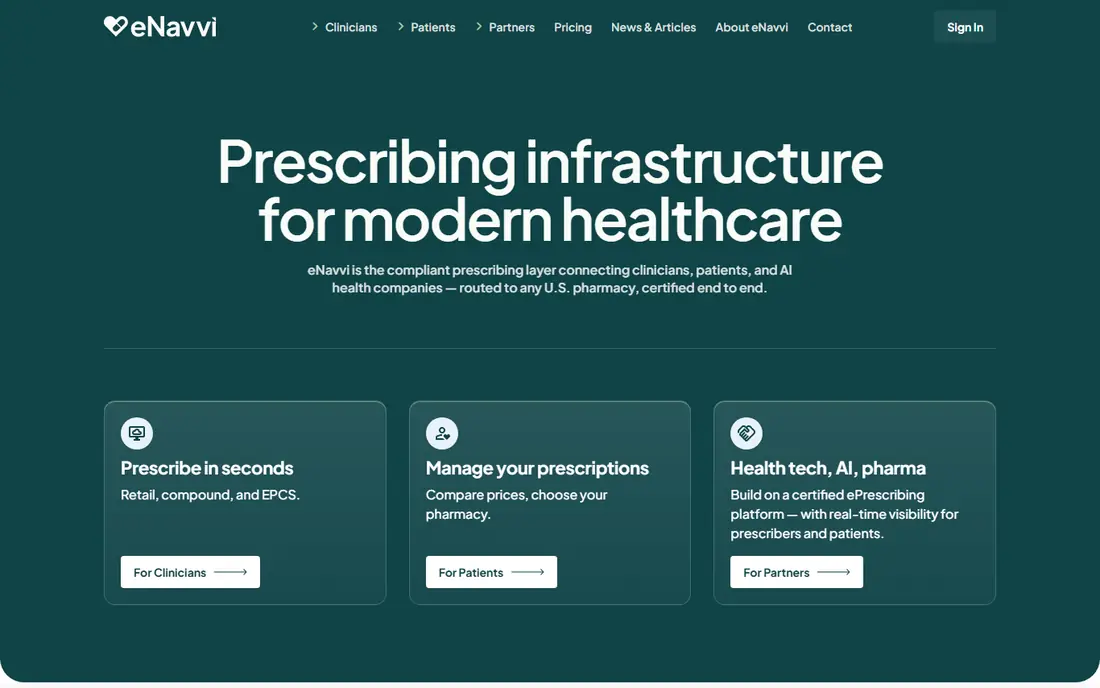
eNavvi is the best place to start if you only send non-controlled prescriptions and want to pay nothing. Its Core plan costs nothing with no time limit, works in any browser, and sends prescriptions through the Surescripts network. For a prescriber without an EHR who writes occasional prescriptions, that free tier removes the main barrier to going electronic.
Controlled substances change the price. EPCS for Schedules II to V costs $20 per month or $200 per year, with a first month as a trial. The honest gap is safety detail: eNavvi publishes little on interaction and allergy checks compared with MDToolbox-Rx, so prescribers who want documented checks should weigh that difference. For simple, low-volume, non-controlled prescribing, though, eNavvi is hard to beat on price.
- Free for non-controlled prescriptions with no time limit
- Works in any browser
- EPCS for Schedules II to V available
- Publishes little detail on interaction checks
- EPCS costs $20 per month or $200 per year
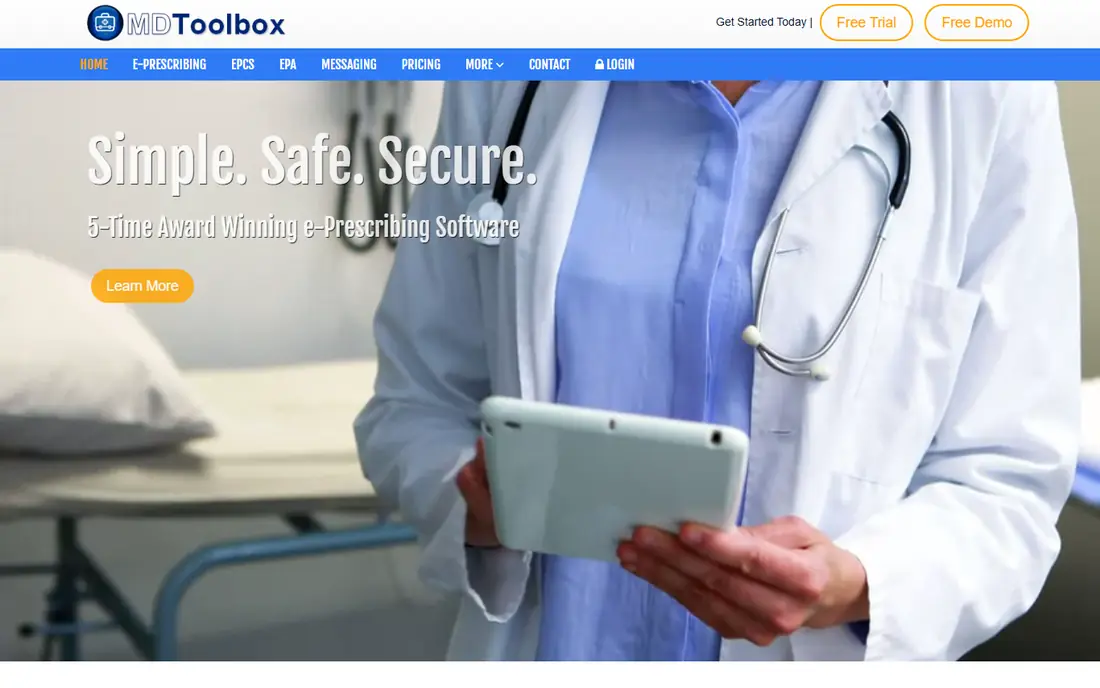
MDToolbox-Rx is the strongest standalone pick for prescribers who want safety checks built into the prescription writer. It is certified for both non-controlled and controlled substance prescribing, and independent comparisons rate its documented safety tools, including interaction checks and prescription drug monitoring program access, above most standalone rivals. It works on its own or synced with an existing EHR, and mobile versions cover on-the-go prescribing.
Pricing is clear: the Pro plan costs $30 per month, or $28 per month billed annually, for non-controlled prescribing, after a 30-day trial. The Complete plan adds EPCS at $38 per month, or $35 per month billed annually. That is more than eNavvi's free tier, but the price buys documented safety tooling and a single tool for both prescription types. For prescribers who want checks they can point to, MDToolbox-Rx is our top standalone pick.
- Strong documented safety tools including interaction and PDMP checks
- EPCS certified
- Works standalone or synced with an EHR
- $28 per month billed annually for non-controlled prescribing
- Complete plan with EPCS costs $35 per month billed annually
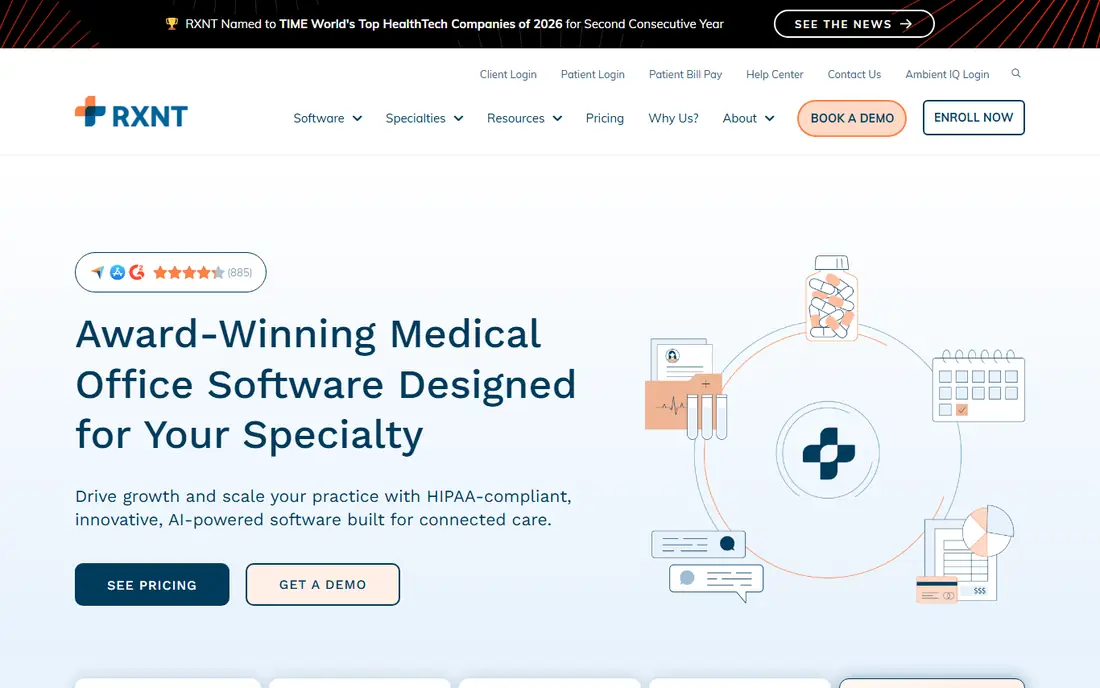
RXNT suits practices that want prescribing as part of a wider system rather than a separate tool. Its e-prescribing module connects with electronic health records, practice management, billing, scheduling and a patient portal, so a prescription flows from the chart rather than from a disconnected app. It is DEA-certified for EPCS, offers automated interaction and allergy checks, and includes mobile apps for iOS and Android.
Standalone e-prescribing is listed at $665 per provider per year, while the EHR Bundle starts at $126 per provider per month and the Full Suite at $335 per provider per month, with EPCS adding $85 per user per year on some plans. That total only makes sense if you use the wider suite. A solo prescriber without an EHR should start with eNavvi or MDToolbox-Rx instead, and only move to RXNT when charts and billing matter too.
- E-prescribing inside a full EHR, billing and scheduling suite
- DEA-certified for EPCS
- Mobile apps included
- Full Suite costs far more than standalone prescribing
- EPCS adds $85 per user per year on top of some plans
iPrescribe is built for prescribers who work from a phone. Its iOS and Android apps let you write and send prescriptions from anywhere, and EPCS is included in the base plan rather than sold as a separate add-on. It works standalone without an EHR, which suits prescribers who need mobility more than a full chart system.
Pricing starts at $30 per license per month billed annually, with desktop access on a $50 plan. That is competitive for a tool with EPCS included, but check two details before you commit: whether desktop access matters to your workflow, and whether its pharmacy network covers the pharmacies your patients actually use. For a phone-first prescriber who writes controlled substances, iPrescribe is a strong, simple pick.
- EPCS included in the base plan
- Built for iOS and Android
- Works standalone without an EHR
- $30 per license per month billed annually
- Desktop access needs a higher $50 plan
- Network detail is less published than Surescripts rivals
DrFirst Rcopia is the enterprise-grade option here. It offers medication history, real-time prescription benefit checks, strong security and identity proofing for EPCS, and integrations with many EHR and practice systems. Large practices and health systems value that depth, especially where benefit checks at the point of prescribing save patients money and reduce pharmacy callbacks.
The drawback for small practices is price transparency. Rcopia is priced by custom quote, with no published price list, and third-party estimates put its range far above standalone tools. A small practice should get a written quote that itemizes licenses, implementation, training and support before comparing it with RXNT or MDToolbox-Rx. If you run a larger organization and need deep integration, Rcopia earns its place. If you are solo, start cheaper.
- Deep medication history and real-time benefit checks
- Strong security and identity proofing
- Wide EHR integrations
- Custom quote pricing with no published price list
- Total cost can be high for small practices
- No free trial published
Veradigm ePrescribe, formerly Allscripts ePrescribe, offers standalone electronic prescribing that works without buying a full EHR. It routes prescriptions through the Surescripts network and lists EPCS within its $59 per prescriber per month plan, which simplifies budgeting for prescribers who write controlled substances. That standalone route suits practices that already have charts elsewhere and only need prescribing.
The price is the honest objection. At $59 per month, Veradigm costs more than MDToolbox-Rx Complete or iPrescribe for similar core prescribing, and its plan includes sponsored messages, which some prescribers dislike. Its value shows for practices that already use Veradigm systems or need its specific integrations. For a new standalone buyer, MDToolbox-Rx or iPrescribe will usually cost less for the same core job.
- Standalone prescribing without an EHR
- EPCS included in the listed plan
- Surescripts network routing
- $59 per prescriber per month is higher than MDToolbox-Rx or iPrescribe
- Sponsored messages are part of the plan
Practice Fusion bundles e-prescribing into a cloud-based EHR aimed at solo and small practices. Templates, scheduling, lab connectivity and a patient portal sit beside prescribing, and EPCS is included in the subscription, so a practice gets one system for charts and prescriptions together. A two-week trial lets you test the workflow before committing.
The price decides the fit. At $199 per provider per month with an annual commitment, Practice Fusion is far costlier than any standalone tool here, and it only makes sense if you actually need the EHR. A prescriber who only needs to send prescriptions should not pay EHR prices for that job. A small practice that needs charts, prescribing and billing in one simple system will find Practice Fusion easier to run than a patchwork of tools.
- Prescribing inside a simple, template-based EHR
- Patient portal and lab connectivity included
- EPCS included
- $199 per provider per month with an annual commitment
- Prescribing only makes sense if you also need the EHR
CharmHealth offers the lowest-cost EHR route to prescribing on this list. Its EHR has a free plan, and e-prescribing is available as a $15 per provider per month add-on, with EPCS bundled at $250 per provider per year including e-prescribing. That structure suits new or low-volume practices that want charts and prescribing together without a large monthly bill.
The limit is that prescribing requires the CharmHealth EHR, so it cannot serve as a standalone writer beside another chart system. Practices should also confirm that the EHR workflow, templates and integrations fit their specialty before committing, since a low price helps little if daily charting slows you down. For a new practice that wants one low-cost system, CharmHealth is the best budget EHR pick here.
- E-prescribing add-on at $15 per provider per month
- Free EHR plan available
- EPCS bundle at $250 per provider per year
- Prescribing requires the CharmHealth EHR, so it is not standalone
- EPCS pricing is separate from the base add-on
How we picked these
We searched for e-prescribing software that is live in October 2026, then checked each one against its official site and independent comparisons of free and paid prescribing tools. We kept tools that send real prescriptions through a pharmacy network, support EPCS where claimed, and publish enough detail to verify their pricing and workflow. Where a vendor did not publish a price, we wrote See website instead of guessing. We kept a mix of free standalone tools, paid standalone tools, EHR bundles and enterprise options, because a solo prescriber and a multi-provider practice need different systems.
What to check before you choose
Start with the two questions that sort this list. First, do you prescribe controlled substances? If not, eNavvi's free tier may be all you need. If you do, compare EPCS pricing directly: eNavvi at $20 per month, MDToolbox-Rx Complete at $35 per month billed annually, iPrescribe with EPCS included, and the EHR bundles with their own EPCS fees. Second, do you already have an EHR? If yes, a standalone tool or an integration with that EHR beats buying a second chart system.
Next, verify the practical details. Confirm that the tool supports your state rules, your pharmacy network and your identity proofing route for EPCS, and ask for a written quote that lists licenses, onboarding, transaction costs and renewal terms. Finally, test the workflow with real prescription types you write often, including refills, controlled substances and prior authorizations, before you move your whole practice onto a new system.
Frequently asked questions
What is the best e-prescribing app?
For standalone prescribing, MDToolbox-Rx is our top pick for its documented safety checks and clear pricing, while eNavvi is the best free option for non-controlled prescriptions. For prescribing inside a wider system, RXNT suits growing practices and CharmHealth suits budget practices. The best app depends on whether you prescribe controlled substances and whether you need an EHR.
Is there free e-prescribing software?
Yes. eNavvi offers free prescribing for non-controlled substances with no time limit, and CharmHealth offers a free EHR plan with prescribing as a paid add-on. Doximity Prescribe also offers free prescribing for verified US clinicians through a different network. Free tiers suit low-volume, non-controlled prescribing, while controlled substances usually need a paid EPCS plan.
What is EPCS, and do I need it?
EPCS stands for electronic prescribing of controlled substances. It is the certified workflow for sending prescriptions for controlled drugs electronically, with identity proofing and two-factor authentication. You need it if you prescribe controlled substances electronically. If you only prescribe non-controlled drugs, a free tool like eNavvi may be enough, but check your state rules first.
Can I use e-prescribing software without an EHR?
Yes. eNavvi, MDToolbox-Rx, iPrescribe and Veradigm ePrescribe all work standalone, without requiring an EHR. RXNT, Practice Fusion and CharmHealth bundle prescribing inside an EHR, so they suit practices that want charts and prescribing together. Choose standalone if you already have charts elsewhere, and choose a bundle if you need a new chart system too.
How much does e-prescribing software cost?
Standalone tools run from free for non-controlled prescribing to $59 per prescriber per month, with EPCS add-ons from $20 per month. EHR bundles run from $15 per provider per month for CharmHealth prescribing to $199 per provider per month for Practice Fusion, plus EPCS fees where separate. Always get a written quote that lists licenses, onboarding and renewal terms, since published prices do not always include every cost.
Sources
See where you really rank - block by block
ProMapRanker scans Google Maps across a grid of your service area. Simple monthly plans from $19, white-label on every plan.
Start freeKeep reading
 wpforms alternatives
Best WPForms Alternatives in 2026
We compare 9 wpforms alternatives for WordPress forms, with free and paid options, current pricing notes, and honest limits for small business sites in 2026.
Read → windows task scheduler alternatives
Best Windows Task Scheduler Alternatives in 2026
Looking for Windows Task Scheduler alternatives? We compare 9 schedulers for Windows and cross-platform work, from free tools to enterprise automation.
Read → which ai video service is best
Which AI Video Service Is Best in 2026
which ai video service is best? We compare 10 legitimate AI video services on price, avatars, editing and output quality to help you pick the right tool.
Read →