 ProMapRanker
Best Drop Shipping Companies in 2026

Key takeaways
- Spocket is the strongest pick for US and EU shipping speed, with vetted suppliers and no minimum order quantities.
- DSers and CJdropshipping are the cheapest ways to start, with free tiers that suit beginners testing products.
- AutoDS suits sellers who want automation across many suppliers and marketplaces, rather than a single catalog.
- SaleHoo and Syncee are directories and marketplaces, not single suppliers, so they suit sellers who want to compare many suppliers in one place.
- Shipping time, return handling, and product quality matter more than catalog size. Order samples before scaling any product.
Quick comparison
| Pick | Great for | Pricing starts at | Free tier | |
|---|---|---|---|---|
 Spocket | Fast US and EU shipping | $39.99 per month | Free trial | Visit |
 AutoDS | Automation across many suppliers | $19.90 per month | Free trial | Visit |
 DSers | AliExpress bulk ordering for Shopify | Free | Yes | Visit |
 CJdropshipping | Free sourcing with warehouse options | Free | Yes | Visit |
 Zendrop | Branded US fulfillment | $49 per month | Yes | Visit |
 Syncee | Global supplier marketplace | Free | Yes | Visit |
 SaleHoo | Vetted supplier directory and research | $67 per year | No | Visit |
 Trendsi | Fashion and apparel dropshipping | Free | Yes | Visit |
The best drop shipping companies
We use "company" here to cover suppliers, marketplaces, and software platforms, since dropshipping sellers usually need a mix. Some entries sell products directly, some connect sellers to suppliers, and some automate orders. The right mix depends on whether speed, price, branding, or automation matters most.
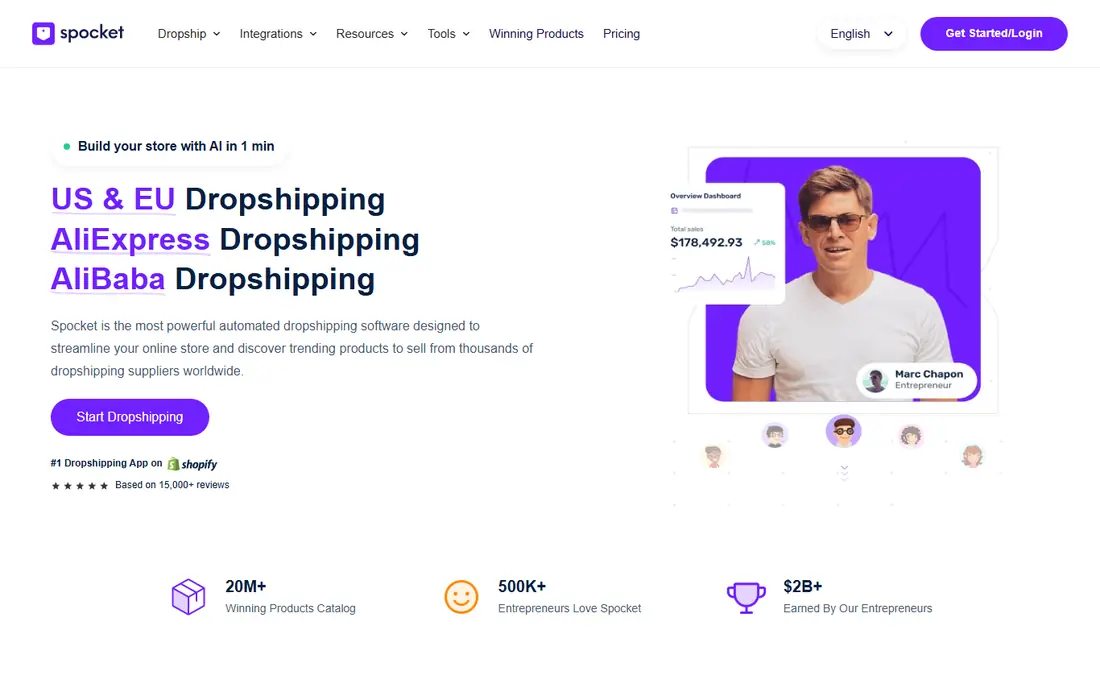
Spocket focuses on quality over sheer catalog size. Suppliers are vetted, many are based in the United States or Europe, and orders can ship in a few days rather than a few weeks. That speed helps with customer satisfaction and reduces "where is my order" messages, which is a real cost for new stores.
The price is the trade off. At $39.99 per month for the Starter plan, Spocket costs more than DSers or CJdropshipping, and some features like branded invoicing sit on higher plans. It is best for stores that sell mid priced products where fast shipping justifies the fee, rather than for testing dozens of low priced items.
- Vetted US and EU suppliers
- No minimum orders
- Branded invoicing on higher plans
- Monthly price is higher than free rivals
- Catalog is smaller than AliExpress based tools
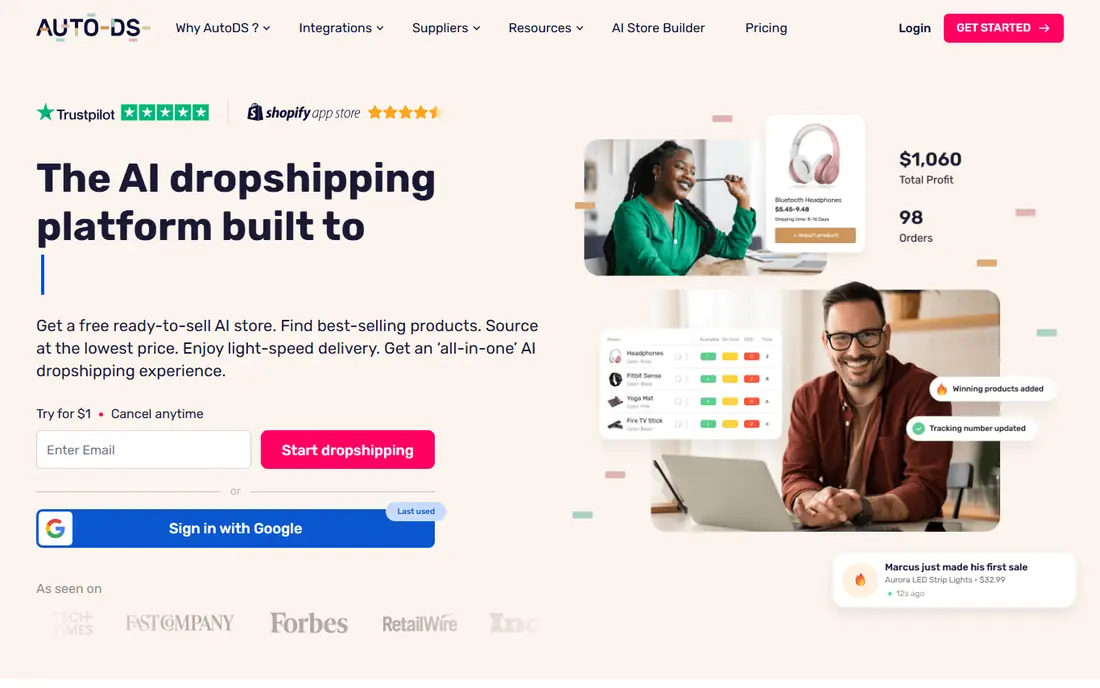
AutoDS is a platform, not a single supplier. It connects a store to many suppliers and marketplaces, then automates price monitoring, inventory sync, and order placement. For sellers managing hundreds of products, that automation can save many hours a week compared with manual ordering.
New sellers should expect setup time. Choosing suppliers, setting pricing rules, and testing fulfillment takes longer than importing a few products from Spocket. AutoDS suits sellers who have validated a product and want to scale, rather than sellers who are still testing their first store idea.
- Automates pricing, stock sync, and order fulfillment
- Supports many marketplaces
- Product research tools
- Learning curve is steeper than a simple catalog app
- Some plans and trial terms vary by store platform
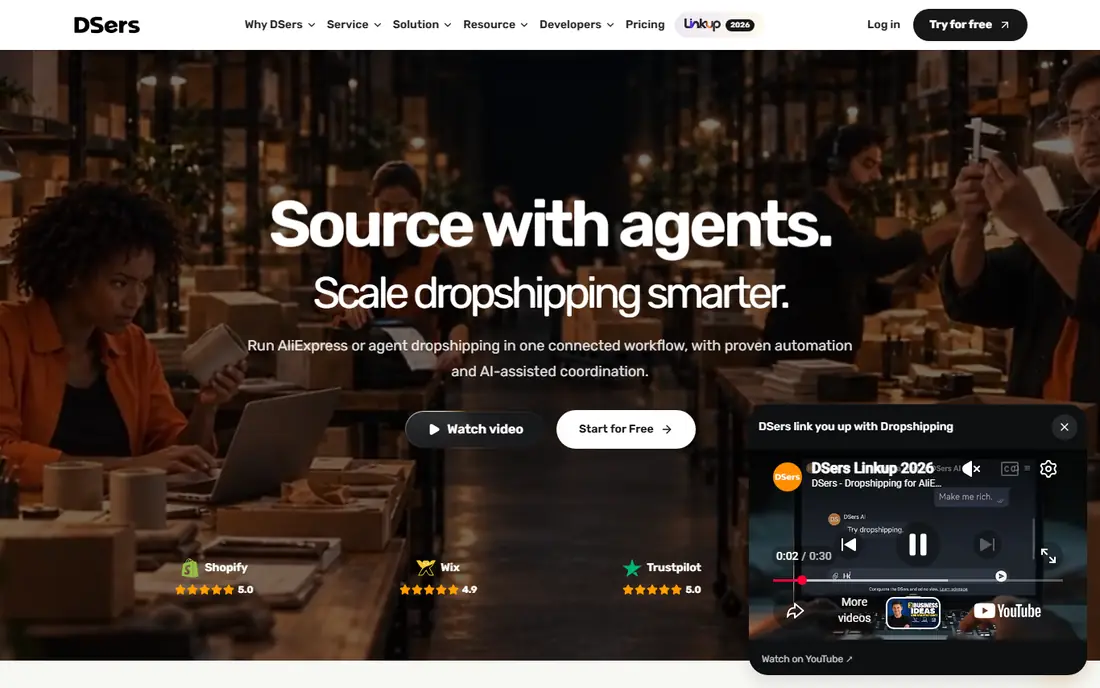
DSers is the official AliExpress partner tool for Shopify, and its strength is bulk handling. Sellers can place hundreds of AliExpress orders at once, map suppliers to products, bundle items, and sync tracking numbers back to their store automatically. The free Basic tier is generous for beginners.
The limit is supply chain reality. AliExpress shipping is often slower than US or EU suppliers, and quality varies by seller, so sample orders and supplier ratings matter. DSers is best for low cost testing and for stores where price matters more than two day delivery.
- Free tier up to 3,000 products
- Bulk order processing
- Automatic tracking sync
- Tied to AliExpress supply chain
- Shipping times are often longer than US suppliers
CJdropshipping combines a product catalog with sourcing and fulfillment services. Sellers can request products not in the catalog, use CJ warehouses in China, the United States, and Europe for faster delivery on stocked items, and add private label packaging on some orders. There is no monthly subscription to join, so costs are mainly product and shipping costs.
Because the catalog is so broad, quality and delivery times vary. Sellers should order samples, confirm warehouse stock before advertising fast shipping, and test customer service response before scaling. For sellers who want sourcing help without a monthly fee, CJdropshipping is a strong option.
- Free to join
- Sourcing, warehousing, and private label services
- US and EU warehouses for some products
- Shipping times vary by product and warehouse
- Quality control needs checking per supplier
Zendrop positions itself between a catalog and a fulfillment partner. It offers its own catalog with US products, custom packaging, and branded invoices, which helps a store look less like a generic dropshipping shop. Coaching tools and support are part of the appeal for beginners who want guidance.
The free plan is limited to browsing, so real fulfillment needs the Pro plan at $49 per month or higher. Sellers should compare that cost with Spocket, which also focuses on US and EU shipping, and choose based on which catalog and branding tools fit their niche.
- US fulfillment options
- White label packaging and custom invoices
- Coaching and support tools
- Catalog is smaller than CJdropshipping
- Pro plan needed for fuller branding features
Syncee is a business to business marketplace that connects retailers with suppliers around the world, including the United States, Europe, and other regions. Sellers can browse products, import them to Shopify or WooCommerce, and sync inventory and orders. The free plan lets a new seller test the marketplace before paying.
As with any marketplace, vetting matters. Check supplier ratings, shipping times, return policies, and minimum order rules before listing a product. Syncee suits sellers who want supplier variety in one place, rather than a single curated catalog.
- Large marketplace with suppliers in many regions
- Free plan to start
- Shopify and WooCommerce integrations
- Supplier quality varies
- Higher plans needed for more products and automation
SaleHoo is different from the tools above because it is mainly a directory and research platform, not an order automation tool. It lists vetted wholesalers and dropshipping suppliers, with research tools to check demand and competition. That helps sellers find suppliers they can contact directly, rather than relying only on one app catalog.
The trade off is work. SaleHoo does not place orders or sync inventory by itself, so sellers still need a store app or manual process for fulfillment. It is best for sellers who want to build direct supplier relationships and who are willing to do outreach, not for sellers who want one click automation.
- Directory of vetted suppliers
- Market research tools
- One time yearly price in some listings
- Directory access is not fulfillment automation
- Some listings show monthly pricing instead of yearly
Trendsi focuses on women's fashion and apparel, with a US warehouse that supports faster shipping than overseas fashion suppliers. Branded invoicing helps a boutique look professional, and the free plan lets sellers test products before committing to the Pro plan at $29.90 per month.
The niche focus is both a strength and a limit. A fashion boutique will find Trendsi more relevant than a general store tool, while a general store will need another supplier for non fashion items. Check sizing, return rates, and restock speed, since fashion returns are higher than many other categories.
- US warehouse for fashion
- Branded invoicing
- Free plan to start
- Fashion only, so not suited to general stores
- Pro plan needed for fuller features
How we picked these
We compared official pricing pages, supplier descriptions, and recent dropshipping comparisons from October 2026. We favored platforms that are still operating in the United States, that publish clear pricing or a real free tier, and that cover different needs: speed, price, automation, branding, and research. We did not claim hands on testing, and we noted where a platform is a directory rather than a fulfillment tool.
How to choose a dropshipping partner
Start with shipping time for your main market. If most buyers are in the United States, a US warehouse or US supplier will usually beat a cheaper overseas option once support messages and refunds are counted. Order a sample of every product you plan to scale, and check packaging, quality, and delivery time yourself.
Next, check returns and support. Ask who handles damaged items, wrong items, and non delivery, and how long refunds take. A supplier with a clear written process is worth more than a supplier with a larger catalog but slow replies.
Finally, watch total cost, not just product price. Add platform fees, shipping, transaction fees, and return costs to get a true margin. A product that looks profitable at a low supplier price can lose money once shipping and refunds are included.
Red flags to avoid
Avoid suppliers who hide shipping times, refuse samples, or require large upfront bulk orders for a first test. Avoid platforms that promise guaranteed sales or income, since no supplier can guarantee that. Check recent reviews for fulfillment problems, and start with a small test order before listing a product widely.
Frequently asked questions
What is the best dropshipping platform for beginners?
DSers and CJdropshipping are strong beginner options because they are free to start and cover a wide product range. Spocket is better for beginners who prioritize fast US shipping and are willing to pay $39.99 per month for vetted suppliers.
What is the best dropshipping company?
There is no single best company for every store. Spocket leads for US and EU speed, AutoDS leads for automation, CJdropshipping leads for free sourcing, and SaleHoo leads for finding vetted suppliers directly.
What is the best dropshipping software?
AutoDS and DSers are the most useful software options in this list, because they automate orders, pricing, and tracking. Spocket, Syncee, and Zendrop combine software with a supplier catalog, while SaleHoo is mainly research and directory software.
Is dropshipping still profitable in 2026?
It can be, but margins are tighter than in early dropshipping years because advertising, shipping, and return costs have risen. Profit depends on product choice, shipping speed, customer service, and total costs, not on catalog size alone.
Do I need to hold inventory to dropship?
No. In dropshipping, the supplier ships directly to the customer, so the seller does not hold stock. Some sellers later use a warehouse or third party logistics partner for best sellers, but that is optional and changes the cost model.
Sources
See where you really rank - block by block
ProMapRanker scans Google Maps across a grid of your service area. Simple monthly plans from $19, white-label on every plan.
Start freeKeep reading
 best resource management software
Best Resource Management Software in 2026
We compared the best resource management software for scheduling, capacity and utilization, with current pricing and free trials, to help teams choose well.
Read → best reporting tools
Best Reporting Tools in 2026
Compare the best reporting tools for dashboards, scheduled reports, and business insights, from Power BI and Tableau to Looker Studio for every team size.
Read → best remote support software
Best Remote Support Software in 2026
Looking for the best remote support software? We compare 9 tools on price, security, session controls, and fit for helpdesks, MSPs, and small teams in 2026.
Read →