 ProMapRanker
Best DMCA Takedown Service in 2026


creators and small firms that already know which links to remove · Pricing starts at: $199 per takedown
Key takeaways
- DMCA.com is the clearest choice when you already know the infringing link and want published per-site pricing.
- Red Points and Knockoff suit brands facing copies across many marketplaces or cloned stores.
- Pixsy stands out for photographers, because it finds image uses and handles recovery cases.
- Only file a notice for content you own or are authorized to act on, and keep records of every notice.
Quick comparison
| Pick | Great for | Pricing starts at | Free tier | |
|---|---|---|---|---|
| DMCA.com | creators and small firms that already know which links to remove | $199 per takedown | No | Visit |
 Red Points | brands with widespread counterfeits across marketplaces | See website | No | Visit |
 Knockoff | Shopify stores facing copycat storefronts | $799 per month | No | Visit |
 BrandShield | companies that need online brand and phishing protection | See website | No | Visit |
 Muso | media and content owners tracking piracy at scale | See website | No | Visit |
 Takedown Piracy | creators who need piracy takedowns without a large platform | See website | No | Visit |
 Pixsy | photographers who want image theft detection and recovery | Free plan for a limited number of images | Yes | Visit |
 Bolster | firms that need fast detection plus takedown workflows | See website | No | Visit |
The best DMCA takedown services
A DMCA takedown service can save hours of writing notices and chasing hosts, but the right service depends on a simple question: do you already know where the copy is, or do you need someone to find it? The services below split along that line, from per-case filing to ongoing detection across marketplaces and websites.
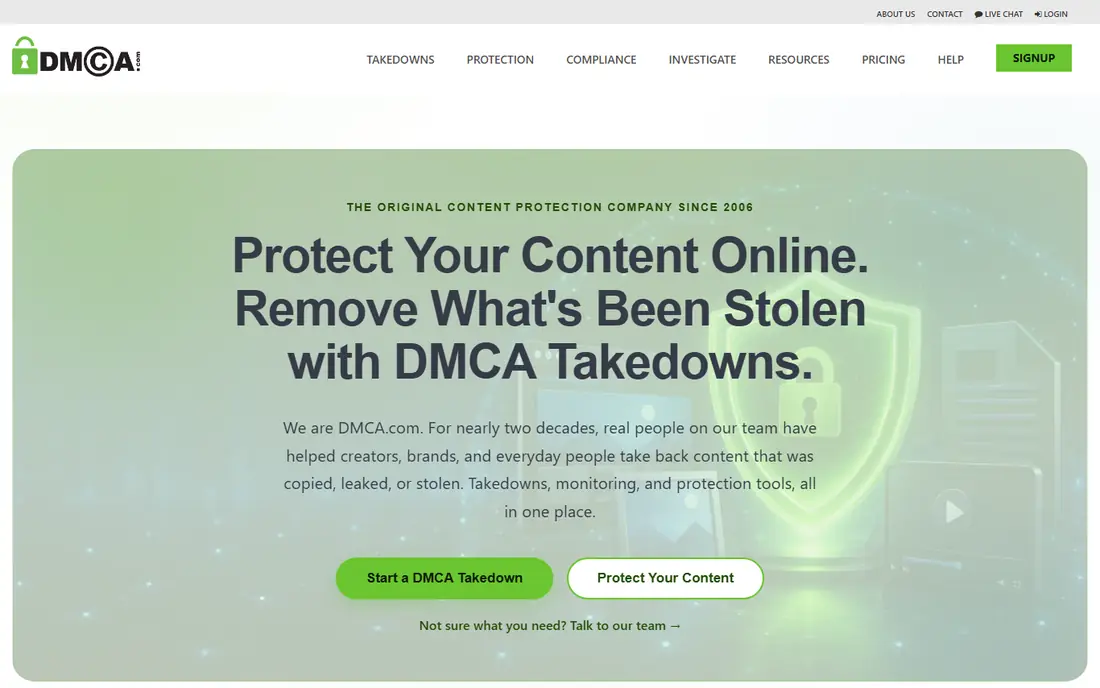
For many owners, DMCA.com is the first service worth a close look because it covers creators and small firms that already know which links to remove without forcing a long contract. DMCA.com handles takedown notices for copied sites, articles, photos, and products, with a team that writes and follows up on notices. Its published pricing makes it one of the easiest services to budget for a single case, and the DIY toolkit suits owners who want to file themselves. That combination helps when you are comparing several options at once, because you can judge the service on what it actually does rather than on a long list of promises.
The honest catch is that it does not find infringing copies for you in its core service, so you need to supply the URLs first. Before you commit, check the current pricing page and the terms that apply to your state, plan size, or order volume. If that limit fits how you work, DMCA.com can be a steady choice. If it does not, use it as a benchmark and compare the next option on this list against it.
- Published per-site pricing
- DIY toolkit option
- Human-reviewed cases
- No automated discovery in the core service
- You must supply the infringing links
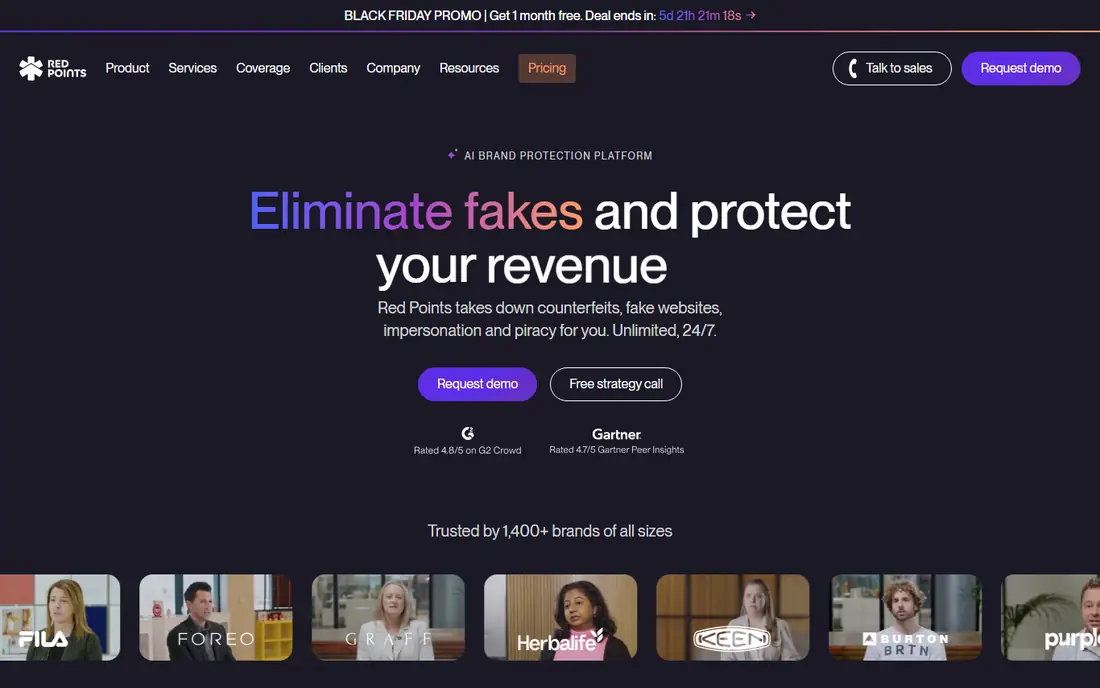
If brands with widespread counterfeits across marketplaces is your main need, Red Points deserves a spot near the top of your shortlist. Red Points monitors marketplaces and websites for counterfeits and infringing listings, then files takedowns and reports results. Its scale suits brands that face copies across many marketplaces at once and need ongoing monitoring, not a one-off notice. That combination helps when you are comparing several options at once, because you can judge the service on what it actually does rather than on a long list of promises.
The honest catch is that small brands may find the price hard to justify until counterfeits reach a serious volume. Before you commit, check the current pricing page and the terms that apply to your state, plan size, or order volume. If that limit fits how you work, Red Points can be a steady choice. If it does not, use it as a benchmark and compare the next option on this list against it.
- Automated detection
- Marketplace takedowns
- Brand protection reporting
- Pricing is largely quote-based
- Costs can be high for small brands
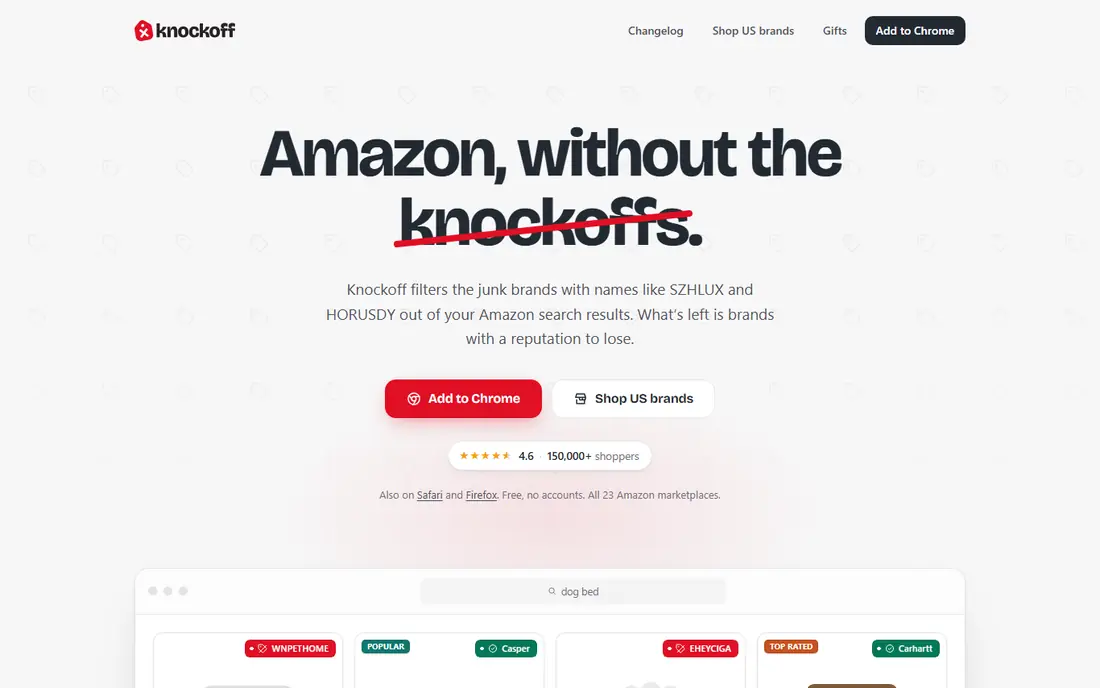
Knockoff stands out for Shopify stores facing copycat storefronts, and it is easy to see why it keeps showing up in landlord and owner conversations. Knockoff finds copycat stores and listings, then sends notices as your authorized agent across Shopify, marketplaces, and lookalike sites. For a store that keeps getting cloned, daily detection plus agent filing can save hours of manual searching and follow-up. That combination helps when you are comparing several options at once, because you can judge the service on what it actually does rather than on a long list of promises.
The honest catch is that the monthly cost is steep if you only face an occasional copied listing. Before you commit, check the current pricing page and the terms that apply to your state, plan size, or order volume. If that limit fits how you work, Knockoff can be a steady choice. If it does not, use it as a benchmark and compare the next option on this list against it.
- Daily detection
- Acts as authorized agent
- Covers marketplaces and lookalike sites
- Monthly price is high for a single store
- Best for stores with active copycat problems
BrandShield
Great for: companies that need online brand and phishing protection
Start with BrandShield when companies that need online brand and phishing protection matters more than having every extra feature in one place. BrandShield monitors for brand misuse, phishing sites, and impersonation, with takedown workflows for confirmed cases. Its phishing and impersonation coverage suits firms where a fake site or social profile can harm customers, not just sales. That combination helps when you are comparing several options at once, because you can judge the service on what it actually does rather than on a long list of promises.
The honest catch is that smaller firms may find the enterprise focus and quote-based pricing heavier than needed. Before you commit, check the current pricing page and the terms that apply to your state, plan size, or order volume. If that limit fits how you work, BrandShield can be a steady choice. If it does not, use it as a benchmark and compare the next option on this list against it.
- Brand monitoring
- Phishing and impersonation detection
- Takedown workflows
- Pricing is quote-based
- Setup can be involved for small teams
Owners who need media and content owners tracking piracy at scale often land on Muso after comparing the simpler options first. Muso tracks pirated content across sites and search, giving media owners data on where copies appear and how takedowns progress. For publishers and studios, the value is in seeing piracy patterns across many titles, not just filing one notice. That combination helps when you are comparing several options at once, because you can judge the service on what it actually does rather than on a long list of promises.
The honest catch is that individual creators may find the platform and pricing geared toward larger catalogs. Before you commit, check the current pricing page and the terms that apply to your state, plan size, or order volume. If that limit fits how you work, Muso can be a steady choice. If it does not, use it as a benchmark and compare the next option on this list against it.
- Piracy monitoring
- Demand and takedown data
- Content protection tools
- Pricing and onboarding suit larger content owners more than individual creators
Takedown Piracy
Great for: creators who need piracy takedowns without a large platform
Takedown Piracy is a practical pick for creators who need piracy takedowns without a large platform, especially when you want a clear process and a predictable bill. Takedown Piracy focuses on removing pirated content for creators and rights holders, with per-case handling and removal reporting. It suits creators who want a focused takedown service rather than a full brand protection suite. That combination helps when you are comparing several options at once, because you can judge the service on what it actually does rather than on a long list of promises.
The honest catch is that owners should confirm pricing and scope for their exact content type before starting a case. Before you commit, check the current pricing page and the terms that apply to your state, plan size, or order volume. If that limit fits how you work, Takedown Piracy can be a steady choice. If it does not, use it as a benchmark and compare the next option on this list against it.
- Piracy takedown focus
- Per-case handling
- Reporting on removals
- Published pricing is limited
- Scope varies by case type
When photographers who want image theft detection and recovery is the priority, Pixsy offers a focused route that avoids a lot of extra setup. Pixsy uses reverse image search to find uses of a photographer's images, then helps with takedowns or recovery for commercial misuse. For photographers, the combination of detection and recovery is the draw, because many image thefts would otherwise go unnoticed. That combination helps when you are comparing several options at once, because you can judge the service on what it actually does rather than on a long list of promises.
The honest catch is that free detection covers a limited image count, and recovery cases involve a share of any amount recovered. Before you commit, check the current pricing page and the terms that apply to your state, plan size, or order volume. If that limit fits how you work, Pixsy can be a steady choice. If it does not, use it as a benchmark and compare the next option on this list against it.
- Reverse image search
- Image theft detection
- Recovery cases for commercial misuse
- Takedown-only use is limited
- Recovery cases share a portion of any recovery
For firms that need fast detection plus takedown workflows, Bolster is worth testing early, because its strengths line up well with that use case. Bolster combines detection with takedown workflows for brand misuse, phishing, and infringing content. Its speed suits teams that face frequent new copies and need to act quickly across many sites. That combination helps when you are comparing several options at once, because you can judge the service on what it actually does rather than on a long list of promises.
The honest catch is that small firms with only occasional cases may not need a full detection platform. Before you commit, check the current pricing page and the terms that apply to your state, plan size, or order volume. If that limit fits how you work, Bolster can be a steady choice. If it does not, use it as a benchmark and compare the next option on this list against it.
- AI detection
- Takedown workflows
- Brand and phishing coverage
- Pricing is quote-based
- Platform suits teams with ongoing risk
How we picked these
We compared official feature pages, pricing pages, and public plan details, and we kept only services that are still offered and that fit the topic directly. We checked who pays, what is included at the entry price, and where the limits sit, because those details change the real cost more than a headline price. We did not claim hands-on testing we did not do. Where a price could not be confirmed on a vendor page in this check, we wrote See website instead of guessing.
How to choose a takedown service
Start by listing what was copied, where it appears, and whether you own the rights or act for the owner. If you have the links, a per-case filing service is usually enough. If copies keep appearing, you need detection and ongoing monitoring. Before you pay, ask who signs the sworn statement, what happens if a host ignores the notice, whether search removal is included, and how results are reported. Keep copies of your original work, publication dates, and every notice you send. Before you sign up, run one real case through the service, from signup to the final report, bill, or delivery, and note every fee that appears. That single test usually tells you more than a long feature list. Keep your criteria written down, compare the same three points across every option, and pick the service that fits your normal week, not just your busiest week.
Frequently asked questions
What is the best dmca takedown service for a single copied article?
DMCA.com suits a single known case, because pricing is published per site and you supply the link. If you do not know where copies are, a detection service is a better first step.
Are there good best dmca takedown services for marketplace counterfeits?
Yes, Red Points and Knockoff focus on marketplace and copycat store problems. Compare whether they cover your exact marketplaces and whether pricing is monthly or per case.
Do I need to own the copyright to file a DMCA notice?
You generally need to be the rights holder or their authorized agent, and the notice includes a sworn statement. Filing a false notice can create legal risk, so check ownership before you file. This article is general information, not legal advice.
How long does a DMCA takedown take?
Timing varies by host and platform. Some cases resolve in days, while difficult hosts or platforms with multi-step systems take longer. Ask the service how it follows up when a host does not respond.
Can a takedown service remove content from search results too?
Some services include search removal for qualifying cases, while others focus on the host site. Confirm whether search removal is included before you pay, because it is often a separate step.
Sources
See where you really rank - block by block
ProMapRanker scans Google Maps across a grid of your service area. Simple monthly plans from $19, white-label on every plan.
Start freeKeep reading
 wpforms alternatives
Best WPForms Alternatives in 2026
We compare 9 wpforms alternatives for WordPress forms, with free and paid options, current pricing notes, and honest limits for small business sites in 2026.
Read → windows task scheduler alternatives
Best Windows Task Scheduler Alternatives in 2026
Looking for Windows Task Scheduler alternatives? We compare 9 schedulers for Windows and cross-platform work, from free tools to enterprise automation.
Read → which ai video service is best
Which AI Video Service Is Best in 2026
which ai video service is best? We compare 10 legitimate AI video services on price, avatars, editing and output quality to help you pick the right tool.
Read →