 ProMapRanker
Best Delivery Apps to Make Money in 2026

Key takeaways
- Pay varies a lot by market, hours, demand and vehicle costs, so no app guarantees a set hourly income.
- DoorDash offers the most order volume in many areas, while Amazon Flex offers set price blocks for package delivery.
- Grocery apps such as Instacart and Shipt pay per batch, which suits shoppers who like larger, slower orders.
- Track fuel, maintenance and taxes, since gross pay on screen is not take home pay.
- We compared official driver pages and public driver earnings reports, and we did not claim hands on testing we did not do.
Quick comparison
| Pick | Great for | Pricing starts at | Free tier | |
|---|---|---|---|---|
 DoorDash | Most order volume | Free | Yes | Visit |
 Uber Eats | Flexible food delivery | Free | Yes | Visit |
 Instacart | Grocery shopping batches | Free | Yes | Visit |
 Amazon Flex | Set price package blocks | Free | Yes | Visit |
 Grubhub | Scheduled food delivery | Free | Yes | Visit |
 Shipt | Retail and grocery orders | Free | Yes | Visit |
 goPuff | Local warehouse orders | Free | Yes | Visit |
 Roadie | Larger and longer deliveries | Free | Yes | Visit |
 Favor Delivery | Texas focused delivery | Free | Yes | Visit |
The best delivery apps to make money
We compared delivery apps open to US drivers and shoppers, looking at order types, pay structure, flexibility and costs. All of these apps are free to join, but pay depends on your market, hours and demand, so treat any hourly figure as a range, not a promise.
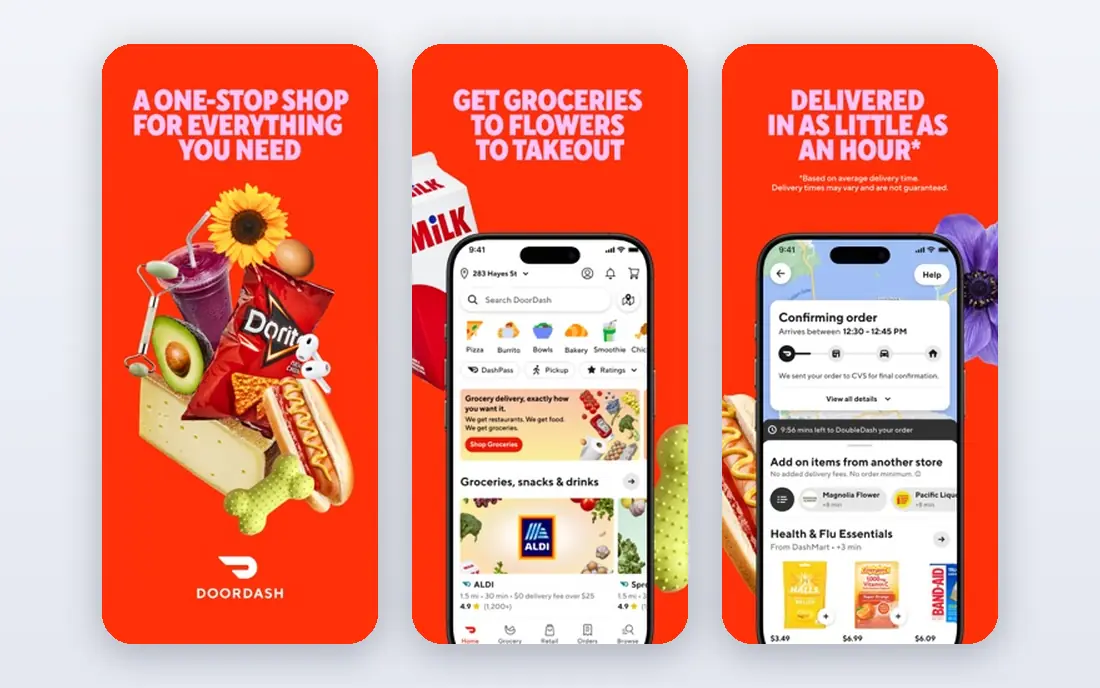
DoorDash is the easiest place to find orders in many US cities, thanks to its large restaurant network. Drivers can dash when they want in many markets, accept or decline offers, and earn tips in full on top of base pay. Peak pay and challenges add bonuses during busy times.
Volume does not always mean high pay per order. Base pay can be low, and drivers need to weigh distance, wait time and fuel before accepting. Tracking miles and expenses matters, since gross earnings hide real costs. For steady volume, DoorDash remains the default starting point.
- Widest restaurant coverage in many areas
- Flexible scheduling
- Frequent promotions
- Base pay per offer can be low
- Pay varies by market
- Wear on your vehicle adds up
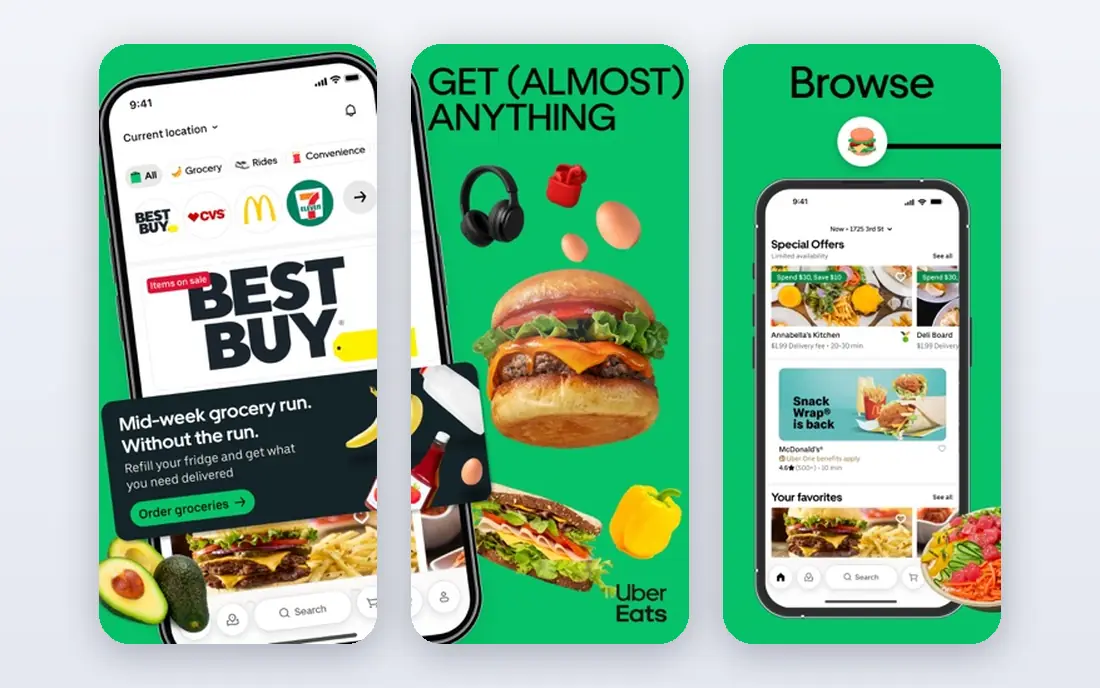
Uber Eats suits drivers who want flexibility and, in some cities, the option to switch between food delivery and rides. The app shows upfront fare details including tips before acceptance in many markets, which helps drivers judge an order. Bike, scooter and foot delivery options exist in some cities.
Pay still varies by market, hour and demand, and surge pricing is not reliable income. Drivers who already use Uber for rides may find the combined app convenient. New drivers should test a few shifts at different times before judging earnings.
- Works alongside Uber rides in some markets
- Upfront fare details
- Bike and foot options in some cities
- Pay varies by time and distance
- Surge is unpredictable
- Support can be slow
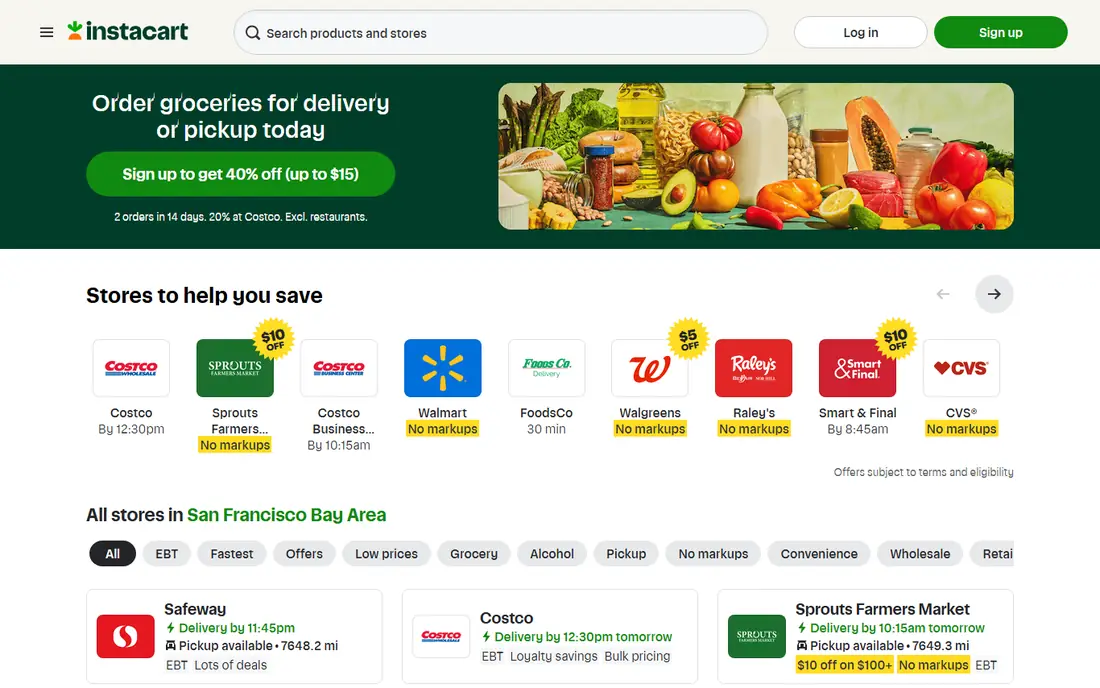
Instacart pays shoppers to pick groceries and deliver them, which suits people who prefer fewer, larger jobs over many small restaurant runs. Full service shoppers handle shopping and delivery, while delivery only roles suit drivers who prefer drop offs. Batch details, including items and pay, show before acceptance.
Shopping time is the catch. A large batch with many items, substitutions and store queues can take far longer than the estimate. Pay per batch varies by market and demand, so hourly earnings depend on speed and batch choice. Good shoppers learn which stores and batch sizes suit them.
- Larger batches can pay more per order
- Shoppers keep tips
- Flexible batch choice
- Shopping takes longer than drop off delivery
- Batch pay varies
- Heavy orders and store waits add time
Amazon Flex lets drivers reserve delivery blocks at a set price, which gives clearer earnings for that block than per order food apps. Work involves picking up packages from a station and delivering along a route, with no restaurant waits. Some delivery types include tips on top of block pay.
Blocks are competitive in many areas, and drivers need a four door mid size car or larger. Flexibility is lower, since you commit to a block window rather than logging on at any minute. For drivers who like planned shifts and package work, Flex is a strong pick.
- Block price shown before acceptance
- Package work avoids restaurant waits
- Tips on some delivery types
- Blocks can be hard to get
- Need a larger vehicle
- Schedule is less flexible than food apps
Grubhub suits drivers who like scheduled blocks and a more structured shift. Drivers can claim blocks in advance, earn base pay based on mileage, order type and time, and keep tips in full. Mission bonuses reward completing a set number of deliveries in a period.
Volume is the limit. In many cities, Grubhub has fewer orders than DoorDash or Uber Eats, so idle time can eat into earnings. It works best as a second app alongside a higher volume option, or as a main app in markets where Grubhub is strong.
- Scheduled blocks in many markets
- Drivers keep tips
- Mission bonuses for completing goals
- Order volume is lower than DoorDash in many areas
- Pay details vary
- Availability varies by city
Shipt shoppers deliver groceries and retail orders, including from partners such as Target in many markets. Order pay reflects estimated time and effort, and shoppers keep tips in full. The mix of grocery and retail orders gives variety compared with food only apps.
Market coverage is uneven, and some areas offer far fewer orders than others. Shopping time, substitutions and store queues can also stretch an order. Shipt suits shoppers in well covered markets who like retail variety and larger orders.
- Retail partners beyond groceries
- Shoppers keep tips
- Order pay reflects time and effort
- Availability varies by market
- Shopping time can be long
- Pay estimates vary
goPuff drivers deliver snacks, drinks and everyday items from local warehouses, rather than restaurants or grocery stores. Trips tend to be shorter in served areas, since the warehouse is central, and scheduled shifts give some structure. Tips add to base pay.
Coverage is the main limit, since goPuff only serves certain cities and neighbourhoods. Pay and shift availability vary by market, so drivers outside served areas cannot use it at all. In a served city, it is a useful extra app for short, local runs.
- Orders picked from local warehouses
- Shorter trips in many areas
- Scheduled shifts available
- Coverage is limited to served cities
- Pay varies by market
- Shift availability can be tight
Roadie focuses on deliveries that do not fit a food app, from large items to longer distance gigs. Drivers choose gigs that fit their vehicle and schedule, and pay per gig can be higher than a single restaurant order. It suits drivers with trucks, SUVs or vans who want occasional larger jobs.
Frequency is lower than food delivery, so Roadie works better as a second app than a sole income source. Longer trips also mean higher fuel and wear costs, which should be factored into each gig. For the right vehicle and market, it adds useful variety.
- Larger items and longer gigs pay more per delivery
- Flexible gig choice
- Good for drivers with larger vehicles
- Gigs are less frequent than food orders
- Need a suitable vehicle
- Longer trips mean higher fuel costs
Favor Delivery, known as Favor, serves Texas cities with food, grocery and everyday item delivery. Runners choose when to work and pick up varied orders, which suits drivers in Texas who want local work. Tips add to per delivery pay.
The limit is geography. Favor does not operate nationwide, so it only helps drivers in its Texas markets. Pay per delivery can also be low for short runs, so runners need to judge distance and tips carefully. In its home markets, it is a solid local option.
- Strong in Texas markets
- Varied orders beyond food
- Flexible runner schedule
- Limited to Texas areas
- Pay per delivery can be low
- Volume varies by city
How we picked these
We compared official driver and shopper pages for US delivery apps, plus public driver earnings reports and pay structure details. We weighed order volume, pay clarity, flexibility, vehicle needs and market coverage. We excluded rideshare only apps and apps with no clear US driver program, and we avoided earnings promises, since pay varies by market, hours and demand.
What to check before you sign up
Start with costs, not gross pay. Track miles, fuel, maintenance, insurance and phone costs for a month, and subtract them from gross earnings to see real take home pay. Set aside money for taxes, since gig income is usually self employment income in the US.
Next, test two apps in your market for two weeks. Compare orders per hour, idle time, tips and distance, not just the highest single order. A high volume app with short trips can beat a high pay app with long waits, once costs are counted.
Finally, check requirements for your area. Age, vehicle, background check and insurance rules vary by app and state. Read the driver agreement for pay, tips, deactivation rules and support options before your first shift.
Frequently asked questions
What is the best delivery app to make money?
DoorDash offers the most volume in many areas, Amazon Flex offers clearer block pay, and Instacart offers larger grocery batches. The best app depends on your market, vehicle and schedule. Test two apps for two weeks and compare net pay after costs.
Which delivery app pays the most per hour?
Pay reports vary by source and market, and no single app leads everywhere. Amazon Flex blocks, Grubhub scheduled work and Instacart batches can pay well in some markets, while DoorDash volume helps in others. Treat published hourly figures as ranges, since your market, hours and vehicle costs change the result.
Can you make money with DoorDash and Uber Eats together?
Many drivers run two apps and switch based on order volume, which can reduce idle time. Multi apping needs care, since accepting orders on both apps at once can cause late deliveries. Use one app at a time for active orders, and check each app's rules.
Do delivery drivers keep all their tips?
Most major apps, including DoorDash, Uber Eats, Instacart, Grubhub and Shipt, state that drivers or shoppers keep tips in full. Tips still vary by customer and order, so they are not guaranteed income. Check the current pay page for each app before you start.
What costs should delivery drivers track?
Track fuel, maintenance, tyres, insurance, phone data and vehicle depreciation, plus time spent waiting and driving to pickup points. Mileage tracking helps with tax deductions in the US, but rules change, so check current tax guidance or a tax professional for your situation.
Is delivery driving worth it for part time work?
It can suit part time work thanks to flexible hours and low entry barriers, but net pay after costs is lower than gross pay on screen. Short, local shifts during busy meal times usually earn better than long, quiet shifts. Test your market before relying on delivery income.
Sources
See where you really rank - block by block
ProMapRanker scans Google Maps across a grid of your service area. Simple monthly plans from $19, white-label on every plan.
Start freeKeep reading
 free alternatives to grok imagine
Free Alternatives to Grok Imagine in 2026
We compared the best free alternatives to grok imagine for image generation, from fast daily credits to design tools, so you can create without paying.
Read → best tools for instagram content creation
Best Tools for Instagram Content Creation in 2026
Compare the best tools for Instagram content creation, from Canva and CapCut to Later and Buffer, on design, video, planning, scheduling, and price in 2026.
Read → best tool to split pdf files
Best Tool to Split PDF Files in 2026
We compared the best tool to split pdf files on split modes, file limits, privacy and price, so you can split a PDF cleanly and keep every page in one go.
Read →