 ProMapRanker
Best Data Intelligence Platforms in 2026

Key takeaways
- Data intelligence covers catalogs, lineage, governance, quality, and AI readiness, and no single product leads on all five for every team.
- Collibra suits regulated governance, Alation suits analyst-friendly discovery, and Atlan suits cloud-native teams that want collaboration built in.
- Microsoft Purview suits Microsoft-heavy estates, while Databricks suits teams that also need a lakehouse for analytics and AI.
- Secoda and OpenMetadata suit smaller teams that need fast setup or open-source control without an enterprise contract.
- Price the full first year, including implementation and add-ons, not just the licence, since enterprise deployments vary widely.
Quick comparison
| Pick | Great for | Pricing starts at | Free tier | |
|---|---|---|---|---|
 Collibra | Regulated governance at scale | See website | Free trial | Visit |
 Alation | Analyst-friendly discovery | See website | Free trial | Visit |
 Atlan | Cloud-native catalog and collaboration | See website | Free trial | Visit |
 Microsoft Purview | Microsoft and Azure estates | See website | Free trial | Visit |
 Informatica Intelligent Data Management Cloud | Complex multi-cloud estates | See website | Free trial | Visit |
 Secoda | Fast setup for mid-size teams | $800 per month | Yes | Visit |
 data.world | Knowledge-graph catalog | See website | Free trial | Visit |
 OpenMetadata | Open-source metadata control | Free | Yes | Visit |
 Databricks | Lakehouse plus data intelligence | See website | Free trial | Visit |
The best data intelligence platforms
We compared data intelligence platforms on catalog search, lineage, governance workflows, data quality, AI features, and pricing transparency. Most enterprise pricing here is quote-based, so we marked those as See website rather than inventing a contract figure.
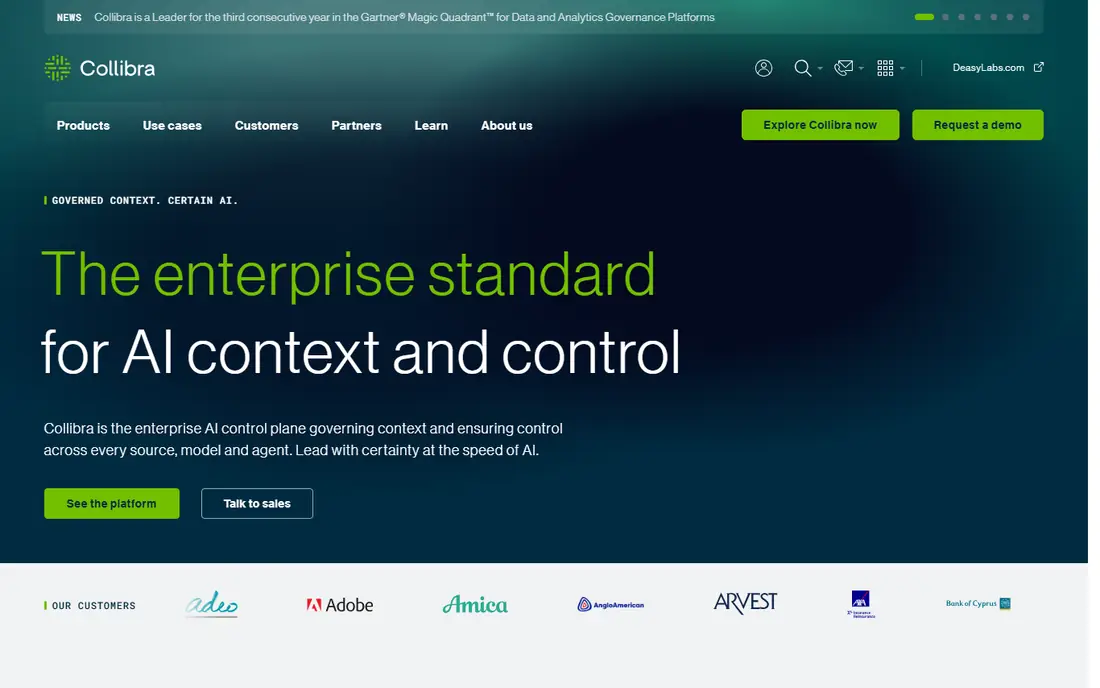
Collibra is the governance-first platform in this list, built for banks, insurers, healthcare organisations, and government teams that need policy enforcement, approval workflows, and audit trails as first-class features. It combines a catalog with governance, data quality, and AI governance, and its stewardship model lets organisations assign owners, track policies, and prove compliance for regulated reporting.
That depth comes with cost and time. Published comparisons put Collibra entry pricing around 170,000 dollars per year, with typical first-year totals far higher once implementation and services are included, and deployments commonly take six to twelve months. If you need formal governance at scale, that investment can be justified. If you mainly need analysts to find trusted data quickly, a lighter catalog will get you value sooner.
- Deep policy and stewardship workflows
- Unified catalog, governance, and quality
- Strong audit trails
- Enterprise pricing is high
- Implementation can take months
- Steward-focused interface needs training
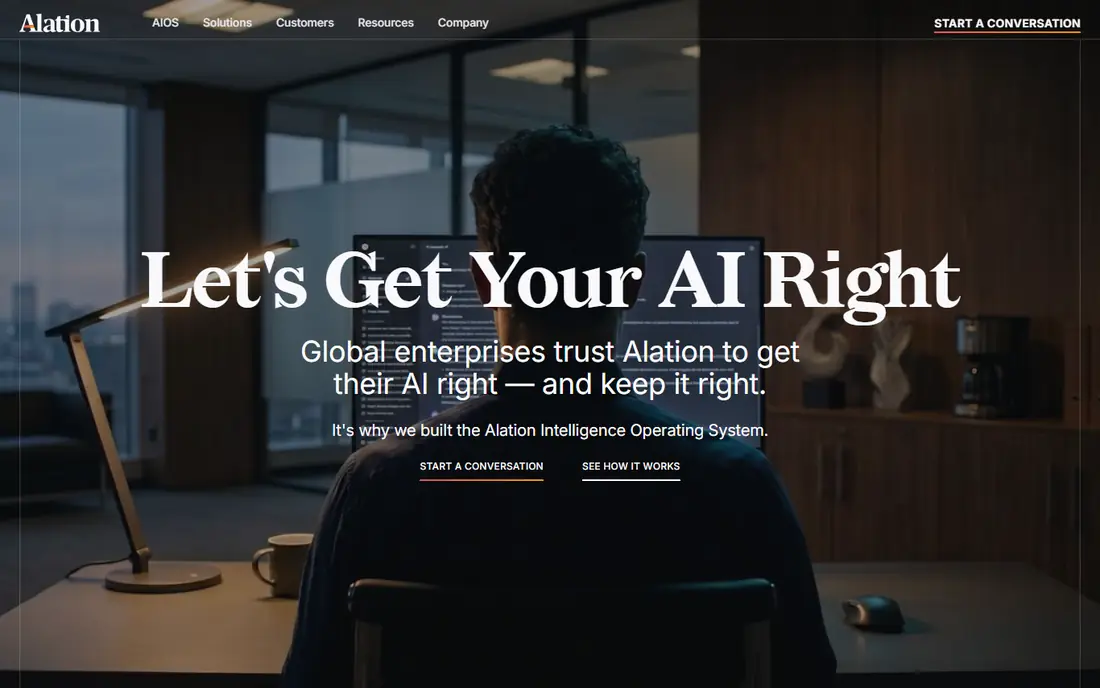
Alation is the discovery-first rival to Collibra. Its catalog is built around search, usage signals, and peer curation, so analysts can find trusted tables, see how colleagues use them, and understand lineage without asking a steward for every question. Recent versions add agentic data intelligence features, including a copilot and agent studio, aimed at making catalog context usable by AI tools as well as people.
The tradeoff is governance depth and cost. Alation's stewardship workflows are lighter than Collibra's, and its data quality features rely more on partner integrations and health signals than on a native quality engine. Published comparisons put entry pricing from around 60,000 dollars per year, with median buyer totals far higher. Choose Alation when adoption by analysts matters more than formal policy enforcement.
- Strong search and behavioural signals
- Column-level lineage
- AI assistants and agent features
- Enterprise pricing is quote-based
- Implementation takes months
- Data quality relies on partners and light signals
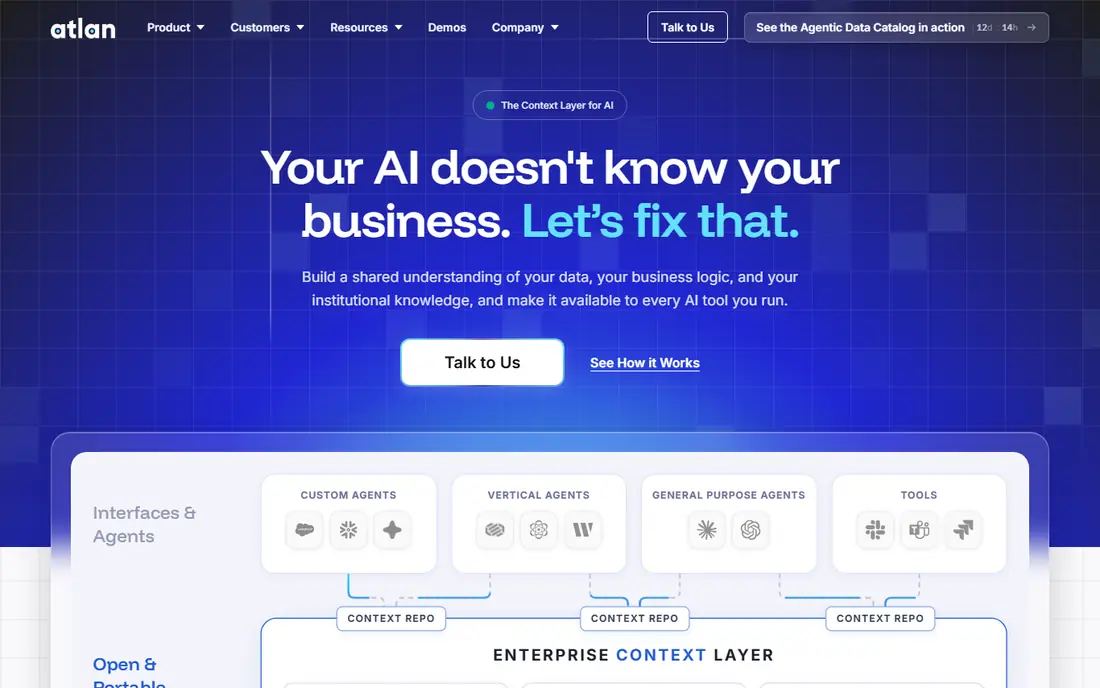
Atlan positions itself as the modern alternative to legacy catalogs, with an active metadata approach that treats the catalog as a living graph of assets, owners, lineage, and usage. Collaboration is built into each asset, so data teams, analysts, and business users can discuss, document, and govern data in one place rather than in separate docs and tickets. Its AI governance studio aims to make that context safe for AI agents to use.
Deployment is commonly faster than Collibra or Alation, often measured in weeks rather than months, which matters for cloud-native teams that want value quickly. Pricing is tiered and quote-based, with published ranges from around 30,000 dollars per year upward. If your stack is cloud-native and your team values collaboration, Atlan is a strong shortlist pick. If you need the deepest regulated workflows, compare it directly with Collibra first.
- Modern cloud-native catalog
- Collaboration built into assets
- AI governance features
- Faster deployment than legacy rivals
- Enterprise pricing is quote-based
- Newer governance depth than Collibra
- Best on cloud data stacks
Microsoft Purview is the natural data intelligence choice for organisations already running Microsoft 365 and Azure. Its unified catalog scans Azure data sources, Microsoft 365 content, and other systems, and it ties data governance to the same compliance and security controls that Microsoft customers already use. For a Microsoft-heavy estate, that native integration removes a lot of connector and identity work.
Pricing is the main caution. Purview mixes per-asset, per-user, and consumption-based charges depending on the feature, so a simple licence comparison with Collibra or Alation will mislead you. Published comparisons note per-user figures around 34 to 55 dollars per month for some editions, alongside pay-as-you-go options. Model your actual asset count and processing use before you budget, and pilot it on your real Azure sources.
- Unified catalog inside Microsoft 365 and Azure
- Native Azure integration
- Usage-based options
- Best inside the Microsoft stack
- Pricing is complex across assets and processing units
- Governance depth varies by area
Informatica Intelligent Data Management Cloud
Great for: Complex multi-cloud estates
Informatica Intelligent Data Management Cloud, often called IDMC, is a broad platform that combines integration, catalog, governance, quality, and master data in one suite. Its CLAIRE AI engine adds automation across those areas, and its connector breadth suits large enterprises with complex, multi-cloud estates that span on-premise systems, several clouds, and many SaaS apps. If your problem is sprawl as much as governance, that breadth matters.
The downside is scope. A broad suite needs skilled owners, a longer implementation, and a larger budget, with published comparisons putting entry pricing from around 50,000 dollars per year upward for large deployments. Smaller teams will find a focused catalog like Secoda or Atlan faster and cheaper. Choose Informatica when you need integration and governance together at enterprise scale.
- Broad integration and governance suite
- CLAIRE AI engine
- Handles complex multi-cloud data
- Enterprise pricing and complexity
- Implementation can take months
- Broad suite needs skilled owners
Secoda is built for mid-size teams that want a catalog working in weeks, not months. It offers AI-assisted search, automated documentation, and lightweight governance, with a free tier and a Business tier listed around 800 dollars per month in recent comparisons. That price and speed make it a practical choice for startups and growing companies that need discovery and trust signals without an enterprise program.
The limit is governance depth. Secoda will not replace Collibra for a regulated bank with formal stewardship and audit requirements, and its enterprise tier is quoted separately. If your main need is for analysts and engineers to find, understand, and trust data quickly, Secoda's speed is a real advantage. If you need deep policy workflows, keep a legacy platform on the shortlist as well.
- Fast time to value
- AI-assisted search and documentation
- Free tier available
- Lighter governance than Collibra
- Enterprise features are quoted
- Smaller ecosystem than legacy rivals
data.world takes a knowledge-graph approach to data intelligence, modelling data as connected concepts rather than just a list of tables. That architecture suits teams that care about semantics: what a metric means, how concepts relate, and how business terms map to physical data. Its AI assistant, Archie, builds on that graph to answer discovery questions with context.
The main change to note is ownership: data.world became part of ServiceNow in 2025, so enterprise quotes now run through ServiceNow, and published comparisons put enterprise pricing from around 90,000 dollars per year. That shift may affect roadmap and contracting, so ask about ServiceNow integration and support terms during evaluation. Choose data.world when a semantic, graph-based model fits how your business thinks about data.
- Knowledge-graph architecture
- AI-assisted discovery
- Semantic layer strengths
- Enterprise pricing is now routed through ServiceNow
- Implementation needs modelling skill
- Smaller community than Alation
OpenMetadata is the open-source option for engineering-led teams that want full control over their metadata platform. It provides a unified metadata graph, catalog search, lineage, data quality checks, and data contracts, all free to self-host under an open-source licence. For teams with platform capacity and strong opinions about data infrastructure, that control is the point.
The cost is people and operations, as with Backstage in the developer platform world. You host, upgrade, and support the platform, and managed offerings from vendors cost extra. Published comparisons put infrastructure costs from around 1,200 dollars per year upward, but the real cost is engineering time. Choose OpenMetadata if you have the team to run it and want to avoid vendor lock-in.
- Free open-source software
- Unified metadata graph
- Data contracts and quality features
- You host and maintain it
- Managed offerings cost extra
- Needs engineering capacity
Databricks is included here because its lakehouse vision overlaps heavily with data intelligence: it unifies analytics, machine learning, and governance, with Unity Catalog governing data and AI assets across the platform. If you already run Spark and Delta Lake, or plan to build AI on enterprise data, Databricks gives you a single platform where governance, compute, and AI meet.
The caution is cost and scope. Consumption-based pricing means you pay for what you use, and published comparisons put mid-market deployments from around 50,000 dollars per year upward, with large deployments far higher. If your only need is to find and govern data without heavy analytics workloads, a purpose-built catalog will be cheaper. Choose Databricks when the lakehouse itself is part of the plan, not just the catalog.
- Unified lakehouse for analytics, machine learning, and governance
- AI-native metadata features
- Broad ecosystem
- Consumption pricing can grow fast
- Overkill if you only need a catalog
- Governance alone is not the cheapest route
How we picked these
We compared official product pages and recent 2026 catalog and pricing comparisons on catalog, lineage, governance, quality, and AI features. We did not claim hands-on deployment, and we did not invent contract prices for quote-based enterprise products. Where pricing ranges differed between sources, we used the most commonly reported range and marked uncertain prices as See website.
How to choose without a six-month evaluation
Start by writing down the three questions your team asks most often about data. If they are "where is this table, who owns it, and can I trust it," you need discovery first, so shortlist Alation, Atlan, or Secoda. If they are "who approved this, what policy applies, and can we prove it," you need governance first, so shortlist Collibra or Purview.
Run a pilot on a real data domain, not a demo dataset. Import one business area with fifty to one hundred assets, wire up lineage for its key pipelines, and ask five analysts to complete real tasks using only the catalog. Measure how long it takes to find a trusted table, trace a metric to its source, and identify an owner. Those timings will separate a catalog your team will actually use from one that only looks good in a demo.
Finally, price the first year honestly. Include licences, implementation services, data quality or AI add-ons, and the internal time for stewards and engineers. A catalog that costs 30,000 dollars in licences but needs six months of implementation can cost more in year one than a catalog that costs 90,000 dollars and goes live in three weeks. Ask each vendor for a first-year total, not just a licence figure.
Frequently asked questions
What is the best data intelligence platform?
It depends on your priority. Collibra suits regulated governance, Alation suits analyst discovery, Atlan suits cloud-native collaboration, Purview suits Microsoft estates, and Secoda suits fast mid-market setup.
What is the difference between a data catalog and a data intelligence platform?
A catalog helps you find and understand data assets. A data intelligence platform adds lineage, governance workflows, data quality, observability, and AI readiness on top of the catalog, so data can be trusted and used safely by people and AI tools.
How much do data intelligence platforms cost?
Enterprise platforms are mostly quote-based, with published ranges from around 30,000 dollars per year for Atlan to around 170,000 dollars per year entry for Collibra in recent comparisons. Secoda lists a Business tier around 800 dollars per month, and OpenMetadata is free to self-host.
Is Microsoft Purview enough for data governance?
For Microsoft-heavy estates, Purview covers a lot of catalog and governance needs natively, but its depth varies by area and its pricing is complex. Compare it with a dedicated governance platform if you need formal stewardship workflows across non-Microsoft systems as well.
Can AI tools use a data catalog safely?
They can, if the catalog provides governed context, access controls, and lineage, and if AI features respect those controls. Atlan, Alation, Collibra, and data.world all describe AI governance features, but you should test how each one handles permissions and sensitive data during a pilot.
Should a small team buy an enterprise data intelligence platform?
Usually not at first. Start with Secoda's free or Business tier, or with OpenMetadata if you have engineering capacity, and move to an enterprise platform once your asset count, governance needs, or AI use justifies the cost and implementation effort.
Sources
See where you really rank - block by block
ProMapRanker scans Google Maps across a grid of your service area. Simple monthly plans from $19, white-label on every plan.
Start freeKeep reading
 wpforms alternatives
Best WPForms Alternatives in 2026
We compare 9 wpforms alternatives for WordPress forms, with free and paid options, current pricing notes, and honest limits for small business sites in 2026.
Read → windows task scheduler alternatives
Best Windows Task Scheduler Alternatives in 2026
Looking for Windows Task Scheduler alternatives? We compare 9 schedulers for Windows and cross-platform work, from free tools to enterprise automation.
Read → which ai video service is best
Which AI Video Service Is Best in 2026
which ai video service is best? We compare 10 legitimate AI video services on price, avatars, editing and output quality to help you pick the right tool.
Read →