 ProMapRanker
Best Data Integration Platforms Comparison in 2026

Key takeaways
- Fivetran and Airbyte lead for managed warehouse loading, but they charge in very different ways: Fivetran by monthly active rows, Airbyte by volume or capacity.
- Qlik Talend and Informatica suit enterprises that need transformation, data quality, and governance in the same platform.
- AWS Glue and Azure Data Factory are the natural picks inside their own clouds, and the hardest to justify outside them.
- Hevo Data and Stitch are simpler, cheaper starting points for smaller teams that mainly need SaaS data in a warehouse.
- Estimate your bill on a trial with real data, because row counts and data volume behave differently once syncs run daily.
Quick comparison
| Pick | Great for | Pricing starts at | Free tier | |
|---|---|---|---|---|
 Fivetran | Hands-off warehouse loading | Free | Yes | Visit |
 Airbyte | Open, flexible data movement | $20 per month | Yes | Visit |
 Qlik Talend | Enterprises needing integration plus quality | See website | No | Visit |
 Informatica | Large enterprises with governance needs | See website | No | Visit |
 AWS Glue | Serverless ETL inside AWS | See website | No | Visit |
 Azure Data Factory | Microsoft-centered data teams | See website | No | Visit |
 Boomi | Application and workflow integration | $99 per month | No | Visit |
 SnapLogic | Low-code enterprise integration | See website | No | Visit |
 Hevo Data | No-code pipelines for smaller teams | $299 per month | Free trial | Visit |
 Stitch | Simple SaaS replication | $100 per month | Free trial | Visit |
The best data integration platforms
Data integration platforms move data from apps, databases, and files into warehouses, lakes, and business tools, and keep it fresh. We compared official pricing pages, connector catalogs, and public documentation for each platform below.
Fivetran is the default choice when you want data in your warehouse without babysitting pipelines. Its connectors are fully managed, so schema changes and API updates are handled by Fivetran rather than your team. After the June 2026 merger with dbt Labs, transformation sits closer to ingestion, which suits teams that already use dbt.
Pricing needs care. Fivetran charges by monthly active rows, meaning each row added or changed in a month counts once per connection, and there is a $5 monthly minimum per standard connection moving up to 1 million rows. The free plan covers up to 500,000 monthly active rows. Run a trial on your real sources before signing, because a busy source can cost far more than a quiet one.
- More than 700 fully managed connectors
- Automated schema handling
- Free plan up to 500,000 monthly active rows
- Per-row pricing can grow fast at scale
- Transformation now sits with dbt after the June 2026 merger
- Annual contracts carry a published minimum
Airbyte is the strongest alternative when you want control over where pipelines run. Its open-source Core edition can be self-hosted, while managed cloud plans offer volume-based Standard and Plus tiers or capacity-based Pro and Enterprise Flex plans. Standard starts at $20 per month, and the same connector code runs across editions, which keeps migration simpler than a rewrite.
The trade-off is ownership. Self-hosting saves license cost but adds servers, upgrades, and monitoring to your workload. Cloud pricing by volume rather than rows suits some workloads better than Fivetran, and others worse, so compare both on your actual data shapes. Teams with strong data engineering skills tend to get the most from Airbyte.
- More than 700 connectors
- Self-hosted Core edition is free
- No-code connector builder with AI assistance
- Self-hosting means you maintain the infrastructure
- Volume-based cloud pricing needs modeling
- Enterprise capacity plans are quoted
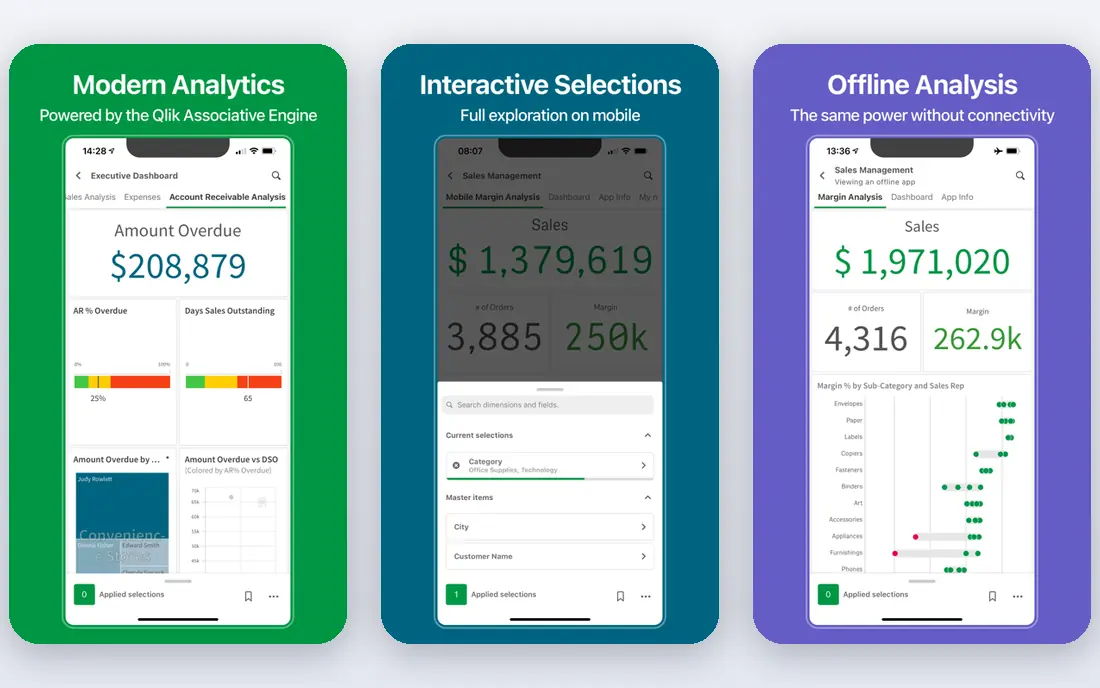
Qlik Talend, now part of Qlik, covers integration, transformation, and data quality in one platform. That breadth matters when your problem is not just moving data, but cleaning it, validating it, and governing it before analysts touch it. Talend Studio gives engineers fine control over complex jobs, and Qlik connectors extend the reach across cloud and on-premises sources.
Pricing is quote-only and varies with data moved, job executions, and job duration. Smaller teams may find the platform heavy, and the learning curve is real for staff new to Studio. It fits best where data quality and governance are formal requirements, not nice extras.
- Broad connector and component library
- Built-in transformation and data quality tools
- Hybrid and cloud deployment options
- Quote-only pricing
- Studio-based work has a learning curve
- Open-source Studio edition was retired in January 2024
Informatica is the enterprise incumbent for organizations that treat data as a governed asset. Beyond moving data, it covers data quality, mastering, cataloging, and governance, which is why regulated industries and very large companies keep choosing it. Its Intelligent Data Management Cloud brings those pieces together under one platform.
The cost and effort match that scope. Pricing is consumption-based and quoted, and a successful rollout usually involves architecture work, not just connector setup. If your team only needs SaaS data in a warehouse, Informatica is more platform than you need. If audit, lineage, and mastering drive the purchase, it belongs on the shortlist.
- Deep governance, mastering, and quality features
- Broad enterprise source coverage
- Strong compliance story
- Consumption pricing can be hard to forecast
- Implementation is a project, not a quick setup
- Smaller teams will find it oversized
AWS Glue is Amazon's serverless integration service, built for teams already running on AWS. It discovers schemas, runs ETL jobs, and moves data into warehouses and lakes such as Redshift and S3, without servers to manage. For an AWS-centered team, the native integration with IAM, monitoring, and storage removes a layer of plumbing.
Outside AWS, the case weakens, since the value comes from that native fit. Pricing is usage-based, charged by data processing unit hours, so a poorly tuned job can cost more than expected. Keep Glue where your data already lives, and use a portable tool for sources that span clouds.
- Native AWS service integration
- Serverless scaling
- Automated schema discovery through crawlers
- Pricing by data processing units needs careful estimates
- Strongest inside AWS, weaker elsewhere
- Interface suits engineers more than analysts
Azure Data Factory is Microsoft's cloud integration service, and it fits naturally for teams on Azure, SQL Server, and Microsoft 365. Pipelines can be built visually, scheduled, and monitored inside the Azure portal, with direct access to Azure storage, databases, and analytics services. For a Microsoft shop, that single-vendor path shortens procurement and support.
As with Glue, the fit narrows outside its home cloud. Pricing is usage-based and spread across pipeline runs, data movement, and compute, so model a realistic workload before committing. Teams already invested in Azure will move fastest here, while multi-cloud teams should weigh a portable option.
- Direct access to Azure resources
- Strong Microsoft source coverage
- Visual pipeline design
- Usage-based pricing across many meters
- Best value inside Azure
- Complex pipelines still need engineering skill
Boomi focuses on connecting applications and automating business processes, rather than only loading warehouses. Its visual designer and pre-built templates help teams wire up order, customer, and finance flows between SaaS apps and on-premises systems. That application focus makes it a good fit when the goal is operational sync, not analytics alone.
Pricing starts at $99 per month on a pay-as-you-go basis plus usage, which sounds approachable until volume grows. If your main need is bulk warehouse loading with hundreds of connectors, Fivetran or Airbyte will usually be simpler. Choose Boomi when process automation across apps is the real job.
- Pre-built process templates
- Low-code visual design
- Pay-as-you-go entry from $99 per month plus usage
- Usage charges add up on top of the base price
- Data warehouse loading is not its main strength
- Enterprise features raise the bill
SnapLogic offers a low-code, visual way to build integration pipelines across cloud and on-premises systems. Its Snaps cover common apps, databases, and cloud services, and its AI features can help draft pipelines from descriptions. For enterprise integration teams that want visual development without hand-coding every flow, that approach speeds delivery.
The honest catch is pricing and scale. SnapLogic does not publish a starting price, and the platform is sold through an enterprise process. Small teams with a handful of sources will find simpler tools cheaper and faster. Larger teams with many systems and a need for visual governance will get more from it.
- Visual pipeline builder
- Large library of pre-built connectors called Snaps
- AI assistance for pipeline building
- Custom, quote-based pricing
- Enterprise sales process
- Smaller teams may find it oversized
Hevo Data aims at teams that want pipelines running quickly without data engineering staff. Sources connect through a no-code interface, schemas map automatically, and data lands in the warehouse with minimal setup. Python-based transformations cover lighter cleanup work, and real-time replication suits dashboards that need fresh data.
The limit is scope. Hevo is less suited to heavy transformation, complex governance, or very large enterprise estates, where Talend or Informatica fit better. Paid pricing from $299 per month also means the smallest teams should check whether the free trial covers their volume before assuming it beats a free self-hosted option.
- Simple no-code setup
- Automatic schema mapping
- Real-time replication for many sources
- Paid plans start at $299 per month for up to 10 users
- Lighter on heavy transformation and governance
- Costs rise with sources and events
Stitch, from Talend, keeps the job deliberately narrow: replicate SaaS and database sources into a warehouse, reliably and with little setup. Teams that know their sources and destinations can get pipelines running in hours, not weeks. That simplicity is the product, and it shows in the pricing, starting at $100 per month for 5 million rows.
Do not buy Stitch expecting a full transformation or governance platform. Complex cleaning, mastering, or process automation belong elsewhere. For a small analytics team that mainly needs fresh SaaS data in Snowflake, BigQuery, or a similar warehouse, Stitch remains a practical, low-fuss choice.
- Fast connector deployment
- Straightforward replication into warehouses
- Starting price of $100 per month for 5 million rows
- Narrower transformation options
- Fewer advanced governance features
- Best for replication rather than complex pipelines
How we picked these
We compared official pricing pages, connector catalogs, and public documentation, and we checked that each platform is still sold and supported in October 2026. We favored platforms with a proven connector library and a clear deployment model, and we covered managed, self-hosted, cloud-native, and enterprise options so the comparison reflects real buying choices. One notable exclusion: Flowise reached end of life on 31 August 2026 and its repository was archived, so we did not list it as a live product here, even though it appears in older integration roundups. We did not claim hands-on testing, and prices marked See website reflect vendors that do not publish a starting price.
What to compare before you commit
Start by counting what you actually move. Fivetran bills by monthly active rows, Airbyte cloud bills by volume or capacity, and several enterprise tools bill by consumption or job execution, so the cheapest tool on paper can be the most expensive for your data shape. Pull a month of real source statistics, including row changes and event counts, and ask each vendor to price that workload in writing.
Next, check connector depth for your exact sources, not the headline count. A catalog of 700 connectors means little if your billing system or warehouse needs a custom connector with a long review queue. Ask how schema changes are handled, how often syncs run on your plan, and what happens when a source API changes. Those answers decide how much maintenance your team inherits.
Finally, weigh transformation and governance honestly. If analysts only need clean tables, a managed loader plus dbt may be enough. If compliance requires lineage, quality rules, and mastering, an enterprise platform earns its price. Run a trial with your messiest source, not your cleanest, and judge the tool on that result.
Frequently asked questions
What is the best data integration platform for a small business?
For most small teams, Fivetran or Airbyte are the strongest starting points. Fivetran is the most hands-off, while Airbyte gives more control and a free self-hosted option. Stitch is worth a look when the job is simple SaaS replication and nothing more.
How does Fivetran pricing compare with Airbyte pricing?
Fivetran charges by monthly active rows per connection, with a free plan up to 500,000 rows and a $5 monthly minimum per standard connection. Airbyte cloud starts at $20 per month on volume-based plans, with capacity-based plans for larger deployments. The cheaper option depends on whether your data changes a lot (rows) or is simply large (volume).
Do I need a data engineer to use these platforms?
Not always. Fivetran, Hevo Data, and Stitch are built for teams without dedicated data engineers, and no-code setup covers common sources. Airbyte self-hosting, Talend Studio work, and Informatica rollouts do need engineering skill, so match the platform to the staff you actually have.
Can these platforms move data in real time?
Some can, with limits. Hevo Data and several enterprise tools support near real-time replication for supported sources, while Fivetran and Airbyte sync frequencies vary by plan, from 15-minute intervals on standard tiers to faster options on enterprise plans. Check the sync interval for your exact source and plan before promising real-time dashboards.
What happened to Flowise?
Flowise reached end of life on 31 August 2026 and its repository was archived. We excluded it from this comparison as a live product, since teams choosing a platform today need one that is still maintained. If you run Flowise now, plan a migration to a supported integration or workflow tool.
Sources
- https://www.fivetran.com
- https://www.airbyte.com
- https://www.qlik.com
- https://www.informatica.com
- https://aws.amazon.com
- https://azure.microsoft.com
- https://www.boomi.com
- https://www.snaplogic.com
- https://www.hevodata.com
- https://www.stitchdata.com
- https://airbyte.com/compare/fivetran-vs-airbyte
- https://airbyte.com/compare/fivetran-vs-talend-vs-airbyte
See where you really rank - block by block
ProMapRanker scans Google Maps across a grid of your service area. Simple monthly plans from $19, white-label on every plan.
Start freeKeep reading
 wpforms alternatives
Best WPForms Alternatives in 2026
We compare 9 wpforms alternatives for WordPress forms, with free and paid options, current pricing notes, and honest limits for small business sites in 2026.
Read → windows task scheduler alternatives
Best Windows Task Scheduler Alternatives in 2026
Looking for Windows Task Scheduler alternatives? We compare 9 schedulers for Windows and cross-platform work, from free tools to enterprise automation.
Read → which ai video service is best
Which AI Video Service Is Best in 2026
which ai video service is best? We compare 10 legitimate AI video services on price, avatars, editing and output quality to help you pick the right tool.
Read →