 ProMapRanker
Best Customer Success Software in 2026


Enterprise health scoring and journey orchestration · Pricing starts at: See website
Key takeaways
- Gainsight leads for large enterprise teams with complex health scoring, while ChurnZero and Totango suit mid-market teams with faster setup.
- Vitally and Custify suit smaller SaaS teams that need health scores and playbooks without an enterprise project.
- HubSpot Service Hub suits teams already on HubSpot CRM, since customer success work stays close to sales and support data.
- Planhat suits data-led teams that price by customer account rather than by seat, which helps large teams on a smaller book.
- Most enterprise pricing is quoted, so budget for implementation and admin time, not just the licence fee.
Quick comparison
| Pick | Great for | Pricing starts at | Free tier | |
|---|---|---|---|---|
| Gainsight | Enterprise health scoring and journey orchestration | See website | No | Visit |
 Totango | Modular playbooks for multi-segment teams | See website | Yes | Visit |
 ChurnZero | Mid-market retention and workflow automation | See website | No | Visit |
 Vitally | Product-led SaaS with a lean CS team | See website | No | Visit |
 Planhat | Data-led teams with account-based pricing | See website | No | Visit |
 HubSpot Service Hub | Teams already on HubSpot CRM | Free | Yes | Visit |
 Custify | Small SaaS teams on a tighter budget | See website | No | Visit |
 CustomerSuccessBox | SMB health scoring with fast setup | See website | No | Visit |
The best customer success software
Customer success software helps a SaaS team see which accounts are healthy, which are at risk, and what to do next. The core tools are health scores, customer data in one view, playbooks for onboarding and renewal, and alerts when usage or sentiment drops. We compared official feature pages and published pricing research for platforms that serve B2B SaaS teams in October 2026. Most enterprise pricing here is quoted, so we say so plainly rather than invent a figure.
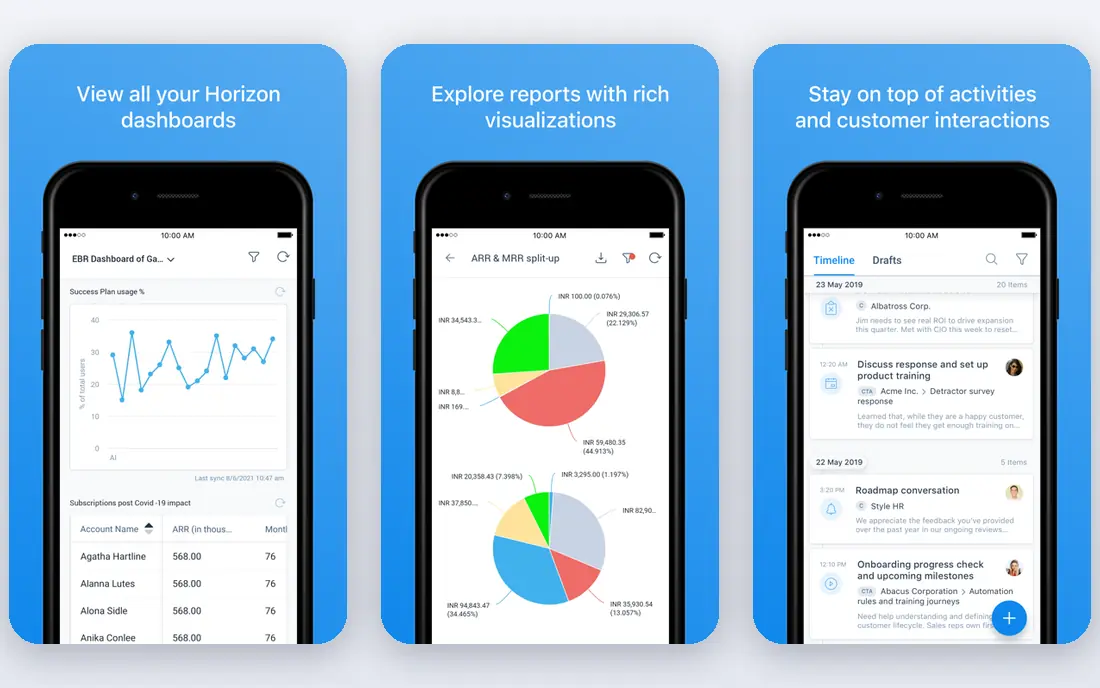
Gainsight remains the benchmark for large customer success teams. Its health scoring can weight product usage, support sentiment, financial data and relationship signals into one score, and its journey orchestration runs multi-step playbooks triggered by real behaviour rather than just renewal dates. For multi-product companies with complex accounts, that depth is hard to match.
The cost and effort are the honest trade-offs. Pricing is quoted, published research puts typical contracts in the tens of thousands per year and higher for enterprise deals, and implementation often needs a dedicated operations owner. Smaller teams frequently buy more platform than they can run in year one. If you have a large book, a dedicated CS operations role and complex accounts, Gainsight is the strongest choice here.
- Highly configurable health scoring
- Mature journey orchestration
- Strong reporting for executive and board reviews
- Pricing is quoted and often high
- Implementation can take two to three months
- Needs dedicated admin time for large deployments
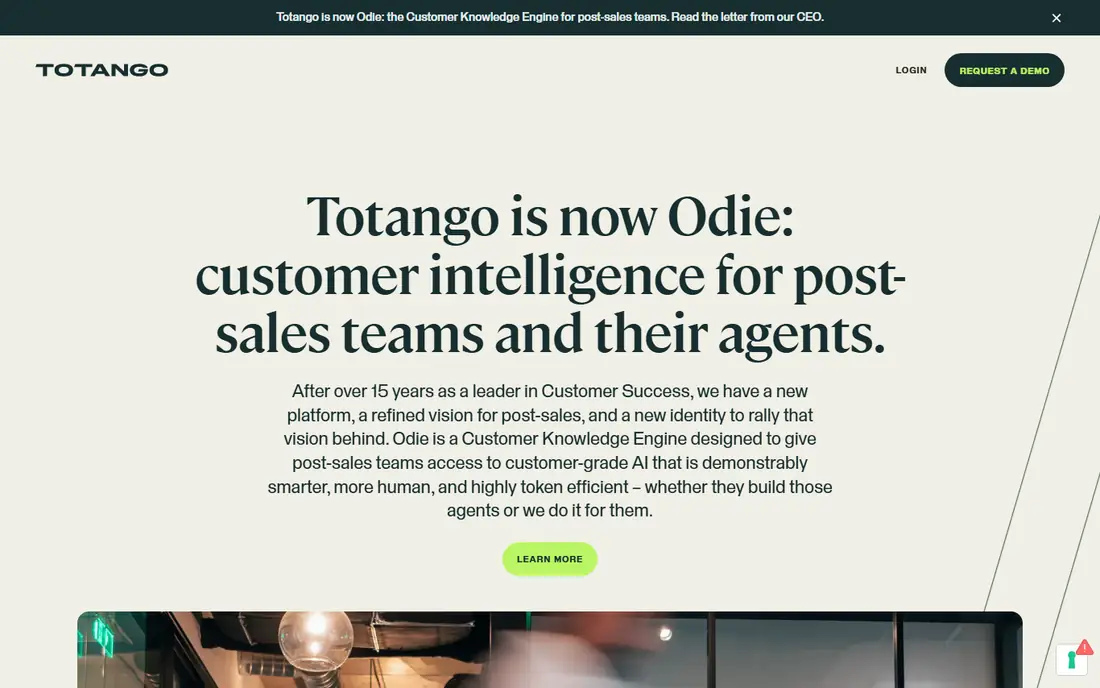
Totango, now combined with Catalyst on published terms, takes a modular approach to customer success. Teams build SuccessBlox for each segment, such as onboarding for new accounts, expansion for growing accounts, and risk playbooks for accounts showing warning signs. That structure suits companies with very different customer types, since each segment gets its own workflow rather than one generic process.
A free community tier gives small teams a way to test the basics, while paid pricing is tiered and quoted, often based on annual recurring revenue. Implementation typically takes several weeks, and the full platform can feel heavy for a team with only a handful of accounts. For multi-segment SaaS teams that want structured playbooks without Gainsight-level complexity, Totango is a strong middle option.
- Modular SuccessBlox approach for different segments
- Free community tier on published terms
- Strong journey and health tools
- Pricing is largely quoted and tiered by ARR
- Implementation can take weeks
- Smaller teams may find the full suite heavy
ChurnZero is built for mid-market SaaS teams that need to act on usage signals fast. It tracks product usage in real time, scores account health, and triggers playbooks, messages and tasks when an account drifts. In-app messaging helps CSMs reach users inside the product, not just by email, which can lift onboarding completion and feature adoption.
Pricing is quoted and varies with account count and modules, so published entry figures should be treated as a guide, not a quote. Implementation usually takes several weeks, and teams with a very long tail of small accounts should model per-account pricing carefully. For mid-market teams with a sales-led motion and a clear retention problem, ChurnZero offers a practical balance of power and speed.
- Strong real-time usage tracking
- Workflow automation and in-app messaging
- Well suited to mid-market SaaS
- Pricing is quoted, with published entry figures varying widely
- Implementation takes weeks
- Per-account pricing can rise with a long tail
Vitally suits product-led SaaS teams that want a modern customer success platform without a long enterprise project. Health scores are flexible and easy to adjust, customer views bring product, support and billing signals together, and playbooks help a lean team cover more accounts with less manual work. Setup is typically measured in weeks rather than months.
Pricing is quoted and varies by service model, from tech-touch to high-touch, so a quote depends on how much human coverage each account needs. Published research puts typical contracts well above a small-team budget, which means Vitally fits growing SaaS firms better than very early startups. For lean teams that live in product data, it is one of the most usable platforms in this list.
- Flexible health scoring with a clean interface
- Good for product-led teams
- Faster setup than enterprise platforms
- Pricing is quoted and varies by touch model
- Smaller ecosystem than Gainsight
- Advanced reporting needs care at scale
Planhat appeals to teams that think in data first. Its data model brings customer, revenue and usage signals together for health scoring, QBR preparation and expansion tracking, and its pricing on published terms is based on active customer accounts rather than seats. That helps a large CS team managing a smaller book, since adding a CSM does not automatically raise the licence bill.
The reverse is also true: a small team with a very long tail of accounts can pay more than expected, so model the bill on account count, not headcount. Pricing is quoted for most plans, and implementation takes several weeks. For data-led European and US SaaS teams that want flexible analytics without per-seat pricing, Planhat is a distinctive and credible choice.
- Priced by active customer account with unlimited seats on published terms
- Strong revenue and health analytics
- Clean data model
- Pricing is quoted for most plans
- Implementation takes weeks
- Less well known in the US than Gainsight or ChurnZero
HubSpot Service Hub is not a pure customer success platform, but it is the right pick for teams already running on HubSpot. The free tier covers basic ticketing and CRM contact management for up to two users, while Professional at $90 per seat per month billed annually adds a customer success workspace, help desk tools, knowledge base and feedback surveys. A $1,500 onboarding fee applies on Professional.
Health scoring and playbook depth lag behind Gainsight, Totango and ChurnZero, so a large dedicated CS team will likely need a specialist tool. For a small or mid-size team that already uses HubSpot for sales and marketing, keeping support, success and CRM data in one place can outweigh that gap. It also avoids a second system, a second login and a second data sync to maintain.
- Free tier for up to two users
- Customer success workspace on Professional
- Tickets, feedback and CRM data in one system
- True customer success features sit on Professional at $90 per seat per month billed annually
- Onboarding fee applies on Professional
- Less deep health scoring than dedicated CS platforms
Custify targets B2B SaaS small and mid-size teams that need health scoring and automation without an enterprise budget or project. Published research puts entry pricing in the region of a few hundred dollars per month, well below Gainsight and Totango, with setup in days to weeks rather than months. Health scores, lifecycle stages, playbook automation and NPS tracking cover the core CS job.
The limits are depth and polish. Analytics are thinner than on larger platforms, email handling is outbound-only on published terms, and user reviews of the interface are mixed. For an early-stage SaaS firm with under a few hundred accounts and a lean CS team, those trade-offs are acceptable. Custify gives a real CS platform at a price a small team can justify.
- Lower entry cost than enterprise platforms
- Health scoring, lifecycle automation and NPS tracking
- Fast setup in days to weeks
- Analytics depth is thinner than Gainsight or ChurnZero
- Email tools are outbound-only on published terms
- Interface reviews are mixed
CustomerSuccessBox focuses on small and mid-size B2B SaaS companies that want health scoring, onboarding tracking and renewal visibility without a large implementation project. Its workflows help CSMs spot at-risk accounts early, follow a consistent onboarding path, and prepare for renewals with usage and engagement data in one view.
Pricing is quoted, so small teams should request a clear proposal based on account count and required modules. The integration list and ecosystem are smaller than Gainsight or HubSpot, which matters if you rely on many connected tools. For an SMB SaaS team that wants a dedicated CS tool with a manageable setup, CustomerSuccessBox is a practical final shortlist option.
- Built for SMB SaaS teams
- Health scoring and journey tracking
- Faster setup than enterprise platforms
- Pricing is quoted
- Smaller ecosystem and integration list than larger rivals
- Less suited to very large enterprise books
How we picked these
We compared official feature pages and published pricing research for customer success platforms that serve B2B SaaS teams in October 2026. We favoured platforms with health scoring, playbooks, customer data views and alerts, across enterprise, mid-market and SMB sizes. Where pricing is quoted rather than published, we wrote See website instead of repeating an unverified figure as a list price. We left out pure help desk tools with no health scoring, and tools whose customer success features could not be verified.
What to check before you choose
Start with the problem, not the platform. List the top three retention leaks: onboarding drop-off, low feature adoption, or silent accounts before renewal. Then check which platform surfaces those signals clearly and triggers a playbook your team will actually run. A platform nobody opens is a cost, not a lever.
Health scores, data and ownership
Define your health score before you buy. Decide which signals matter, such as logins, feature use, support tickets and payment health, and how each signal is weighted. Check which integrations feed that score, how often data syncs, and who owns the platform day to day. Enterprise platforms need an admin; smaller platforms need a CSM champion.
Total cost and implementation time
Ask for the full proposal: licence, implementation, training and any required onboarding fees. Gainsight and Totango implementations can run into tens of thousands in services on published research, while Custify and CustomerSuccessBox aim for days to weeks. Add admin time to the licence cost when you compare totals, and agree on a go-live date with clear success measures.
Frequently asked questions
What is the best customer success software?
Gainsight is the best enterprise choice, ChurnZero and Totango suit mid-market teams, and Vitally suits product-led teams. Custify and CustomerSuccessBox suit smaller SaaS teams on tighter budgets, while HubSpot Service Hub suits teams already on HubSpot. The best platform depends on team size, account count and how complex your health scoring needs to be.
What is the best customer success platform for a small SaaS team?
Custify and CustomerSuccessBox are strong small-team options, with lower entry costs and faster setup than enterprise platforms. HubSpot Service Hub also works for small teams already on HubSpot, with a free tier for basic support work. Start with the platform your team will actually use daily, and upgrade only when account volume demands it.
How much does customer success software cost?
Costs vary widely. HubSpot Service Hub starts free and reaches $90 per seat per month on Professional, while dedicated platforms are often quoted. Published research puts typical mid-market and enterprise contracts in the tens of thousands per year, plus implementation in some cases. Always get a written quote based on your account count, seats and modules.
What is a customer health score?
A customer health score combines signals such as product usage, support activity, payment status and relationship strength into one rating for each account. A falling score warns the CS team to act before renewal, while a rising score can signal expansion potential. The score is only useful if the signals are accurate and the team follows a playbook when it changes.
Do I need customer success software or just a CRM?
A CRM tracks deals and contacts, while customer success software tracks account health, usage and lifecycle playbooks after the sale. Small teams can start with CRM notes and spreadsheets, but once account numbers grow, a dedicated platform surfaces risk and renewal work that a CRM hides. HubSpot Service Hub bridges the two for teams already on HubSpot.
How long does it take to implement customer success software?
Smaller platforms such as Custify can go live in days to weeks, while mid-market platforms often take three to six weeks. Enterprise platforms such as Gainsight can take two to three months or more, especially with complex data and custom health scores. Agree on data sources, health score design and playbook scope before the project starts to avoid delays.
Sources
See where you really rank - block by block
ProMapRanker scans Google Maps across a grid of your service area. Simple monthly plans from $19, white-label on every plan.
Start freeKeep reading
 best resource management software
Best Resource Management Software in 2026
We compared the best resource management software for scheduling, capacity and utilization, with current pricing and free trials, to help teams choose well.
Read → best reporting tools
Best Reporting Tools in 2026
Compare the best reporting tools for dashboards, scheduled reports, and business insights, from Power BI and Tableau to Looker Studio for every team size.
Read → best remote support software
Best Remote Support Software in 2026
Looking for the best remote support software? We compare 9 tools on price, security, session controls, and fit for helpdesks, MSPs, and small teams in 2026.
Read →