 ProMapRanker
Best Customer Service Blogs in 2026


How-to guides and templates · Pricing starts at: Free
Key takeaways
- Vendor blogs give useful how-to guides, but read their product advice with a healthy dose of scepticism.
- Independent blogs from Shep Hyken and Jeff Toister focus more on culture, training, and service habits than on tools.
- Help Scout stands out for small teams because its posts stay close to everyday replies, hiring, and team habits.
- Pick two or three blogs and read them weekly instead of skimming a long list once a month.
- The best blogs on customer service mix real examples, scripts, and metrics rather than general encouragement.
Quick comparison
| Pick | Great for | Pricing starts at | Free tier | |
|---|---|---|---|---|
| HubSpot Service Blog | How-to guides and templates | Free | Yes | Visit |
 Zendesk Blog | Support at scale and AI topics | Free | Yes | Visit |
 Help Scout Blog | Small support teams | Free | Yes | Visit |
 Intercom Blog | Messaging and AI support | Free | Yes | Visit |
 Freshworks Blog | Practical help desk advice | Free | Yes | Visit |
 Shep Hyken Blog | Service culture ideas | Free | Yes | Visit |
 Jeff Toister Blog | Service training and research | Free | Yes | Visit |
 CustomerThink | Many voices on service and experience | Free | Yes | Visit |
 Groove Blog | Small business support stories | Free | Yes | Visit |
The best customer service blogs
These nine blogs cover vendor advice, independent thinking, and community writing. We chose them because each one still publishes regularly and speaks to a clear reader.
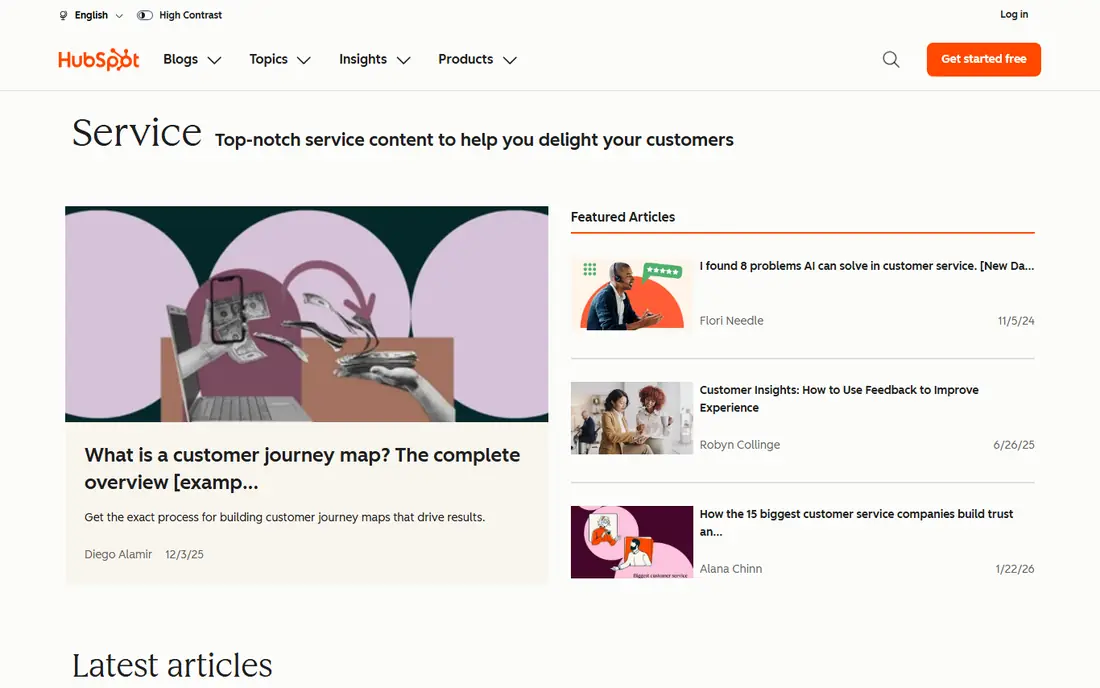
HubSpot publishes plain how-to posts on tickets, surveys, onboarding, and service metrics. A new support lead can find a usable template or checklist in most posts without wading through theory first. The writing stays practical, and many articles explain a term before they use it, which helps readers who are new to support work.
The trade-off is the source. HubSpot sells service software, so product mentions appear often, and its advice fits best inside a HubSpot setup. We still rate it highly for learning, as long as you separate the general lesson from the sales message. Start with its guides on response times and customer satisfaction surveys.
- Clear step-by-step guides
- Useful templates and metrics
- Broad coverage for beginners and managers
- Written by a software vendor
- Some posts lead back to HubSpot products
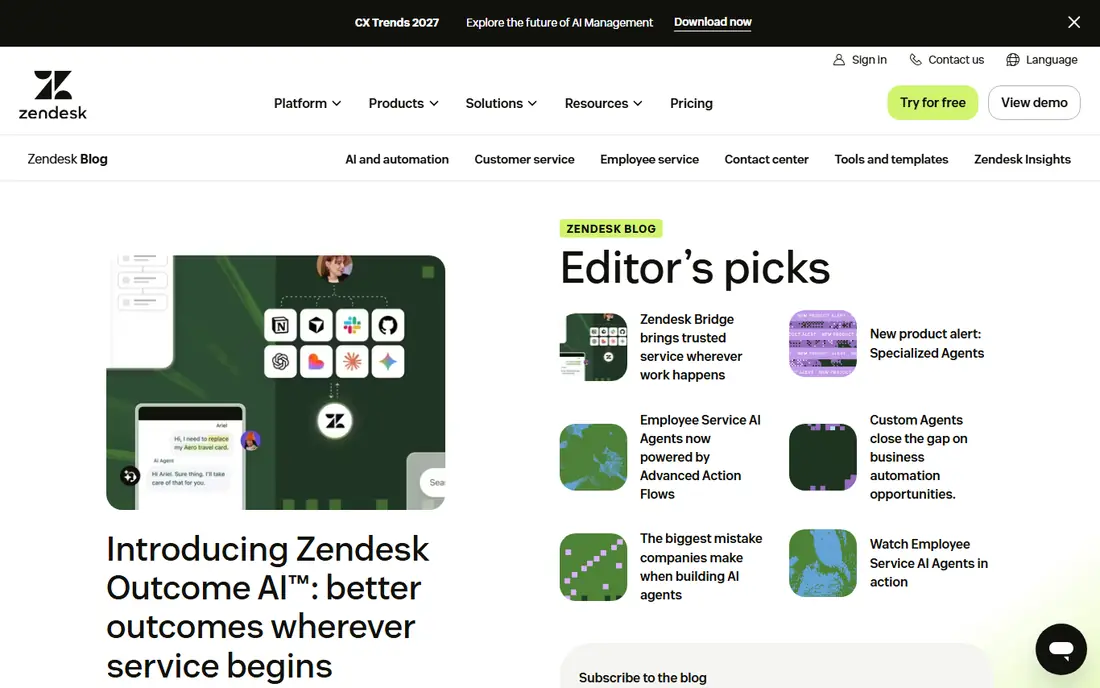
Zendesk writes for organisations that handle large ticket volumes across email, chat, phone, and social channels. Its posts on AI agents, automation, and workforce planning give managers a sense of how bigger teams organise the work. Readers who run a contact centre will find the most direct value here.
Smaller teams may find some posts too broad or too tied to enterprise tools. The blog works best as a source for trends and benchmarks, not as a daily manual for a three-person team. Check the author and the product links before you act on a recommendation.
- Strong coverage of AI and contact centres
- Benchmark-style findings
- Posts for large teams
- Vendor perspective throughout
- Enterprise topics can feel distant for small teams
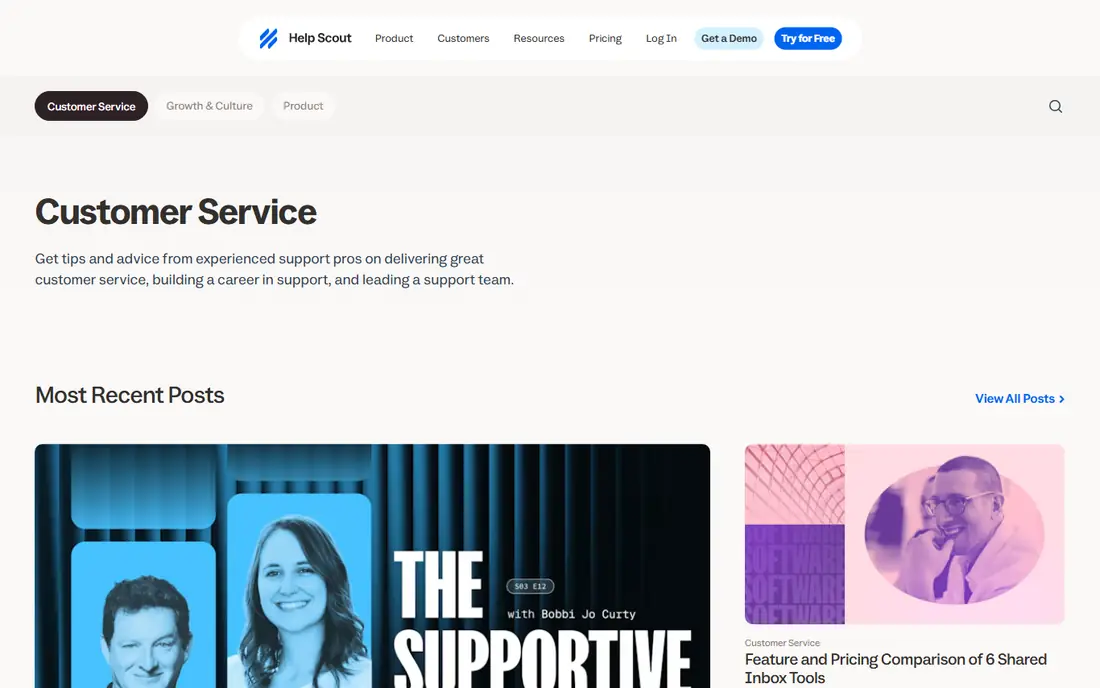
Help Scout writes about the craft of support: how to phrase a hard reply, how to structure a small team, and how to avoid burnout. Its case studies and guides feel close to real inboxes, and the blog often includes example wording you can adapt. That focus makes it a strong first read for a team that lives mainly in email and chat.
The main limit is scope. Phone-heavy or very large operations will need other sources for workforce planning and complex routing. For most small and growing teams, though, Help Scout gives advice that can be used the same day it is read.
- Warm, practical tone
- Strong posts on replies and hiring
- Light on product promotion
- Less coverage of phone and enterprise contact centres
- Smaller focus on AI than some rivals
Intercom covers live chat, in-product messaging, and AI agents in detail. Its posts explain how teams set up automated answers, hand off to people, and measure resolution. Digital-first companies will recognise their own problems in these articles, from onboarding messages to support inside an app.
Readers outside that world may find less to use. A phone-first service desk or a field team will need to translate the lessons into their own channels. Still, for anyone weighing an AI agent or a messaging tool, Intercom offers one of the clearest vendor-side views.
- Clear writing on messaging and AI agents
- Product and engineering perspective
- Useful for digital-first teams
- Vendor perspective
- Less useful for phone-first or field service teams
Freshworks publishes guides on help desks, chatbots, self-service, and customer satisfaction. Many posts start with a simple definition and then move to setup steps, which suits readers who are choosing or configuring a tool. The blog also covers sales and marketing topics, so service readers should use its service categories to stay focused.
As with other vendor blogs, product links appear often. Treat the how-to content as the main value and check pricing or feature claims on the product pages themselves. Used that way, Freshworks is a solid second or third blog in a weekly reading habit.
- Wide coverage across support topics
- Beginner-friendly explainers
- Posts for small and mid-sized teams
- Vendor perspective
- Quality varies by topic
Shep Hyken has written about service for decades, and his blog keeps returning to one idea: customers reward companies that are consistently easy to deal with. Posts are short, frequent, and easy to quote in a team channel. Managers who need a weekly talking point for a huddle will find plenty here.
The blog is not a technical manual. Readers who want setup steps for a help desk or a chatbot should pair it with a vendor blog. Its strength is culture and habits, and it works best when a leader turns one idea at a time into a team practice.
- Short, frequent posts
- Independent voice
- Memorable service principles
- Less technical depth
- Some posts are brief opinion pieces rather than guides
Jeff Toister writes about what agents and customers actually do, and about how training shapes those habits. His posts on service vision, hiring, and coaching give managers a framework they can use in onboarding and one-to-one meetings. The tone is calm and evidence-minded, with less hype than many vendor blogs.
The trade-off is volume and tool detail. Readers who need a guide for a specific help desk feature will not find it here. Readers who want to build a lasting service culture, though, will find Toister one of the most thoughtful voices on this list.
- Research-informed writing
- Strong on training and service culture
- Independent voice
- Publishes less often than large vendor blogs
- Fewer tool-specific guides
CustomerThink gathers writing from many contributors, so readers hear from consultants, practitioners, and vendors in the same feed. That range helps when you want different views on one topic, such as AI in support or loyalty measurement. The site also carries news and opinion that vendor blogs tend to skip.
Variety brings uneven quality. Some posts read like vendor pitches, and others are short opinion pieces with little evidence. We suggest following specific authors you trust rather than reading every post, and checking claims against a second source before you change a process.
- Wide range of contributors
- Opinion, news, and research in one place
- Community discussion
- Quality varies by contributor
- Some posts are promotional
Groove built its blog around running a small support team with limited resources. Its posts cover email workflows, customer conversations, and lessons from growing a company without a large support department. Small business owners often find the tone reassuring, because the problems described match their own inboxes.
The archive is smaller and less technical than Zendesk or HubSpot, and AI coverage is thinner. That matters less if your main need is better everyday replies and a calmer inbox. For small teams, Groove earns its place through honesty and focus.
- Honest small-team stories
- Practical posts on email support
- Plain language
- Smaller archive than large vendor blogs
- Less coverage of AI and enterprise topics
How we picked these
We compared official blog pages, recent publishing activity, and the stated focus of each blog, and we checked third-party roundups that reviewed these blogs in October 2026. We kept blogs that still publish, that speak clearly to support teams, and that cover different needs, from small-team craft to large-scale operations. We left out blogs that had gone quiet, that covered only one product, or that repeated generic advice with no examples.
How to build a reading habit that helps your team
A blog list only helps when reading turns into a change in how your team works. Use the steps below to turn a few good posts into better replies and calmer queues.
Start with your biggest pain point
Pick the problem that costs the most time this month, such as slow first replies, repeat contacts, or angry escalations. Choose the blog on this list that covers that problem best, and read three of its recent posts before you look elsewhere. A narrow start beats a broad skim.
Turn one idea into a team practice
After reading, write down one change in plain words, such as a new opening line for refund replies or a new rule for escalating billing cases. Share it in a team meeting, try it for two weeks, and review the results together. Small, tested changes build trust in the reading habit.
Mix vendor and independent voices
Vendor blogs explain tools well, while independent blogs question habits and culture. Reading both helps you spot when a tool recommendation is really a sales message. If two independent writers and one vendor agree on a practice, that agreement is worth more than any single post.
Keep a short shared list
Save the best posts in a shared document with a one-line note on what each post changed. New hires can then learn from the same material, and the team avoids re-reading the same guides. Review the list each quarter and drop blogs that no longer publish useful work.
Frequently asked questions
What are the best blogs on customer service for beginners?
Start with Help Scout and HubSpot, since both explain basic terms and give templates you can use at once. Add Shep Hyken for short culture ideas that are easy to discuss in a team huddle. Once the basics feel familiar, add Zendesk or Intercom for larger-scale and AI topics.
Are vendor blogs trustworthy for service advice?
Vendor blogs can be useful, but they are written by companies that sell support software. Trust their how-to guides and definitions, and treat product recommendations with care. Compare a vendor claim with an independent blog or a second vendor before you buy or change a tool.
How often should a support team read service blogs?
Reading two or three posts each week is enough for most teams, as long as one idea becomes a tested practice. Daily reading without action rarely improves replies. A short weekly discussion of one post often beats a long reading list that nobody finishes.
Which blog is best for small support teams?
Help Scout and Groove fit small teams best, because both write about email support, hiring, and everyday replies. Freshworks also helps when a small team is choosing or setting up a help desk. Larger enterprise blogs still help for trends, but they should not be the main daily read.
Do these blogs cost anything to read?
All nine blogs on this list are free to read, with no paywall for their standard posts. Some offer email newsletters or paid books and courses, but the blog articles themselves remain free. You may need to create a free account for comments on some sites.
Sources
- https://blog.hubspot.com/service
- https://www.zendesk.com/blog
- https://www.helpscout.com/blog
- https://www.intercom.com/blog
- https://www.freshworks.com/blog
- https://hyken.com/blog
- https://www.toistersolutions.com/blog
- https://customerthink.com
- https://www.groovehq.com/blog
- https://www.kaizo.com/blog/10-customer-service-blogs/
See where you really rank - block by block
ProMapRanker scans Google Maps across a grid of your service area. Simple monthly plans from $19, white-label on every plan.
Start freeKeep reading
 wpforms alternatives
Best WPForms Alternatives in 2026
We compare 9 wpforms alternatives for WordPress forms, with free and paid options, current pricing notes, and honest limits for small business sites in 2026.
Read → windows task scheduler alternatives
Best Windows Task Scheduler Alternatives in 2026
Looking for Windows Task Scheduler alternatives? We compare 9 schedulers for Windows and cross-platform work, from free tools to enterprise automation.
Read → which ai video service is best
Which AI Video Service Is Best in 2026
which ai video service is best? We compare 10 legitimate AI video services on price, avatars, editing and output quality to help you pick the right tool.
Read →