 ProMapRanker
Best Customer Relationship Management Software in 2026


Large teams that need deep customization · Pricing starts at: $25 per user per month
Key takeaways
- Salesforce and Microsoft Dynamics 365 lead for large, complex teams, but both need real setup time and a larger budget.
- HubSpot and Zoho CRM offer the most flexible path for mid-size teams, with free or low-cost starting points and room to grow.
- Monday CRM suits teams that already plan work visually, while Sugar Sell suits teams that want sales intelligence tied to business data.
- Price per user is only part of the bill, since implementation, add-ons, and minimum seat counts can change the total sharply.
Quick comparison
| Pick | Great for | Pricing starts at | Free tier | |
|---|---|---|---|---|
| Salesforce | Large teams that need deep customization | $25 per user per month | Free trial (30 days) | Visit |
 HubSpot CRM | Growing teams that want sales, marketing, and service together | Free | Yes | Visit |
 Zoho CRM | Mid-size teams that want value and customization | Free | Yes | Visit |
 Microsoft Dynamics 365 Sales | Microsoft-centered organizations | $65 per user per month | Free trial | Visit |
 Monday CRM | Visual teams that manage sales and delivery together | See website | Free trial (14 days) | Visit |
 Freshsales | Sales teams that want built-in calling and AI help | $9 per user per month | Yes | Visit |
 Pipedrive | Pipeline-focused sales teams | $14 per user per month | Free trial (14 days) | Visit |
 Sugar Sell | Teams that want AI insights from sales and business data | $68 per user per month | Free trial | Visit |
The best customer relationship management software
Customer relationship management software covers more than a contact list. It tracks leads, deals, service cases, and marketing activity in one record, and the right platform depends on team size, complexity, and budget. The eight platforms below span small-team value and enterprise depth, and we compared them on pricing, customization, automation, and integration breadth.
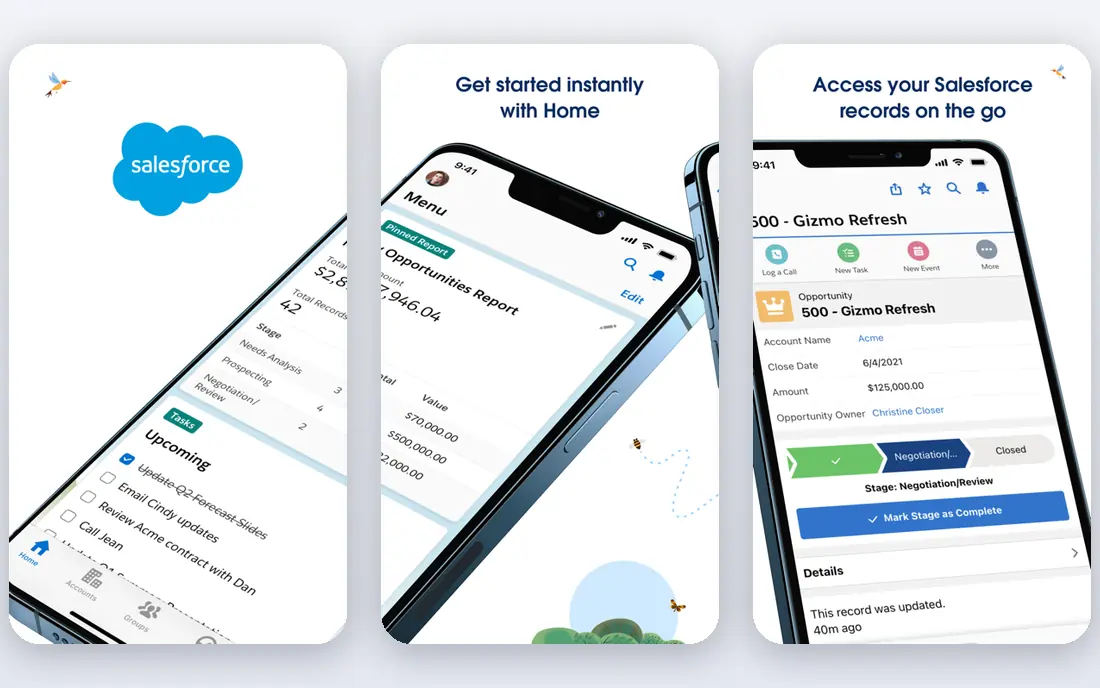
Salesforce remains the default for companies that need a CRM to bend around complex processes. Starter Suite covers leads, accounts, contacts, and opportunities at a modest per-user price, while higher tiers add quoting, forecasting, deeper automation, and access to the AppExchange catalog of third-party apps. Few rivals match that breadth when a business runs many teams, territories, and approval steps.
The cost curve deserves a plain warning. Pro Suite costs four times the Starter price per user, and Enterprise adds more again, so a team that outgrows Starter should budget carefully. Admin work also grows with complexity, and many companies need a dedicated administrator or partner. For large teams that need that depth, Salesforce earns its position at the top.
- Deepest customization and app ecosystem
- Strong reporting and forecasting
- Wide integration catalog
- Steep price jump from Starter to Pro Suite
- Setup and admin work can be heavy
HubSpot CRM
Great for: Growing teams that want sales, marketing, and service together
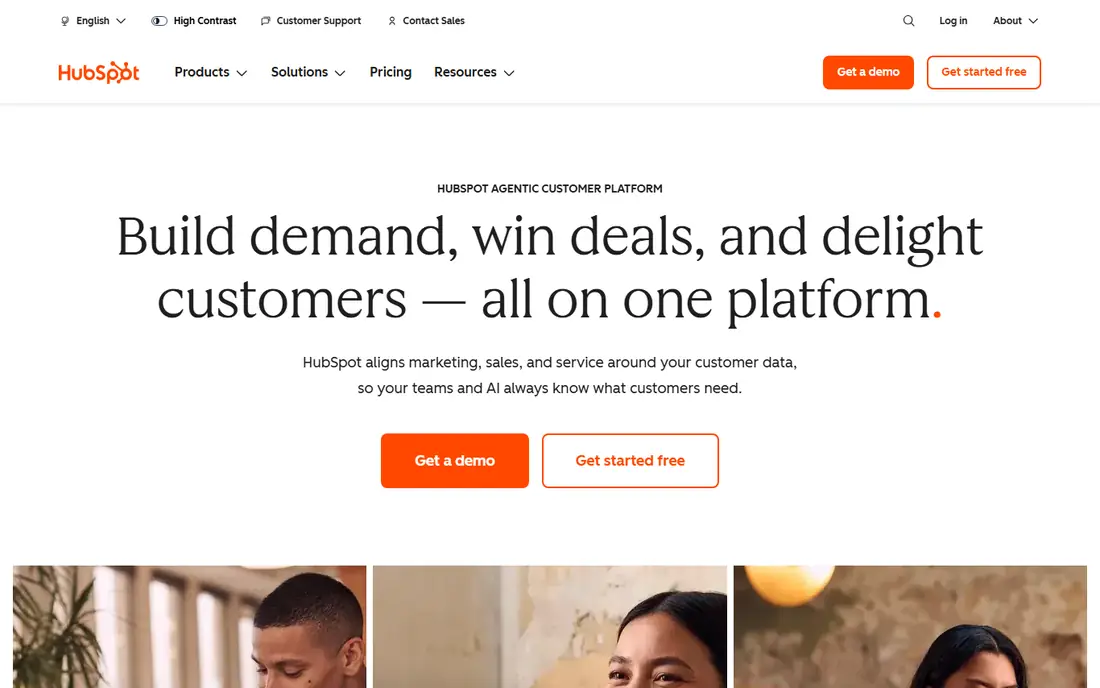
HubSpot works best when sales, marketing, and service need to share one customer story. The free CRM gives contacts, deals, tasks, and forms, and paid hubs add email, automation, ticketing, and reporting on the same record. A growing team can start free, add Sales Hub when pipeline work grows, and add Service Hub when support volume rises, without moving data between systems.
Costs still need watching. Professional tiers carry a much higher per-user price plus onboarding fees on some plans, and marketing pricing scales with contacts. Teams that plan their hub mix early, and that keep contact lists clean, get the best value from HubSpot without surprise bills.
- Free CRM with contacts, deals, and forms
- Shared record across hubs
- Large integration catalog
- Higher tiers rise sharply in price
- Marketing contact pricing can add cost
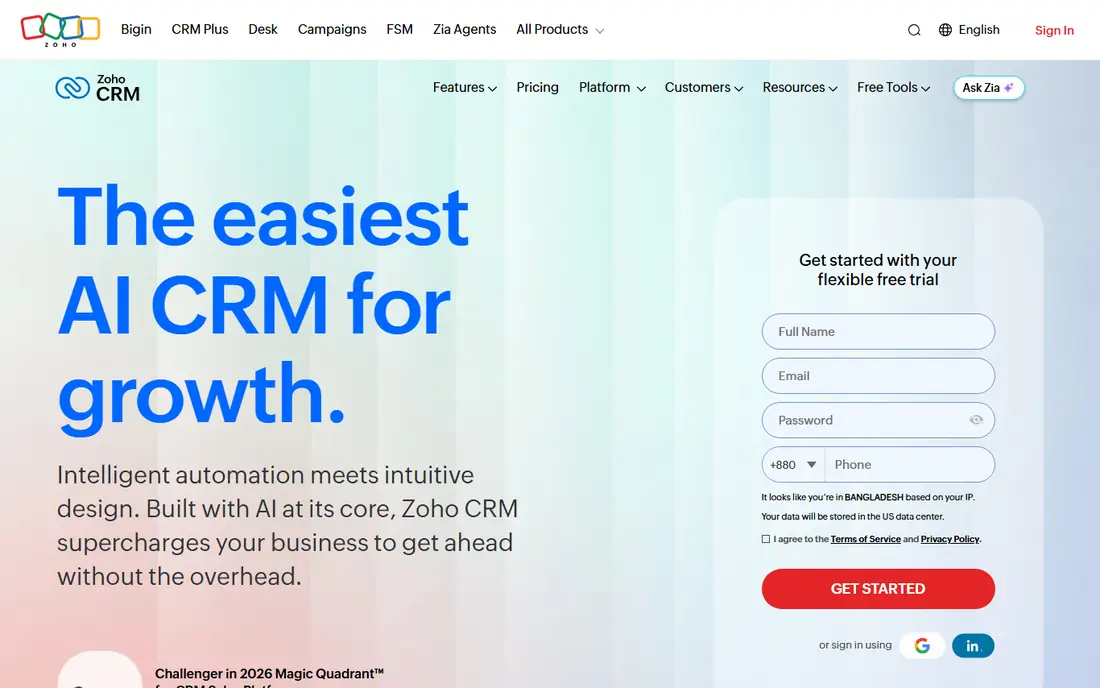
Zoho CRM gives mid-size teams a striking amount of control for the price. Workflows, blueprints, scoring rules, and custom modules sit on paid tiers that cost less per user than many enterprise rivals. The wider Zoho suite adds books, projects, and desk tools that share data, which helps companies that want one vendor for several jobs.
The interface is the main trade-off. Menus run deep, and a team that skips setup time may find the product harder to adopt than simpler tools. With a careful setup, named owners for each module, and training for new hires, Zoho CRM becomes a capable, affordable platform for companies with dozens of users.
- Free plan for up to 3 users
- Low paid starting prices
- Strong workflow and customization tools
- Interface can feel dense
- Some advanced features need higher tiers
Dynamics 365 Sales fits organizations that already run on Microsoft tools. Outlook emails, Teams meetings, and Office documents link to sales records, and administrators can manage users and security through familiar Microsoft controls. Professional covers core sales work, while Enterprise and Premium add deeper forecasting, AI assistance, and Copilot credits for agent-style help.
Licensing complexity is the honest drawback. Plans, add-ons, and minimums take time to map to a real team, and the starting price sits above budget CRMs. Companies that already pay for Microsoft 365 and Azure often find the total picture more attractive, since the CRM slots into tools staff already use every day.
- Deep links to Outlook, Teams, and Office apps
- Strong enterprise controls
- AI assistance on higher tiers
- Higher starting price than many rivals
- Setup and licensing can be complex
Monday CRM turns a sales pipeline into a board that a whole team can read at a glance. Columns track stage, value, owner, and next step, automations move items and send reminders, and dashboards show pipeline health without a separate reporting tool. Teams that also deliver projects like the shared view, since sales and delivery can live on linked boards.
Seat minimums and plan differences need checking before purchase. Paid CRM plans start with a minimum number of seats, so a very small team may pay for seats it does not yet need. For teams of three or more that think visually, Monday CRM offers a flexible and friendly alternative to more rigid enterprise systems.
- Visual boards that teams grasp quickly
- Flexible columns and automations
- Strong project and sales mix
- Minimum seat counts on paid plans
- Pricing varies by plan and seat pack
Freshsales gives mid-size sales teams a practical mix of communication and pipeline tools at a low starting price. Calls, emails, and chats sit inside the CRM, lead scoring helps reps rank their day, and Freddy AI adds summaries and insights on paid tiers. Setup is faster than enterprise platforms, which suits teams that need results in weeks, not quarters.
Larger companies with complex approval chains, territory rules, and custom objects may hit limits sooner. Freshsales is not built to replace a full enterprise suite for a thousand-person sales force. For teams up to a few dozen sellers, it offers a clear, affordable path with room to grow through its higher tiers.
- Built-in phone, email, and chat
- Freddy AI insights on paid tiers
- Low paid starting price
- Free plan is limited
- Enterprise depth is thinner than Salesforce or Dynamics
Pipedrive keeps selling simple on purpose. Deals sit on a visual board, each deal carries its next activity, and managers can see stalled deals without digging through reports. That activity-based method suits teams that sell through calls, meetings, and follow-ups, and new reps usually learn the product in a day.
Breadth is the limit. Marketing automation, service ticketing, and deep customization sit outside Pipedrive's core strength, so companies that need those jobs may pair it with other tools. As a pure sales CRM for teams that live in the pipeline, Pipedrive remains one of the easiest platforms to adopt and to keep clean.
- Clearest visual pipeline in this group
- Activity-based selling keeps deals moving
- Fast adoption
- No free plan
- Marketing and service tools are thinner than all-in-one suites
Sugar Sell, from SugarCRM, targets teams that want more than a record system. Its AI features aim to surface patterns from sales activity and business data, helping managers spot deals at risk and accounts ready for a next step. Customization options suit mid-market companies with distinct processes, and the platform offers cloud and other deployment choices that larger suites may not match.
Price and minimums are the barriers. The Standard tier starts above budget CRMs, and some tiers require a minimum number of users, which raises the entry cost for small teams. For a mid-size company that values insight and flexibility over the largest app store, Sugar Sell is a serious alternative to the two biggest names.
- Sales intelligence that draws on business data
- Flexible deployment options
- Strong customization for mid-market teams
- Higher starting price
- Minimum seat counts on some tiers
- Smaller app catalog than Salesforce
How we picked these
We compared official pricing pages, feature lists, and published plan details for CRM platforms that serve growing and large teams. We favored platforms with a clear upgrade path, published starting prices or trials, and integration catalogs that cover email, calendar, and common business tools. We left out niche tools with no workable starting tier for a general business audience.
What to check before you choose
Map your sales process on paper before you buy, including stages, owners, approval steps, and reports managers actually read. A CRM that cannot match that process without heavy customization will frustrate reps, no matter how strong its feature list looks. Test data import with your real contacts, check duplicate handling, and confirm that email and calendar sync work for your whole team.
Budget for the second year, not just the first. Add implementation help, training, add-ons, and any seat minimums, and ask what happens to price when you add ten users. Finally, run a trial with two or three real deals from first contact to close, and ask reps honestly whether the tool saved time or added clicks.
Frequently asked questions
What is the best customer relationship management software?
Salesforce leads for large, complex teams, while HubSpot and Zoho CRM lead for growing teams that want value and flexibility. The best choice depends on team size, process complexity, and budget, so shortlist two platforms and trial both with real deals.
What are the best CRM apps for a growing business?
HubSpot, Zoho CRM, Freshsales, and Monday CRM all suit growing businesses, with free or low-cost starting points and paid tiers that add automation and reporting. Pipedrive suits sales-led growth, while Salesforce and Dynamics 365 suit growth that brings complex structure.
What are the top 5 CRM software options?
The five most widely used options in this guide are Salesforce, HubSpot, Zoho CRM, Microsoft Dynamics 365 Sales, and Monday CRM. Each leads in a different area, from enterprise depth to visual simplicity, so rank them by your process needs rather than by market size alone.
What is the best customer relationship management platform for large teams?
Salesforce and Microsoft Dynamics 365 Sales lead for large teams, with deep customization, security controls, and reporting. Both need setup time and admin skill, so budget for implementation and training alongside the license cost.
How much does CRM software cost?
Costs range from free for basic plans to $25 per user per month for Salesforce Starter, $65 for Dynamics 365 Sales Professional, and $68 for Sugar Sell Standard, with higher tiers costing far more. Always confirm seat minimums, add-ons, and annual billing terms on the vendor pricing page before signing.
Sources
- https://www.salesforce.com/crm/pricing
- https://www.hubspot.com/pricing/crm
- https://www.zoho.com/crm/pricing.html
- https://www.microsoft.com/en-us/dynamics-365/sales/pricing
- https://www.monday.com/crm/pricing
- https://www.freshworks.com/crm/sales/pricing
- https://www.pipedrive.com/en/pricing
- https://www.sugarcrm.com/pricing
See where you really rank - block by block
ProMapRanker scans Google Maps across a grid of your service area. Simple monthly plans from $19, white-label on every plan.
Start freeKeep reading
 best resource management software
Best Resource Management Software in 2026
We compared the best resource management software for scheduling, capacity and utilization, with current pricing and free trials, to help teams choose well.
Read → best reporting tools
Best Reporting Tools in 2026
Compare the best reporting tools for dashboards, scheduled reports, and business insights, from Power BI and Tableau to Looker Studio for every team size.
Read → best remote support software
Best Remote Support Software in 2026
Looking for the best remote support software? We compare 9 tools on price, security, session controls, and fit for helpdesks, MSPs, and small teams in 2026.
Read →