 ProMapRanker
Best Credit Building Apps in 2026

Key takeaways
- The best credit building apps report on-time payments to all three major bureaus, Equifax, Experian and TransUnion, so check reporting before you pay.
- A credit builder loan, a secured card and bill reporting build credit in different ways, and some people benefit from combining two types.
- Our pick for most beginners is Kikoff for its low monthly cost, with Self as the best structured loan and savings option.
- This is not financial advice. Terms, fees and rates vary by product and state, so read the current terms before you sign up.
Quick comparison
| Pick | Great for | Pricing starts at | Free tier | |
|---|---|---|---|---|
 Self | Structured loan plus savings | See website | No | Visit |
 Kikoff | Low-cost starter credit line | $5 per month | No | Visit |
 MoneyLion Credit Builder Plus | Loan plus wider financial tools | $19.99 per month | No | Visit |
 Chime Credit Builder | Secured card with no annual fee | Free | Yes | Visit |
 Kovo | Low-cost reporting with no interest | $10 per month | No | Visit |
 Grow Credit | Building credit from subscriptions | See website | Yes | Visit |
 Experian Boost | Free Experian-only boost | Free | Yes | Visit |
 Credit Strong | Flexible loan sizes and terms | See website | No | Visit |
The best credit building apps
Credit building takes time, and no app can raise a score overnight. Pick an app you can afford every month, pay on time, and keep balances low. This is not financial advice, and terms and rates vary, so confirm current fees on the provider site before you commit.
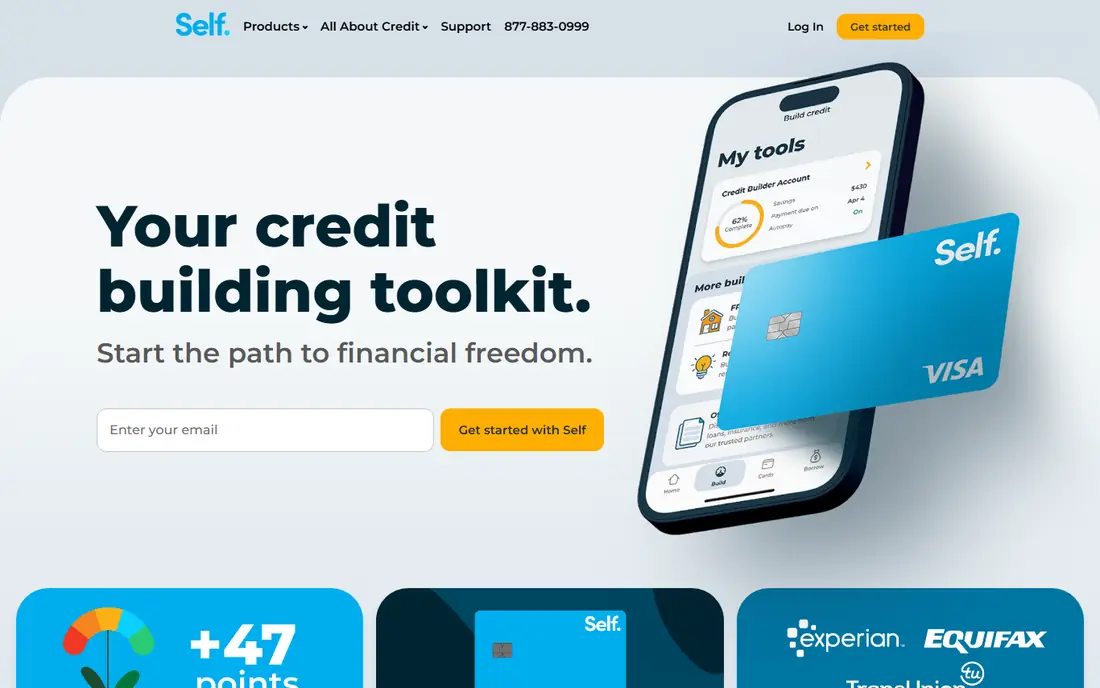
Self offers a credit builder account where you pay monthly into a locked savings account, and Self reports those payments to all three bureaus. At the end of the term, you receive the saved amount minus interest and fees. That structure suits people who want a clear payment habit and a small savings sum at the end.
The catch is access to your money. You cannot spend the saved funds during the term, and the total cost includes interest and fees. If you need flexible cash, a secured card or bill reporting tool may fit better. If you want discipline plus savings, Self is a solid choice.
- Reports to all three bureaus
- Builds savings as you pay
- Optional secured card once you save enough
- Funds are locked until the loan ends
- Interest and fees apply
- Monthly plans vary in cost
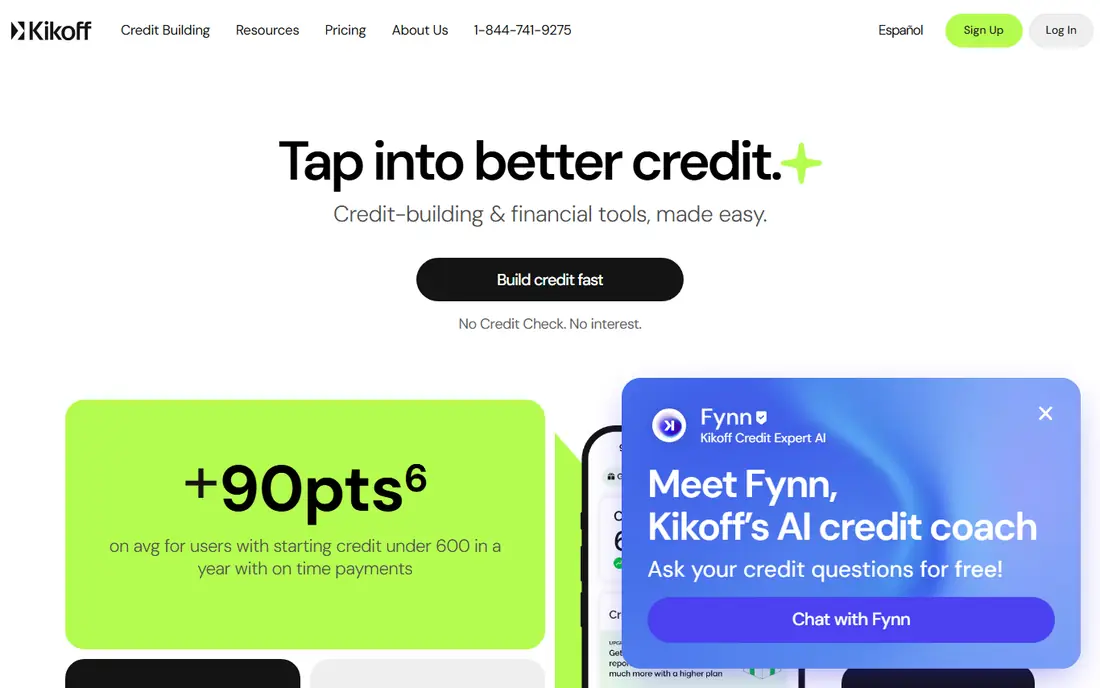
Kikoff is our pick for beginners because the basic plan costs only a few dollars a month and still reports to all three bureaus. You get a small line of credit to use in the Kikoff store or for reporting, and on-time payments build your payment history. That low entry cost makes it easier to keep the account open and paid on time.
Limits are small at first, and the product is not a general-purpose credit card for everyday spending. If you want a card you can use anywhere, look at Chime Credit Builder or a secured card instead. If you want the cheapest reliable reporting tool, Kikoff is hard to beat.
- Low monthly cost
- Reports to all three bureaus
- No credit check for the basic line
- Rent and bill reporting options
- Credit limits start small
- Higher tiers cost more
- Value depends on consistent on-time payments
MoneyLion Credit Builder Plus bundles a small builder loan with membership features such as budgeting tools, credit monitoring and access to cash advances. For people who already use MoneyLion for banking or investing, that bundle can be convenient and keeps credit building inside one app.
The monthly cost is the main drawback. At $19.99 per month, it costs far more over a year than Kikoff or Kovo, so it only makes sense if you value the extra tools. If you only want credit reporting, a cheaper single-purpose app saves money.
- Credit builder loan reported to all three bureaus
- Budgeting and credit monitoring tools
- Access to cash advances for members
- Monthly membership is higher than rivals
- Features may be more than a pure credit builder needs
- Terms need careful reading
Chime Credit Builder is a secured Visa card that works differently from a normal credit card. You move money from your Chime checking account to the card, spend up to that amount, and Chime reports on-time payments to all three bureaus. There is no annual fee and no interest, since you only spend money you already hold.
You must have a Chime checking account and a qualifying direct deposit to open it, which limits it to Chime customers. For those customers, it is one of the cheapest ways to build revolving credit history without debt risk, since you cannot spend beyond the money you moved.
- No annual fee and no interest
- Reports to all three bureaus
- Spending limit set by money you move to the card
- Needs a Chime checking account
- Requires qualifying direct deposit for activation
- Not a traditional credit card with a set limit
Kovo charges $10 per month and reports payments to Equifax, Experian, TransUnion and Innovis. The plan bundles subscription services, which gives the reporting account a clear structure without interest charges. For people who want broad bureau coverage at a modest price, Kovo is a strong middle option between Kikoff and MoneyLion.
The bundle is also the limit. If the included services do not fit your life, you are still paying for them as part of the plan. Check exactly what is included and how long the term runs before you sign up.
- Reports to all three bureaus plus Innovis
- No interest and no credit check
- Includes subscription services in the plan
- Bundled services may not suit everyone
- Monthly cost continues for the term
- Less flexible than a card
Grow Credit turns payments you already make, such as streaming subscriptions, into reported credit activity. You get a virtual Mastercard for subscription bills, and Grow Credit reports those payments to all three bureaus. A free plan covers basic use, while paid plans raise limits and add features.
This is a gentle way to start, since it uses spending you already plan. It will not build as much history as a larger loan or a secured card used regularly, and it only covers subscriptions. Pair it with another tool if you want faster or broader credit growth.
- Reports subscription payments to all three bureaus
- Free plan for basic use
- Virtual card for subscription spending
- Paid plans cost more for higher limits
- Only covers subscription spending
- Limits are modest
Experian Boost is free and works by connecting to your bank account and adding eligible utility, telecom and streaming payments to your Experian credit file. For people with thin files, that extra payment history can help, and there is no loan, fee or credit check involved.
The limit is scope. It only changes your Experian score, not Equifax or TransUnion, and lenders who check other bureaus will not see the boost. Use it as a free add-on alongside a tool that reports to all three bureaus, not as your only credit builder.
- Free to use
- Adds utility, phone and streaming payments to your Experian file
- No loan or card needed
- Only affects your Experian score
- Not all bills qualify
- Impact varies by credit file
Credit Strong offers credit builder loans from small monthly payments to larger plans, with terms from 12 months upward. Like Self, it locks the loan funds in savings while you pay, then releases the balance minus interest and fees at the end. That flexibility lets you match the monthly payment to your budget.
Read the term and fee details for the exact plan you choose, since cost varies by loan size and length. If you want the lowest monthly cost, Kikoff or Kovo may be cheaper. If you want a larger loan amount to build installment history, Credit Strong gives you more choice.
- Wide range of loan sizes and terms
- Reports to all three bureaus
- Options for different budgets
- Interest and fees apply
- Locked savings model
- Early closure terms need checking
How we picked these
We compared official provider sites, app store listings and public credit builder comparisons. We kept only products that report payments to at least one major bureau, exist today and have clear pricing or fee information. We favored products that report to all three bureaus, and we flagged costs, locked funds and bureau limits so readers can compare total cost, not just monthly price.
How to build credit without wasting money
First, check which bureaus each app reports to. A tool that reports to only one bureau helps only lenders who check that bureau, while a tool that reports to all three gives broader coverage. If you can afford only one paid tool, choose one with all-three reporting.
Second, keep payments on time and amounts affordable. A missed payment hurts more than a small on-time payment helps, so pick a monthly cost you can pay even in a tight month. Set up autopay if the app offers it, and check statements for fees you did not expect.
Third, avoid stacking too many paid builders at once. Two tools with different account types, such as a builder loan and a secured card, can help more than four similar loans. After six to twelve months of on-time payments, review your scores and consider a no-annual-fee card or a larger credit product if your file supports it. This is not financial advice, and your results will vary with your full credit history.
Frequently asked questions
Which apps are best for credit building?
Kikoff is best for low cost, Self is best for a structured loan plus savings, and Chime Credit Builder is best for a no-fee secured card if you already use Chime. The best choice depends on your budget, whether you want a loan or a card, and which bureaus you need reported.
What are the best free credit building apps?
Experian Boost is free and adds eligible bills to your Experian file, and Grow Credit and Chime Credit Builder offer free starting options. Free tools usually cover fewer bureaus or lower limits than paid plans, so check reporting before you rely on them alone.
Which app is best to help build credit from scratch?
For a thin file, start with a low-cost reporter such as Kikoff or Kovo, plus Experian Boost as a free add-on. Keep payments on time for at least six months, then review your progress before adding another product.
Do credit building apps really raise your score?
They can help by adding on-time payment history, which is a major scoring factor, but results vary. Late payments, high balances on other cards, collections and other file items can limit or reverse gains. No app can guarantee a specific score increase.
How long does it take to build credit with an app?
Most people need at least six months of reported on-time payments to see meaningful change, and larger gains often take twelve months or more. Keep the account open and paid on time, and avoid closing it early if you can, since account age also matters.
Sources
See where you really rank - block by block
ProMapRanker scans Google Maps across a grid of your service area. Simple monthly plans from $19, white-label on every plan.
Start freeKeep reading
 free alternatives to grok imagine
Free Alternatives to Grok Imagine in 2026
We compared the best free alternatives to grok imagine for image generation, from fast daily credits to design tools, so you can create without paying.
Read → best tools for instagram content creation
Best Tools for Instagram Content Creation in 2026
Compare the best tools for Instagram content creation, from Canva and CapCut to Later and Buffer, on design, video, planning, scheduling, and price in 2026.
Read → best tool to split pdf files
Best Tool to Split PDF Files in 2026
We compared the best tool to split pdf files on split modes, file limits, privacy and price, so you can split a PDF cleanly and keep every page in one go.
Read →