 ProMapRanker
Best Corporate Travel Platforms in 2026

Key takeaways
- Navan, Perk, Ramp, and Brex offer free or low-cost entry points, while SAP Concur, Spotnana, and Egencia target larger, global programs.
- The real choice is between a travel-first booking tool and a combined travel, expense, and card system.
- Published prices are often starting points, and enterprise plans are quoted, so budget with a demo and a written quote.
- Policy controls, approval flows, and accounting integrations matter more than a slick booking page once trips scale.
Quick comparison
| Pick | Great for | Pricing starts at | Free tier | |
|---|---|---|---|---|
 Navan | Combined travel and expense | Free | Yes | Visit |
 Perk | Fast booking for growing teams | Free | Yes | Visit |
 Ramp | Finance-led travel and cards | Free | Yes | Visit |
 Brex | Cards plus travel in one account | Free | Yes | Visit |
 SAP Concur | Large global programs | See website | No | Visit |
 Spotnana | Modern enterprise booking | See website | No | Visit |
 Egencia | Global travel at scale | See website | No | Visit |
 Engine | Hotel-heavy travel | Free | Yes | Visit |
The best corporate travel platforms
We compared booking coverage, expense and card features, policy controls, support, and published pricing for platforms still operating in October 2026. Small teams should weigh free entry points heavily, while larger firms should weigh integrations and global support more.
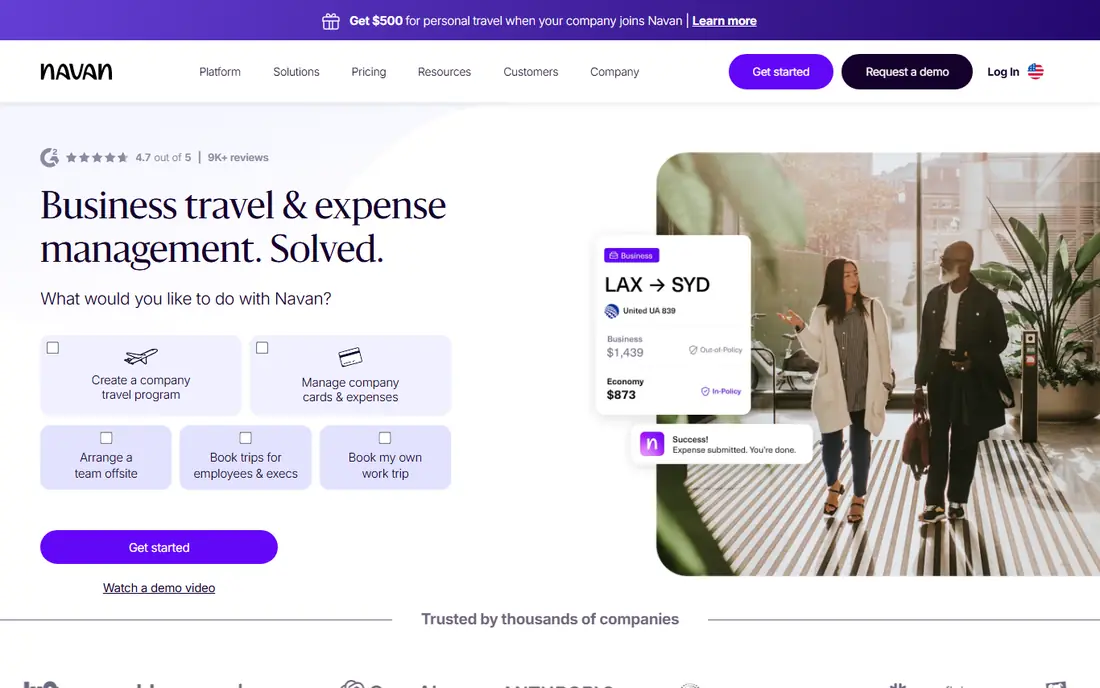
Navan is the most complete all-in-one pick for a team that wants booking, expense, and cards without stitching three vendors together. Flights, hotels, and rail sit beside expense capture, so a trip booked in Navan can flow into reports with less manual entry. Support around the clock matters when a flight cancels late at night.
The free travel entry point is attractive, but expense pricing is charged per active user after a small free allowance, so costs grow with headcount. Enterprise needs also move to a quoted plan. If your team travels often and finance wants one system, Navan is a strong shortlist entry.
- Travel booking plus expense in one system
- Free travel plan for eligible firms
- 24/7 travel support
- Full expense pricing rises with active users
- Larger firms need a quoted plan
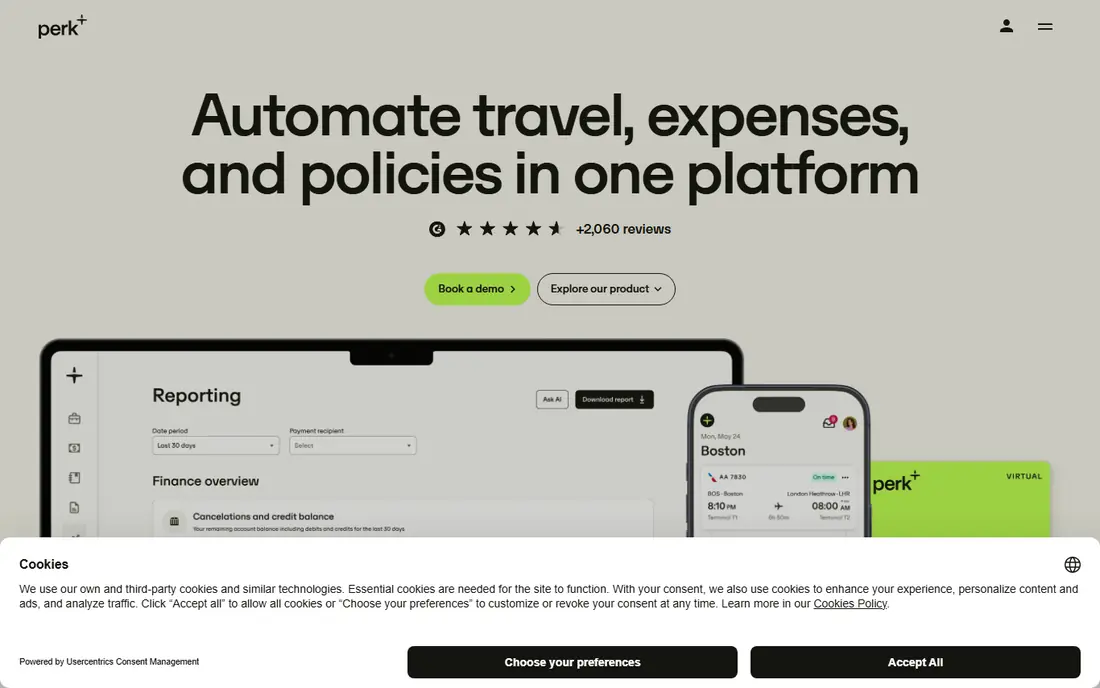
Perk, formerly TravelPerk, suits a growing company that wants fast booking without a large upfront contract. The Starter tier lets a team start at no platform cost, paying a percentage per booking instead. European coverage and VAT recovery support are practical strengths for firms with frequent trips across Europe.
Expense management is not as native as in Navan or Ramp, so finance teams may need an integration to close the loop. Heavy travelers should also model the per-booking fees, since a low platform fee can still produce a high total bill. For booking speed and a low start cost, Perk is easy to recommend.
- Free Starter tier with a per-booking fee
- Strong European coverage
- VAT recovery help
- Expense features rely on integrations
- Per-booking fees add up for heavy travelers
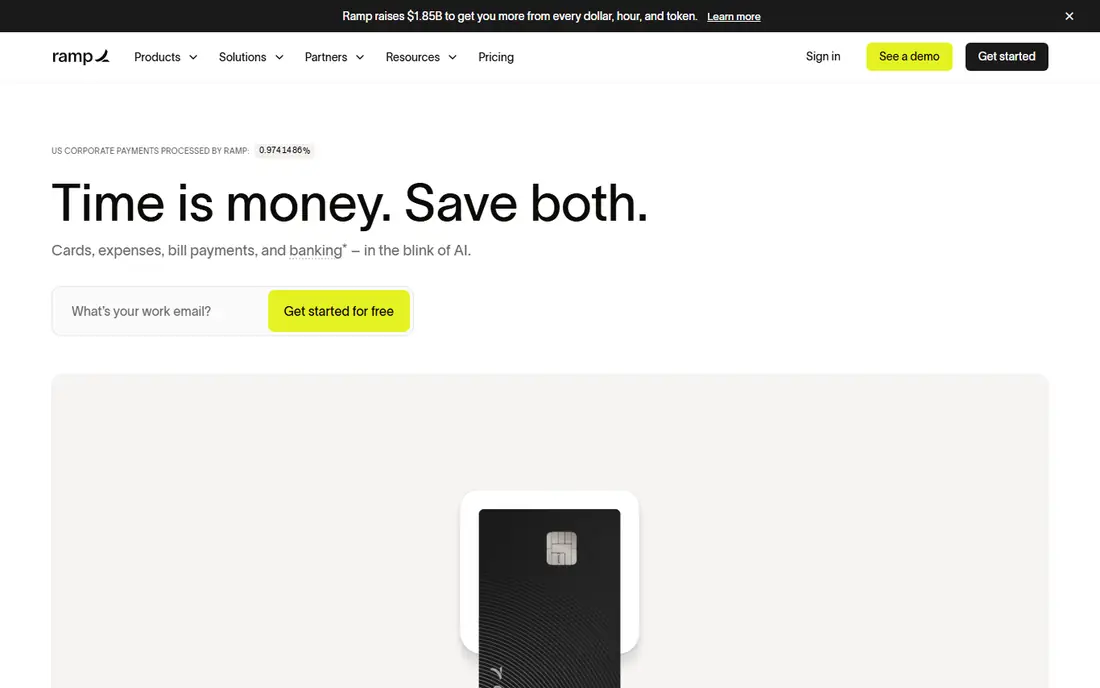
Ramp makes sense when finance, not the traveler, drives the decision. Corporate cards, expense automation, and travel sit in one account, so spend controls apply at the card level. The free core plan is generous for startups and small firms that already want Ramp cards.
Travelers may find the booking experience less polished than a travel-first tool, since Ramp is built around spend control. The Plus plan adds a per-user monthly cost plus a platform fee, so larger teams should quote the full bill. If your priority is controlling spend, Ramp is the natural pick.
- Free core plan with cards and expense
- Travel included with a Ramp account
- Strong accounting integrations
- Travel is finance-first, not traveler-first
- Plus plan adds a per-user cost
Brex appeals to startups and scaling firms that want banking-style cards, bill pay, and travel in one place. The free Essentials tier lowers the barrier, and approvals help managers control spend before it happens. For a team already using Brex cards, adding travel keeps receipts and bookings in one view.
Premium software moves to a per-user monthly price, so the free tier is not the whole story for larger teams. Travel booking depth is also lighter than a dedicated travel platform. If cards and finance are already centered on Brex, the travel add-on is convenient rather than a reason to switch alone.
- Free Essentials tier
- Cards, bill pay, and travel together
- Approvals built in
- Premium software costs per user
- Travel depth is lighter than travel-first tools
SAP Concur remains the default for large, global firms with complex policy, approval, and audit needs. Travel, expense, and invoice tools connect to major ERP systems, which matters when finance runs on SAP, Oracle, or Workday. Global coverage and mature controls make it a safe enterprise choice.
The cost is implementation time and complexity, since rollout can take months and training matters. Travelers who use a modern consumer booking site may find the interface less smooth. For a large firm where compliance and reporting outweigh booking flair, Concur still leads.
- Deep travel, expense, and invoice controls
- Broad ERP integrations
- Global scale
- Implementation can take months
- Booking experience feels dated to some users
Spotnana targets enterprises that want a modern booking tool without giving up travel management controls. Direct airline connections and broad content aim to show more fares and options than older booking tools. The design feels closer to a consumer site, which helps traveler adoption.
It is not a self-serve small-business tool, since sales run through enterprise contracts and travel management partners. Pricing is quoted by volume and scope, so a small team will not get a quick public price. For a large firm refreshing an old booking tool, Spotnana deserves a demo.
- Modern booking built on direct airline connections
- Strong content coverage
- Traveler-friendly design
- Sold through enterprise and travel management contracts
- No self-serve pricing
Egencia, part of American Express Global Business Travel, suits firms with international travel at scale. The global network supports bookings, changes, and support across many countries, which is hard for a small vendor to match. AI-assisted features help travelers find options faster within policy.
Custom pricing and an enterprise sales process make it a poor fit for a ten-person startup. Smaller teams will get faster value from a free-tier tool. For a multinational program that needs consistent global support, Egencia is a credible enterprise pick.
- Global Amex GBT network
- AI-assisted booking help
- Support for international programs
- Custom pricing only
- Smaller teams may find it heavy
Engine is the practical pick for hotel-heavy travel, such as trade shows, site visits, and retail openings. The free core plan covers booking across a large hotel inventory, and consolidated billing simplifies group trips. That focus makes it easy to adopt without a finance project.
Flight and rail booking is thinner than in a full travel platform, so flight-heavy teams may need a second tool. The FlexPro tier adds a monthly cost for extra savings and flexibility features. If hotels dominate your travel spend, Engine is a low-cost, low-friction start.
- Free core booking
- Large hotel inventory
- Consolidated billing for groups
- Flight and rail depth is thinner
- FlexPro paid tier adds a monthly cost
How we picked these
We compared vendor pricing pages, product descriptions, and 2026 comparison guides for platforms that offer corporate travel booking, expense, or both. We kept tools that are still operating, serve US-based teams, and publish at least a starting tier or a clear enterprise model. Where pricing is quoted, we say so rather than guessing a number.
How to choose for your team size
A team under 50 people should start with a free tier and add policy rules only as trips grow. Test booking, cancellation, and receipt flow on a real trip before rolling the tool out company-wide. A team over 200 people should run a pilot with finance, travel managers, and frequent travelers, since adoption and ERP sync matter more than the signup page.
Ask these questions in a demo
Ask how approvals work, what happens when a trip is booked out of policy, and how expenses sync to your accounting system. Ask about support hours, change fees, and data exports, since those details decide daily friction. Get the total cost in writing, including per-booking fees, per-user fees, and any platform fee.
Frequently asked questions
What are the best corporate travel apps?
The best corporate travel apps depend on team size and priorities. Navan and Perk suit travel-first booking, Ramp and Brex suit finance-led spend control, and SAP Concur and Egencia suit large global programs. Shortlist two tools and test them on real trips before deciding.
What is the best travel software for business?
Travel software for business should combine booking, policy controls, and expense capture in a way your team will actually use. Navan covers that combination well for mid-market teams, while Perk covers booking speed for growing teams. Enterprise firms should weigh ERP integrations and global support first.
Is there a free corporate travel platform?
Yes, Navan, Perk, Ramp, Brex, and Engine all offer a free tier or a free core plan, though fees may apply per booking or per active user for expense features. Read the tier limits before you assume the whole system is free. Free entry is real, but full expense and premium features are usually paid.
How much does corporate travel software cost?
Costs range from free for a core tier to quoted enterprise contracts that run into five or six figures per year. Per-user expense pricing, per-booking fees, and platform fees all affect the total. Model a full year of trips and users, not just the headline monthly price.
Do small businesses need a corporate travel platform?
A small business with a few trips a year may not need a full platform, and a free booking tool plus a card may be enough. A platform earns its place when trips grow, approvals matter, or expense reports consume real finance time. Start free and upgrade when the pain is clear.
Sources
See where you really rank - block by block
ProMapRanker scans Google Maps across a grid of your service area. Simple monthly plans from $19, white-label on every plan.
Start freeKeep reading
 free alternatives to grok imagine
Free Alternatives to Grok Imagine in 2026
We compared the best free alternatives to grok imagine for image generation, from fast daily credits to design tools, so you can create without paying.
Read → best tools for instagram content creation
Best Tools for Instagram Content Creation in 2026
Compare the best tools for Instagram content creation, from Canva and CapCut to Later and Buffer, on design, video, planning, scheduling, and price in 2026.
Read → best tool to split pdf files
Best Tool to Split PDF Files in 2026
We compared the best tool to split pdf files on split modes, file limits, privacy and price, so you can split a PDF cleanly and keep every page in one go.
Read →