 ProMapRanker
Best Competitor Analysis Software for AI Products in 2026

Key takeaways
- No single tool covers traffic, pricing, product changes, and sales enablement, so most AI product teams need a small stack rather than one purchase.
- Semrush, Ahrefs, and Similarweb give the clearest view of how rivals attract attention online, while Crayon and Klue turn public signals into sales material.
- Visualping and Owler suit smaller teams that mainly need alerts when a rival changes a page, a price, or a public announcement.
- Use only public data and respect each site's terms. Do not use these tools for covert surveillance, credential theft, or access to non-public material.
- Quote-based enterprise tools can cost far more than the monthly tools here, so confirm total cost before a trial ends.
Quick comparison
| Pick | Great for | Pricing starts at | Free tier | |
|---|---|---|---|---|
 Semrush | SEO and PPC competitor research | See website | Free trial | Visit |
 Ahrefs | Backlink and content gap research | See website | No | Visit |
 Similarweb | Traffic and market benchmarking | See website | Free trial | Visit |
 Crayon | Enterprise competitive intelligence | See website | No | Visit |
 Klue | Sales battlecards and win-loss insight | See website | No | Visit |
 SpyFu | Affordable PPC and keyword history | See website | Free trial | Visit |
 Visualping | Website change monitoring | See website | Yes | Visit |
 Owler | Company news and alerts | See website | Yes | Visit |
 Brandwatch | Social listening and brand comparison | See website | No | Visit |
The best competitor analysis software for AI products
These tools compare public signals about rival AI products, from search visibility and web traffic to pricing pages, social conversation, and sales positioning. We compared official feature pages, pricing pages, app store listings where relevant, privacy policies, and public reviews.
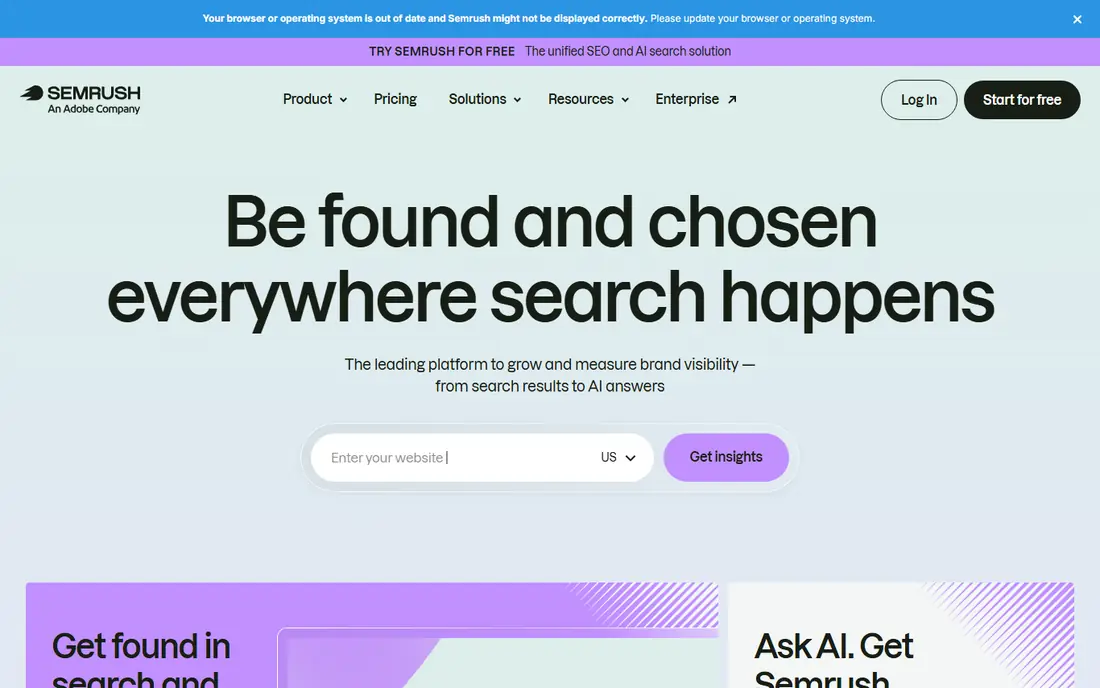
Semrush fits an AI product team that lives or dies by search and paid discovery. A team can enter a rival domain, see which keywords it ranks for, which ads it runs, and where its content gaps sit. That view is useful when a new AI feature needs a launch page, a comparison page, or a set of help articles that actually get found.
The catch is scope. Semrush describes what rivals do in search and advertising, not why buyers choose them or how their product works inside. Treat its traffic figures as directional estimates and pair them with product research before making a roadmap call. Pricing also rises quickly when more seats and projects are added, so check the plan that matches your team size.
- Broad keyword, advertising, and traffic tools in one account
- Useful domain comparison views
- Regular data updates
- Full plans can be costly for a small team
- Some traffic figures are estimates, not exact counts
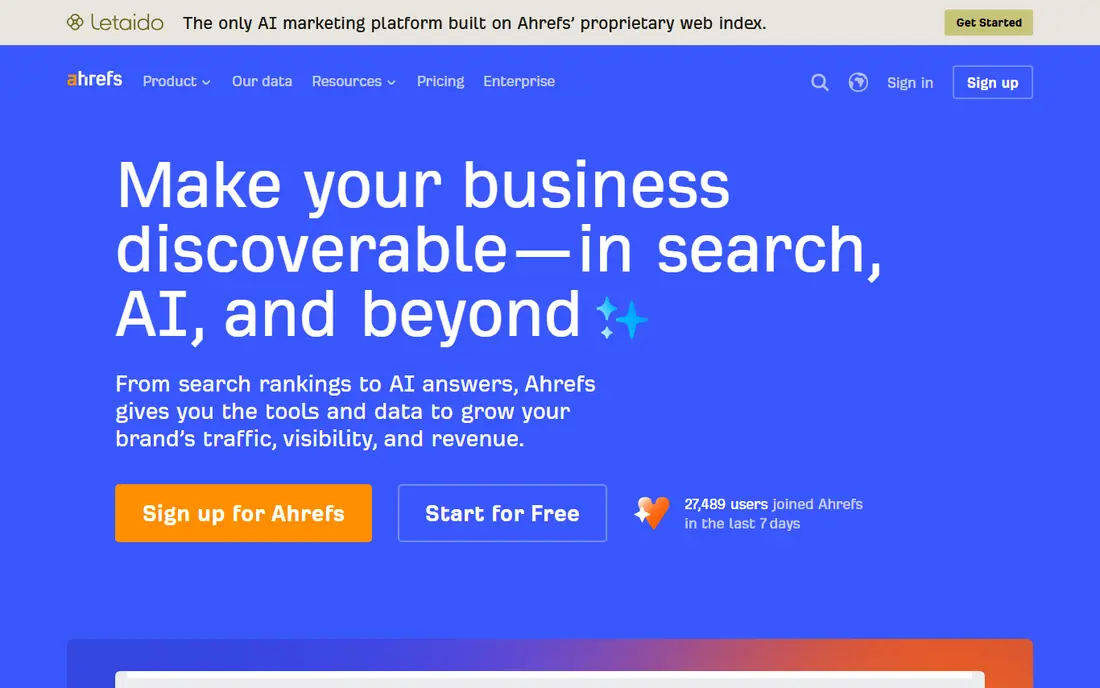
Ahrefs earns its place for teams that want to understand authority, not just traffic. Its backlink reports show which sites link to a rival, which pages attract those links, and which topics a rival covers that your site does not. For an AI product, that often reveals integration partners, review coverage, and documentation pages that drive steady signups.
The tool is less useful as a general market monitor. It will not track a rival pricing change or build a sales battlecard on its own. Buy it when search authority and content are central to your growth plan, and use a monitoring tool beside it for day-to-day changes.
- Deep backlink data
- Clear content gap reports
- Strong rank tracking
- No free plan
- Enterprise-style reporting can feel heavy for a solo founder
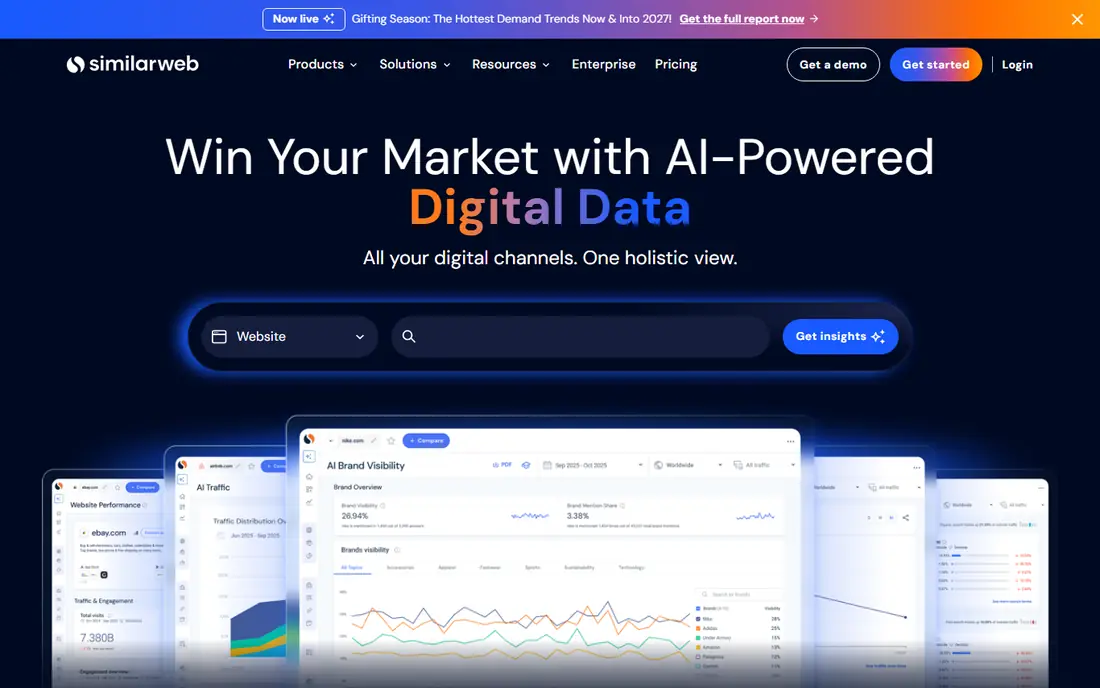
Similarweb answers a different question from Semrush or Ahrefs. It asks how large a rival audience is, where visitors come from, and how that mix changes over time. That framing helps an AI startup decide whether a rival is growing through search, social, referral, or direct visits, and whether a channel deserves more attention.
Accuracy varies with site size. Large, well-trafficked rivals produce steadier estimates, while small or new AI products may show gaps. Use Similarweb for relative comparison and trend direction, not as a precise count of rival users. The free and trial options are a sensible way to test whether its coverage fits your market before talking to sales.
- Clear traffic and audience comparisons
- Useful market segment views
- Strong for benchmarking
- Smaller sites may show thin or estimated data
- Full access is quote-based for many teams
Crayon is built for companies that already have a competitive intelligence habit and want it organised. It pulls public rival signals into one place, helps analysts curate what matters, and pushes battlecards and updates to sales teams. For an AI vendor with several direct rivals and a sales team that faces them daily, that structure can save repeated manual research.
The trade-off is cost and effort. Crayon works best when someone owns the program, reviews alerts, and keeps battlecards current. A two-person startup may get more value from a cheaper monitor and a shared document. Larger teams, by contrast, benefit from the audit trail and the shared source of truth.
- Central tracking of rival pages, news, and reviews
- Battlecard creation
- Team distribution tools
- Quote-based pricing suits larger budgets
- Setup takes time and internal ownership
Klue focuses on the moment a deal is contested. Its battlecards summarise a rival position, common objections, and suggested responses, and its win-loss work helps a team learn why deals were won or lost. That focus makes it a strong pick for AI products sold through sales calls, demos, and procurement reviews rather than self-serve signup alone.
Adoption is the honest risk. Battlecards only help if reps open them, and that requires clean content, regular updates, and a manager who reinforces their use. Teams without a sales motion may find Klue heavier than they need. Teams with one often find it the most practical tool on this list for revenue impact.
- Strong battlecard and enablement workflows
- Win-loss research options
- CRM and chat integrations
- Quote-based pricing
- Value depends on sales adoption
SpyFu suits a small AI team that wants history without an enterprise bill. It shows keywords a rival has bought or ranked for, and how that mix has changed over time. That history can reveal a pivot, a new use case, or a seasonal campaign that a single snapshot would miss.
Depth is the limit. SpyFu does not replace a full market intelligence platform, and its estimates should be checked against other sources before a budget decision. Still, for a founder or marketer who needs a quick, affordable read on rival search behaviour, it is a practical starting point.
- Long keyword and ad history
- Lower entry cost than larger suites
- Simple competitor domain reports
- Narrower data depth than Semrush or Ahrefs
- Traffic estimates need careful reading
Visualping does one job well. It watches a rival page and alerts you when that page changes. For AI products, that means pricing pages, model pages, changelog pages, and feature announcements can be tracked without daily manual checks. The free tier covers light monitoring, which suits a small team tracking a handful of rivals.
It is not a research database. Visualping will not explain a rival strategy or compare traffic, and it relies on public pages being accessible. Pair it with a research tool for context, and use it as the alert layer that tells you when to look closer.
- Simple page monitoring
- Useful pricing and feature page alerts
- Free tier for light use
- Monitors pages, not whole markets
- Frequent checks and large page sets cost more
Owler fits teams that track companies, not just websites. Its profiles and alerts surface funding news, leadership changes, acquisitions, and other public company events that can change a rival position. For AI products, where a funding round or a key hire can signal a new direction, that company-level view adds useful context.
Coverage is uneven. Well-known companies tend to have fuller profiles, while early-stage rivals may have thin records. Use Owler as an alert and background tool, and verify major claims against the original announcement or filing before repeating them in a sales conversation.
- Company profiles and news alerts
- Useful funding and leadership signals
- Free tier available
- Depth varies by company
- Detailed data sits behind paid plans
Brandwatch tracks what people say about brands in public social and web conversation. For an AI product, that can reveal complaints about accuracy, pricing, support, or a new feature, as well as praise that points to a rival strength. Share-of-voice views help a team see whether its own launch cut through or was drowned out.
Listening tools need careful queries. A brand name that is also a common word can flood results with noise, and sentiment scores are not a substitute for reading actual posts. Teams that invest in query design and regular review get real value. Teams that set it up once and ignore it will mostly get charts.
- Broad social and web listening
- Sentiment and share-of-voice views
- Strong reporting
- Quote-based pricing
- Setup and query design take skill
How we picked these
We compared official feature pages, pricing pages, privacy policies, and public reviews for tools that analyse public competitor data for AI products. We kept tools that are live, that cover a distinct job such as search, traffic, monitoring, sales enablement, or social listening, and that can be used without access to non-public data. We left out tools that promised covert access, private data, or methods that would breach a site's terms, and we used See website where a vendor does not publish a clear starting price.
What to check before you pay
Start with the question you need answered each week. If the question is about search, pick Semrush, Ahrefs, or SpyFu. If it is about market size and traffic mix, test Similarweb. If it is about sales conversations, look at Crayon or Klue. If it is about change alerts, Visualping and Owler cover a lot for little money.
Check data coverage for your exact rivals before paying. Run your top five rival domains through a trial, compare the results with what you already know, and note where data is thin. Check who will own updates, because a battlecard or monitor that no one maintains soon becomes misleading. Finally, confirm seat limits, data refresh rates, and renewal terms, since those details often matter more than the headline feature list.
Frequently asked questions
What is the best competitor analysis tool for AI products?
There is no single best tool for every AI product. Search-led teams often start with Semrush or Ahrefs, market-led teams with Similarweb, and sales-led teams with Crayon or Klue. Pick the tool that answers your most frequent question, then add a monitor such as Visualping for change alerts.
What are the best competitor analysis tools for AI products?
The strongest general set on this list is Semrush, Ahrefs, Similarweb, Crayon, Klue, SpyFu, Visualping, Owler, and Brandwatch. Each covers a different job, so a small stack usually beats one large purchase. Avoid tools that claim private or hidden rival data, since those claims often break privacy rules or platform terms.
Is competitor analysis software legal?
Analysis of public data, such as public pricing pages, public search results, public social posts, and public company announcements, is a normal business practice. It becomes a problem when it involves stolen credentials, private accounts, covert surveillance, or breaking a site's terms. Keep your research to public sources and document where each fact came from.
How much should a small AI team spend?
A small team can start with free tiers and trials from Visualping, Owler, and SpyFu, plus one paid search tool if search matters. Enterprise platforms such as Crayon, Klue, and Brandwatch are usually quote-based and suit larger teams with a sales or intelligence owner. Do not buy an enterprise plan until a trial has proved coverage for your rivals.
How often should competitor data be reviewed?
Review alerts weekly and do a deeper comparison monthly or each quarter. Pricing pages and feature announcements can change fast in AI, while traffic and search trends need longer windows to show a real shift. A weekly alert habit plus a quarterly review keeps the work useful without turning it into a full-time job.
Sources
See where you really rank - block by block
ProMapRanker scans Google Maps across a grid of your service area. Simple monthly plans from $19, white-label on every plan.
Start freeKeep reading
 wpforms alternatives
Best WPForms Alternatives in 2026
We compare 9 wpforms alternatives for WordPress forms, with free and paid options, current pricing notes, and honest limits for small business sites in 2026.
Read → windows task scheduler alternatives
Best Windows Task Scheduler Alternatives in 2026
Looking for Windows Task Scheduler alternatives? We compare 9 schedulers for Windows and cross-platform work, from free tools to enterprise automation.
Read → which ai video service is best
Which AI Video Service Is Best in 2026
which ai video service is best? We compare 10 legitimate AI video services on price, avatars, editing and output quality to help you pick the right tool.
Read →