 ProMapRanker
Best Competitive Analysis Tool in 2026

Key takeaways
- Semrush is our pick for most teams that want SEO, PPC and traffic analysis in one place, with strong gap and traffic tools.
- Ahrefs is the strongest choice for backlink and content gap work, thanks to its large link index and Site Explorer.
- Similarweb suits market level work, where traffic share, channels and audience journeys matter more than single keyword ranks.
- SpyFu and SE Ranking offer the best value for smaller teams that need competitor keywords and ads without enterprise pricing.
- Traffic and backlink figures are estimates from each vendor, so compare trends and gaps across tools rather than treating one number as exact.
Quick comparison
| Pick | Great for | Pricing starts at | Free tier | |
|---|---|---|---|---|
 Semrush | All in one SEO and PPC research | $139.95 per month | Free trial | Visit |
 Ahrefs | Backlink and content gap research | $129 per month | Free tools | Visit |
 Similarweb | Traffic and market intelligence | $125 per month | Free trial | Visit |
 SpyFu | PPC and SEO competitor keywords | $39 per month | Free trial | Visit |
 SE Ranking | Budget all in one competitor research | $52 per month | Free trial | Visit |
 Moz Pro | Authority and rank benchmarking | $99 per month | Free trial | Visit |
 BuzzSumo | Content performance research | $199 per month | Free trial | Visit |
 Crayon | Pricing and messaging change tracking | See website | No | Visit |
 Klue | Competitive enablement and win loss | See website | No | Visit |
 Owler | Company level competitor monitoring | Free | Yes | Visit |
The best competitive analysis tools
The best competitive analysis tool depends on the question you need to answer. Some tools reveal traffic and keywords, others reveal links and content, and a few track pricing, messaging and company news. The list below covers that range.
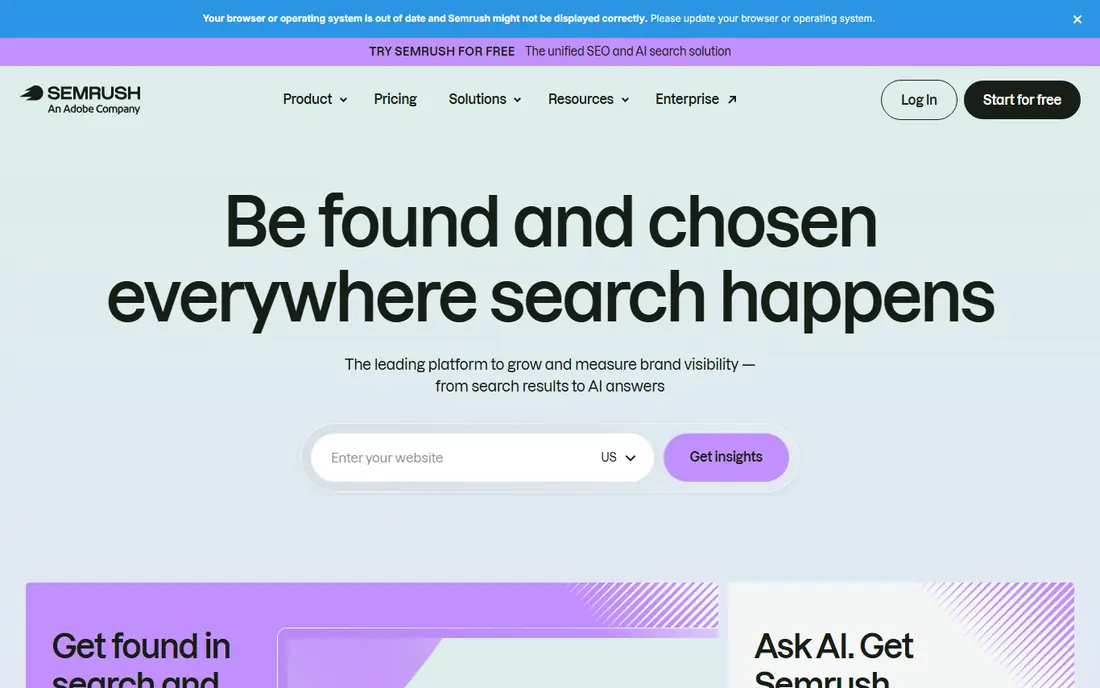
Semrush is the broadest competitive research platform in this list. You can compare domains for shared and missing keywords, analyse backlink gaps, estimate traffic and channels, and review paid search keywords and ad copy. That breadth makes it useful when one team owns SEO, content and paid search, and needs a shared view of competitors.
The cost and complexity are the trade offs. Entry pricing is high for freelancers, and the full toolset takes time to learn. Teams that only need backlink or traffic data may get better value from a focused tool. For a team that will use keyword, content, link and traffic research every week, Semrush is hard to beat as a single subscription.
- Keyword Gap, Backlink Gap and Traffic Analytics
- PPC keyword and ad research
- Large toolset in one subscription
- High entry price
- Some advanced features need higher tiers
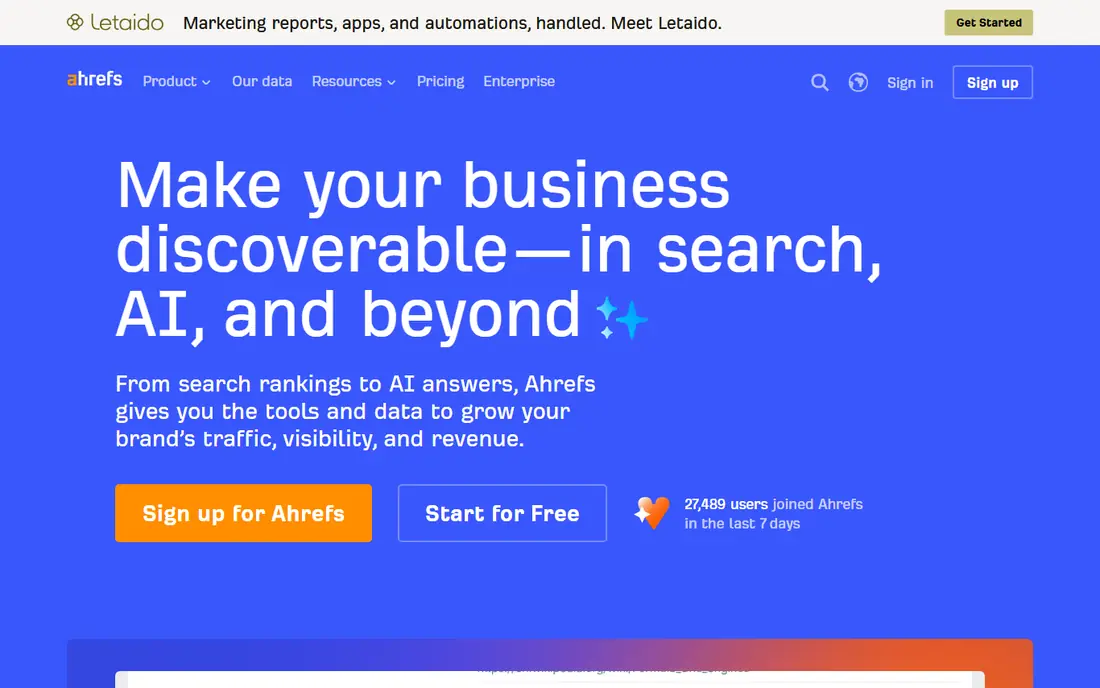
Ahrefs is best known for backlink research, and it remains the strongest tool in this list for link and content gap work. Site Explorer shows which pages earn links, which keywords drive traffic, and which content performs best for a competitor. Content Gap finds keywords that rivals rank for and you do not, which gives content teams a clear brief.
Ahrefs offers free tools for your own site, but competitor research needs a paid plan, and PPC analysis is lighter than Semrush. Teams that build links and content will value its depth, while paid search led teams may prefer Semrush or SpyFu. Use Ahrefs when links and organic content are the main competitive battleground.
- Large backlink index
- Site Explorer and Content Gap
- Strong keyword and content data
- Paid plans start high
- PPC data is lighter than Semrush
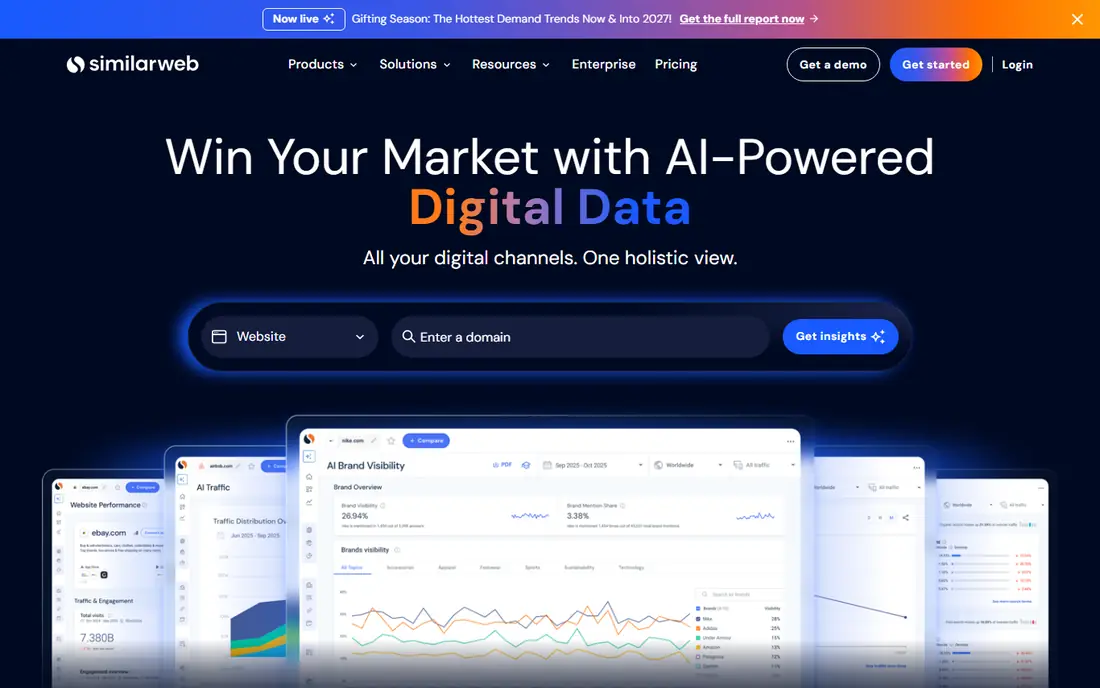
Similarweb answers a different question from Semrush and Ahrefs: how large is a competitor, where does its traffic come from, and how does its audience behave. You can compare traffic, channels, referrals, search and social mix, and see market share within an industry. That view suits strategy, planning and investor style research, as well as marketing teams that need a market baseline.
Remember that traffic figures are modelled estimates, not exact analytics from the competitor site. Use Similarweb for trends, shares and channel patterns, and check keyword and link detail in Semrush or Ahrefs. For market level decisions, though, its breadth is a clear advantage.
- Traffic estimates and channel mix
- Audience and market share views
- App and industry data
- Traffic figures are modelled estimates
- Deeper plans are costly
SpyFu is a value led tool for competitor keyword and ad research. It shows which keywords competitors buy and rank for, how their ad copy has changed, and how their organic visibility has moved over time. That history helps PPC teams learn from rivals without paying for an enterprise suite, and the entry price is far lower than Semrush or Ahrefs.
SpyFu is less deep for large scale link analysis, market intelligence and enterprise reporting. Small and mid sized teams that focus on Google Ads and organic keywords will find it more than enough. Larger teams may use SpyFu alongside Semrush or Ahrefs, rather than as a full replacement.
- Long PPC keyword and ad history
- Low entry price
- Easy competitor keyword research
- Less enterprise depth
- Traffic and link data are thinner than larger rivals
SE Ranking is an all in one SEO platform with competitor research, rank tracking, backlink checking and site audits at a lower price than the largest suites. It suits agencies and growing teams that need a broad toolset without enterprise cost, and its reporting helps agencies show clients how they compare with rivals.
Data depth is the trade off. Keyword, link and traffic coverage are thinner than Semrush and Ahrefs, especially for very large or niche markets. For most small and mid sized sites, though, SE Ranking covers the core competitive questions well, and its price makes it easy to keep as a daily tool rather than an occasional check.
- Competitor research, rank tracking and audits in one plan
- Lower price than larger suites
- Agency friendly reporting
- Data depth is thinner than Semrush and Ahrefs
- Some features need higher tiers
Moz Pro is a long established SEO platform with rank tracking, keyword research, link exploration and site audits. Its Domain Authority and Page Authority metrics are widely used as a shorthand for site strength, which helps teams benchmark competitors quickly, even if those scores are not a Google ranking factor. Keyword Explorer also helps teams compare difficulty and opportunity across rivals.
Moz has faced stronger competition from Ahrefs and Semrush on data depth, and its link index is smaller. It still suits teams that value clear metrics, simple reporting and a familiar workflow. Test its data for your niche before you switch, especially if link research is your main use.
- Domain Authority metrics
- Keyword Explorer and Link Explorer
- Rank tracking and audits
- Link index is smaller than Ahrefs
- Pricing has risen in recent comparisons
BuzzSumo answers a content question: what is working for competitors, and who is sharing it. You can find their most shared articles and videos, track topics and brands, and discover writers and influencers in a niche. That helps content teams pitch topics with proven demand, rather than guessing from keyword volume alone.
BuzzSumo is not a full SEO suite. It does not replace keyword, link or traffic research, and its entry price is high for a single purpose tool. Use it when content performance drives your strategy, and pair it with Semrush, Ahrefs or SE Ranking for keyword and link work.
- Finds top performing competitor content
- Social engagement data
- Content and influencer discovery
- High entry price
- Not a full SEO or traffic suite
Crayon is a competitive intelligence platform for product, marketing and sales teams. It tracks changes to competitor websites, pricing pages, messaging, features and announcements, and turns those changes into alerts and battlecards for sales teams. That focus suits companies where pricing and positioning shift often, and where sales teams need current talking points.
Crayon is an enterprise tool with quoted pricing, and it needs a clear owner to turn alerts into action. It does not replace SEO or traffic tools, so most teams will use it alongside Semrush or Ahrefs. Shortlist Crayon when competitor messaging and pricing changes directly affect your sales conversations.
- Tracks competitor website, pricing and messaging changes
- Central battlecards
- Sales team alerts
- Quoted enterprise pricing
- Needs a sales enablement workflow to get full value
Klue is a competitive enablement platform that helps product marketing teams collect competitor intelligence and turn it into battlecards, playbooks and win loss insights for sales. It centralises research, tracks competitor moves, and measures how sales teams use that content. That makes it useful for B2B companies where deals are won or lost on positioning and proof.
Klue is not a traffic or keyword tool, and its value depends on sales teams actually using the battlecards. Pricing is quoted, and implementation needs product marketing ownership. Pair Klue with an SEO tool for traffic and keyword data, and use Klue for the sales facing side of competitive work.
- Battlecards and sales enablement
- Win loss analysis
- Central competitive content library
- Quoted pricing
- Value depends on sales adoption
Owler is a company intelligence platform that tracks competitors at the company level, with profiles, news, funding, acquisitions and estimated revenue and headcount. Its free plan makes it an easy starting point for building a competitor list and getting alerts when rivals make news. Paid plans add deeper data and more alerts.
Owler will not tell you which keywords or links drive a competitor, so it pairs well with an SEO tool rather than replacing one. Use Owler for company level monitoring, especially for startups, funding moves and leadership changes, and use Semrush or Ahrefs for the marketing detail behind those moves.
- Free company profiles and alerts
- Funding, news and revenue estimates
- Easy competitor lists
- Marketing and SEO data are thin
- Detailed data needs a paid plan
How we picked these
We compared official pricing pages, product documentation and 2026 competitor tool guides. We kept tools that provide real competitor data, such as traffic estimates, keyword gaps, backlink data, ad history, content performance or pricing change tracking, rather than tools that only summarise public news. We included a mix of SEO suites, content tools, sales enablement platforms and company monitors, so readers can match the tool to their main competitive question. Where pricing is quoted or varies by plan, we wrote See website instead of repeating a third party estimate as a vendor price.
How to run competitive analysis without drowning in data
Start with three competitors, not thirty
Pick the rivals who actually take your customers, rank for your money keywords, or win your deals. A short, real list produces useful gaps and actions, while a long list produces reports nobody reads. Revisit the list every quarter, because search and market rivals change faster than internal assumptions.
Compare gaps, not only totals
Total traffic or total links can mislead. Keyword Gap and Content Gap views show what rivals cover that you do not, and Backlink Gap shows which sites link to them but not to you. Those gaps turn into content briefs, outreach lists and product pages, while totals alone only tell you who is bigger.
Separate modelled estimates from facts
Traffic tools estimate visits, link tools sample the web, and company tools estimate revenue. Treat those figures as direction and trend, not as exact counts. When a decision is costly, check the same competitor in two tools, and look for agreement on direction before you act on a single number.
Track changes, not only snapshots
A one off report ages fast. Set alerts for pricing, messaging, keyword and content changes, and review them weekly or monthly. Tools such as Crayon and Klue help sales teams, while Semrush, Ahrefs and SE Ranking help marketing teams track rank, link and content movement over time.
Turn findings into owned actions
Every competitive report should end with a short action list: pages to write, links to pursue, ads to test, or sales messages to update. Assign an owner and a date to each action, or the research will sit in a dashboard. Competitive analysis earns its cost only when it changes what your team does next.
Frequently asked questions
Which competitive analysis tool is best?
Semrush is our pick for most teams, because it covers SEO, PPC, traffic and gap analysis in one place. Ahrefs is best for backlink and content gap work. Similarweb is best for market and traffic intelligence. SpyFu and SE Ranking are best for value. The best tool depends on whether your main question is keywords, links, traffic, content or sales positioning.
What are the best competitive analysis tools for small businesses?
SpyFu and SE Ranking are strong value choices for small businesses, with competitor keyword, ad and rank tools at lower prices. Owler adds free company monitoring. Small teams should start with one paid tool, use it weekly, and add a second tool only when a clear gap appears in data or workflow.
What is the best competitive analysis software for SEO?
Semrush and Ahrefs are the strongest SEO competitive analysis tools in this list. Semrush covers keyword gaps, traffic and PPC in one suite, while Ahrefs leads on backlink and content gap depth. SE Ranking is a good budget alternative, and Moz Pro suits teams that value simple authority benchmarking.
Can I do competitive analysis for free?
Yes, for basic work. Owler offers free company profiles and alerts, Ahrefs offers free tools for your own site, and Semrush and Similarweb offer limited free views and trials. Free tools work for a first competitor list and basic checks, but regular keyword, link and traffic research usually needs a paid plan.
How accurate is competitive analysis tool data?
Traffic, link and revenue figures are estimates based on each vendor data and models, so they can differ between tools. Use them for trends, shares and gaps, not as exact counts. When tools agree on direction, the finding is more reliable. When they disagree, check the underlying keywords, pages or links before you act.
Should I use more than one competitive analysis tool?
Often yes, but keep it to two or three with clear roles. A common mix is Semrush or Ahrefs for SEO, Similarweb for market traffic, and Crayon or Klue for sales positioning. Avoid paying for five overlapping suites. Give each tool a job, and drop any tool whose reports no longer change your decisions.
Sources
See where you really rank - block by block
ProMapRanker scans Google Maps across a grid of your service area. Simple monthly plans from $19, white-label on every plan.
Start freeKeep reading
 wpforms alternatives
Best WPForms Alternatives in 2026
We compare 9 wpforms alternatives for WordPress forms, with free and paid options, current pricing notes, and honest limits for small business sites in 2026.
Read → windows task scheduler alternatives
Best Windows Task Scheduler Alternatives in 2026
Looking for Windows Task Scheduler alternatives? We compare 9 schedulers for Windows and cross-platform work, from free tools to enterprise automation.
Read → which ai video service is best
Which AI Video Service Is Best in 2026
which ai video service is best? We compare 10 legitimate AI video services on price, avatars, editing and output quality to help you pick the right tool.
Read →